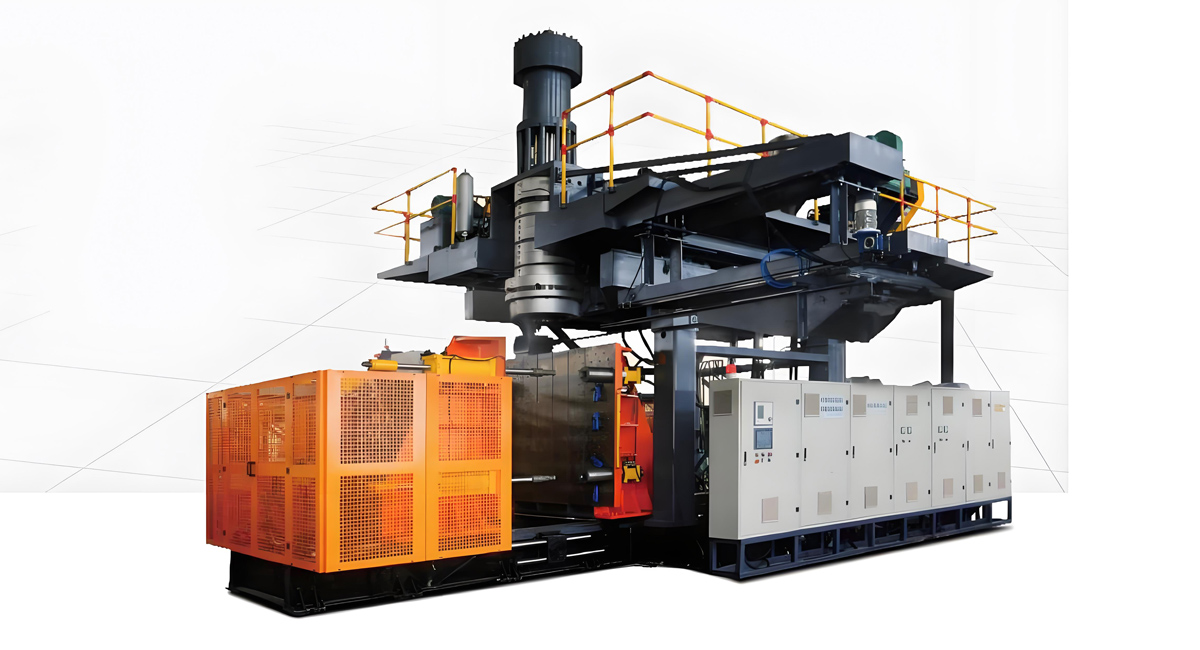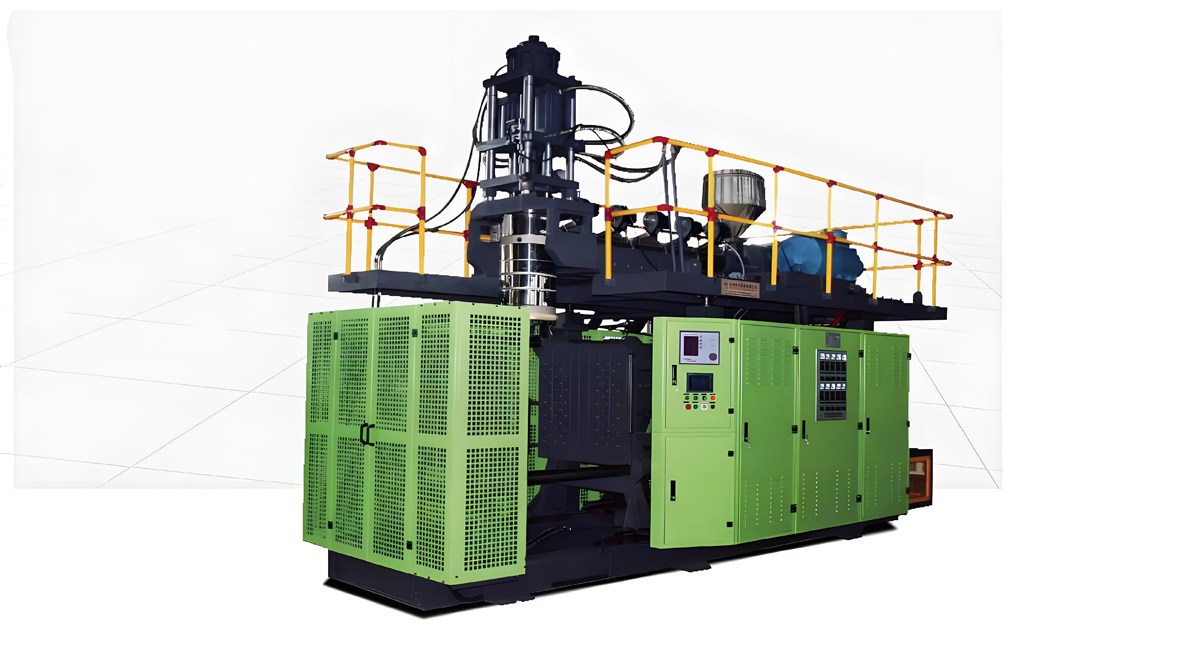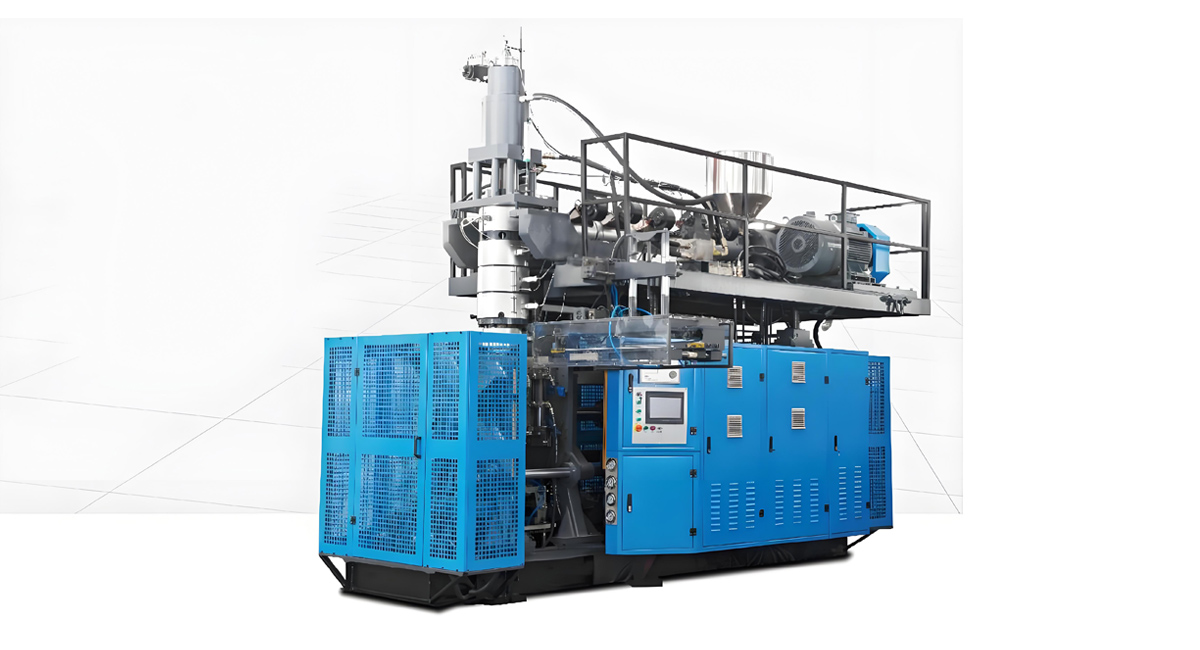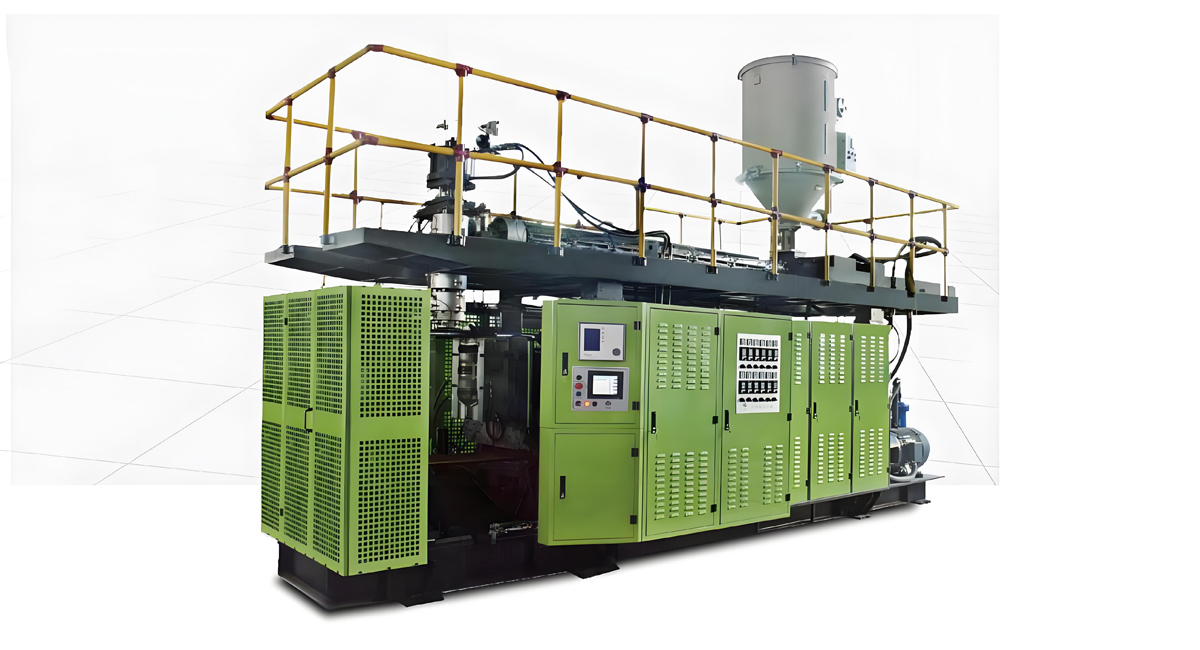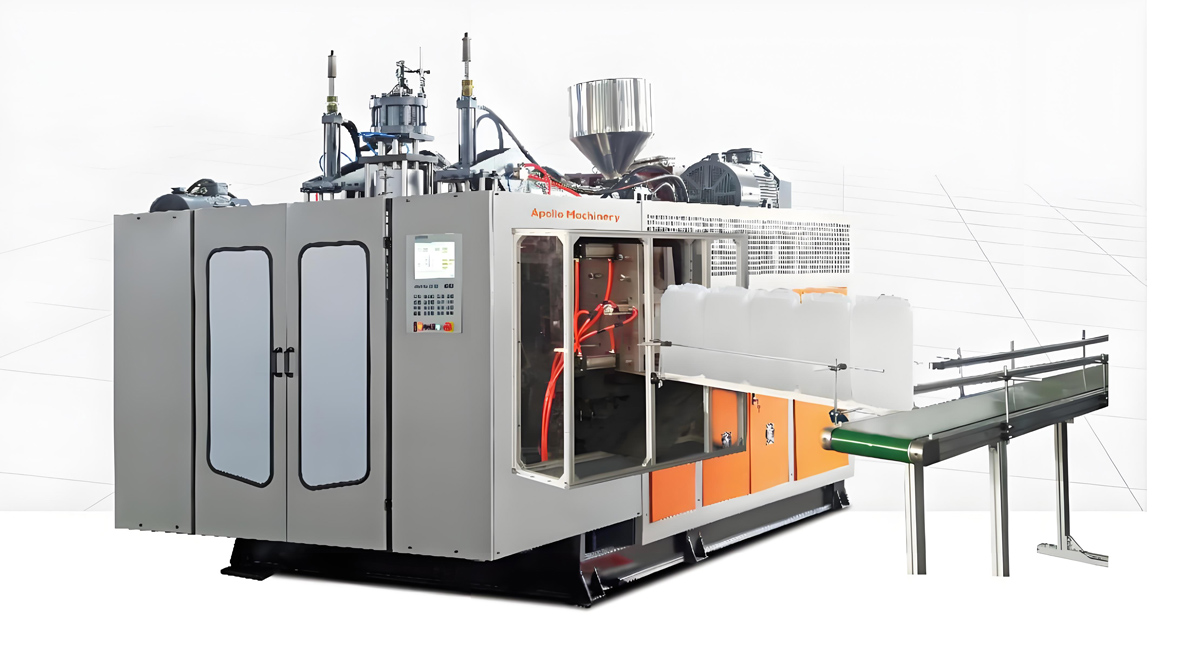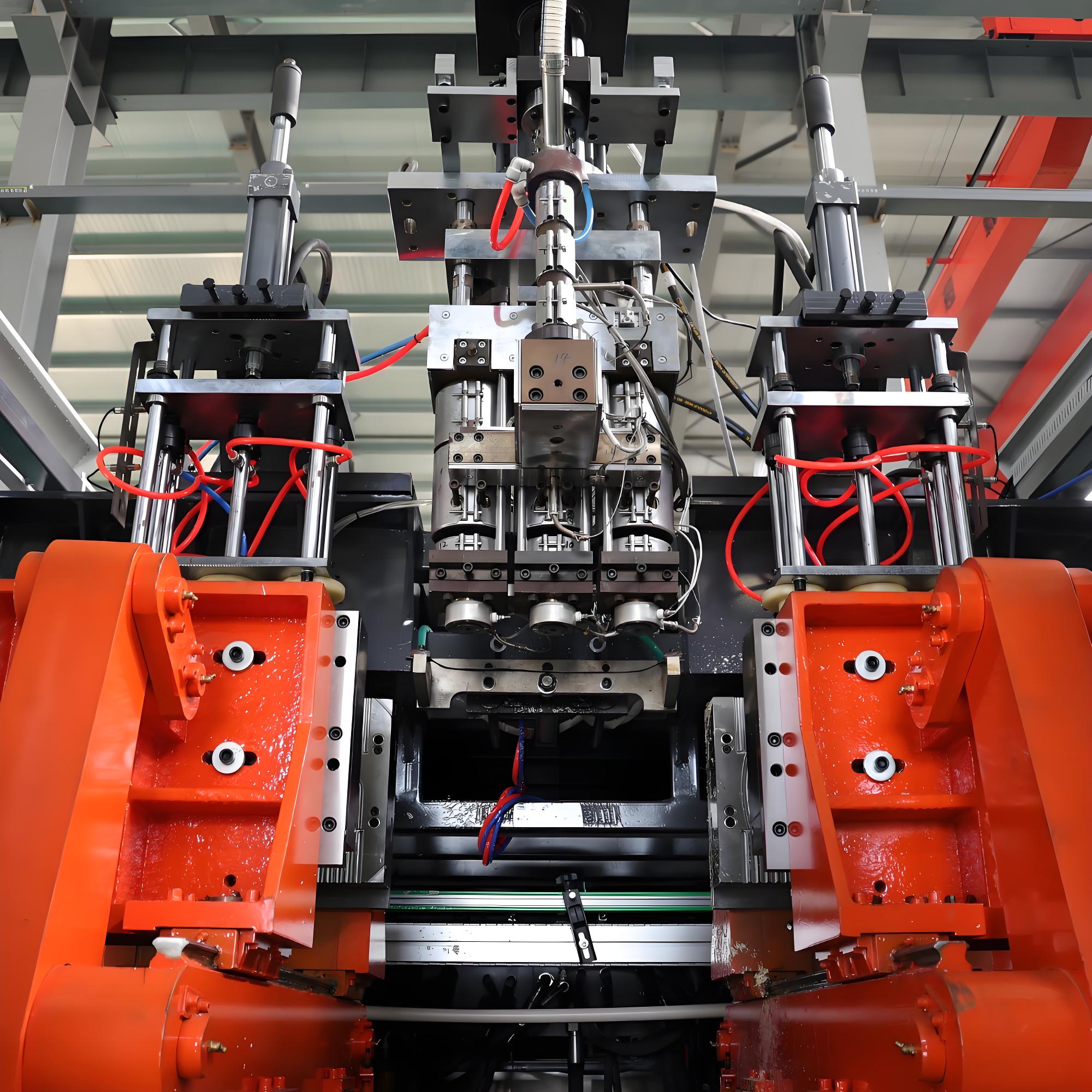

An extrusion blow molding machine produces hollow plastic articles by extruding a molten tube of polymer, called a parison, and inflating it inside a cooled mold. In 2026 the global extrusion blow molding machine market sits at an inflection point: demand is shifting from mature Western economies toward Asia, the Middle East, and Africa, while lightweighting and recycled-content mandates reshape what buyers specify. This article quantifies the market size, maps regional demand, breaks down demand by application segment, compares extrusion blow molding against injection and stretch processes, and explains the forces that will define the competitive landscape through 2030.
Use the table of contents to jump to a specific section, or read end to end for a complete picture of where the extrusion blow molding machine market is heading.
This analysis draws on public market data and industry benchmarks, including plastics machinery market sizing and regional demand shares, to give procurement teams, plant managers, and investors a decision-ready view rather than a vendor brochure. Where precise figures are not publicly standardized, the ranges given reflect consensus industry estimates and are flagged as such so readers can weight them appropriately.
Table of Contents
- Extrusion Blow Molding Machine Market Size in 2026
- Regional Demand: Where Growth Concentrates
- Demand by Application Segment
- Extrusion vs Injection vs Stretch Blow Molding
- Key Growth Drivers
- Competitive Landscape
- Challenges and Restraints
- 2026 to 2030 Outlook
- Frequently Asked Questions
- Conclusion
Extrusion Blow Molding Machine Market Size in 2026
The extrusion blow molding machine market forms a specialized slice of the broader plastic processing equipment industry, which was valued at roughly 35 to 40 billion USD in 2024. Blow molding as a whole accounts for a meaningful share of that total because hollow packaging and industrial containers are consumed in every region and sector. Within blow molding, extrusion blow molding (EBM) remains the most versatile configuration, handling everything from 10 milliliter medical vials to 1,000 liter intermediate bulk containers, and it is the segment most exposed to industrial and non-beverage demand.
Industry estimates suggest the global blow molding machine market reached approximately 2.8 to 3.2 billion USD in 2025, with extrusion blow molding representing close to half of unit shipments when measured by the number of machines placed rather than by value. The extrusion blow molding machine market specifically is projected to grow at a compound annual growth rate of about 4.5 percent to 5.5 percent between 2026 and 2030, outpacing the machinery industry average because container reuse, chemical storage, and automotive fluid systems continue to convert from metal and glass to engineered plastics.
Key Statistics
Global plastics machinery market: approximately 35 to 40 billion USD (2024). Asia-Pacific: roughly 45 percent of global plastics machinery demand. China: the world’s largest plastics machinery producer by volume. Global plastic production: about 400 million tons per year. Post-consumer plastic recycling rate: approximately 9 percent globally (UNEP). Extrusion blow molding share of blow molding unit shipments: close to 50 percent.
Two structural facts explain the steady expansion. First, global plastic production runs near 400 million tons per year and keeps climbing, which directly expands the installed base of machines that must be replaced or retrofitted. Second, the shift toward recycled content, especially recycled polyethylene terephthalate and recycled high-density polyethylene, requires re-engineered extrusion heads and improved melt filtration, prompting a replacement cycle that lifts both unit volume and average selling price. A typical new industrial extrusion blow molding machine in 2026 is priced between 80,000 and 250,000 USD depending on clamp size, number of stations, and automation level, and that price band itself signals a healthy, capital-intensive market rather than a commoditized one.
Growth is not uniform across the product mix. Value growth slightly outpaces unit growth because buyers trade up to automated, recycled-ready, and multi-layer systems, lifting average selling prices even where unit volumes are stable. Regionally, Asia-Pacific and the Middle East and Africa post the fastest compound annual growth, while North America and Europe contribute steadier, replacement-driven demand that supports premium pricing and longer service contracts. For equipment suppliers, converters, and investors, reading this mix correctly is the difference between chasing volume and capturing durable margin.
Beyond new-machine sales, the market’s measured value is amplified by two adjacent revenue streams. Service, tooling, and spare parts typically represent a multi-year annuity for suppliers and a decisive factor in buyer choice, because downtime on a container line can cost more than the machine itself. At the same time, a robust used and refurbished equipment market extends machine lifetimes and creates an entry point for first-time buyers in emerging regions, indirectly stimulating demand for newer, more efficient lines as operations scale.
Regional Demand: Where Growth Concentrates
Regional demand for the extrusion blow molding machine market is no longer evenly distributed. Asia-Pacific is the undisputed center of gravity, absorbing close to 45 percent of global plastics machinery demand and serving both a massive domestic consumer base and the export supply chains that feed North America and Europe. Within Asia, China remains the largest producer of plastics machinery by volume, while India, Vietnam, Indonesia, and Turkey are the fastest-growing deployment markets as local packaging, dairy, and chemical industries scale.
North America represents a mature but high-value region. Demand there is driven less by greenfield capacity and more by automation upgrades, labor substitution, and reshoring of essential container production. Buyers in the United States and Canada favor all-electric and hybrid machines that cut energy use and meet corporate sustainability targets, and they are willing to pay a premium for throughput and reliability. Europe, similarly mature, is the strictest regulatory environment: food-contact compliance under EU 10/2011 and end-of-life packaging directives push manufacturers toward mono-material structures and higher recycled content, which in turn demands more capable extrusion systems.
The Middle East and Africa are the quiet outperformers. Gulf states are investing in local chemical and packaging production to capture more value from their polymer feedstock, and African nations are building first-generation manufacturing capacity for bottles, jerrycans, and water-storage tanks. For an extrusion blow molding machine supplier, these regions offer the highest growth rates but also the steepest requirements for local service, training, and spare-parts availability. Latin America rounds out the picture, with Mexico serving as a nearshoring hub for North American packaging and Brazil anchoring South American demand.
Country-level patterns reinforce the regional story. India and Vietnam are scaling dairy, household, and personal-care packaging at double-digit rates, Turkey bridges Europe and the Middle East as a cost-competitive exporter, and Mexico’s nearshoring boom is pulling container production closer to North American brands. In the Gulf, sovereign-backed petrochemical diversification is converting polymer output into local packaging and industrial containers, while several African economies are commissioning their first domestic bottle and tank lines with development-bank support. These granular shifts matter more than regional averages, because they determine where a supplier should locate spare-parts stock and service engineers.
| Region | Demand character | Primary driver | Typical buyer priority |
|---|---|---|---|
| Asia-Pacific | High volume, fast growth | Consumer and industrial expansion | Cost per unit, local support |
| North America | Mature, replacement-led | Automation, reshoring | Energy efficiency, uptime |
| Europe | Mature, regulation-led | Recycled content, circularity | Compliance, mono-materials |
| Middle East and Africa | Emerging, high growth | Local value addition | Service network, training |
| Latin America | Growing, nearshoring | Regional supply chains | Total cost of ownership |
Demand by Application Segment
The extrusion blow molding machine market is best understood through the segments that actually buy machines, because each segment specifies different materials, sizes, and compliance paths. Packaging for household, personal care, and food accounts for the largest share of unit demand. Bottles, jerrycans, and drums in high-density polyethylene and polypropylene dominate this segment, and the relentless churn of SKUs keeps small- and mid-format machines in constant demand.
Industrial and chemical containment is the second pillar. Intermediate bulk containers, chemical drums, and fluid reservoirs require large shot sizes, multi-layer barrier structures, and robust continuous operation. This segment is less price-sensitive and far more loyal to proven, serviceable brands, which is why it sustains premium pricing. Agricultural and water-storage tanks form a distinct, fast-growing niche concentrated in regions with unreliable water infrastructure, and automotive fluid reservoirs and ducts remain a stable, specification-heavy segment tied to vehicle production volumes.
Medical and pharmaceutical blow molding is smaller in unit terms but high in margin and compliance burden. It favors clean, tightly controlled extrusion lines and often demands ISO 13485-aligned quality systems. Finally, the recycling and reuse economy is emerging as a demand source of its own: reclaim lines that turn post-consumer bottles back into food-grade or industrial containers need extrusion systems tuned for variable, contaminated feedstock. Each of these segments pulls the market in a different direction, and suppliers that tailor machine configuration to segment needs capture disproportionate share.
Within packaging, dairy and edible-oil bottles, lubricant and pesticide jerrycans, and personal-care lotion containers form the high-churn core that keeps small- and mid-format machines busy, while seasonal and promotional SKUs reward suppliers whose quick mold-change and flexible tooling reduce changeover losses. The common thread across segments is that buyers no longer buy a generic machine; they buy a configuration matched to a specific material, container size, and compliance path, which is why application expertise now outweighs raw price in the purchasing decision.
Two segments deserve special attention because they defy the packaging-centric view of the market. Automotive fluid reservoirs, selective catalytic reduction tanks, and vent ducts are specification-heavy, validation-driven programs tied to vehicle platforms, and they reward suppliers that can document process capability and traceability. Water-storage and agricultural tanks, by contrast, are volume plays in regions with unreliable infrastructure, where durability and price decide the first order and after-sales reach decides the repeat order.
Extrusion vs Injection vs Stretch Blow Molding
Buyers evaluating the extrusion blow molding machine market must distinguish extrusion blow molding from its two siblings, because the choice of process determines which machine to buy. Extrusion blow molding excels at large, complex, and multi-layer hollow parts and handles a wide range of materials with relatively simple tooling. Injection blow molding delivers superior neck finish and dimensional accuracy for small, high-volume pharmaceutical and cosmetic containers but is limited in part size. Stretch blow molding, built around polyethylene terephthalate, dominates rigid beverage bottles where clarity and barrier are paramount.
For most industrial, chemical, and non-beverage packaging applications, extrusion blow molding is the default because it balances part size, material flexibility, and tooling cost. The trade-off is that extrusion parts carry a slightly heavier weight and a less precise neck than injection or stretch processes, which is acceptable for the majority of non-beverage containers. The table below summarizes the practical boundaries buyers should keep in mind when specifying equipment.
| Process | Best for | Typical material | Part size range | Tooling cost |
|---|---|---|---|---|
| Extrusion blow molding | Industrial, chemical, large containers | HDPE, PP, PVC | 10 ml to 1,000 L | Low to medium |
| Injection blow molding | Pharma, cosmetic vials | PP, PET, HDPE | 1 ml to 1 L | Medium |
| Stretch blow molding | Beverage bottles | PET, PP | 100 ml to 3 L | Medium to high |
Within extrusion blow molding itself, the choice between continuous and intermittent extrusion, single and double station, and accumulator head versus direct head defines throughput and part consistency. Continuous extrusion suits high-volume small containers, while accumulator heads are essential for very large parts where the parison must be gathered before inflation. Understanding this internal segmentation is critical because it is where most of the technology differentiation, and most of the purchasing budget, actually lives.
Technology and Innovation Trends in 2026
The extrusion blow molding machine market is being reshaped less by entirely new machine categories and more by incremental but cumulative improvements in drive technology, process control, and connectivity. The clearest trend is the shift from hydraulic to all-electric and hybrid clamp and extrusion drives. All-electric machines cut energy consumption by a meaningful margin, reduce oil-related maintenance, and deliver more repeatable parison control, which is why they are growing at roughly 8 percent annually and are becoming the default specification in energy-cost-sensitive and regulated markets.
Parison programming and adaptive wall-thickness control are the second wave. Modern controllers let operators vary wall thickness along the parison to place material exactly where stress and drop-test requirements demand it, enabling lightweighting without sacrificing performance. This capability is now expected on mid- and high-tier machines and is a key differentiator between commodity and premium equipment.
Multi-layer co-extrusion is the third trend, driven directly by recycled-content and barrier requirements. By co-extruding a recycled core between virgin skins, or by adding an ethylene-vinyl-alcohol barrier layer for aggressive chemicals, converters meet both cost and compliance targets within a single part. The complexity of these heads raises the technical bar and favors suppliers with deep polymer and tooling know-how.
Connectivity closes the loop. About 35 percent of new machines ship with remote monitoring, in-mold sensing, and predictive-maintenance features, and forward-looking plants use this data to lift overall equipment effectiveness and schedule service before failures occur. Quick mold-change systems and standardized platen interfaces shorten changeover from hours to minutes, letting smaller converters serve multi-SKU, low-volume orders profitably. Together these trends raise the value of every machine placed and lengthen the list of features a buyer must evaluate.
Key Growth Drivers
Several durable forces push the extrusion blow molding machine market upward through the late 2020s. The first is substitution: plastic containers keep replacing metal drums, glass bottles, and fiber drums across industrial supply chains because they are lighter, safer to handle, and cheaper to ship. The second is population and consumption growth in emerging markets, where rising incomes convert loose and refillable distribution into packaged, branded, single-use containers.
The third driver is recycled content regulation. As the European Union, several U.S. states, and an expanding set of national governments mandate minimum recycled content in packaging, converters must upgrade extrusion systems to process recycled high-density polyethylene and recycled polyethylene terephthalate without sacrificing output or surface quality. This regulation-driven retrofit cycle is the single most important tailwind for new machine sales in mature markets. The fourth driver is automation and Industry 4.0: about 35 percent of new machines now ship with smart connectivity, in-mold sensing, and remote diagnostics, and buyers use these features to cut labor and reduce scrap.
The fifth driver is lightweighting. Every gram removed from a bottle or drum reduces material cost and transport emissions, and achieving it requires better wall-thickness control and parison programming, which only modern extrusion blow molding machines provide. Finally, the expansion of local manufacturing in the Middle East, Africa, and Southeast Asia converts imported finished goods into locally produced containers, directly expanding the installed base of machines in those regions.
A sixth, often overlooked driver is e-commerce and direct-to-consumer fulfillment, which multiplies the number of uniquely branded, small-batch containers shipped worldwide and rewards flexible, quick-changeover extrusion lines over rigid high-volume tooling. As brands test new SKUs online before committing to mass production, the ability to switch molds in minutes becomes a competitive advantage rather than a convenience.
A seventh driver is corporate sustainability and ESG reporting, which is moving from optional to contractual. Brand owners now set science-based packaging targets and audit suppliers for energy intensity and recycled content, so converters must run efficient, documented lines to win contracts. This quietly lifts demand for modern, measurable extrusion blow molding machines and accelerates the retirement of legacy hydraulic equipment even where it still runs.
Competitive Landscape
The extrusion blow molding machine market is layered. At the high end, established European and German engineering brands such as Krones, Sidel, and Bekum set the benchmark for precision, speed, and support, and they dominate demanding pharmaceutical and beverage-adjacent applications. In North America, Graham Engineering and Milacron hold strong positions in industrial and dairy container systems. Taiwanese and Italian suppliers such as Chumpower and Techne compete on value and flexibility, while a growing cohort of Chinese manufacturers has expanded export volumes by combining competitive pricing with rapidly improving reliability and CE and ISO 9001 compliance.
| Tier | Representative suppliers | Primary strength | Typical buyer |
|---|---|---|---|
| Premium | Krones, Sidel, Bekum | Precision, speed, support | Multinational brands |
| Industrial | Graham Engineering, Milacron | Large-part expertise | Chemical, dairy |
| Value-flexible | Chumpower, Techne | Configuration range | Mid-size converters |
| Cost-competitive | Chinese exporters including Apollo Machinery | Price, lead time | Emerging markets |
One structural shift worth watching is supplier consolidation and localization. Larger groups acquire niche head and control specialists to bundle complete lines, while leading exporters localize assembly and financing to blunt currency and tariff risk. The net effect is a market where the buyer’s real choice is increasingly between integrated solutions from a few global platforms and focused, application-deep specialists that win on responsiveness.
Competition is intensifying not only on price but on total cost of ownership. Buyers increasingly evaluate energy consumption per thousand parts, mold-change time, scrap rate, and the responsiveness of the service network rather than the sticker price alone. This shifts advantage toward suppliers that pair capable hardware with local spare-parts stocking and operator training. For Chinese suppliers that have invested in export service infrastructure, the result has been steady share gains in Asia, Africa, and Latin America, while European and North American brands defend their position with proprietary head and control technology.
Across all tiers, the aftermarket has become a strategic battleground. Because a container line’s uptime often matters more than its purchase price, suppliers that stock regional spare parts, train local technicians, and offer remote diagnostics convert one-time sales into multi-year relationships. This is precisely where newer Chinese exporters have closed the gap with European incumbents, and where the next phase of competition will be decided.
Challenges and Restraints
The extrusion blow molding machine market faces real headwinds. The most immediate is feedstock volatility: resin prices tied to crude oil and natural gas swing widely, and when resin is expensive, converters delay capital purchases, compressing machine demand. A second restraint is overcapacity in some Chinese export segments, which pushes prices down and squeezes margins for every supplier, including premium brands that must respond with incentives.
A third challenge is the skills gap. Modern extrusion blow molding machines are sophisticated, computer-controlled systems, yet many high-growth regions lack enough trained operators and maintenance technicians. Suppliers that do not invest in training slow their own market penetration because buyers fear downtime. A fourth restraint is sustainability compliance itself, which, while a growth driver, also raises the technical bar: producing food-grade recycled-content containers reliably requires capital-intensive filtration and quality systems that smaller converters cannot always afford. Finally, geopolitical trade measures, including tariffs and local-content rules, can redirect but also distort where machines are bought and built.
Currency risk compounds these challenges for cross-border buyers. Because machines are capital goods often priced in a reserve currency while local revenue arrives in volatile local currencies, a sharp depreciation can stall a purchase decision or erode project returns overnight, which is why flexible financing and local assembly increasingly decide whose machine a converter ultimately buys.
2026 to 2030 Outlook
Looking to 2030, the extrusion blow molding machine market will grow steadily rather than explosively, with regional mix continuing to tilt toward Asia, the Middle East, and Africa. All-electric and hybrid machines, already growing near 8 percent annually, will become the default in markets where energy cost and labor scarcity matter, while hydraulic machines will persist in price-sensitive segments. Recycled-content capability will move from differentiator to baseline requirement in regulated markets, and connectivity will become table stakes as converters pursue overall equipment effectiveness and predictive maintenance.
The most consequential shift will be the rise of mono-material and post-consumer-recycled-ready container designs, which demand extrusion heads and control software tuned for variable feedstock. Suppliers that master this complexity will capture premium share, while those that compete only on price will face margin compression. For buyers, the practical implication is clear: specify for the next five years of regulation and feedstock uncertainty, not just today’s resin price, and favor suppliers with proven local support.
Total cost of ownership, not purchase price, should anchor every specification. Energy per thousand parts, scrap rate, mold-change time, and service responsiveness typically dwarf the initial quote over a machine’s life, which is why the most sophisticated buyers request referenced performance data and pilot runs before committing capital. Suppliers that turn connectivity and service into durable, recurring value, rather than one-time equipment sales, will be the ones that win through 2030.
Frequently Asked Questions
What is an extrusion blow molding machine used for?
An extrusion blow molding machine makes hollow plastic products such as bottles, jerrycans, drums, tanks, and automotive fluid reservoirs by extruding a molten polymer tube and inflating it inside a mold. It is the most versatile blow molding process for non-beverage and industrial containers.
How large is the extrusion blow molding machine market?
The broader blow molding machine market is estimated at roughly 2.8 to 3.2 billion USD in 2025, and extrusion blow molding accounts for close to half of unit shipments. The extrusion segment is projected to grow at about 4.5 percent to 5.5 percent per year through 2030.
Which regions have the strongest demand?
Asia-Pacific absorbs close to 45 percent of global plastics machinery demand and is the largest market, while the Middle East, Africa, and Southeast Asia show the fastest growth. North America and Europe are mature, replacement- and regulation-led markets, and Eastern Europe is emerging as a lower-cost extension of the EU supply chain.
What does an extrusion blow molding machine cost?
In 2026 a new industrial extrusion blow molding machine typically costs between 80,000 and 250,000 USD, depending on clamp size, number of stations, accumulator head, and automation. Very large or fully automated lines can exceed that range, while refurbished units and flexible financing can lower the entry cost for first-time buyers. Because energy, scrap, and service dominate lifetime cost, the purchase price is only the starting point of the calculation.
How is extrusion blow molding different from stretch blow molding?
Extrusion blow molding handles a wide range of materials and large or complex parts and is used mainly for industrial, chemical, and non-beverage packaging. Stretch blow molding is purpose-built for polyethylene terephthalate beverage bottles where clarity and barrier matter most.
What materials can these machines process?
The most common materials are high-density polyethylene and polypropylene, with polyvinyl chloride and recycled grades increasingly used. Material choice drives wall thickness, barrier properties, and compliance for food or chemical contact.
Why are recycled-content rules boosting machine sales?
Mandates for minimum recycled content require converters to process recycled high-density polyethylene and recycled polyethylene terephthalate reliably, which needs upgraded extrusion heads, melt filtration, and control systems, prompting a retrofit and replacement cycle in mature markets.
What should a buyer prioritize when specifying a machine?
Beyond purchase price, buyers should weight energy use per thousand parts, mold-change time, scrap rate, local spare-parts availability, operator training, and remote diagnostics, because these determine total cost of ownership far more than the initial quote.
Is 2026 a good time to buy an extrusion blow molding machine?
For converters facing recycled-content mandates, rising labor cost, or aging lines, 2026 is favorable because all-electric and recycled-ready machines are widely available and supplier competition is intense. Buyers should still model total cost of ownership and secure local service before committing, since lead times and component availability vary by tier and region.
Conclusion
The extrusion blow molding machine market in 2026 is a steadily growing, regionally shifting, and increasingly compliance-driven segment of plastic processing. Demand is concentrating in Asia, the Middle East, and Africa even as mature markets upgrade for efficiency and recycled content, and the competitive battle is moving from sticker price toward total cost of ownership and local support. Buyers who specify for feedstock variability and regulation through 2030 will protect their margins, while suppliers that pair capable, connected hardware with real service infrastructure will capture the share that matters. For anyone evaluating capacity, replacement, or market entry, the message is consistent: the extrusion blow molding machine remains the workhorse of hollow plastic production, and its market is far from saturated.