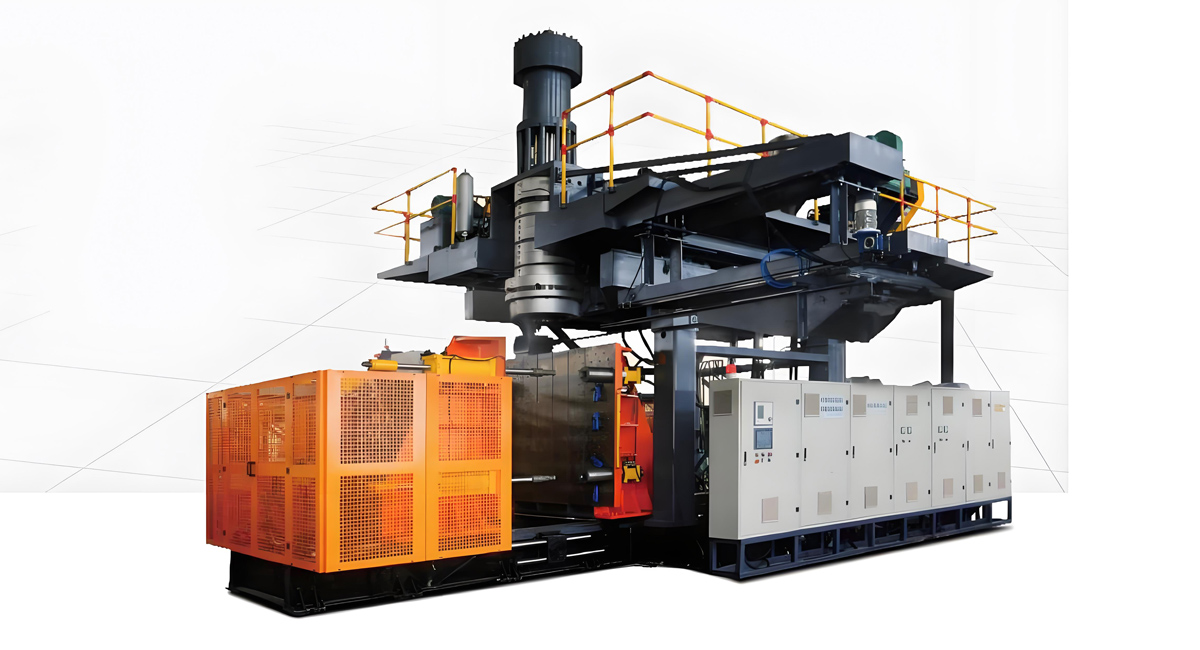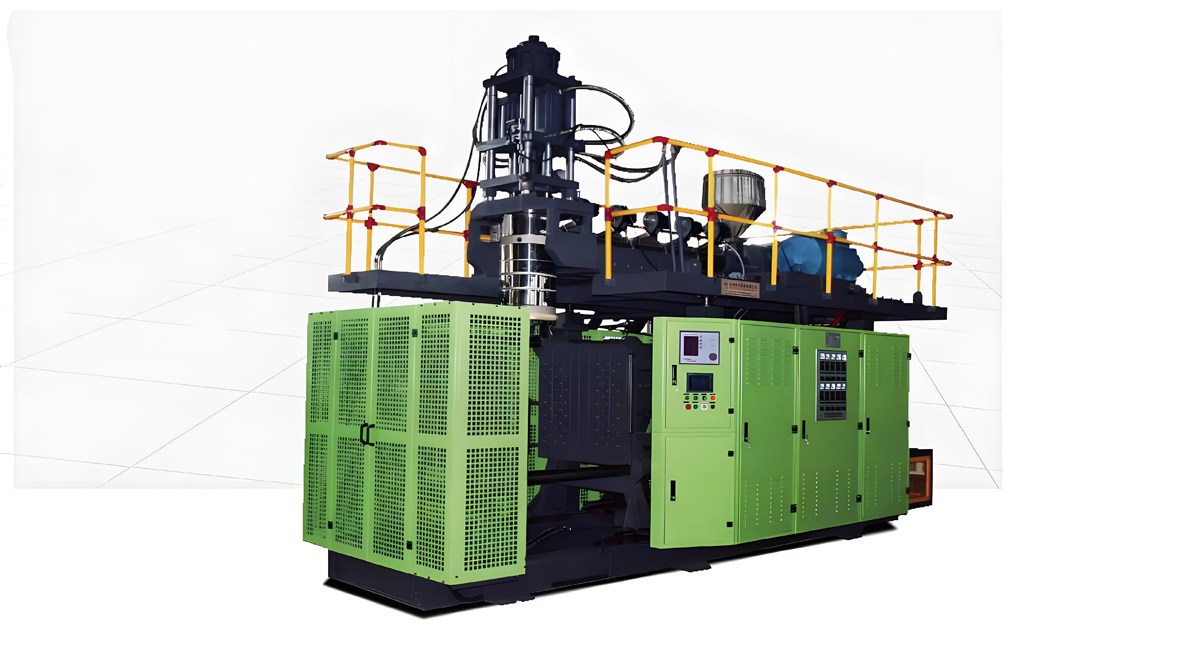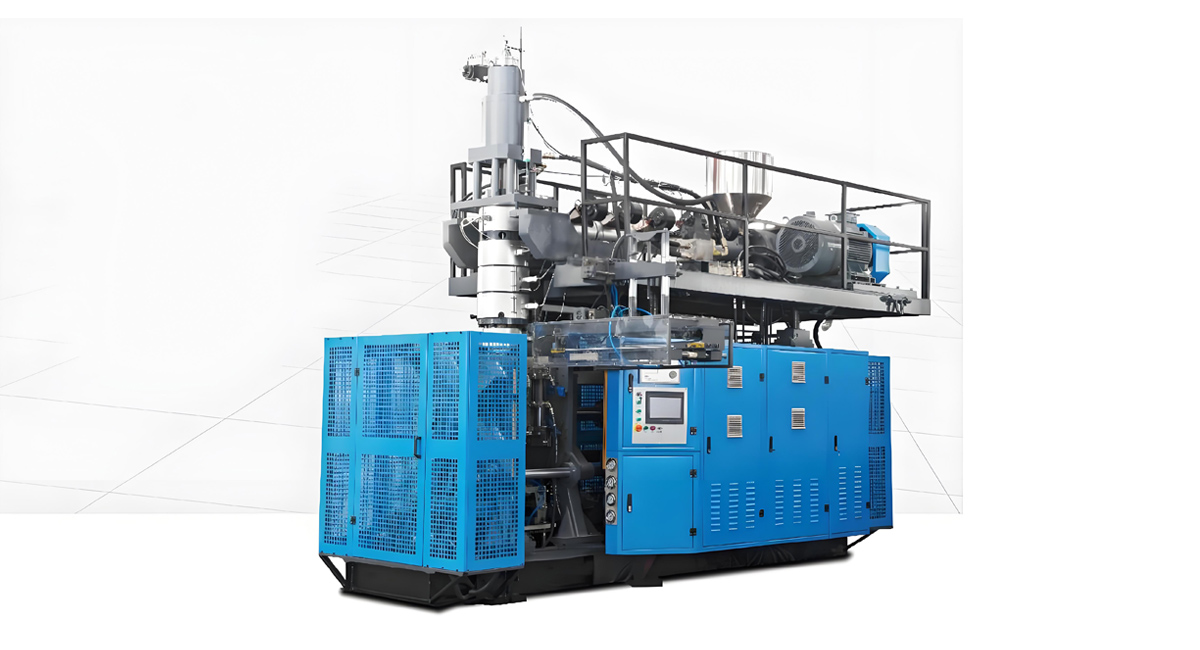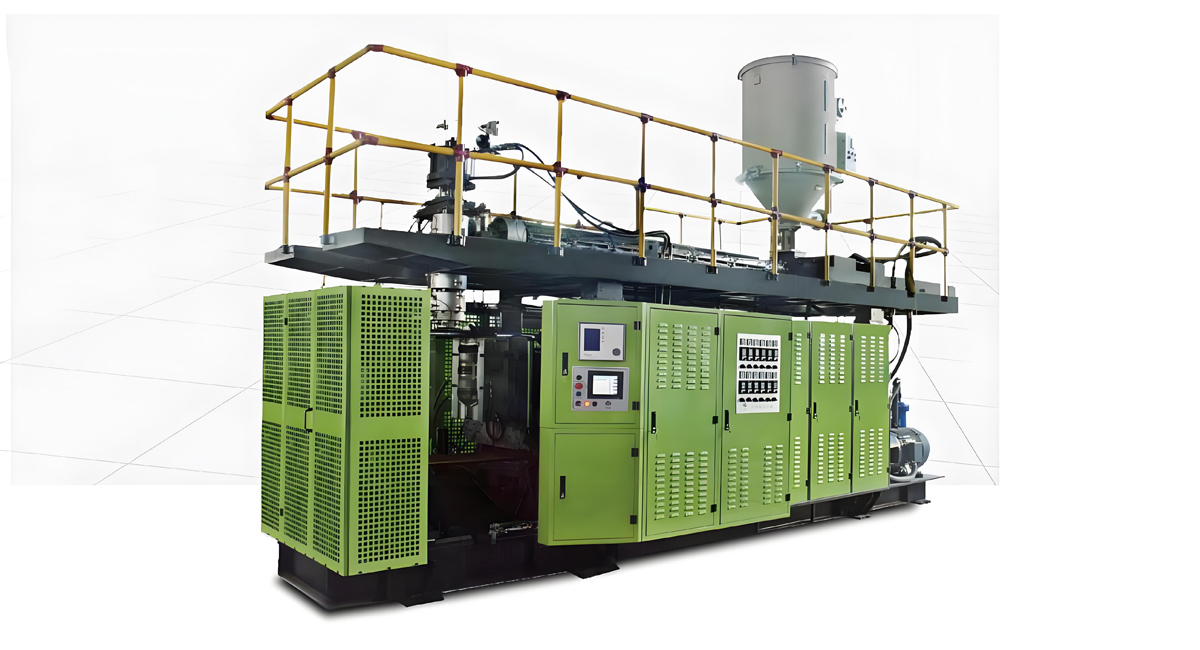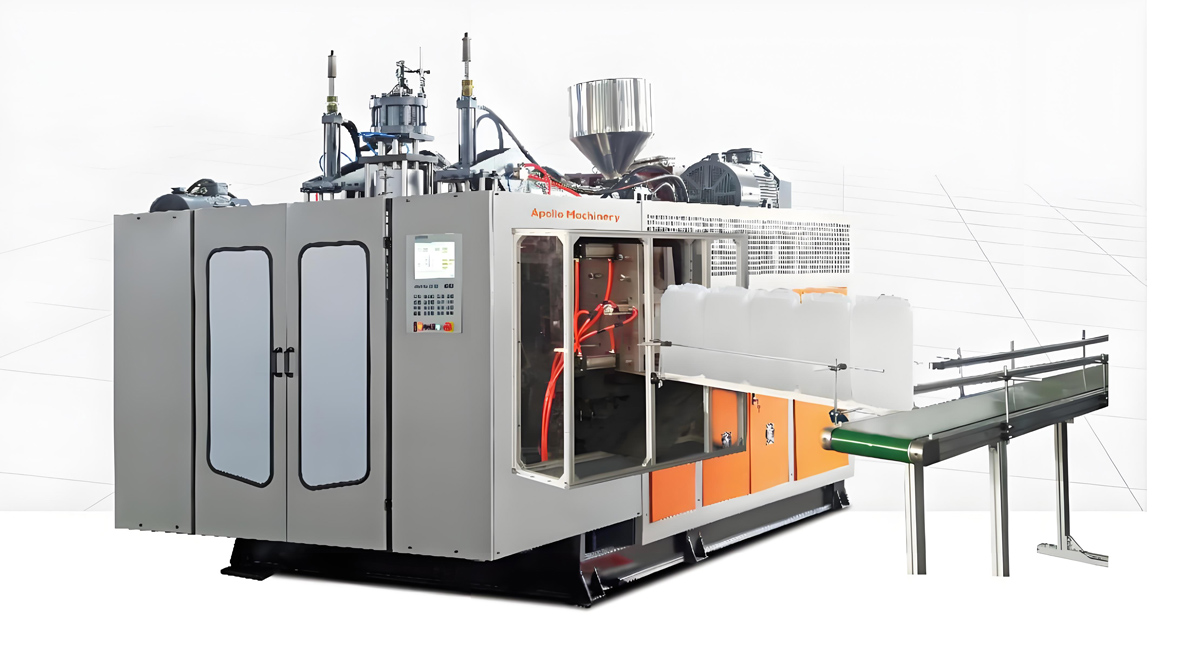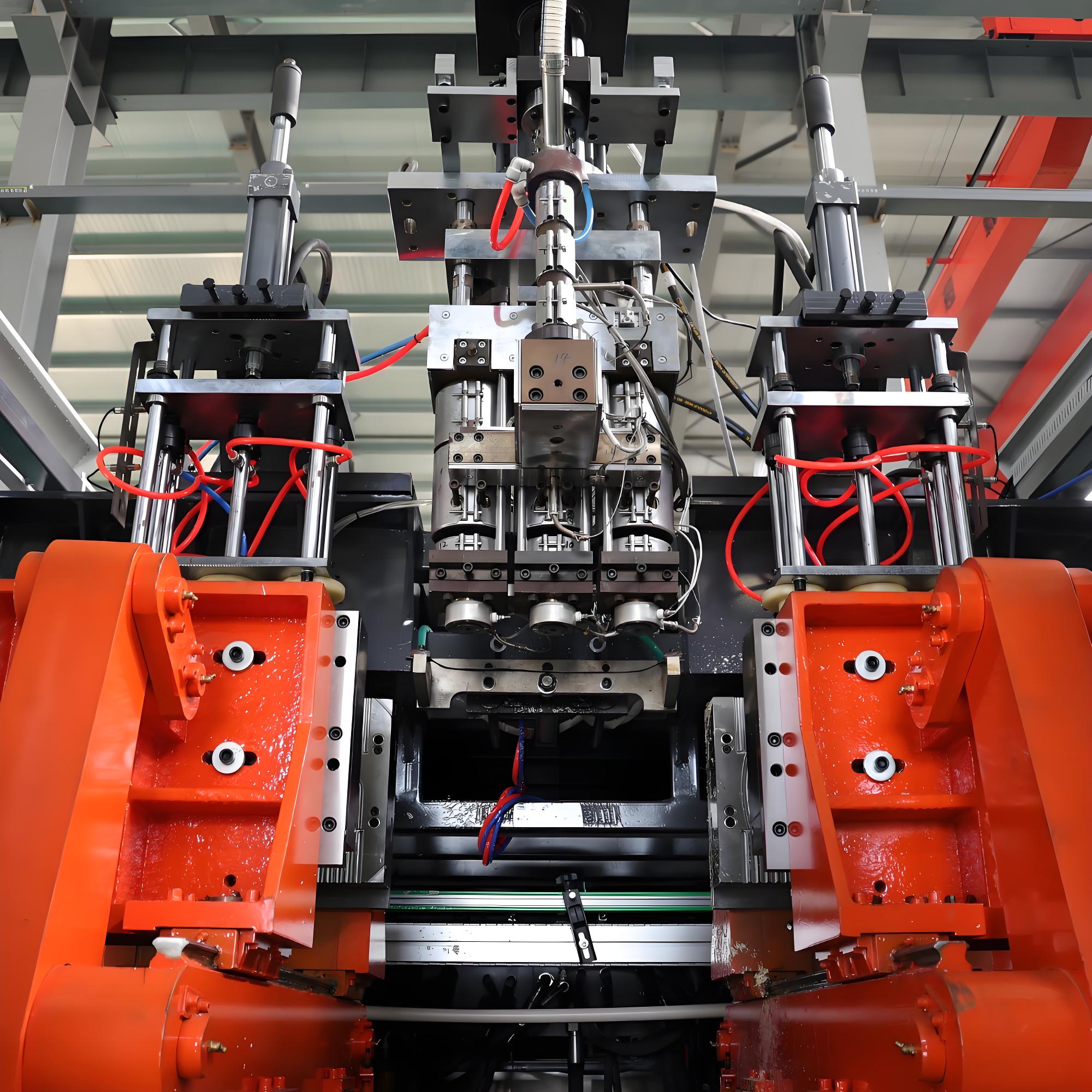

Detergent, dishwashing liquid, surface cleaner, and laundry care bottles are among the highest-volume hollow plastic containers made anywhere on earth, and the macchina di estrusione a soffiaggio is the workhorse that produces the overwhelming majority of them. If you walk through any supermarket, janitorial supply warehouse, or e-commerce fulfillment center, the opaque HDPE jug with an integrated handle is the unmistakable signature of this segment. For a converter evaluating where to deploy capacity, few applications combine such steady demand, such clear material logic, and such strong regulatory tailwinds as household and institutional cleaning packaging. This guide explains why extrusion blow molding owns this category, how the bottles are engineered, where recycled content fits, and what to look for when specifying a machine.
Why Detergent and Cleaning Bottles Are an Extrusion Blow Molding Stronghold
The case for extrusion blow molding in cleaning packaging starts with the material. Most laundry and dish liquids are packaged in high-density polyethylene, a resin whose density of 0.941 to 0.965 grams per cubic centimeter delivers the chemical resistance, impact toughness, and low cost that the category demands. HDPE is also one of the easiest polymers to blow mold: it has a broad processing window, accepts regrind readily, and forms seamless hollow shells without welds or secondary assembly. An macchina di estrusione a soffiaggio takes a parison of molten HDPE, captures it in a two-part mold, inflates it with air, and ejects a finished bottle with an integrated handle in a single continuous cycle.
Extrusion blow molding beats the alternatives on exactly the metrics that matter for cleaning bottles. Injection stretch blow molding produces clearer, lighter PET bottles but is tuned for carbonated and water-like products, not the viscous, alkaline, sometimes solvent-laden formulations found in home care. Injection blow molding excels at small, neck-critical pharmaceutical vials but is uneconomic at the 1-liter and 2-liter volumes that dominate laundry care. Steel or fluoropolymer containers resist aggressive chemicals but cost far more and weigh far more. Blow molding lands in the sweet spot: a lightweight, chemical-resistant, drop-tolerant, low-cost hollow part produced at high speed.
Sustainability reinforces the case. HDPE is one of the most widely collected and recycled rigid plastics, coded number 2 in recycling systems worldwide, which means the bottle a converter ships today is also the feedstock the same converter or a neighbor will reclaim tomorrow. A well-designed cleaning bottle with a simple label, a standard closure, and natural or light color is straightforward to sort, wash, and reprocess into the very PCR streams the category now demands. That closed loop is a strategic asset: brands are judged on recyclability and recycled content together, and the macchina di estrusione a soffiaggio that makes the bottle is also the platform that lets a converter participate in both sides of the loop, producing virgin-quality bottles while absorbing post-consumer bales into qualified recycled runs.
Market Momentum: Why This Segment Is Growing Fast
Cleaning packaging is not a sleepy commodity segment. The dedicated high-stress PCR HDPE detergent bottle market was valued at roughly 3.1 billion US dollars in 2025 and is projected to reach about 3.6 billion US dollars in 2026, then expand to 14.7 billion US dollars by 2036 at a compound annual growth rate of 15.1 percent. The broader HDPE bottle market, which counts cleaning products among its four largest applications alongside personal care, food, and pharma, is forecast to grow from 12.8 billion US dollars in 2026 to 19.19 billion US dollars by 2035 at a 4.6 percent compound annual growth rate. Layered on top of that is the fast-rising refill-system-compatible PCR packaging market, worth 2.18 billion US dollars in 2026 and expected to reach 6.94 billion US dollars by 2036 at a 12.3 percent compound annual growth rate, with the personal care and homecare segment alone accounting for about 45 percent of that value.
What drives this growth is a structural shift rather than a fashion. Extended producer responsibility laws, plastic tax frameworks in Europe and North America, and retailer sustainability scorecards are forcing home care brands to move to recycled and refillable packaging at scale. Laundry care commands about 49 percent of the PCR HDPE detergent bottle segment, handleware formats about 39 percent, and the 1-to-2 liter size about 37 percent. India is the fastest-growing region at a 17.2 percent compound annual growth rate, followed by refill-led momentum in China at 14 percent and the United States at 11.6 percent. For a molder, these numbers translate into durable, regulation-backed demand rather than a cyclical spike.
Resin Selection: HDPE, PP, and Stress-Crack Resistance
Choosing the right resin is the first decision in any cleaning bottle program. HDPE remains the default for laundry, dish, and surface cleaner jugs because of its chemical resistance and toughness, but not all HDPE grades are equal. Blow molding grades in the density band of 0.941 to 0.965 grams per cubic centimeter are balanced for melt strength and stiffness, while slightly lower-density grades improve environmental stress crack resistance, the property that determines whether a bottle survives long contact with concentrated surfactants. Environmental stress cracking resistance, often shortened to ESCR, is the single most important performance metric in this category: a bottle that passes a drop test on day one can still fail on a warehouse pallet after six months of slow chemical attack on the polymer chains.
Polypropylene is the alternative where higher temperature resistance or a glossier surface is needed, such as for hot-fill cleaners or premium trigger-spray products. PET, though more associated with stretch blow molding, is gaining share in premium transparent cleaning bottles where brand teams want glass-like clarity, but it requires different equipment and is less common on an macchina di estrusione a soffiaggio. The practical takeaway for converters is to qualify an HDPE grade with documented ESCR data for the specific formulation, because a surfactant that is harmless to one grade can embrittle another over the product shelf life.
Handleware Design: The Engineering of the Integrated Handle
Handle Geometry and Pinch-Off
The integrated handle is what makes a detergent jug usable, and it is also where bottle engineering gets difficult. Handleware accounts for about 39 percent of the PCR HDPE detergent bottle market because a heavy liquid in a weakened recycled polymer still has to be lifted safely thousands of times. The handle is formed in the same mold as the body, which means the parison must be programmed to deposit extra material where the handle and the base pinch-off meet. Modern parison control systems let the operator vary wall thickness along the parison so the handle hinge and the base weld receive more material than the flat side walls, improving drop performance without adding total weight.
The pinch-off, where the two mold halves squeeze the parison shut at the bottom, is the second critical zone. A sharp, well-vented pinch-off shears the flash cleanly and creates a strong bottom weld; a dull or misaligned one leaves a thin, leak-prone seam. With recycled-content resins that have lower melt strength, tooling engineers increasingly redesign the base geometry and pinch-off angle to accommodate the weaker melt, which is why a bottle qualified for virgin resin often needs retooling before it runs at 30 to 50 percent recycled content.
Estrusione continua and High-Throughput Production
Cleaning bottles are a volume game. A single popular laundry format can ship in the hundreds of millions of units per year, so the macchina di estrusione a soffiaggio behind it must run continuously and reliably. Continuous extrusion machines, where the extruder feeds a parison without stopping, are the default for standard detergent formats because they maximize output per cavity. Double-station and multi-cavity configurations multiply that further: a double-station machine molds on two molds in alternation while the parison is being formed, roughly doubling effective throughput for the same floor space.
Speed, however, is meaningless without consistency. Precision parison programming, stable melt temperature, and calibrated blow pressure keep wall thickness uniform across millions of bottles, which is what protects both drop performance and material cost. A well-tuned line for a 1-liter handleware jug can produce dozens of bottles per minute per cavity, and the economics of the category reward converters who can hold tight weight tolerances, because every gram saved on a hundred-million-unit program is a measurable raw-material saving.
Post-Consumer Recycled Content: The 30 to 50 Percent Tier
Recycled content is no longer optional in home care packaging. The 30 to 50 percent PCR tier accounts for about 44 percent of the PCR HDPE detergent bottle market because it represents the maximum feasible threshold before drop-test survival declines sharply without expensive compatibilizers. Brands are under binding inclusion minimums in several jurisdictions and face plastic tax liabilities if they ship completely virgin rigid packaging, so converters who can reliably run 30 to 50 percent PCR own a structural advantage.
Running recycled HDPE is harder than running virgin. Post-consumer bales are inconsistent in melt flow, color, and contamination, so the line needs melt filtration to catch specks, blending silos to homogenize batches, and compatibilizers to bridge property gaps. The capital cost of this equipment is real, which is why converter-led production holds about 58 percent of the market: only specialists with blending and filtration infrastructure can qualify recycled feedstock at volume. An macchina di estrusione a soffiaggio with stable extrusion and good parison control is the anchor of that capability, because consistent melt behavior is what lets mid-tier brands adopt high-recycled-content geometries without sacrificing filling-line speed.
Multi-Layer Co-Extrusion for Recycled Cores and Barriers
When a bottle needs both recycled content and a pristine food- or skin-contact surface, multi-layer co-extrusion is the answer. A three-layer head places a recycled or regrind core between two thin virgin skins, so the outside and inside walls meet regulatory and aesthetic requirements while the bulk of the wall is lower-cost recycled material. The same architecture separates functional performance from recycled ratio, which is why commercial laundries in Germany and the Netherlands now specify modular multi-layer designs in tenders, locking in future PCR percentage upgrades without changing bottle geometry.
Multi-layer heads also enable barrier layers. For oxygen-sensitive or aggressive solvent-based cleaners, a thin tie or barrier layer inside the structure protects the product and the recycled core alike. The trade-off is capital: multi-layer extrusion lines require the heaviest upfront investment among blow molding technologies, which consolidates this work among converters who already run recycling infrastructure. For a molder entering cleaning packaging, a machine with a multi-layer-ready head is a future-proof choice even if the first program runs single-layer.
Fluorination and Surface Treatment for Solvent-Based Cleaners
Not every cleaner is an aqueous surfactant. Window sprays, degreasers, and some automotive fluids contain solvents that can permeate or stress-crack standard HDPE, leading to scent loss, content shrinkage, or container failure. Fluorination surface treatment addresses this by modifying the bottle interior at the molecular level during molding, creating a fluorine-treated layer that resists hydrocarbon permeation. Industrial chemical distributors increasingly specify fluorinated HDPE for agrochemical and automotive fluid packaging that was once served by metal or fluoropolymer containers, and the technology is expanding into personal care where brands want a moisture barrier without aluminum laminate cost.
For an macchina di estrusione a soffiaggio builder, fluorination means a treatment gas is introduced into the parison or the blow air, so the machine and the mold must be engineered for safe gas handling. Converters who offer fluorinated cleaning bottles can serve the higher-margin solvent segment that single-layer HDPE suppliers cannot touch, which makes the capability a meaningful differentiator in a crowded category.
Neck Finishes and Closure Compatibility
The neck finish is where the bottle meets the world. Trigger sprayers, pump dispensers, flip tops, and screw caps all depend on standardized neck threads, and the most common specifications in cleaning packaging are the 28/410 and 28/400 finishes, which fit the global trigger-head and pump ecosystem. A high-tolerance neck is not a detail: a sloppy thread causes weeping at the seal, inconsistent pump stroke, and leak complaints that reach the brand owner. Precision neck calibration on the mold, supported by stable parison control, is what keeps closures airtight across millions of units.
Closure choice also drives bottle design. A heavy trigger sprayer shifts the center of gravity and demands a stronger shoulder and handle, while a simple screw cap on a 5-liter pail-style jug prioritizes stack strength over ergonomics. Specifying the closure early, before the bottle is tooled, prevents the expensive rework that comes from discovering incompatibility after the mold is cut.
Decorating and Brand Differentiation
Cleaning bottles compete on shelf, so decoration matters. Direct-surface printing, pressure-sensitive labels, sleeve labels, and increasingly digital printing let brands launch localized campaigns quickly and convey usage and sustainability messages through QR codes. Digital printing in particular supports short runs and high-resolution graphics, which helps regional brands differentiate without committing to long label inventories. For premium transparent PET cleaning bottles, high gloss and clarity become the brand signal, while for opaque HDPE the focus is on clean label placement and consistent color across recycled-content batches that naturally vary in tint.
Color consistency is a quiet challenge with PCR. Natural or light-colored recycled HDPE keeps the package on-brand and eases downstream recycling, whereas dark or mixed-color regrind is harder to sell and harder to certify. Converters who can hold a stable color across inconsistent feedstock win contracts that virgin-only suppliers lose on sustainability grounds.
Defect Prevention: Stress Cracking, Seam Leaks, Handle Welds
The three failures that plague cleaning bottles are environmental stress cracking, seam leaks at the pinch-off, and weak handle welds, and all three are preventable with process discipline. Stress cracking is managed by selecting an ESCR-rated grade for the formulation, avoiding over-thinning the walls, and validating the bottle against the actual surfactant over its full shelf life rather than a one-day drop test. Seam leaks are prevented by a sharp, well-vented pinch-off and by keeping the parison clean and correctly temperature-balanced so the two halves weld fully. Handle welds fail when the parison program starves the hinge of material, so parison programming that thickens the handle root is the fix.
The commercial stakes are high: warehouse pallet failures from stress cracking in recycled HDPE bottles represent significant financial risk, and a leak reaching a retailer’s distribution center can trigger chargebacks and delisting. This is why packaging qualification for cleaning bottles has become a specialized discipline combining polymer science, drop and stack testing, and regulatory documentation, and why buyers now select suppliers on drop-test survival and stress-crack resistance rather than unit price alone.
Machine Selection Checklist
For a converter deciding where to deploy an macchina di estrusione a soffiaggio in cleaning packaging, the specification should answer a short list of questions. What is the target bottle size and is it handleware, which dictates clamp force and mold complexity? Is the program single-layer or does it need a multi-layer head for recycled cores or barriers? Will it run recycled content, which requires stable extrusion, melt filtration, and parison control tolerant of variable melt strength? Does the product need fluorination for solvent resistance? How many cavities and stations are needed to hit the annual volume? And does the neck finish match the chosen closure ecosystem? Answering these before purchase prevents the most expensive mistake in the category, which is buying a machine that cannot qualify for the recycled-content or barrier program the brand actually needs.
All-electric and servo-driven machines are worth a close look here. They hold tighter parison and cycle control than hydraulic machines, reduce energy cost on continuous runs, and improve weight consistency, which directly protects both drop performance and material spend. For high-volume handleware, a double-station continuous-extrusion machine with a multi-layer-ready head and precision neck tooling is the pragmatic sweet spot.
Commissioning and after-sales support deserve explicit weight in the decision. A cleaning bottle line lives or dies on the first ninety days: parison programming, mold break-in, and closure matching all need hands-on engineering, and a supplier who sends field engineers and keeps spare parts local shortens the ramp from first shot to qualified bottle. Operator training on ESCR-aware processing and recycled-feedstock handling also pays back quickly, because the difference between a stable run and a scrap-heavy one is usually operator skill with the exact resin and mold in front of them. The right machine is the one a converter can actually run at spec on day one, not the one with the best brochure.
Cost Perspective in US Dollars
Investment and operating cost shape every cleaning bottle program. A capable continuous-extrusion double-station machine for 1-to-2 liter handleware typically ranges from about 60,000 to 180,000 US dollars depending on cavitation, automation, and whether a multi-layer head is included, with fully electric servo-driven lines at the upper end and hydraulic single-station lines at the lower end. Tooling for a custom handleware jug, including mold, neck insert, and parison programming, commonly runs from 8,000 to 30,000 US dollars per cavity set, and multi-layer or fluorination-ready tooling sits above that range.
On the operating side, the dominant variables are resin cost and yield. At typical 30 to 50 percent recycled content, resin savings versus full virgin can reach 5 to 15 percent of material cost, partially offset by compatibilizer and filtration expense. Energy for an all-electric line is typically 20 to 40 percent lower than a comparable hydraulic line over a continuous annual run, and tight weight control can remove 2 to 5 percent of resin per bottle without hurting drop performance. For a program shipping tens of millions of units, those percentages compound into six-figure annual savings, which is why process capability, not just sticker price, decides the true cost of the machine.
Labor and tooling amortization complete the picture. A single operator can tend several automated machines, so direct labor per thousand bottles falls as cavitation and uptime rise, and the payback on a 120,000 USD double-station line running a stable 1-liter handleware program is often two to four years once resin savings and yield gains are included. Tooling is a sunk cost spread across the program life, so a mold that costs 20,000 USD but runs flawlessly for five years contributes only a few cents per bottle, while a cheaper mold that needs rework or produces leaks can cost far more in recalls and rejections. The disciplined way to evaluate any macchina di estrusione a soffiaggio purchase is therefore total cost per qualified bottle over the contract, not the price on the quotation.
Sustainability and the Recycling Loop
Cleaning bottles sit at the center of the circular packaging debate, and that position rewards converters who design for recycling from the start. A recyclable bottle is more than a resin choice: it is a label system that separates cleanly, a closure that is commonly recoverable, and a color that does not contaminate the natural stream. Light-colored, simply decorated HDPE jugs are exactly what material recovery facilities prefer, because they sort into a high-value natural bale rather than a mixed, low-value one. The macchina di estrusione a soffiaggio with multi-layer capability can even place recycled content in an inner core while keeping a clean virgin skin, so the bottle is both recyclable and already partly made of recycled material, satisfying brand and regulator at once.
The refill economy pushes the loop further. Refill-system-compatible PCR packaging is growing from 2.18 billion US dollars in 2026 toward 6.94 billion US dollars by 2036, with personal care and homecare about 45 percent of value, and the model is shifting from selling single-use units to monetizing refill cycles as a recurring service. Bottles built for twenty or more trips need enhanced stress-crack resistance, closure precision, and fatigue durability, and they are increasingly standardized across brands through refill consortia so the same durable container serves many products. A converter who qualifies for this segment is no longer just a bottle maker; it is a node in a circular service platform, which is a more defensible position than competing on unit price in the single-trip market.
Quality Control and Validation Testing
Cleaning bottle quality is proven by testing, not assumed. The drop test is the baseline: a filled bottle is dropped from a set height onto a hard surface, often at both room and low temperature, to confirm the handle, shoulder, and base survive impact. The stack test checks that a pallet of filled bottles does not collapse or creep under load over days, which matters because warehouse pallets are where recycled-content bottles most often fail. The environmental stress crack resistance test exposes the bottle or a molded specimen to a surfactant solution under stress and measures the time to failure, simulating the six-month shelf life that separates a good grade from a bad one. Leak and closure torque checks confirm the neck and cap hold pressure and prevent weeping during e-commerce shipping, where bottles travel longer, more punishing routes than in traditional retail.
Documentation closes the loop. Buyers in Europe increasingly require ISO 15378-style pharmaceutical-grade discipline even for cosmetic and household applications, and German converters are adding in-house analytical labs to cut third-party certification delays. A converter who can present validated drop, stack, ESCR, and migration data alongside a stable color and certified recycled content wins contracts that a cheaper, less documented supplier cannot, because the cost of a field failure in a cleaning product, with its aggressive chemistry and high visibility, dwarfs any saving at the press.
Regional Hotspots and Sourcing
Demand for cleaning bottle capacity is not evenly distributed. India leads growth at a 17.2 percent compound annual growth rate as its liquid detergent sector formalizes under new plastic waste rules, China follows at 14 percent with smart retail and refill stations rolling out in cities, and the United States grows at 11.6 percent on retailer-brand refill logistics. Germany and Brazil each grow near 11.2 percent, the former on regulatory rigor and durability certification, the latter on community refill initiatives. For equipment sourcing, this means converters in these regions are investing in PCR-qualified lines now, and machine suppliers who can deliver blending, filtration, and multi-layer capability alongside the press are capturing the expansion.
The refill trend deserves special attention. Refillable cleaning bottles are engineered for twenty or more cycles, which raises the bar on stress-crack resistance, closure precision, and material fatigue durability. Bottles built for reuse command a different quality specification than single-trip jugs, and converters who qualify for refill ecosystems are entering a service model where the container is a durable asset rather than a disposable cost, monetized per refill cycle rather than per unit sold.
From a sourcing standpoint, the mature markets reward capability while the emerging markets reward speed and cost. North American and European buyers consolidate supplier panels around lifecycle disclosure and certified recycled content, so a converter there wins on documentation, durability data, and mass-balance accounting rather than price. Asian and Latin American buyers prioritize fast commissioning, local service, and flexible payment, so a machine supplier with regional engineers and spare-part stock wins more deals than one offering the lowest spec sheet. Either way, the macchina di estrusione a soffiaggio itself is only half the offer; the blending, filtration, molding, and validation package around it is what lets a converter actually qualify for the recycled and refill programs that are growing at double-digit rates.
Conclusione
Detergent and household cleaning bottles are the quiet backbone of the blow molding industry, and the macchina di estrusione a soffiaggio is the technology that makes them at scale. The category pairs durable, regulation-backed demand with clear material logic: HDPE resists the chemicals, the integrated handle makes the jug usable, and continuous extrusion makes it affordable by the hundred million. The frontier has moved from simply molding virgin HDPE to qualifying recycled content, multi-layer barriers, fluorination, and refill-ready durability, and the converters who build that competence now will own the lower-risk, higher-trust position as EPR laws and retailer scorecards tighten through 2030 and beyond. The market is growing at double-digit rates, the technology is proven, and the only variable left is execution, which begins with choosing a machine and a partner matched to the recycled and refill programs that define the decade ahead.