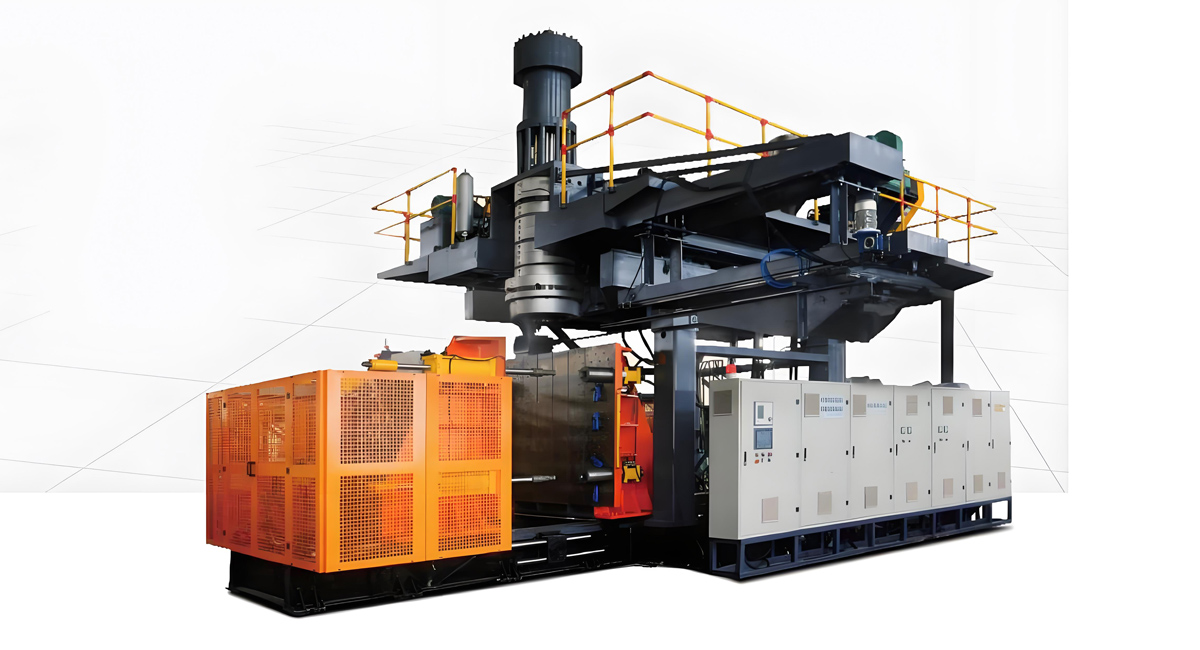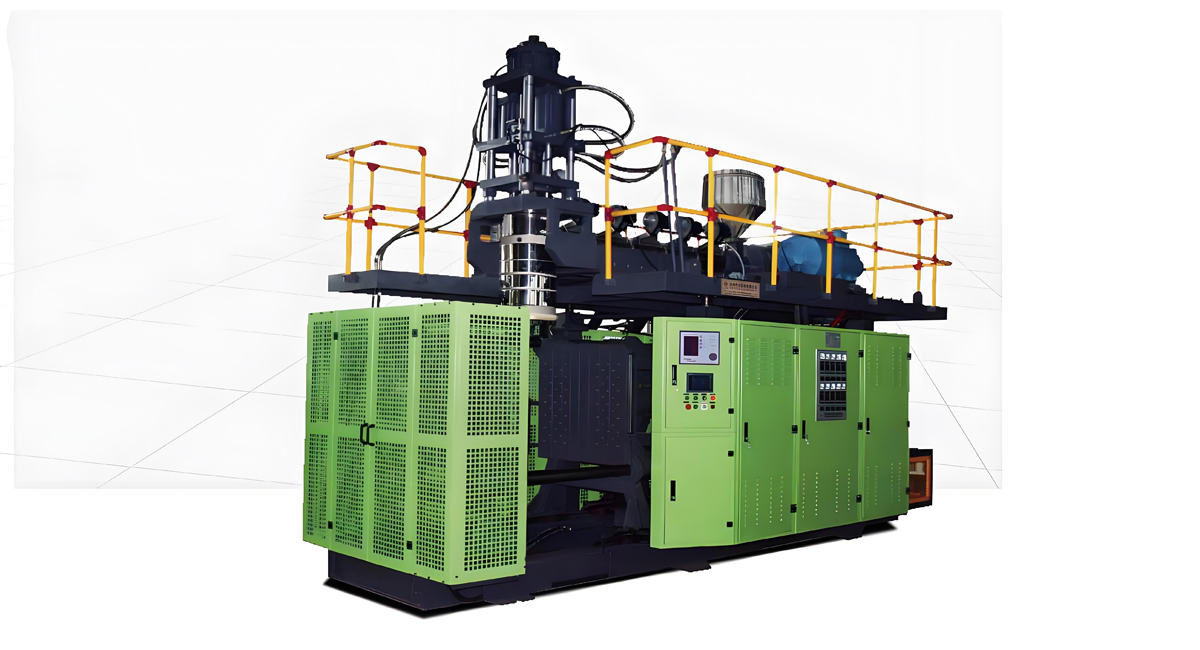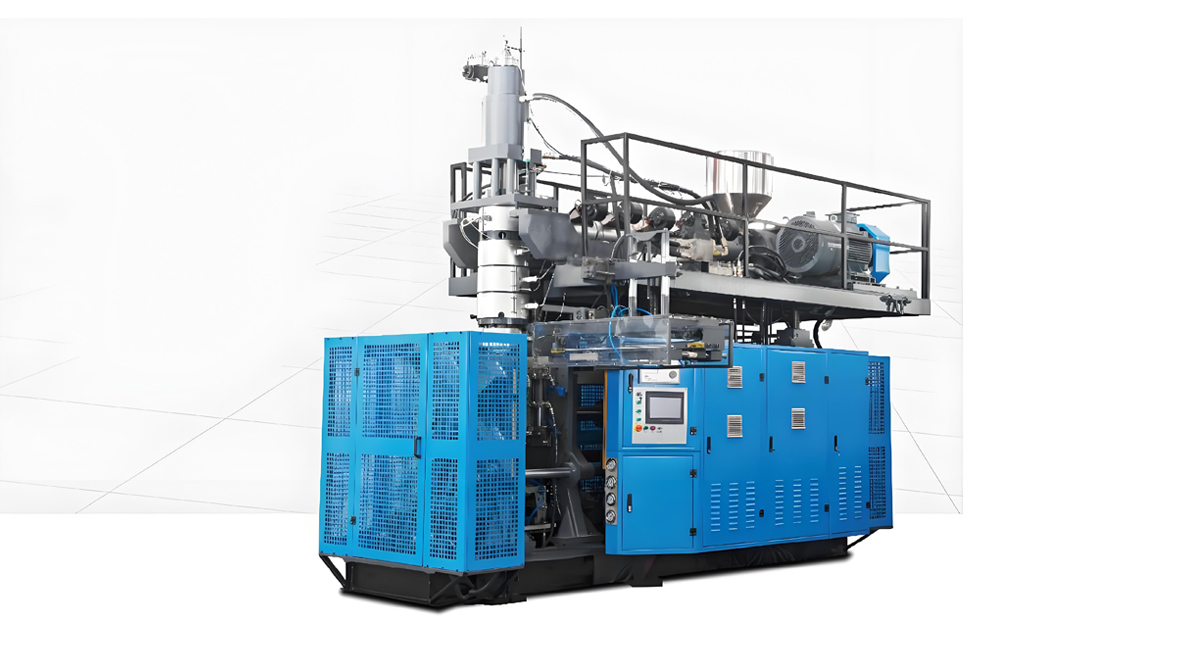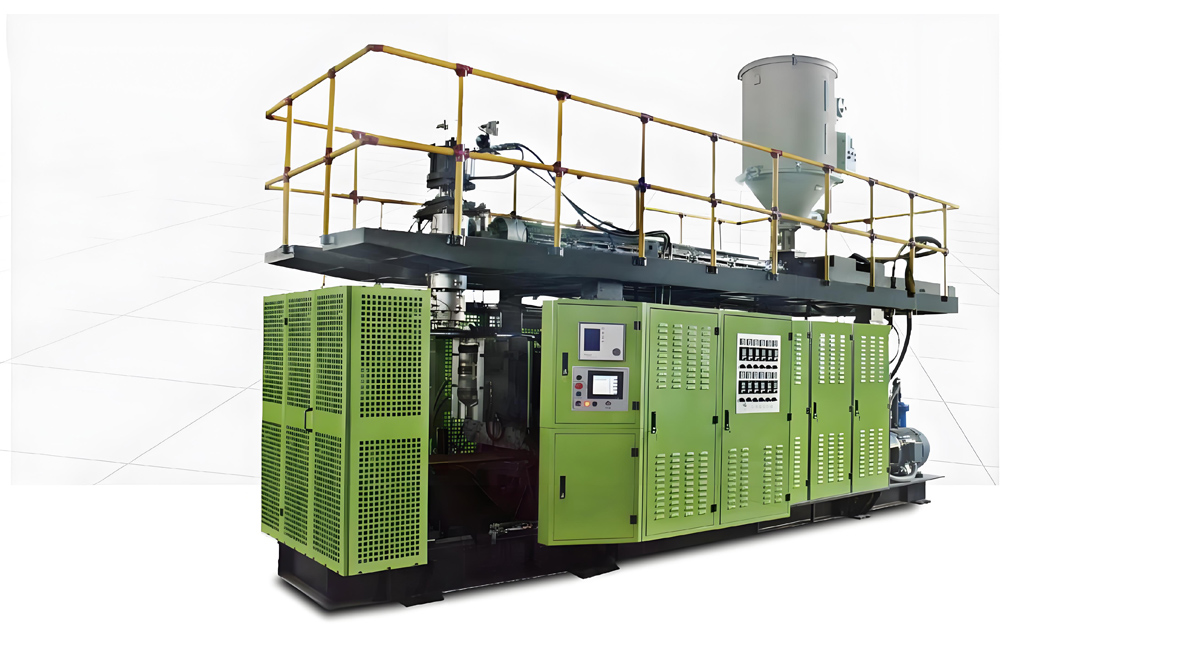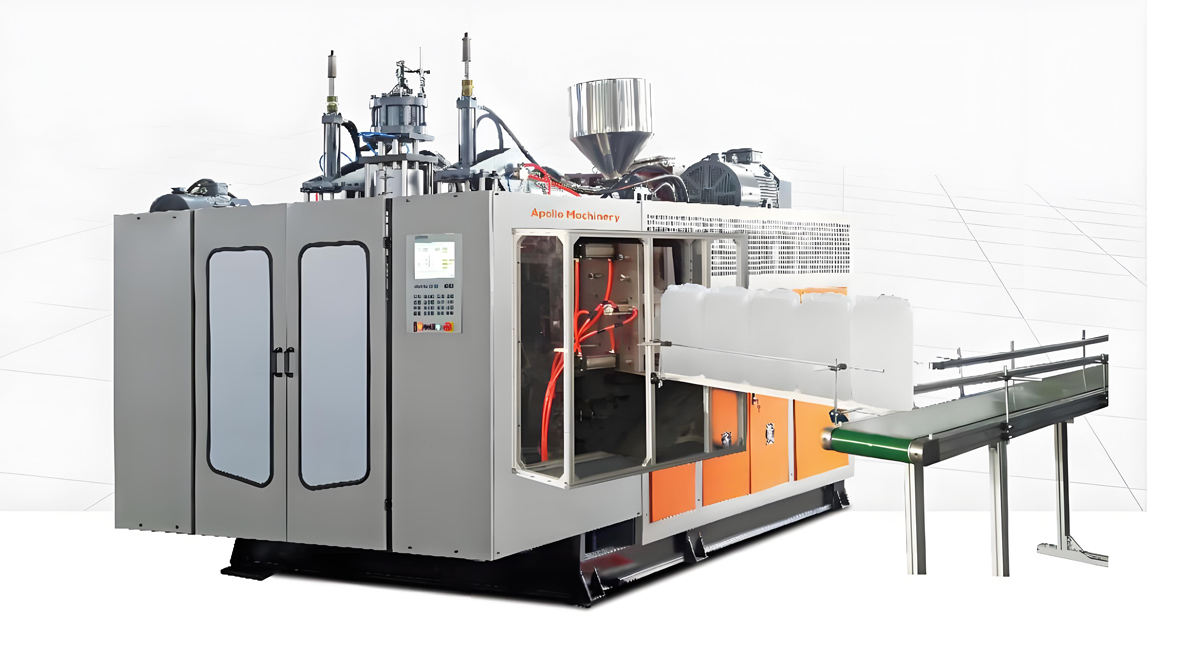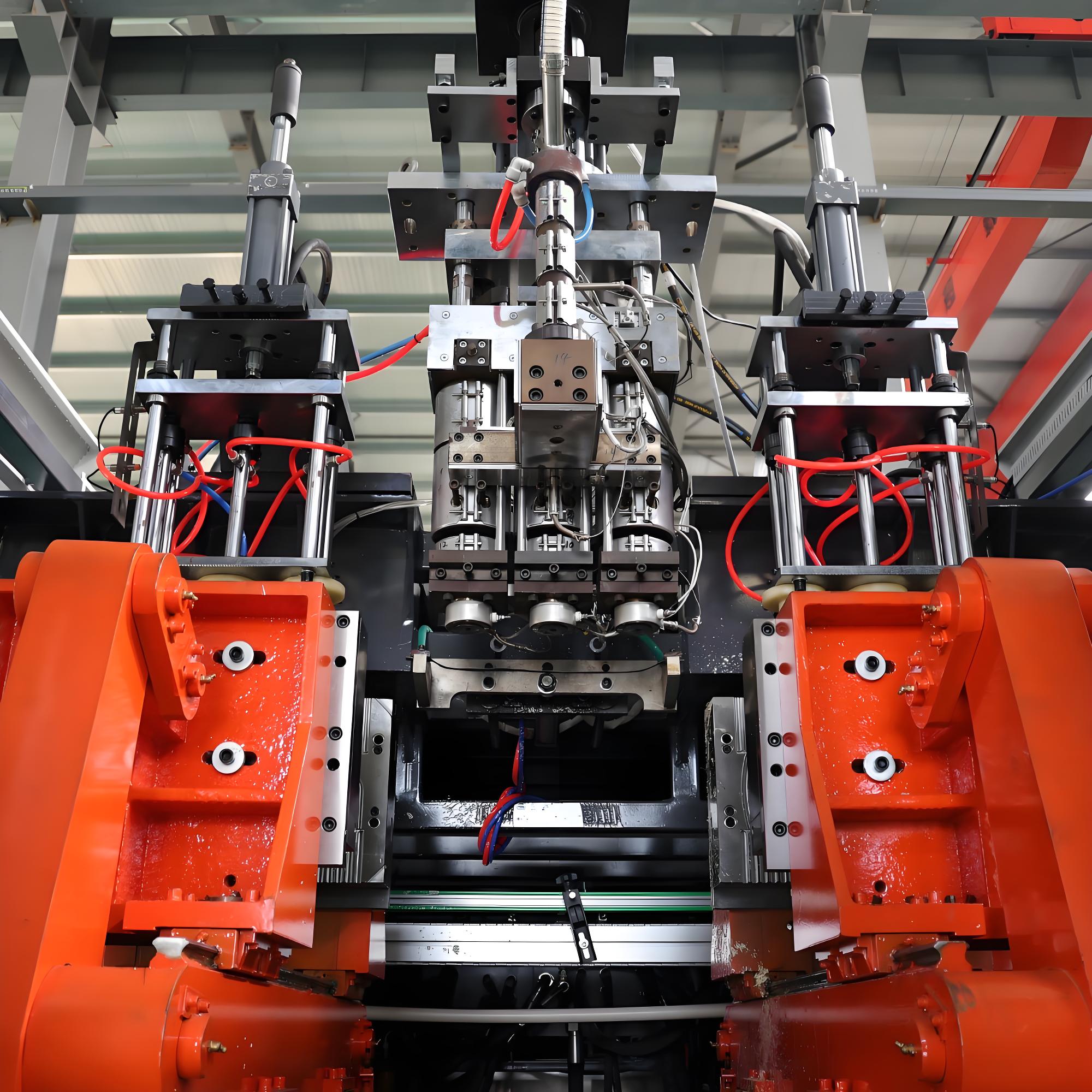

A parison control system is the single most powerful tool for turning an extrusion blow molding (EBM) machine into a precise, material-efficient producer of hollow parts. In EBM, the parison is the hollow tube of molten plastic that the machine extrudes and then inflates against the mold wall; the thickness of that tube, at every point along its length, becomes the wall thickness of the finished container. Without control, gravity, melt swell and extrusion speed leave the parison too thin at the heavy base and too thick at the light top, forcing the processor to over-weight the whole part to avoid a failure at the weakest spot. Apollo, a Wanplas factory with more than 20 years in extrusion blow molding, fits programmable parison control across its ABLB, ABLD and Fully Electric series so that container weight falls while strength and consistency rise. This guide explains the physics of parison formation, how a modern control system varies wall thickness point by point, the parameters and materials that shape the result, and the practical steps to program, troubleshoot and validate uniform walls.
What Is a Parison and Why Wall Thickness Control Matters
A parison is the hollow, tube-shaped precursor of a blow-molded part. The extruder pumps melt through a die head, and the annular gap between the die ring and the mandrel forms a tube with a controlled, but initially uniform, wall thickness. As the parison hangs and is then captured by the closing mold, compressed air expands it until the melt contacts the cooled cavity surface and freezes into the container shape.
The wall thickness of the final part is, to a first approximation, the local parison thickness divided by the local blow-up ratio. A bottle body that expands only slightly keeps most of its parison thickness; a shoulder or handle that stretches a lot becomes thin. If the parison were perfectly uniform, the part would be thick where little stretch occurs and dangerously thin where most stretch occurs. Wall thickness control inverts this: the system makes the parison thicker exactly where the part will stretch most, and thinner where it will barely stretch.
Uniform, optimized walls deliver three commercial wins. First, they protect performance: drop impact, top-load stacking and squeeze resistance all depend on local wall thickness, and control places material where the load actually lands. Second, they cut weight: by removing excess from low-stress zones, the same container is lighter, which lowers resin cost and freight. Third, they stabilize the process: a repeatable profile reduces part-weight variation, leak-test failures and scrap, which is the foundation of statistical process control on the line.
Apollo treats parison control as standard on its higher-cavity and technical-part machines because customers in food, chemical, pharmaceutical and automotive supply chains increasingly demand both light weight and certified wall-thickness consistency. A turnkey EBM project from a Wanplas factory therefore usually includes profile programming as part of commissioning rather than as a paid add-on after thought.
The Physics of Parison Formation: Die Swell and Melt Sag
Two opposing physical effects dominate what the parison looks like the moment it leaves the die, and a control system exists to correct both.
Die swell ( extrudate swell )
Polymer melt is elastic as well as viscous. As it exits the converging die lands, the shear and extensional stresses built up in the flow relax, and the melt “springs back,” increasing the parison diameter and wall thickness relative to the die gap. Die swell is strongest for high-molecular-weight, low-melt-flow resins and at high shear rates (high extrusion speed), and it can increase wall thickness by 10 to 40 percent versus the geometric gap. Because swell varies with speed, any change in extrusion rate changes the wall unless the controller compensates.
Melt sag ( drawdown )
The parison hangs under its own weight while it is still soft, so the upper part stretches the lower part. The result is a parison that is thinner at the bottom (the heavy end) and thicker at the top, the opposite of what the part needs for a container that must survive a bottom-drop test. Sag worsens with long parisons, low melt strength, high head temperature and slow extrusion, because the soft melt has more time to draw under gravity.
Elastic memory and freeze-off
The melt also carries orientation induced at the die; this frozen-in structure affects shrink and impact. The controller cannot change chemistry, but by varying gap along the length it offsets the geometric distortion so the final wall is where the designer intended. Understanding these effects is why “just open the die more” fails: opening the gap raises swell and changes sag simultaneously, so only a programmed, point-by-point correction reaches a true target profile.
The goal of parison control is not a uniform tube but a deliberately non-uniform tube whose non-uniformity cancels the stretching and sag of blowing, leaving a uniform, optimized container wall.
Continuous, Intermittent and Accumulator Heads
The type of extrusion head determines how and when wall thickness can be varied, so the control strategy must match the machine architecture. Apollo’s range spans all three, and the parison programmer is configured accordingly.
Continuous extrusion (ABLB class)
In continuous extrusion the screw runs without stop and the parison is extruded continuously while the mold indexes. Wall thickness is varied by changing the die gap during extrusion: a servo actuator moves the mandrel or ring as the parison length grows, so the gap at second 1 differs from the gap at second 4. This is the most common configuration for bottles and small containers up to about 20 liters.
Intermittent (reciprocating screw or ram) extrusion
Here the screw or a ram pushes a measured shot, then pauses while the mold closes and blows. The parison is formed in a controlled time window, which makes point-by-point programming straightforward because each length segment maps to a known elapsed time. Reciprocating systems suit small, fast bottle lines.
Accumulator head (ABLD class)
For large containers of 20 to 1500 liters, melt is gathered in an accumulator and then rapidly expelled through the die in a few seconds to avoid sag and premature freeze. Wall thickness is programmed during this fast purge by moving the accumulator piston rate and, where fitted, a die-gap actuator. Because the parison is short-lived and very heavy, accumulator-head control emphasizes minimizing sag and base thinning on drums and tanks.
| Head Type | Apollo Series | Typical Volume | Control Actuation | Main Challenge |
|---|---|---|---|---|
| Continuous | ABLB | 200 mL to 20 L | Servo die gap during extrusion | Swell vs sag balance |
| Intermittent | ABLB (reciprocating) | up to 10 L | Time-mapped gap profile | Shot consistency |
| Accumulator | ABLD | 20 L to 1500 L | Piston rate + die gap | Base sag, fast purge |
How a Parison Control System Works
A modern parison programmer is a closed loop of measurement, actuation and operator input. The operator defines a target wall-thickness profile as a set of points along the parison length; the controller drives a servovalve and a mechanical actuator to realize that profile in real time as the parison is extruded; the result is verified by weighing and sectioning parts until the profile matches the target.
The servo-hydraulic actuator and MOOG valve
The die gap is moved by a high-response hydraulic or electric actuator. In hydraulic systems, a MOOG-type servo valve modulates oil flow to a cylinder that shifts the mandrel or die ring with millisecond response and sub-millimeter repeatability. The servo valve’s bandwidth must exceed the rate at which the gap needs to change during the short extrusion window, which is why general-purpose proportional valves are inadequate for fine profiles on fast lines.
The programmer and profile table
The controller holds a profile table: an array of thickness setpoints, one per control point along the parison. During extrusion, an internal clock or encoder maps elapsed extrusion length to the current point and commands the actuator to the corresponding gap. Advanced systems let the profile be edited on a touchscreen as a smooth curve, then converted internally to discrete point commands.
Feedback and learning
Although many systems are open-loop on the gap (commanded, not measured), the quality loop closes externally: the operator weighs the part, measures wall at defined sections (base, body, shoulder, neck) with a gauge or cut section, and nudges the profile points until the wall map matches the spec. Some lines add an inline wall-thickness sensor that feeds the programmer automatically, turning open-loop into closed-loop control.
Control Resolution: 32 to 256 Point Systems
Control resolution is the number of independent thickness steps the system can place along the parison. More points resolve sharper transitions, at the cost of more programming effort and a higher controller price tier.
32 and 64 point systems
These cover simple, smoothly tapered bottles where the thickness changes gradually from base to neck. They are economical and easy to tune, and they already deliver most of the weight-saving benefit for straight-walled containers without handles or sharp shoulders.
128 and 226 point systems
Mid- to high-resolution systems suit containers with a handle, a defined shoulder, a label panel or a calibrated neck. The extra points let the programmer thicken exactly at the handle root and thin exactly at the flat body panel without bleeding material into neighboring zones.
256 point systems
The highest resolution is used for complex technical parts, large containers and applications where wall uniformity is a certified quality attribute (pharmaceutical, fuel-system, pressure-vessel duties). With 256 points the profile is effectively continuous, and the same hardware can serve many part shapes through stored recipes.
| Resolution | Best For | Tuning Effort | Relative Cost Tier |
|---|---|---|---|
| 32 points | Simple straight bottles | Low | Low |
| 64 points | Tapered bottles, jars | Low to Medium | Low to Medium |
| 128 points | Handleware, shouldered parts | Medium | Medium |
| 226 points | Technical and large parts | Medium to High | High |
| 256 points | Certified, complex geometries | High | Very High |
Programmable Die Gap vs Mandrel Movement
The actuator can change wall thickness by moving either the outer die ring (radial die gap) or the inner mandrel (axial mandrel movement that alters the annular gap). Both change the same gap; the mechanical choice depends on the head design and the desired response.
Radial die gap (ring movement)
In a programmable die, a ring around the mandrel moves inward or outward under the servo actuator, changing the annular clearance uniformly around the circumference. This is the classic parison programmer arrangement and gives clean, symmetric thickness control. It requires a precision ground ring-and-mandrel pair and a sealed actuator that keeps melt from leaking along the moving interface.
Axial mandrel movement
Moving the mandrel axially in and out also changes the gap because the land geometry is tapered. Axial movement is mechanically simpler to seal and can be very fast, but the gap change is less linear with displacement, so the control software must be characterized for the specific head. Some accumulator heads combine axial mandrel shift with piston-rate modulation.
Two-axis and contoured dies
Advanced heads separate axial from radial control or use a contoured mandrel so that a single actuator produces a tailored gap curve. For oval or non-round containers, multi-segment dies can even vary gap around the circumference, though this is rare outside specialized automotive duct and technical-part production.
Programming the Wall Thickness Profile
Programming is where theory becomes a sellable, consistent container. The workflow below is the standard Apollo commissioning routine for a new mold.
Step 1: Define the target wall map
Start from the part drawing and the performance spec. Mark where impact (base, handle root) and top-load (sidewall, shoulder) are critical, and where weight can be cut (flat body, upper shoulder). Set a nominal minimum wall, commonly 0.3 to 0.6 millimeters for small bottles and 1.5 to 4.0 millimeters for drums, with local increases at stress points.
Step 2: Extrude an uncontrolled parison and measure
Run with a flat (uniform) profile and section the resulting part. Document where it is too thin (usually base and handle) and too thick (usually shoulder and neck tail). This measured map is the correction you must apply.
Step 3: Build the compensating profile
Thicken the parison where the part stretches most, and thin it where stretch is least. Because sag steals base thickness, the lower parison points are opened more than geometry alone suggests. Adjust a few control points at a time and re-measure; avoid large simultaneous moves that interact through swell.
Step 4: Lock the recipe and verify
Once the wall map meets spec with margin, save the profile as a named recipe tied to the mold and resin grade. Confirm with a production run that part-weight variation is low (commonly under 2 percent) and that drop and top-load tests pass. Document the recipe so mold changes restore the exact process.
A good profile is invisible in the finished part: the walls look uniform because the parison was deliberately non-uniform. The proof is a wall map that meets spec everywhere with the lowest possible average thickness.
Critical Process Parameters Affecting Wall Thickness
Parison control sets the gap, but the surrounding process decides how that gap translates into wall. The parameters below must be stabilized or the profile will not hold.
Melt temperature
Higher melt temperature lowers viscosity and swell but increases sag and freeze time; lower temperature raises swell and can cause poor knit at the parison weld. Tight temperature control, typically within plus or minus 2 degrees across the head zones, is the precondition for a stable profile.
Extrusion (screw) speed
Faster extrusion raises shear and swell, thinning the wall for a given gap, and shortens sag time. Because swell and speed couple, any change in output must be re-profiled or the wall drifts. This is why modern lines hold screw speed constant and vary only the die gap.
Blow pressure and timing
Blow pressure (commonly 6 to 10 bar, higher for thin small bottles) and the delay before blowing set how far and how fast the parison stretches. Late blow lets the parison cool and thin sections freeze thick; early blow can trap air and mark the part. These are tuned together with the profile, not separately.
Mold temperature and cooling
A colder, well-channeled mold freezes the wall quickly so the programmed thickness is retained; an inconsistent mold temperature lets the wall keep moving after blow, blurring the profile. Stable cooling is the silent partner of good parison control.
| Parameter | Effect on Wall | Stable Target |
|---|---|---|
| Melt temperature | Higher = thinner, more sag | plus/minus 2 deg C |
| Screw speed | Higher = more swell, thinner | held constant, vary gap only |
| Blow pressure | Higher = thinner, faster set | 6 to 10 bar typical |
| Blow delay | Late = thicker frozen wall | tuned per geometry |
| Mold temperature | Colder = wall retained | per resin, uniform |
Material-Specific Considerations
Every resin behaves differently in the die, so the profile that is perfect for HDPE will be wrong for PP or PVC. The programmer must be re-characterized per grade.
HDPE and LDPE/LLDPE
HDPE is the parison-control benchmark: moderate swell, good melt strength, forgiving. LDPE and LLDPE have higher swell and lower stiffness, so they sag more and need a more aggressive base-thickening profile. Blends are common to balance stiffness and processability.
Polypropylene
PP has lower melt strength than HDPE at process temperature and sags readily, so profiles open more at the base and the melt temperature window is tighter (around 200 to 260 degrees Celsius). PP also shows more orientation, which can raise top-load but lower impact if over-stretched.
PVC, PC and PETG
PVC is heat-sensitive and has high swell; tight temperature control (around 160 to 210 degrees Celsius) and stabilizer packages protect it, and the profile is tuned gently to avoid stagnation that degrades the melt. PC and PETG need drying and higher temperatures near 250 to 280 degrees Celsius, and their clarity makes wall streaks visible, so smooth profiles and clean heads matter more.
| Material | Die Swell | Sag Tendency | Profile Note |
|---|---|---|---|
| HDPE | Moderate | Low | Baseline, forgiving |
| LLDPE | High | High | Strong base thickening |
| PP | Moderate | High | Tight temp, base open |
| PVC | High | Medium | Gentle, no stagnation |
| PETG/PC | Medium | Medium | Smooth, clean head |
Common Wall Thickness Defects and Troubleshooting
Even with control, walls go wrong. The table maps the usual symptoms to root causes and fixes, which is the daily language of the blow-molding floor.
| Defect | Likely Cause | Corrective Action |
|---|---|---|
| Thin base, drop fails | Sag, late base opening | Open lower points, lower head temp |
| Thick shoulder, overweight | Over-thick upper profile | Close upper points, raise blow pressure |
| Part-weight variation | Unstable screw speed, temp drift | Stabilize speed, tighten zones |
| Weld line at pinch | Cool parison, low blow, dirty die | Raise temp, clean land, adjust timing |
| Thin handle root | Stretch exceeds local wall | Thicken at handle section, 128+ pts |
| Visible wall streaks | Melt degradation, poor mix | Lower temp, check screw, rescrew |
Most thickness complaints trace back not to the programmer but to an unstable surrounding process: a drifting barrel zone, a worn heater band, a blocked cooling channel or a screw that has lost its compression. Good parison control starts with a healthy machine, which is why Apollo’s commissioning always includes a mechanical and thermal audit before profile tuning begins.
Weight Reduction and Material Savings
The business case for parison control is weight. A container designed with a flat, over-built wall to survive the worst local stretch can usually be light-weighted 5 to 15 percent with a proper profile while holding the same drop and top-load performance. At production volume, that percentage is enormous: on a line making millions of bottles a year, a 10 percent weight cut is a 10 percent cut in resin purchases, freight and landfill, with no change in shelf function.
The saving compounds with regrind. Lighter parts produce less flash per unit, and the flash ratio to good part falls, so the closed granulation loop returns a higher proportion of clean material. Lightweighting also shortens cooling time slightly (less mass to freeze), nudging cycle time and energy down. The constraint is certification: food-contact and pharmaceutical containers must keep a documented minimum wall at every critical point, so the profile is tuned to the spec margin, not to the absolute thinnest possible.
Competitors such as Bekum, Graham Engineering and Techne market similar weight-saving claims, and the principle is universal; what differs is the resolution, the servo response and how easily the profile is saved, recalled and transferred across a fleet. Apollo’s programmer stores recipes per mold and resin so a re-run needs no re-tuning, protecting the saving over the product’s life.
In-Line Monitoring and Quality Control
Programming sets the wall; monitoring proves it stays there. A robust quality plan combines offline measurement and, increasingly, inline sensing.
Offline measurement
Operators cut a part at defined heights (base, lower body, upper body, shoulder, neck) and measure wall with a thickness gauge or microscope, logging the values on a control chart. Top-load compression and filled-drop tests confirm the wall map translates to performance. This is the acceptance method at commissioning and the audit method thereafter.
Inline wall sensing
Ultrasound or optical sensors mounted after ejection can scan the moving part and feed wall data back to the line. Where the programmer closes the loop on this signal, the profile self-corrects for resin-lot and temperature drift, holding the wall map without an operator touching the curve. This is the direction of Industry 4.0 on EBM lines and is part of the Wanplas group’s connected-machine roadmap.
Part-weight SPC
Because wall and weight are linked, a simple daily weight check is a powerful proxy for wall stability. A control chart on part weight with tight limits (commonly plus or minus 2 percent) catches profile drift, screw-speed change or regrind variation long before a customer complaint. Leak testing and top-load sampling complete the picture.
Choosing the Right System for Your Apollo Machine
The right parison control system is the one matched to the part complexity and the quality requirement, not the one with the highest point count. A 32-point programmer is the correct, economical choice for a straight HDPE bottle; a 226- or 256-point system is justified for handleware, large drums or certified medical and fuel containers where wall uniformity is a documented attribute.
Buyers should also weigh the actuator type (hydraulic servo with a MOOG-class valve versus all-electric), the recipe management (per-mold storage, easy transfer, remote backup), and the supplier’s ability to characterize the profile during commissioning and to recover it on service visits. Because Apollo is a Wanplas factory with more than 4,000 machines in over 90 countries, its programmers are supported by field engineers who can re-establish a proven profile after a mold change or a resin switch, which protects the weight and quality gains that justified the system in the first place.
For plants already running related Wanplas group equipment, the same control philosophy and data format ease integration: for example, when color masterbatch from a Wanplas compounding source changes lot and slightly shifts melt behavior, the parison recipe can be trimmed without re-qualifying the whole process. Cross-factory consistency is a quiet advantage of staying within one specialized group.
Frequently Asked Questions
What is a parison control system in blow molding?
A parison control system varies the wall thickness of the extruded hollow tube along its length, point by point, so the inflated container has uniform strength where needed and less material where it is not, reducing weight while protecting performance.
How many control points do I need?
Simple bottles run well on 32 to 64 points, but containers with handles, shoulders or complex geometry benefit from 128, 226 or 256 point systems that resolve sharp transitions in the thickness profile and keep material in the right zones.
Does parison control save material?
Yes. Correct wall-thickness programming typically reduces container weight by 5 to 15 percent versus uncontrolled extrusion while holding drop and top-load performance, which compounds into major resin savings at volume.
What causes a thin base and failed drop test?
Melt sag pulls material from the heavy lower parison, and a profile that does not open enough at the base leaves it thin. Lowering head temperature and opening the lower control points thickens the base so the drop test passes.
Is parison control different for PP versus HDPE?
Yes. PP has lower melt strength and sags more, so its profile opens more at the base and runs in a tighter temperature window; HDPE is the more forgiving baseline. The programmer must be re-characterized for each resin grade.
Can the profile be saved and reused?
Apollo programmers store a named recipe per mold and resin grade, so a mold change or re-run recalls the exact proven profile without re-tuning, protecting both quality and the weight-saving gain over the product life.
Do I need inline wall sensing?
Not always. Offline cut-section measurement and part-weight SPC are sufficient for many lines. Inline ultrasound or optical sensing is justified for certified, high-volume or tightly specified parts where the wall must self-correct for drift.
Which Apollo series supports parison control?
Programmable parison control is fitted across the ABLB continuous and reciprocating machines, the ABLD accumulator-head large-container machines, and the Fully Electric series, with resolution selected to the part complexity.
Conclusion
Parison control is the discipline that turns a uniform extruded tube into a uniformly strong, deliberately light-weighted container by making the parison non-uniform in exactly the right way. The system works through a high-response servo actuator and a MOOG-class valve that vary the die gap point by point along the parison, correcting die swell at the top and melt sag at the base, and it is only as good as the stable melt temperature, screw speed, blow timing and mold cooling around it. Selecting 32 to 256 control points to match part complexity, characterizing the profile per resin grade, and verifying with cut-section and weight monitoring delivers 5 to 15 percent material savings with equal or better performance. Apollo, a Wanplas factory, integrates programmable parison control across its ABLB, ABLD and Fully Electric extrusion blow molding series and supports it from commissioning through the product life, making wall-thickness uniformity a managed, repeatable asset rather than a daily firefight.