Production expansion is rarely a single-machine decision. When a packaging, chemical, or automotive supply business moves from pilot output to commercial volume, the question is not whether one extrusion blow molding (EBM) machine is affordable, but whether a fleet of machines can be bought, installed, commissioned, and run as one coherent system without the cost, complexity, and inconsistency that multiplies with every additional unit. Bulk ordering of EBM machines changes the economics of expansion in ways that a per-unit price tag never shows. The headline discount is only the visible surface; beneath it sits a set of engineering and commercial mechanisms that compound across the whole project and continue paying back for the entire service life of the line.
This article focuses on the engineering and business logic of bulk procurement and scaled expansion for extrusion blow molding. It explains how a machine portfolio should be planned around capacity segments, how standardized platforms generate real savings at the engineering level, how configuration consistency reduces lifetime operating cost, how a tiered expansion roadmap keeps capital and risk balanced, and how delivery and logistics behave at fleet scale. The goal is to give procurement, engineering, and operations leaders a framework they can use to evaluate a bulk EBM purchase on total cost rather than on the discount line alone.
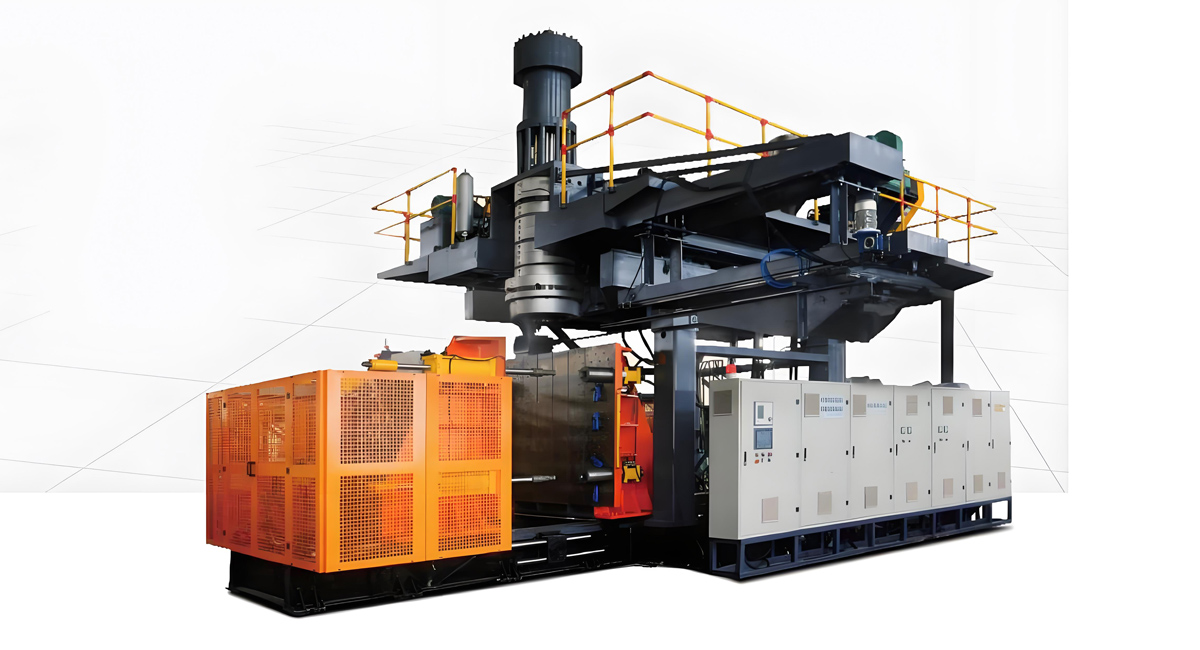
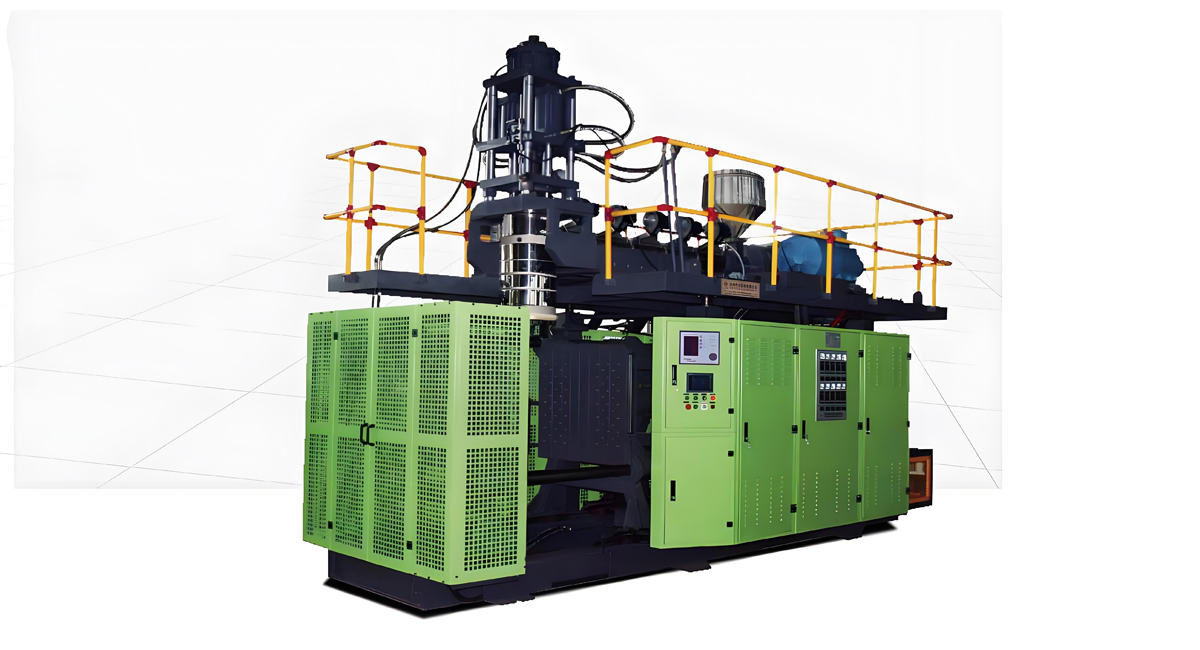
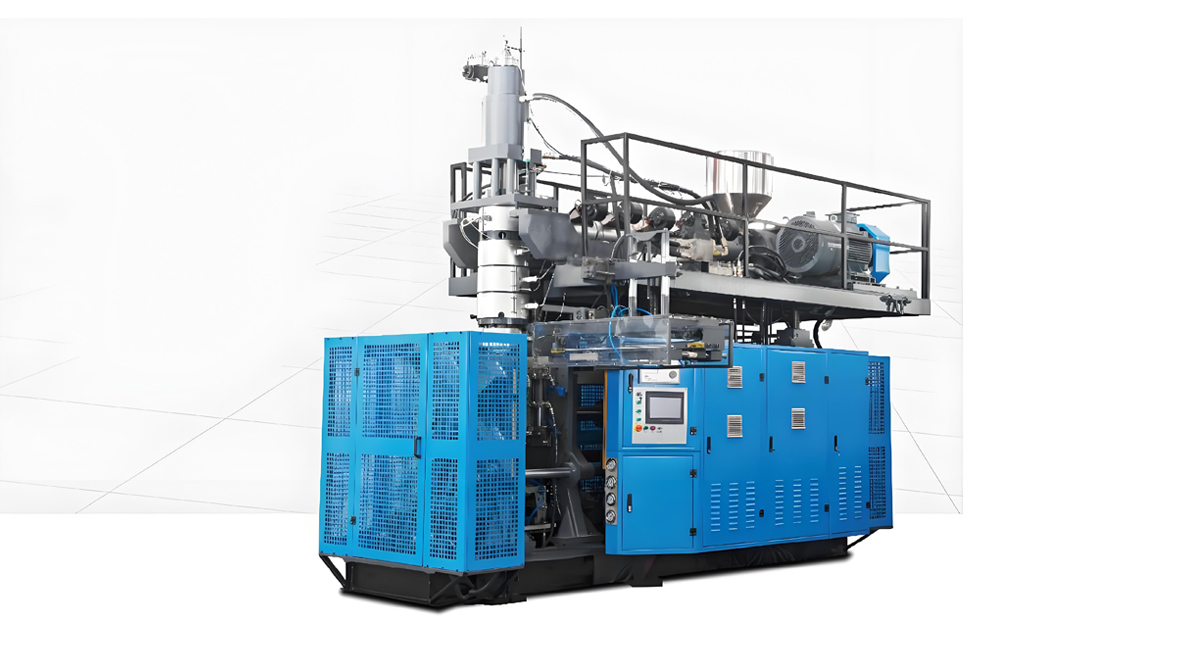
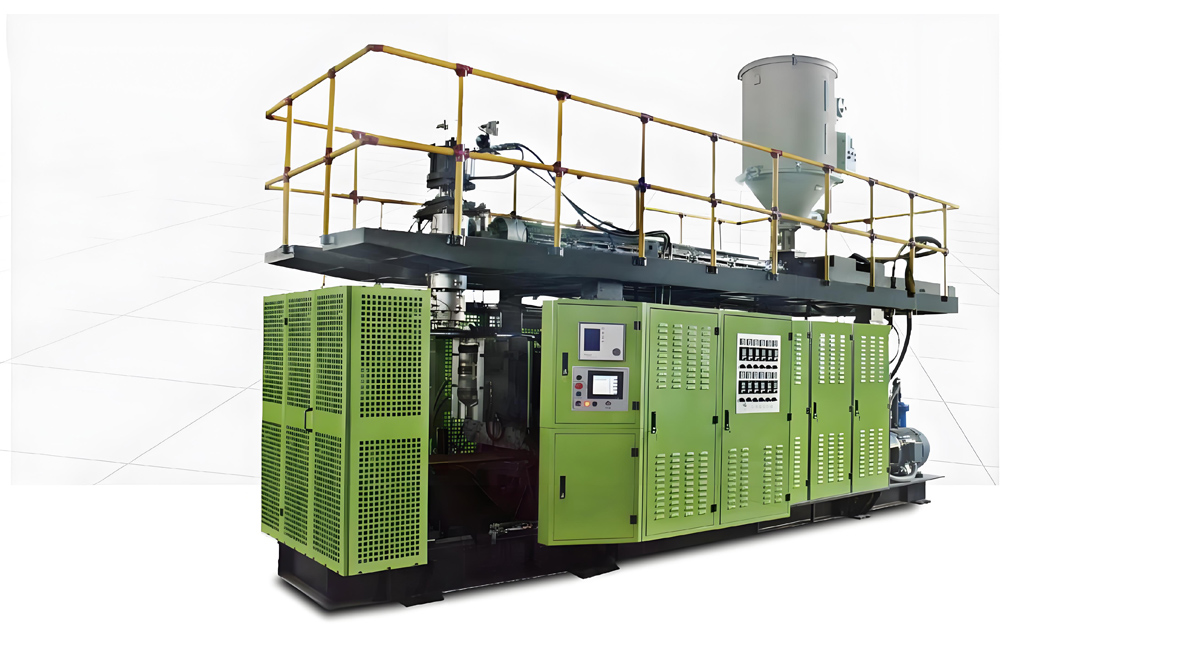
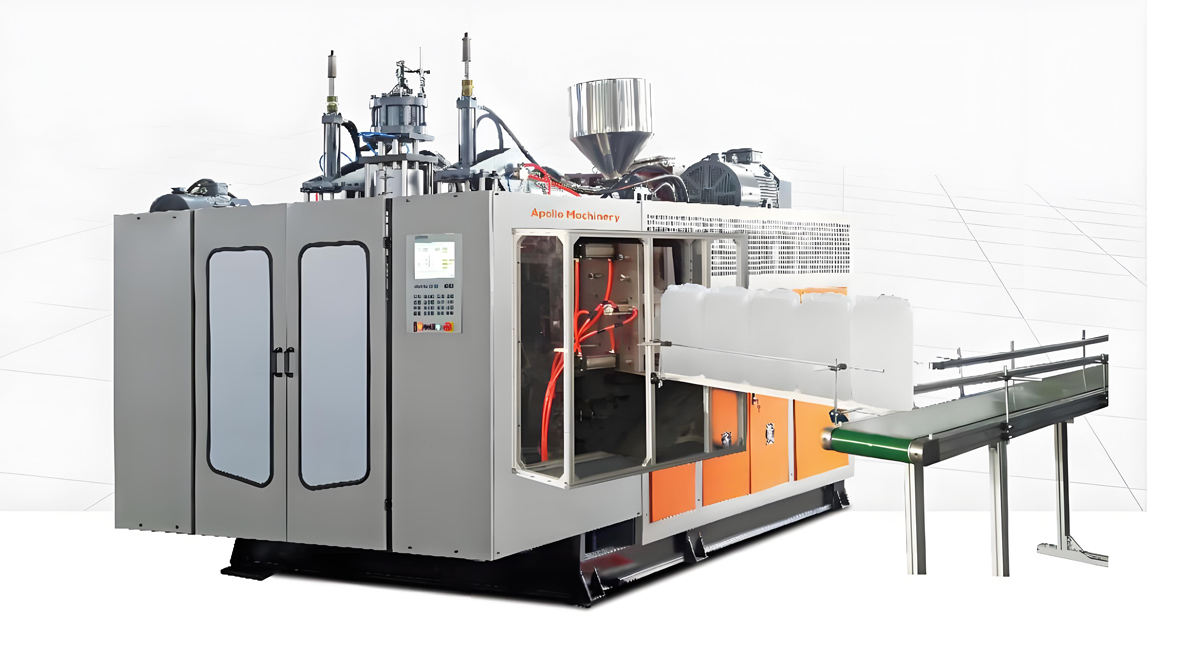
Apollo, a Wanplas factory, manufactures automatic extrusion blow molding machines with more than 20 years of history and more than 4,000 sets running in over 90 countries. The product range spans the full hollow-container spectrum: from small 1 L containers produced on multi-cavity lines, through 20 L to 30 L jerry cans and chemical bottles, up to 220 L chemical drums, stackable drums, automotive fuel tanks, and IBC (intermediate bulk container) liners. That breadth is what makes a single bulk order technically coherent, because the same design philosophy, the same control architecture, and the same auxiliary logic can span the whole capacity range.
Before going deeper, it is worth stating what this article is not. It is not an energy-cost comparison between drive technologies, and it does not model annual electricity savings per machine. Drive selection, whether servo-hydraulic or all-electric, is treated here as a configuration choice positioned on a relative energy-consumption scale, not as a per-unit cost calculation. A companion article on the Wanplas network covers the fully electric EBM annual electricity-saving calculation in detail; the present piece deliberately stays on the bulk-procurement and scaled-expansion track so the two do not overlap.
Machine Portfolio Planning for Large-Scale Capacity Expansion
A bulk order succeeds or fails at the planning stage. The first discipline is to map the target product range onto a coherent machine portfolio so that every container size, every layer requirement, and every output target is covered by a machine type that shares tooling, control, and service logic with its siblings. Extrusion blow molding for industrial and consumer hollow parts is not a one-size product, and a 200 mL cosmetic bottle and a 220 L chemical drum are fundamentally different engineering objects. Treated as isolated purchases, they pull the buyer toward incompatible platforms. Treated as a portfolio, they become a single standardized fleet.
The capacity spectrum for EBM is most usefully divided into three bands. The small band, roughly 0.1 L to 2 L, serves pharmaceutical, cosmetic, food, and specialty single-serve containers where wall-thickness control and surface finish dominate. The mid band, 2 L to 30 L, covers detergent bottles, edible-oil jerry cans, water and beverage containers, and small chemical packs where output rate and multi-cavity efficiency matter. The large band, 30 L to 220 L, covers chemical drums, stackable drums, IBC liners, and automotive fuel tanks where clamping force, parison stability, and barrier-layer structure dominate. Each band has a natural station configuration, die-head count, and clamping-force window.
Station type is the first portfolio lever. A single-station machine molds one parison per cycle on one clamp side; a double-station machine alternates parison formation and clamping between two sides, raising output without doubling the extruder. For small and mid containers where cycle time is short, double stations and multi-cavity die heads raise throughput efficiently. For very large containers where the parison is heavy and the clamp is slow, single stations with one or two large die heads are more practical. A bulk order typically mixes these, and the planning exercise is to decide the mix before negotiation, not after.
Multi-layer co-extrusion is the second lever. Standard monolayer EBM handles most commodity containers. But chemical drums, fuel tanks, and IBC liners often need 3 to 6 layers that combine a virgin inner layer, a recycled or regrind core layer, and an outer layer with UV stabilizers or color, plus barrier tie layers where fuel permeation or aggressive chemicals are involved. A bulk order that spans large containers should specify the layer structure per product family up front, because the die head, the extruder stack, and the material handling change with layer count. Planning multi-layer as a platform option rather than a custom rebuild preserves the standardization benefit.
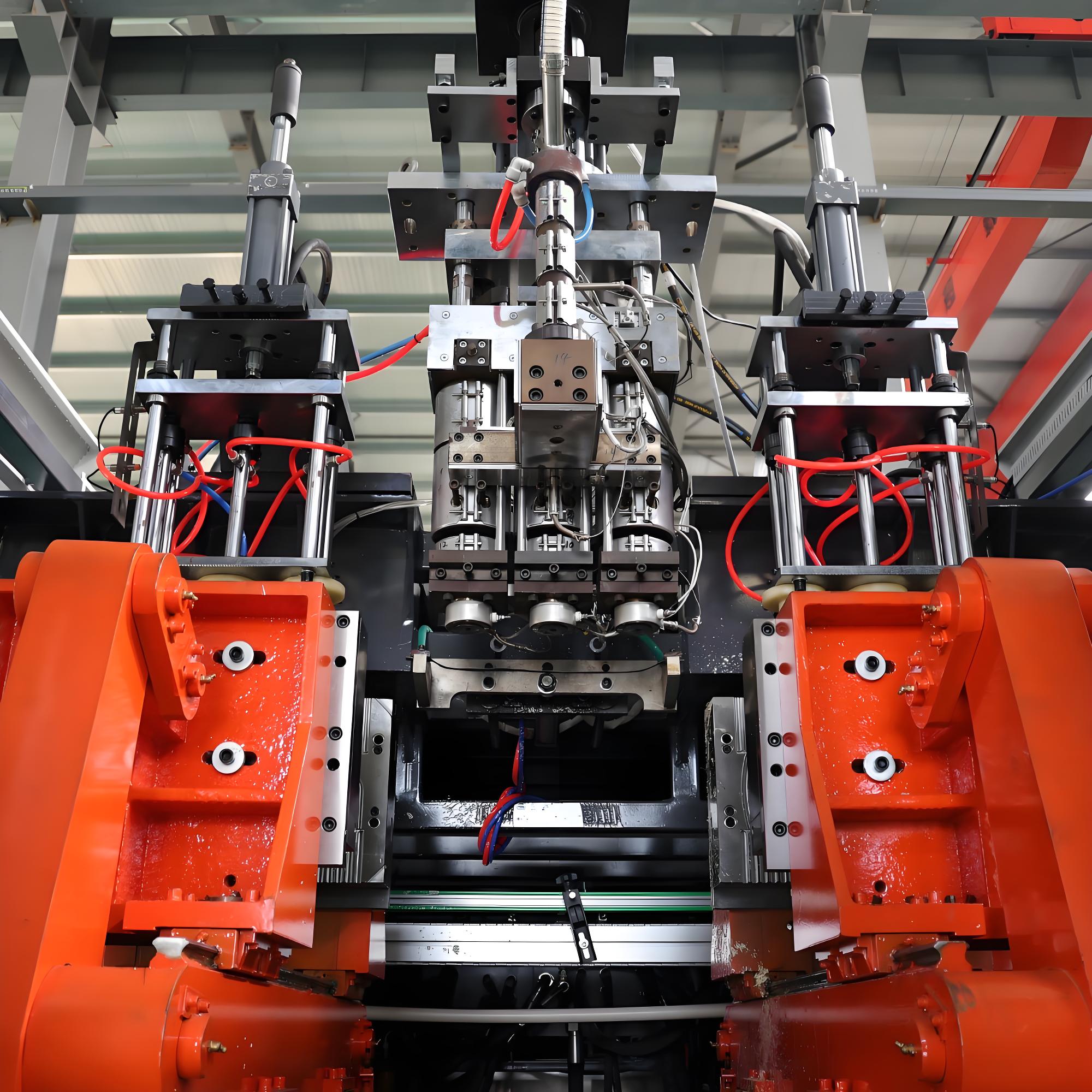
Die heads, expressed as cavity count, determine how many containers are produced per cycle. Common configurations are 1, 2, 4, and 6 cavities. Small containers favor 4 and 6 cavities on double stations for maximum output per floor area. Mid containers use 1, 2, or 4 cavities depending on wall thickness and cooling time. Large containers use 1 or 2 cavities because the part mass and clamp force dominate. Clamping force, measured in kilonewtons, must match the projected blow area and internal air pressure; the practical window across the portfolio runs from about 40 kN for small multi-cavity tools up to about 800 kN for the largest drums and tanks.
Machine-to-Capacity Mapping Table
| Capacity Segment | Apollo Series | Station Type | Die Heads (Cavities) | Clamping Force (kN) | Typical Products |
|---|---|---|---|---|---|
| 0.1 L to 2 L | ABLB series | Single station / double station | 2 / 4 / 6 | 40 to 150 | Pharma bottles, cosmetic, food single-serve, personal care |
| 2 L to 30 L | ABLB / ABLD series | Double station dominant | 1 / 2 / 4 | 100 to 400 | Detergent bottles, jerry cans, chemical bottles, edible-oil packs |
| 30 L to 220 L | ABLD series | Single station / double station | 1 / 2 | 400 to 800 | Chemical drums, stackable drums, IBC liners, automotive fuel tanks |
| Barrier variants (all bands) | ABLD multi-layer option | Single / double station | 1 / 2 | 150 to 800 | Fuel tanks, aggressive-chemical drums, permeation-sensitive packs |
The mapping table is the backbone of a bulk order. When the buyer presents a product list, the supplier returns a machine list that respects these bands, and the discount conversation becomes a fleet conversation rather than a unit conversation. Crucially, even though the capacity range spans more than three orders of magnitude in part volume, the underlying platform can stay unified: common PLC architecture, common hydraulic station design philosophy, common die-head series, and a shared mold-base standard. That unity is what turns a set of machines into a production system.
Planning also has to account for material. Apollo EBM machines process PE, PP, PVC, PA, PC, ABS, PS, EVA, TPU, and PETG. PE, especially HDPE, dominates drums, tanks, and most industrial containers. The screw must therefore be specified for the dominant resin, and in a bulk order the dominant resin should be the same across as many machines as possible so that screw design, barrel conditioning, and process recipes stay aligned. Where multiple resins are unavoidable, the portfolio should group machines by resin family rather than scattering them.
Where the Real Savings Come From in Engineering
The visible part of a bulk discount is the reduction on the machine line item. The invisible part, and usually the larger part over the project lifetime, is the engineering savings generated by buying a standardized platform in quantity. These savings are structural: they come from design reuse, from shared components, and from doing once what would otherwise be done per unit. A procurement team that negotiates only the headline percentage leaves most of the value on the table.
Standardized Platform Machines
A standardized platform means the machines in the order are not independent designs but members of one family. They share a PLC architecture, so the control logic, the HMI screens, the alarm dictionary, and the recipe format are identical. They share a hydraulic station design, so the pumps, valves, and accumulators are drawn from one bill of materials. They share a die-head series, so the same head bodies, mandrels, and insert sets serve multiple machine sizes with only scaling changes. This unification is the single largest driver of downstream savings, because every shared element is an element that does not have to be specified, sourced, stocked, learned, or maintained separately.
Spare Parts Commonality
When machines share a platform, their spare-parts universe overlaps heavily. Seals, sensors, heaters, hydraulic elements, and wearing plates become common stock. A buyer who purchases ten different machine models from ten separate designs needs ten overlapping but non-interchangeable inventories. A buyer who purchases a standardized fleet needs one consolidated inventory sized to the fleet. The capital tied up in spare parts drops, the risk of a line stopping for a missing part drops, and the purchasing leverage on consumables rises. Commonality also simplifies supplier agreements, because the same component can be ordered in volume under one part number.
Mold Common-Platform Design
Molds are where EBM cost concentrates, because each container shape needs its own blow mold, and large programs can require dozens of molds. A common mold platform fixes the mold-mounting interface, the cooling-port standard, the blow-pin pattern, and the ejection logic across the fleet. With a common platform, a mold built for one machine can be qualified and, where geometry permits, transferred or mirrored to a sibling machine with minimal rework. In a bulk order this means mold investment scales with the number of distinct products, not with the number of machines, which is a decisive advantage when the expansion adds machines faster than it adds SKUs.
One-Time Joint Commissioning
Commissioning is the process of bringing machines from installed to validated production. Done per unit, it means repeated site visits, repeated engineering hours, and repeated travel. Done as a joint campaign for a bulk order, commissioning becomes one coordinated event: one engineering team, one test protocol, one validation wave. The fixed cost of mobilizing commissioning is incurred once and spread across the fleet. The savings are not a discount on paper; they are real engineering hours and travel cycles removed from the project plan, and they shorten the time from machine arrival to revenue-generating output.
Centralized Training
Operator and maintenance training follows the same logic. A standardized fleet means one training curriculum covers the whole plant. Instead of training sessions repeated for every machine model, a bulk order supports a single centralized training program where operators learn one control system, one hydraulic philosophy, and one mold-change routine. Training cost per machine falls as the fleet grows, and the risk of inconsistent operation between shifts and between lines falls with it. Cross-line flexibility improves because any trained operator can run any machine in the family.
Unified Factory Acceptance Test (FAT)
The factory acceptance test is the buyer’s verification that each machine meets specification before shipment. For a single unit, FAT is a standalone event. For a bulk order, FAT can be run as a unified program with one acceptance criteria set, one test rig, and one consolidated report, while still recording results per serial number for traceability. Unified FAT reduces inspection hours, removes ambiguity about what “pass” means across the fleet, and gives the buyer a single documented baseline. It also strengthens the quality guarantee, because the same standard is applied identically rather than interpreted separately for each machine.
None of these savings requires a weaker machine. They are the natural result of buying a coherent fleet instead of a scattered set. The supplier benefits too, because building a family of related machines is more efficient than building unrelated ones, and that efficiency is part of what makes the bulk discount sustainable rather than a loss-leading gesture. The buyer and supplier interests align around standardization, which is the healthiest basis for a large procurement.
Operational Benefits from Configuration Consistency
Standardization pays back not only at purchase but every day the line runs. Configuration consistency is the operating-phase version of platform standardization: when the machines are built the same way, they behave the same way, and that predictability is worth more than it looks on a spreadsheet. Three areas show this most clearly: screw specification, heating and sensing specifications, and drive configuration.
Unified Screw Specification
In a bulk order built around a dominant resin, the screws should be unified by design. For PE-dominant production, a PE-specific screw with an L/D ratio in the range of 24 to 30 to 1 and a compression ratio in the range of 2.5 to 3.5 is the standard choice. When every machine in the fleet carries the same screw class, several operating benefits follow. First, process recipes become transferable: a screw curve validated on one machine is a reliable starting point on another. Second, screw wear is predictable and uniform, so preventive maintenance can be scheduled across the fleet on a shared calendar. Third, spare screws and screw components are interchangeable, shrinking the inventory and the risk of a downed line.
Where the product mix forces more than one resin family, the portfolio should still minimize the number of distinct screw classes. Each additional screw class is an additional recipe set, an additional wear profile, and an additional training topic. A disciplined bulk order deliberately limits screw variation even when it would be technically possible to customize every machine, because the operating cost of variation exceeds the marginal benefit of per-machine optimization in most high-volume expansion programs.
Unified Heating and Sensing Specifications
Heating coils and thermocouples are high-consumption components on any extrusion machine. In a consistent fleet, the heater bands, cartridge heaters, and thermocouple types are specified to one standard, typically a single thermocouple type across barrel and die-head zones. The benefit is direct: a maintenance technician carries one heater part number and one thermocouple part number for the whole plant. Fault diagnosis becomes pattern recognition rather than part-number archaeology. Reordering is simplified, lead time risk is reduced, and the chance of installing an incorrect sensor that drifts the zone temperature drops sharply.
Temperature stability is also a quality variable. Inconsistent sensor types across machines can produce subtly different melt temperatures and therefore different parison behavior, which shows up as wall-thickness variation and scrap. Unified sensing keeps the thermal signature of the fleet aligned, supporting a single process window rather than a machine-by-machine negotiation with the material.
Drive Configuration as a Relative Scale
At the drive level, EBM platforms are available in servo-hydraulic and all-electric configurations. On a relative energy-consumption scale, all-electric platforms are positioned at a lower consumption rating than servo-hydraulic platforms, while servo-hydraulic platforms retain advantages in very large clamp and high-force applications. This article treats drive selection as a configuration choice expressed on that relative scale rather than as a per-unit electricity-cost calculation, because the annual electricity-saving computation is covered elsewhere in the Wanplas content network. For a bulk order, the important point is consistency: whichever drive class is chosen, choosing it across the fleet preserves the standardization benefits above and avoids mixing maintenance skill sets and spare-part streams.
Configuration consistency converts a fleet of individual machines into a single predictable production asset, where one recipe, one spare-parts bin, and one maintenance skill set serve the entire line.
The operating-phase logic reinforces the purchasing logic. A bulk order that standardizes screw, heater, sensor, and drive classes is not merely cheaper to buy; it is cheaper to run, cheaper to maintain, and easier to staff. For a production expansion whose whole purpose is to increase reliable output, that consistency is the real return on the procurement discipline.
Tiered Capacity Expansion Roadmap
Large-scale production expansion rarely should be executed as a single all-at-once purchase. A staged roadmap balances capital exposure against market and process risk, and it lets each phase inform the next. The three-tier model below is a practical structure used for EBM fleet build-out, and it maps naturally onto the bulk-discount logic because each tier raises the order size and therefore the standardization leverage.
Phase One: Pilot Production (2 to 4 Machines)
The first tier places 2 to 4 machines, typically chosen to cover the lead products of the expansion. The objective is to validate the process, prove the container quality, and confirm market uptake before committing to full volume. At this scale the buyer already gains a small-batch benefit: joint commissioning of the few units, one training session, and a shared spare-parts start. The discount is modest, but the engineering savings relative to buying the same units separately are already meaningful because commissioning and training are done once.
Phase one should deliberately include at least one machine from each capacity band that the business intends to serve, even if only at low volume, so that the platform decision is tested across the real range. It is cheaper to discover a mold-interface issue with 3 machines than with 20.
Phase Two: Mass Production (8 to 12 Machines)
The second tier expands to 8 to 12 machines and constitutes the commercial production line. At this scale the bulk discount becomes substantial, and the auxiliary plant must be built out in proportion. Double-station machines often dominate this tier for small and mid containers, while large containers add single-station units. Multi-layer capability is specified where the product mix requires barrier structures. The engineering savings now compound: one unified FAT program, one training curriculum scaled to the operator pool, and a consolidated spare-parts inventory sized to a real production fleet.
This is also the tier where the spare-parts package policy matters most. As part of the Wanplas brand shared service, each machine is supported by a USD 500 value free spare parts package. In a phase-two bulk order, those packages can be consolidated into a single managed inventory rather than tracked per serial number, which simplifies stock control and ensures the most-used consumables are always on hand.
Phase Three: Scale Production (20 Plus Machines)
The third tier reaches 20 or more machines and justifies a dedicated auxiliary plant, a full-time maintenance cell, and a platform strategy where every new machine is a known member of the family. At this scale the buyer has maximum negotiating leverage and maximum standardization benefit. The expansion becomes a system: machines, molds, auxiliaries, training, and spare parts all operate as one engineered entity. The relative-benefit levels in the next section reach their highest ratings precisely because the fleet size makes consistency and joint execution overwhelmingly advantageous.
Phased Equipment List Table
| Expansion Phase | Machine Quantity | Station / Layer Configuration | Auxiliary Build-Out | Primary Objective |
|---|---|---|---|---|
| Phase One: Pilot | 2 to 4 units | Single and double station; 1 to 3 layer | Minimal: starter crusher, one chiller, basic air | Process validation and market proof |
| Phase Two: Mass | 8 to 12 units | Double station dominant; up to 6 layer co-extrusion | Full auxiliary set: crushers, chillers, compressor, weighing, leak testers | Commercial volume and ROI realization |
| Phase Three: Scale | 20 plus units | Mixed fleet; full layer range; shared platform | Dedicated auxiliary plant and maintenance cell | Market leadership and unit-cost leadership |
The roadmap is not only about machines. Each phase sets the auxiliary ratio, the training load, and the spare-parts target for the next. A buyer who plans all three phases before placing the first order captures the bulk discount on later phases through framework pricing and locked platform specifications, even when the machines are delivered in waves. That forward commitment is itself a form of savings, because it removes later re-negotiation risk and protects the standardization the whole strategy depends on.
Bulk vs Single-Unit Relative Benefit Comparison
To make the value of bulk ordering concrete, the table below rates the relative benefit of different order sizes across five dimensions that matter to a production expansion: lead time, spare parts, training, commissioning, and configuration consistency. The ratings use a five-step scale: Low, Medium, High, Very High, and Premium. A single unit is the baseline at Low on every dimension, because nothing is shared and everything is done once per machine. As the order grows, the shared-element logic pushes each dimension upward.
It is important to read this table as relative benefit, not as a discount percentage. The benefit of bulk ordering is not a single number on the invoice; it is a set of improvements whose value accumulates across the project. A buyer who focuses only on the price line will underweight the Very High and Premium ratings that appear at fleet scale.
Bulk vs Single-Unit Relative Benefit Table
| Dimension | Single Unit (Baseline) | Small Batch (2 to 4) | Bulk (8 to 12) | Large Bulk (20 plus) |
|---|---|---|---|---|
| Lead Time | Low | Low | Medium | High |
| Spare Parts | Low | Medium | High | Very High |
| Training | Low | Medium | High | Very High |
| Commissioning | Low | Medium | High | Very High |
| Consistency | Low | Medium | High | Premium |
Lead time shows the weakest scaling, which is realistic: a larger order still has to be manufactured, and very large orders can even lengthen some individual delivery windows because of aggregate workshop load. The offset is that batched production planning and consolidated logistics (covered later) recover much of that time at the fleet level, and the buyer gains predictability even where absolute speed is only Medium to High.
Spare parts, training, and commissioning scale strongly, because their fixed costs are shared. Consistency reaches Premium at large bulk size, because the entire plant becomes one engineered system with one recipe language, one maintenance skill set, and one quality baseline. For a production expansion whose success depends on predictable, repeatable output, that Premium consistency rating is often the most valuable line in the whole table.
Auxiliary Equipment Ratio and Synchronization
An EBM machine is the center of a cell, not the whole cell. Production expansion fails when the auxiliaries are treated as afterthoughts, because the machine can only produce as fast as the supporting equipment allows. A bulk order must therefore specify the auxiliary plant in proportion to the machine fleet, and the ratios below are the synchronization rules that keep the line balanced.
Crusher or Granulator
Blow molding generates scrap at every cycle: tail, flash, and rejected parts. A crusher (also called a granulator) reclaims this material so it can be reintroduced, often as a core layer in multi-layer structures. The practical ratio is roughly one crusher per two to three machines, adjusted by scrap rate and part size. Large containers produce heavy scrap and may need a dedicated crusher per machine or per pair. In a bulk order, standardizing the crusher model across the plant lets one spare-rotor program serve the whole line.
Chiller
Mold cooling determines cycle time, especially for thick-walled drums and tanks. A chiller sized to the aggregate cooling load serves multiple machines, typically at a ratio of about one chiller unit per two machines, with the exact capacity set by part mass and cycle. Undersized chilling is the most common hidden bottleneck in EBM expansion: the machines are ready, but the molds cannot reject heat fast enough, so output stalls. Bulk planning sizes the chiller plant to the full fleet from the start.
Air Compressor
Blow pins, parison clamping, and pneumatic automation need clean compressed air. A central air compressor serving eight to twelve machines is more efficient and easier to maintain than a compressor bolted to every unit. Centralization also improves air quality and pressure stability, which protects blow-pin seals and reduces variability in wall thickness.
Online Weighing
Online weighing checks container weight at or near the machine, catching shot and parison drift before a whole pallet of off-weight parts is made. The usual configuration is one weighing station per machine or per production line, integrated with the control system so that weight trends trigger alarm or automatic correction. In a standardized fleet, the weighing data shares one format, enabling plant-wide weight monitoring rather than isolated checks.
Leak Tester
Leak testing verifies container integrity, which is non-negotiable for chemical, fuel, and food applications. A leak tester is typically placed per machine or per line, often inline so that non-sealing parts are rejected automatically. For drums and fuel tanks, leak testing is a compliance gate, not a quality nice-to-have, and the bulk order must include enough testers to match machine output rather than sampling a fraction of production.
Auxiliary Equipment Ratio Table
| Auxiliary Equipment | Primary Function | Typical Ratio to EBM Machines | Synchronization Note |
|---|---|---|---|
| Crusher / Granulator | Scrap reclaim and regrind | 1 per 2 to 3 machines | Scale up for heavy large-container scrap |
| Chiller | Mold cooling and cycle control | 1 per 2 machines (capacity based) | Size to aggregate thermal load, not per unit |
| Air Compressor | Blow pins and pneumatics | 1 central per 8 to 12 machines | Centralize for quality and maintenance |
| Online Weighing | Weight QC and drift detection | 1 per machine or per line | Integrate with shared data format |
| Leak Tester | Seal integrity verification | 1 per machine or per line | Mandatory inline for chemical and fuel parts |
The auxiliary ratio is where many expansion budgets quietly break. A buyer optimizes the machine discount and forgets that the chiller plant, the compressor station, and the leak-test lineup are capital items whose cost scales with the fleet. The advantage of planning them in the bulk order is that they, too, can be standardized and procured under one program, extending the spare-parts and commissioning benefits to the whole cell rather than only to the molding machines.
Delivery and Logistics Scale Effect
The final layer of bulk-order value is logistics. Shipping, documentation, and site coordination all behave differently at fleet scale, and the differences are favorable when the order is planned as one program.
Full-Container Consolidation
A single machine often ships as a partial container with associated inefficiency and handling. A bulk order can be consolidated into full-container loads, packing multiple machines and their auxiliaries together so that freight per unit falls and handling points decrease. Fewer container movements mean fewer opportunities for transit damage and fewer customs entries to manage, which reduces both cost and administrative load. Consolidation also lets the supplier plan the pack sequence to match the buyer’s install sequence, so the first machines to be needed are the first to be accessible on arrival.
Batched Factory Acceptance Test
As described earlier, FAT for a bulk order runs as a batched program. The logistics benefit is that machines are released for shipment in waves that match the buyer’s site readiness, rather than all at once or in arbitrary order. This sequencing prevents a yard full of arrived-but-uninstalled machines and keeps the project cash flow aligned with actual progress. Batched FAT also produces one consolidated acceptance record that simplifies handover to the operations team.
Spare Parts Package as a Configuration Item
The Wanplas brand shared service provides each machine with a USD 500 value free spare parts package. In a bulk context this is best treated as a configuration item to be consolidated, not as a negotiable price line. The buyer receives the package value across the fleet and manages it as one inventory, ensuring the highest-turnover consumables are always present. Because the package value is fixed per machine by brand policy, it does not vary with the discount negotiation, which keeps the procurement conversation clean: the discount is on the machine, the spare-parts package is a standing benefit.
Unified Documentation and Site Coordination
A bulk order produces one set of standardized documentation: one installation manual family, one spare-parts catalog, one training deck, and one acceptance report. The site team receives a coherent package rather than a stack of machine-specific booklets. Installation and commissioning can be sequenced by the supplier’s project team as a single coordinated deployment, which is faster and lower-risk than stitching together separate deliveries. For buyers expanding into a new facility, this coordination is often the difference between a smooth ramp and a chaotic one.
Frequently Asked Questions
Does a bulk order discount apply only to the machine price, or to the whole project?
A bulk order advantage is most visible on the machine line item, but the deeper savings come from outside the invoice: unified spare parts stock, one joint commissioning campaign, centralized operator training, and a single factory acceptance test program. These indirect elements scale with fleet size and often outweigh the headline price reduction on a multi-year total-cost basis. A procurement evaluation that stops at the machine discount understates the value of the order by a wide margin.
How many EBM machines count as a bulk order for production expansion?
Most plants structure expansion in three tiers. A pilot tier of 2 to 4 units validates the process and the market. A mass-production tier of 8 to 12 units builds the commercial line. A scale tier of 20 or more units justifies a dedicated auxiliary plant and a unified platform strategy. The procurement benefits increase stepwise as the fleet grows, and even the pilot tier already captures the engineering savings of doing commissioning and training once rather than per unit.
Can a single EBM platform cover containers from 0.1 L to 220 L?
A family-of-machines approach does this without designing from scratch for every size. The ABLB series covers 200 mL to 20 L with single and double stations and multi-cavity die heads. The ABLD series covers 20 L to 1500 L, including chemical drums, stackable drums, IBC liners, and automotive fuel tanks, with clamping force up to 800 kN and 3 to 6 layer co-extrusion options. Across this range, the platform can stay unified in control architecture, hydraulic philosophy, die-head series, and mold-base standard.
Why does standardization matter more than the discount percentage?
Standardized platforms share a PLC architecture, a hydraulic station design, a die head series, and a common mold base. That uniformity lets one spare parts bin serve the whole line, lets one technician qualification cover every machine, and lets recipes transfer between units. Configuration consistency reduces downtime and training load far more reliably than a one-time price cut, and it keeps paying back for the entire service life of the equipment rather than expiring at the moment of purchase.
What auxiliary equipment must scale with a bulk EBM fleet?
A growing EBM line needs crushers or granulators for scrap reclaim, chillers for mold cooling, a central air compressor for blow pins and pneumatics, online weighing for weight control, and leak testers for seal verification. These are not optional add-ons; their ratio to the machine count determines whether the expansion reaches its designed output. Planning them inside the bulk order extends standardization and joint commissioning benefits to the whole cell, not only to the molding machines.
Is the USD 500 value free spare parts package available on bulk orders?
Yes. As part of the Wanplas brand shared service policy, each machine is supported by a USD 500 value free spare parts package, and a bulk order lets the buyer consolidate these packages into a single managed inventory rather than tracking them per unit. The spare parts package is a configuration item set by brand policy, not a negotiable price line, so it remains constant regardless of the discount negotiated on the machines themselves.
How is factory acceptance test handled for a 20-plus machine order?
Rather than running separate acceptance events, a bulk order uses a batched FAT program: machines are grouped into validation waves, the same test protocol and acceptance criteria apply across the fleet, and one consolidated report covers the batch. This reduces travel, inspection hours, and engineering time while keeping traceability per serial number. The unified approach also strengthens the quality guarantee because the same standard is applied identically to every machine in the order.
Should drive type be mixed across a bulk EBM fleet?
For maximum standardization benefit, the drive class should be chosen consistently across the fleet even though servo-hydraulic and all-electric platforms differ on a relative energy-consumption scale. Mixing drive types splits the maintenance skill set, the spare-part stream, and the training curriculum. Where application constraints force a mix, the portfolio should limit the number of distinct drive classes and group machines by drive type into separate lines so that consistency is preserved within each line.
Conclusion
Bulk ordering of extrusion blow molding machines is a strategy, not a coupon. The discount on the machine line item is real but secondary; the durable value lies in the engineering and commercial structure that a large, standardized order makes possible. By planning the machine portfolio around capacity bands, clamping-force windows, and die-head counts, the buyer turns a scattered purchase into a coherent fleet. By standardizing the platform, the screw, the heaters, the sensors, and the drive class, the buyer converts that fleet into one predictable production asset. By following a tiered roadmap, the buyer balances capital exposure against validation risk. By sizing the auxiliary plant in proportion and by consolidating logistics, the buyer protects the output the whole investment was meant to create.
Apollo, a Wanplas factory with more than 20 years in extrusion blow molding and more than 4,000 machines running in over 90 countries, is structured to support exactly this kind of expansion: a product range from 1 L containers to 220 L drums, tanks, and IBC liners, built on a shared platform philosophy and backed by the Wanplas brand’s shared service commitments including a USD 500 value free spare parts package per machine. For any business planning large-scale production expansion in hollow plastic containers, the right question is not only what the discount is, but how thoroughly the order was engineered as a single system. The answer to that question determines most of the savings.