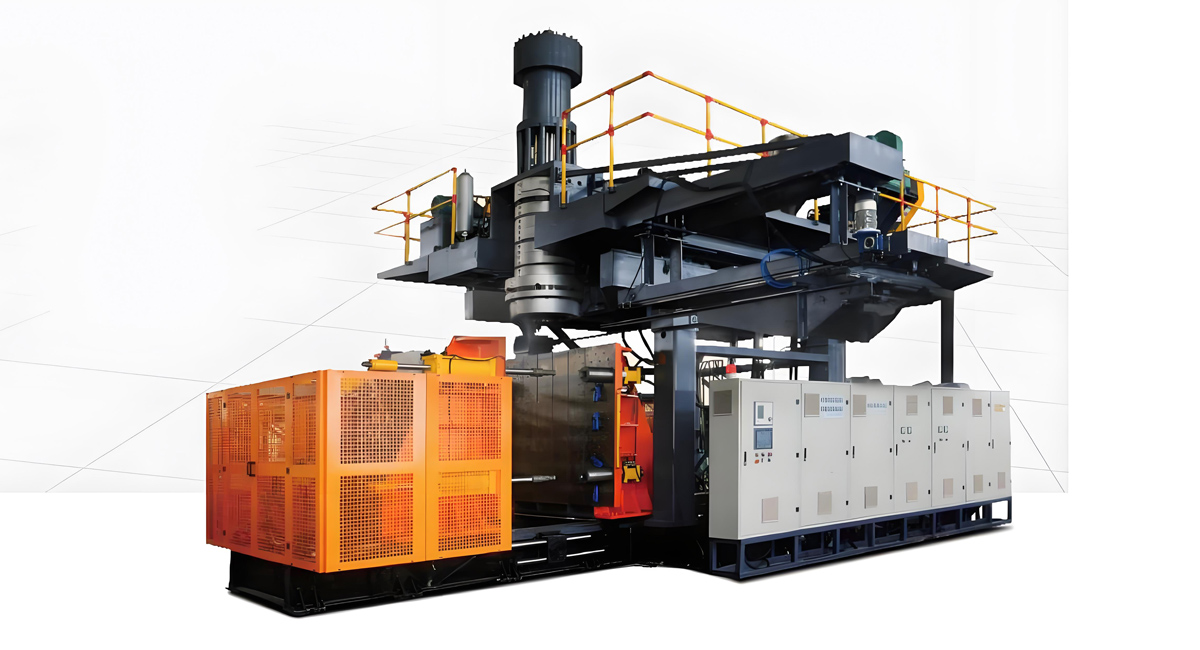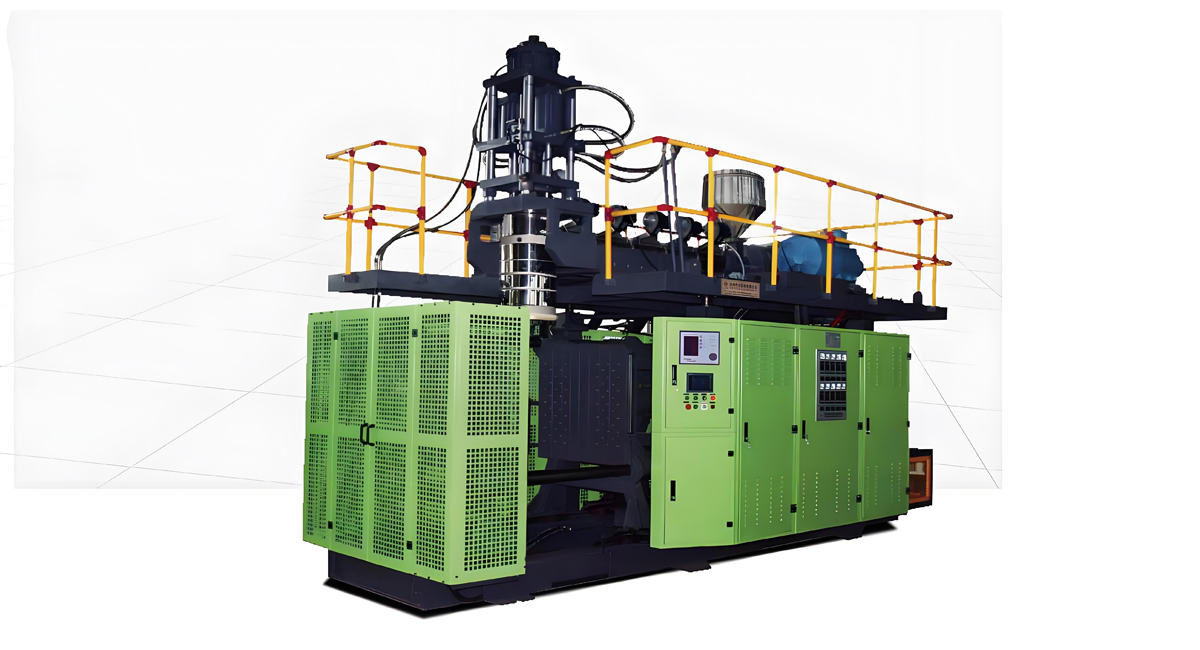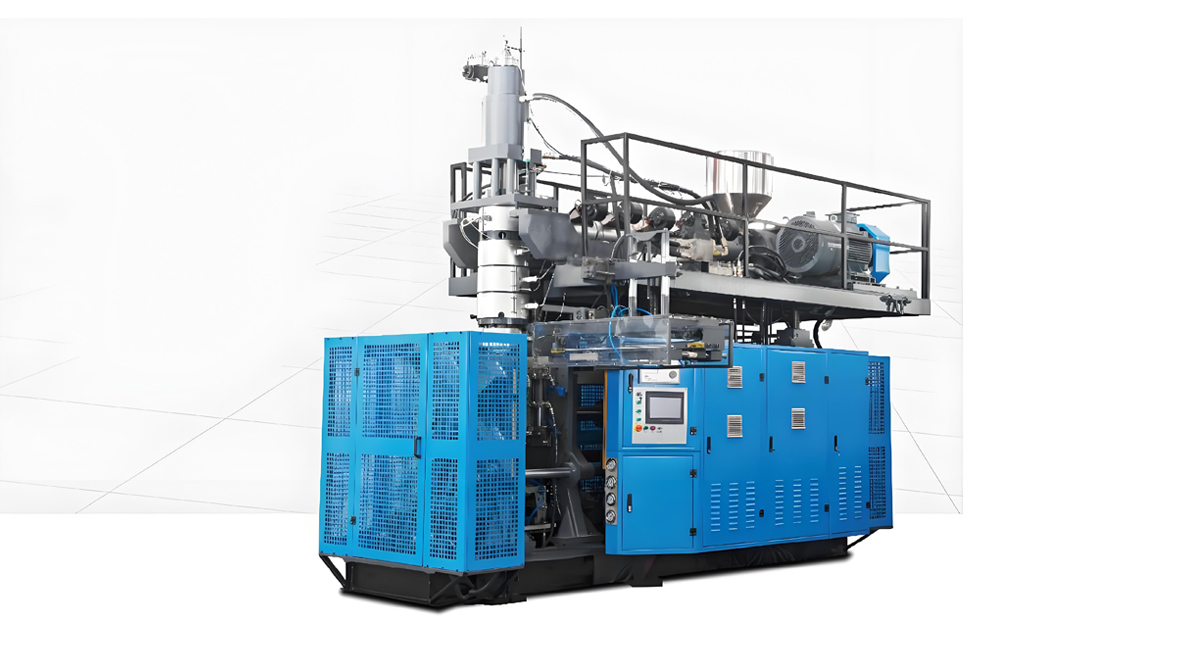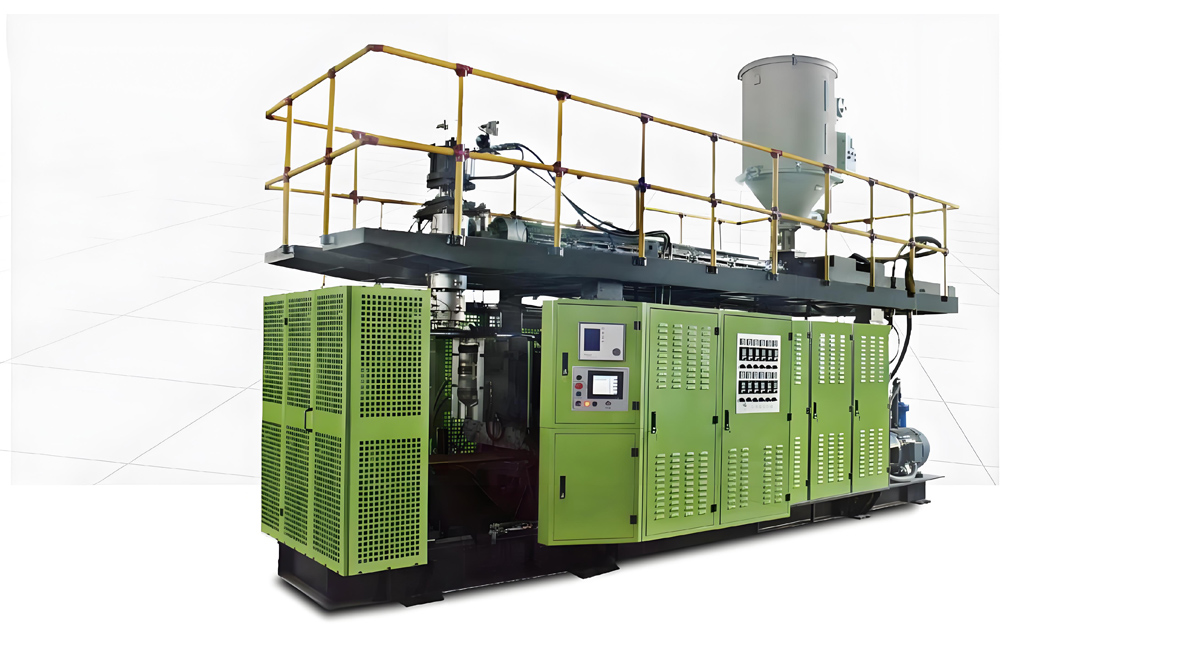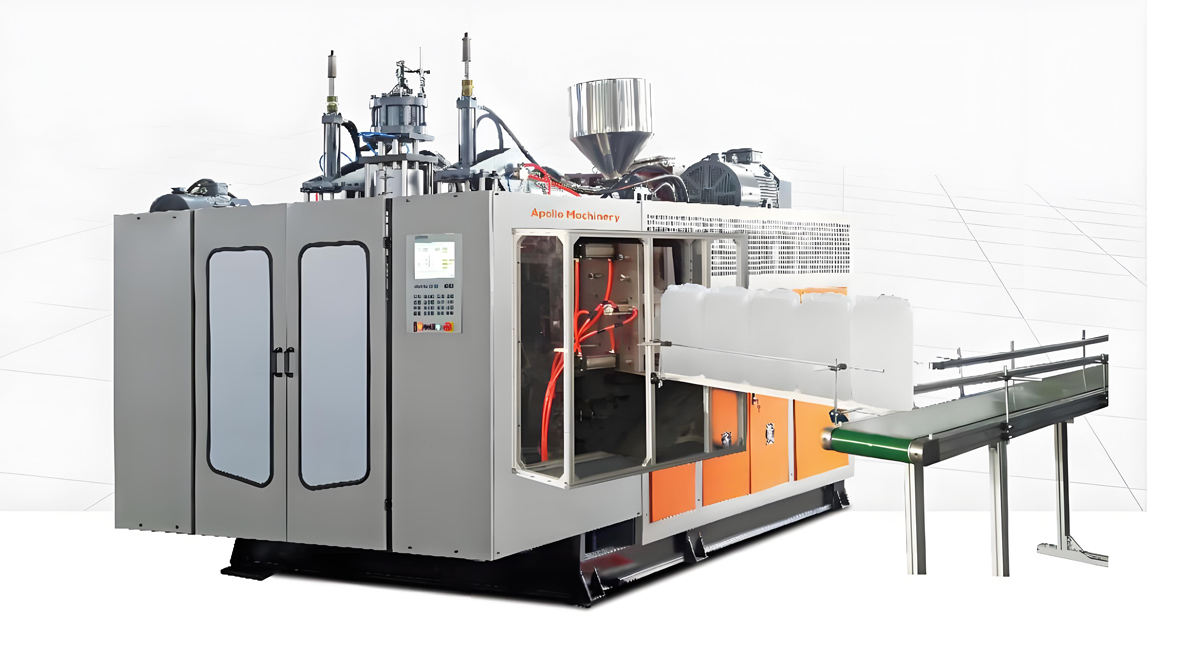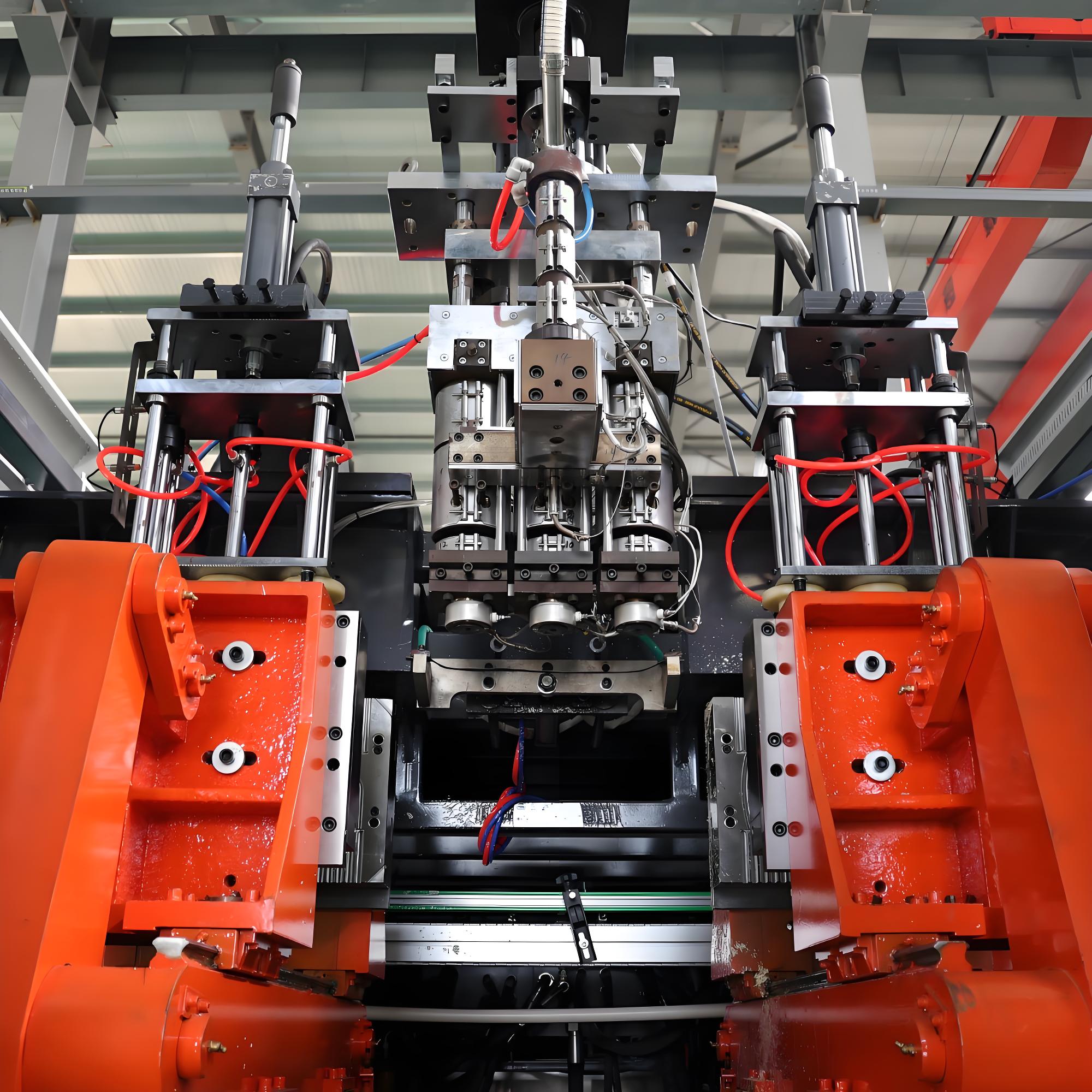

Extrusion blow molding (EBM) is the workhorse process behind millions of plastic containers, drums, tanks, and technical hollow parts produced every day across food and beverage, daily chemical, chemical, building material, medical, and automotive supply chains. For a production manager, the purchase price of an EBM machine is only the beginning of the cost story. The larger and more persistent figure is the total cost of ownership across the machine’s service life, and within that figure the maintenance burden is the lever that most directly affects both profit and peace of mind. Apollo, a Wanplas factory with more than 20 years of specialization in extrusion blow molding machines and over 4,000 units running in more than 90 countries, designs its ABLB, ABLD, and fully electric series around the principle that a machine should be easy and inexpensive to keep running for the long term. This article explains how maintenance cost is actually composed on an EBM line, which components wear and how long they last, how structural design decisions change the maintenance math, and how a disciplined inspection plan keeps unplanned downtime low.
The Real Cost of Keeping an EBM Line Running
Maintenance cost is rarely a single number on a spare-parts invoice. On a typical extrusion blow molding line it is a blend of several distinct categories, each of which can be influenced by design and by operating discipline. The first category is wear-part replacement: the screw and barrel, the die head and mandrel, hydraulic seals, proportional valves, clamping mechanism elements, servo encoders, pneumatic solenoid valves, and the cooling water circuit all age at different rates. The second category is lubrication and consumable fluids: grease, way oil, hydraulic oil, and filter elements. The third is energy degradation, where a poorly maintained drive, leaking hydraulic system, or fouled cooling circuit slowly raises the power drawn per thousand containers. The fourth and usually the largest category is unplanned downtime loss, because every hour the line is stopped is an hour of lost output plus labor spent on diagnosis. The fifth is labor man-hours themselves: the time technicians spend on routine service, adjustments, and breakdowns.
To make this comparable across machine types and factories, it helps to express each category on a relative scale rather than in absolute currency. The table below uses a baseline index of 100 points for a conventionally designed hydraulic EBM machine of comparable output, then shows how each maintenance component contributes relative weight and how many technician man-hours per year it typically consumes. These are planning indices, not quotations, and real values shift with shift pattern, ambient conditions, and material handled.
Maintenance Cost Composition at a Glance
| Cost component | What drives it | Relative cost grade | Man-hours per year (index) | Share of total index (baseline 100) |
|---|---|---|---|---|
| Wear-part replacement | Screw/barrel, die, seals, valves, encoder | Medium | 120 to 220 | 22 |
| Lubrication and fluids | Grease, hydraulic oil, filters, way oil | Low | 60 to 120 | 12 |
| Energy degradation | Leaky hydraulics, fouled cooling, worn drives | Medium to High | 40 to 90 | 14 |
| Unplanned downtime loss | Stopped output, expedited parts, overtime | Very High | 80 to 200 | 34 |
| Routine labor man-hours | Planned inspection and adjustment | Medium | 160 to 300 | 18 |
The most important takeaway from this breakdown is that the physical spare parts are not the dominant expense. Unplanned downtime and the labor wrapped around it together account for the largest share of the index. That is precisely why a low-maintenance EBM machine is defined less by cheap replacement parts and more by design features that keep the machine available: fewer leakage points, fewer wear surfaces, cleaner fluids, easier access, and condition monitoring that turns surprises into scheduled actions.
Why Machine Design Decides Lifetime Maintenance Burden
Two EBM machines with identical nominal output can have completely different lifetime maintenance profiles, and the difference is baked in at the design stage rather than discovered later on the shop floor. The structural choices that matter most are the clamping drive architecture, the guide system, the lubrication strategy, the die-head construction, the hydraulic versus electric balance, and the accessibility of service points. A machine designed around an all-electric or hybrid clamping and parison system removes the entire hydraulic power unit from daily concern. A machine built with linear guides instead of scraped slideways eliminates a class of lubrication and adjustment work. A machine with a centralized lubrication system converts dozens of manual grease points into a timed, metered routine. A modular die head turns a multi-hour teardown into a swap of a contained cartridge.
Apollo’s product range illustrates this spectrum clearly. The ABLB series covers containers from 200 milliliters to 20 liters and uses a conventional, robust architecture suited to high-volume commodity packaging. The ABLD series extends to 20 liters through 1,500 liters for heavy-duty drums and tanks where clamping force and platen size dominate. The fully electric series, also covering 200 milliliters to 20 liters, is engineered for operations with strict environmental and cleanliness requirements and for plants that want to remove the hydraulic system entirely. By offering both hydraulic and fully electric routes, Apollo lets a buyer match the maintenance philosophy to the product and the plant, rather than being forced into one paradigm.
Design also shapes how failures present themselves. A well-instrumented machine with a PLC and HMI that logs alarms and trend data lets a technician see a drifting hydraulic pressure or a rising motor current before it becomes a breakdown. A machine with hard-to-reach grease points will, in practice, be under-lubricated, and under-lubrication is the single most common accelerator of wear-part failure. The lesson is straightforward: maintenance cost is designed in, and the lowest-cost machine over ten years is usually the one engineered for serviceability from the first bolt.
Wear Components and Realistic Service-Life Ranges
Understanding which parts wear, and over what horizon, is the foundation of any credible maintenance plan. The figures below are operating-hour ranges observed under normal single-shift to double-shift production with correct material preparation; they are planning references, not guarantees, and aggressive regrind content or abrasive fillers will shorten them. The point of the table is to show the relative ranking of components so that stock and scheduling can be prioritized.
Wear-Part Life and Replacement Reference
| Component | Construction / material | Typical service life (operating hours) | Replacement interval guidance | Relative part cost grade | Man-hours per replacement |
|---|---|---|---|---|---|
| Screw and barrel | Bimetallic liner, 60 to 65 HRC | 20,000 to 40,000 | At wear threshold or output drop | Premium | 8 to 16 |
| Die head and mandrel | Nitride or hard-coated steel | 30,000 to 60,000 | Inspect per campaign; refurbish | High | 6 to 12 |
| Hydraulic sealing parts | Polyurethane and nitrile seals | 4,000 to 10,000 | Scheduled kit change | Low | 3 to 8 |
| Proportional valve | Servo-proportional cartridge | 15,000 to 30,000 | Condition-based | High | 2 to 5 |
| Mold clamping mechanism | Hardened links, guides, toggles | 50,000 to 100,000 cycles | Lubricate; align per plan | Medium | 4 to 10 |
| Servo motor encoder | Optical or magnetic encoder | 40,000 to 80,000 | Replace on fault or drift | Medium | 2 to 4 |
| Pneumatic solenoid valve | Pilot-operated 5/2 or 3/2 | 10,000 to 20,000 | Swap from stock | Low | 1 to 2 |
| Cooling water circuit scaling | Mold and chiller loop | 4,000 to 8,000 to fouling | Descale on interval | Low | 3 to 6 |
Two patterns stand out. First, the screw and barrel are the highest-cost item but also the longest-lived if protected, which is why material preparation and melt-temperature discipline pay back over years rather than weeks. Second, the cheapest components by unit price, such as solenoid valves and seals, are the ones that fail most often, so they should be treated as consumables with stock on the shelf rather than as surprises awaiting a special order. A maintenance plan that respects this ranking spends little on premium parts while avoiding the very high cost of a line stopped waiting for a five-dollar seal.
Structural Design Choices That Cut Maintenance
The most leverage comes from the broad architectural decisions, and the first of these is the choice between an all-electric, a hybrid, and a fully hydraulic drive. A fully hydraulic EBM machine relies on a pump, valves, accumulators, and cylinders for clamping, parison transfer, and blow. It is robust and often lower in initial complexity, but it introduces oil filtration, seal replacement, oil-temperature control, and the constant risk of slow leaks that soil the workspace and accelerate contamination. An all-electric machine replaces those functions with servo motors and ball screws or linear direct drives, removing the hydraulic power unit entirely. A hybrid machine keeps hydraulics only where they are genuinely advantageous, such as high-tonnage clamping on large ABLD drums, while electrifying the parison and auxiliary motions.
For the clamping system specifically, the guide choice matters. Traditional slideways depend on a film of way oil and periodic scraping to maintain alignment; if lubrication lapses, the surfaces wear and the platen racks out of square, which then loads the mold and the tie bars unevenly. Linear guides, by contrast, are preloaded, sealed, and greased for life in many designs, with lubrication supplied through a centralized system rather than a manual gun. The practical result is fewer adjustment events and a more stable platen over the machine’s life.
Centralized lubrication is a deceptively powerful feature. Instead of a technician walking the machine with a grease gun and potentially missing a distant nipple, a pump meters grease or oil to every defined point on a timed cycle, often with a low-level alarm if a line blocks. Apollo machines that include a centralized lubrication system turn what used to be a weekly chore into a monthly reservoir top-up, and they remove the single largest cause of premature guide and linkage wear: inconsistent lubrication.
Modular die heads reduce the pain of color or product changeovers and of routine refurbishment. Where a traditional head must be fully stripped, cleaned, and reassembled, a modular design isolates the flow insert and mandrel as a contained cartridge that can be swapped and serviced off-line. This not only shortens changeover man-hours but also keeps the precision surfaces protected because they spend less time exposed on the bench. The parison servo valve, when specified as a maintenance-free type with a sealed drive and no periodic recalibration, removes another recurring adjustment from the calendar.
Maintenance Burden by Drive Architecture
| Aspect | All-electric | Hydraulic | Hybrid |
|---|---|---|---|
| Lubrication points to service | Low | High | Medium |
| Seal replacement frequency | Very Low | High | Medium |
| Oil change and filtration | None | High | Medium |
| Energy degradation over life | Low | High | Medium |
| Workspace cleanliness | High | Medium | Medium to High |
| Mean maintenance man-hours per year (index, baseline 100) | 55 to 70 | 100 to 130 | 75 to 95 |
| Spare-parts cost grade | Medium | Low to Medium | Medium |
| Best fit | Clean-room, food, pharma, low-oil sites | Heavy drums, lowest initial complexity | Balanced cost and cleanliness |
The index figures in the table are relative planning values against a hydraulic baseline of 100. They show that moving from hydraulic to all-electric typically removes on the order of 30 to 45 index points of annual maintenance load, mostly by eliminating oil management and seal work, while adding only modest servo-condition monitoring. A hybrid design captures a meaningful share of that benefit while keeping hydraulic clamping for the largest molds.
Hydraulic System Care and Oil Cleanliness
For any machine that retains a hydraulic power unit, oil cleanliness is the single highest-leverage maintenance discipline. Contamination is the root cause of the majority of proportional-valve and pump failures, and it is entirely manageable through filtration and discipline. The target to hold routinely is NAS 1638 class 8, equivalently ISO 4406 18/16/13, with tighter class 7 acceptable for servo-rated systems. Return-line and pressure-line filter elements should be changed on a fixed schedule, commonly every 1,000 to 2,000 operating hours, rather than waiting for a differential-pressure alarm that may already coincide with component wear.
Oil temperature is the second pillar. Hydraulic fluid ages faster and loses viscosity control as temperature climbs, and seal life falls sharply above about 55 degrees Celsius. The cooling circuit should hold the reservoir in the 40 to 55 degree Celsius band, verified by a trend rather than a single glance, because a slowly failing cooler raises the baseline almost imperceptibly until seals begin to weep. Accumulators, where fitted to smooth clamp or blow demand, need an annual nitrogen pre-charge check; a soft accumulator makes the pump work harder and shortens its life while also degrading cycle consistency.
A disciplined hydraulic routine also includes sampling. A quarterly oil sample for particle count and water content turns the cleanliness target from a hope into a measured variable, and a rising trend triggers a filter change or a partial oil exchange before damage occurs. This is exactly the kind of planned action that converts a future Very High downtime event into a Low-grade scheduled service. Apollo’s service documentation for hydraulic ABLB and ABLD machines specifies these intervals, and following them is the difference between a hydraulic machine that feels high-maintenance and one that runs for years between major interventions.
Electrical Control, Diagnostics, and Predictive Maintenance
Modern EBM machines are controlled by a PLC with an HMI, and the maintenance value of that control system extends far beyond setting parameters. The PLC is a data source. Alarm logs record every fault with a timestamp, so a recurring evening pressure drop or a weekend servo overtemperature is visible in the history rather than reported as a vague “it stopped once.” Recipe management stores validated process sets per article, so changeovers do not require re-deriving the parison transfer timing from memory, which protects both quality and the mechanics from ad-hoc adjustments.
Predictive maintenance builds on this data. Three signals are especially useful and inexpensive to capture. Vibration trend on the extruder gearbox and clamp drive reveals bearing wear weeks before failure. Motor current trend on the screw drive and servo axes shows rising mechanical resistance from a worn guide or a binding linkage. Temperature trend on bearings, hydraulic oil, and heater zones exposes cooling or loading problems early. None of these require exotic sensors; they use signals already present on a well-instrumented machine, surfaced through the HMI or through a remote monitoring connection so that the plant’s maintenance lead can watch several lines at once.
Spare-parts inventory should be tiered to match this monitoring. Critical parts are those whose failure stops the line and which cannot be sourced locally within the target mean time to repair; these are kept on the shelf regardless of unit cost. Regular parts are consumables with predictable intervals, ordered on a schedule. Slow-moving parts are catalogued with supplier lead time so that a planned overhaul can be ordered weeks ahead. A simple criticality matrix prevents both overstocking and the painful gap where a minor component halts production. As a Wanplas factory, Apollo supports its machines with an annual free spare-parts allowance under the group’s service promise and with warranty replacement of defective components, which complements but does not replace disciplined local stocking of fast-failing items.
Cooling and Compressed Air for Stable Running
Cooling and compressed air are easy to overlook, yet both silently determine long-term cost. The mold cooling circuit removes the heat of crystallization from each bottle or part, and its efficiency sets the cycle time. Over thousands of hours, minerals precipitate inside the waterway, narrowing the passage and raising mold temperature, which lengthens cooling time and can cause warpage or flashing from a hotter, softer parison. Descaling the mold circuit every 4,000 to 8,000 operating hours, with the interval shortened by water hardness or an open cooling tower, keeps cycle time and quality stable. A side-stream filter and a measured water-treatment program extend that interval and protect the chiller itself.
The chiller deserves its own attention. A chiller running with fouled condensers or low refrigerant charge works harder, consumes more energy, and cools less effectively, pushing the mold temperature up and the cycle time with it. A quarterly chiller service, including condenser cleaning and a refrigerant check, is a Low-cost action that defends both output and energy use. Compressed air, used for blow pins, ejectors, and pneumatic actuators, must be clean and dry; a dew point around minus 20 degrees Celsius prevents moisture from freezing small orifices or corroding valves. Air compressor efficiency also matters for the long run, because an aging compressor draws more power per unit of air and may deliver unstable pressure that disturbs parison transfer or mold blow. Treating the compressor as a maintenance-critical asset, not a background utility, keeps the whole line consistent.
The Maintenance Schedule: Daily to Yearly Checklist
A maintenance plan is only as good as its execution, and execution is easiest when the work is broken into frequencies that match how the machine actually ages. The checklist below is structured by cadence, with each line carrying the action, the man-hours, and a relative cost grade. It is written for a representative double-station or multi-station EBM line; specific Apollo models may add or omit lines, but the structure holds.
Inspection and Service Checklist
| Task | Frequency | Action | Man-hours | Relative cost grade |
|---|---|---|---|---|
| Visual walk-around and leak check | Daily | Check oil, air, water leaks; clear scrap | 0.3 to 0.5 | Low |
| HMI alarm log review | Daily | Read and acknowledge alarms; note trends | 0.2 to 0.4 | Low |
| Lubrication reservoir and points | Weekly | Top up centralized lube; verify feed | 0.5 to 1.0 | Low |
| Air filter drain and dew-point check | Weekly | Drain traps; confirm dry air | 0.3 to 0.5 | Low |
| Hydraulic filter differential check | Monthly | Read gauge; replace if near limit | 0.5 to 1.0 | Low |
| Oil sample for particle and water | Quarterly | Send sample; compare to NAS 8 | 0.5 to 1.0 | Low |
| Chiller condenser cleaning | Quarterly | Clean coils; verify refrigerant | 1.0 to 2.0 | Low |
| Mold waterway descaling | Quarterly to semi-annual | Circulate descaler; flush; verify flow | 2.0 to 4.0 | Medium |
| Seal kit replacement on hydraulics | Semi-annual to annual | Replace planned seals before leak | 3.0 to 8.0 | Low |
| Accumulator nitrogen pre-charge check | Annual | Measure and recharge to spec | 1.0 to 2.0 | Low |
| Alignment and calibration verification | Annual | Platen square, encoder zero, sensor cal | 4.0 to 8.0 | Medium |
| Die head and screw inspection | Annual | Measure wear; plan refurbishment | 6.0 to 12.0 | High |
Summed across a year, a line on this plan typically consumes a few hundred technician man-hours, almost all of it predictable and scheduled. The contrast with a reactive regime is stark: the same machine left unserved may appear to cost nothing for months, then absorb a multi-day stoppage that dwarfs a year of planned care. The schedule is therefore not an expense but an insurance policy expressed in man-hours.
Common Faults, Root Causes, and Relative Downtime
Even on a well-designed machine, faults occur, and the maintenance advantage shows up in how quickly they are resolved. The table below maps the most common EBM faults to their likely root cause, the standard remedy, and a relative downtime grade with an index against the same baseline of 100. A Low downtime event is resolved within a shift by swapping a stocked part; a Very High event involves a major strip or a long-lead order.
Fault, Root Cause, Remedy, and Downtime
| Fault / symptom | Likely root cause | Remedy | Relative downtime | Downtime index (baseline 100) |
|---|---|---|---|---|
| Parison sag or inconsistency | Melt-temperature drift, die contamination | Stabilize zones; purge and clean head | Low | 15 to 30 |
| Hydraulic pressure drop | Internal seal leak, clogged filter | Replace seal kit; change filter | Medium | 35 to 60 |
| Clamping misalignment, flash | Worn guide, missed lubrication | Realign platen; restore lube cycle | Medium | 40 to 70 |
| Servo fault or position error | Encoder cable, bearing preload | Swap encoder/cable; check mount | Medium | 30 to 55 |
| Poor cooling, long cycle | Waterway scaling, weak chiller | Descale mold; service chiller | Low to Medium | 20 to 45 |
| Blow pin leak or stuck | Worn seal, moisture in air | Replace pin seal; dry air supply | Low | 10 to 25 |
| Screw/barrel output loss | Abrasive regrind, over-temperature | Rebuild or replace screw/barrel | Very High | 80 to 140 |
| Proportional valve failure | Oil contamination above NAS 8 | Replace valve; flush and re-filter | High | 50 to 90 |
The pattern is instructive. The highest-index events, screw and barrel replacement and proportional-valve failure, are both strongly preventable: the first by material preparation and temperature control, the second by oil cleanliness discipline. This is why the low-maintenance philosophy invests man-hours early, in filtration and lubrication, to avoid Very High downtime later.
OEE View: Availability, Performance, Quality, and MTBF
Overall equipment effectiveness, or OEE, frames maintenance in business language. It is the product of availability, performance, and quality. Availability is the fraction of planned production time the machine is actually running, and it is directly harmed by unplanned downtime, the very thing a low-maintenance design targets. Performance is speed loss from slow cycles or minor stops, often traceable to creeping cooling inefficiency or a sticky valve. Quality is scrap and rework, frequently linked to unstable parison conditions that good maintenance preserves. A maintenance program that raises availability even a few points, by cutting stoppages, can lift OEE more than a much larger improvement in a single isolated parameter.
Two reliability metrics make this concrete. Mean time between failures, or MTBF, measures the average operating interval between stoppages; a planned-maintenance EBM line commonly targets an MTBF in the 1,200 to 2,500 operating-hour band, with the upper end typical of all-electric or hybrid machines with disciplined lubrication. Mean time to repair, or MTTR, measures how fast the line returns after a fault; for the most frequent faults the target is below 4 hours, achievable because the failing part is stocked and the diagnosis is supported by alarm history. Multiplying a higher MTBF by a lower MTTR yields the availability that defines low total cost of operation.
It is worth stating the relationship plainly: maintenance cost and OEE are two views of the same machine. Spending man-hours on scheduled care lowers the probability of a Very High downtime event, which raises availability, which raises OEE, which lowers the effective cost per container. The Apollo design intent, across the ABLB, ABLD, and fully electric series, is to make that scheduled care both shorter and less frequent so that the OEE gain comes almost for free.
Spare Parts Strategy and Operator Training
Reliable running depends as much on the surrounding system as on the machine itself. A tiered spare-parts strategy, introduced earlier, should be backed by a simple stock ledger that records minimum and maximum quantities, supplier lead time, and the last date drawn. Critical items, such as hydraulic seal kits, a proportional valve or cartridge, blow-pin seals, solenoid valves, heater bands, thermocouples, fuses, and encoder cables, should never drop below the minimum. Regular consumables, such as filters and grease, are ordered on the service schedule. Slow-moving items, such as a spare screw or die insert, are planned for during annual budgeting rather than during a midnight breakdown.
Operator training is the cheapest maintenance multiplier available. An operator who understands the difference between a benign alarm and a precursor to failure, who knows to keep the workspace clean and the grease reservoir filled, and who reports a rising trend in the HMI before it becomes a stoppage, extends component life more than any single hardware upgrade. Apollo’s installation and commissioning service includes operator training, and the group’s open-factory policy invites customers to observe assembly and testing, which builds the practical familiarity that keeps machines healthy in the field. Documentation matters too: a bound manual with the lubrication map, the torque values, and the alarm list, kept at the machine, turns tribal knowledge into repeatable procedure.
Choosing a Low-Maintenance EBM: The Apollo Approach
When a buyer evaluates extrusion blow molding machines for long-term low cost, the right questions are rarely about the sticker price. They are about how the machine is built to stay available. Apollo, a Wanplas factory, answers those questions across its range. The fully electric series removes the hydraulic power unit for the cleanest, lowest-routine-care operation and is well suited to food, pharmaceutical, and environmentally sensitive sites. The ABLD series brings hydraulic clamping force to large drums and tanks where electric clamping would be disproportionate, while still benefiting from modular die heads and centralized lubrication. The ABLB series delivers proven, serviceable architecture for the high-volume 200 milliliter to 20 liter container segment.
Common to the low-maintenance intent are several concrete design commitments: bimetallic barrel liners rated at 60 to 65 HRC for long screw and barrel life; linear or sealed guide systems that reduce adjustment; centralized lubrication that removes missed grease points; modular die heads for fast, protected servicing; maintenance-free parison servo valves where specified; and PLC and HMI platforms that log alarms and support remote monitoring so trends are seen early. Combined with the Wanplas group’s shared service promises, including warranty replacement of defective components and an annual free spare-parts allowance, the ownership experience is engineered to be predictable rather than surprising.
The practical recommendation is to match the drive architecture to the product and the plant, then enforce the schedule. A food packager with strict hygiene goals gains the most from the fully electric series. A chemical drum maker with heavy clamping needs gains the most from a well-specified ABLD with rigorous hydraulic care. In every case, the lowest total cost of operation comes from designing out maintenance at the source and planning the rest on a calendar rather than a crisis.
Frequently Asked Questions
What is the biggest driver of maintenance cost on an extrusion blow molding machine?
Unplanned downtime is usually the largest contributor because a stopped line loses output and ties up labor, while the physical spare-part cost is comparatively small. Design choices that raise availability, such as all-electric clamping and centralized lubrication, therefore reduce total maintenance burden more than simply buying cheaper components.
How long does a bimetallic screw and barrel last in an EBM machine?
A bimetallic barrel liner rated at 60 to 65 HRC typically delivers 20,000 to 40,000 operating hours before wear reaches the replacement threshold. Proper drying of hygroscopic materials, stable melt temperature, and clean regrind can push the life toward the upper end of that range.
Do all-electric EBM machines really need less maintenance than hydraulic ones?
Yes, on balance. An all-electric machine removes the hydraulic power unit, oil filtration, seal replacement, and oil-temperature management from the maintenance plan. The trade-off is that servo drives and encoders need condition monitoring, but the total man-hours per year are generally lower and the workspace stays cleaner.
What hydraulic oil cleanliness level should an EBM machine target?
Aim for NAS 1638 class 8 or ISO 4406 18/16/13 as a routine target. Servo-hydraulic and proportional-valve systems are sensitive to particulate contamination, so the return and pressure filters should be changed on a fixed schedule rather than only when a fault appears.
How often should the mold cooling water circuit be descaled?
With typical municipal or well water, inspect and descale the mold waterway every 4,000 to 8,000 operating hours, and verify the chiller-side loop at the same interval. Poor water quality, high hardness, or open cooling towers shorten that interval, so a side-stream filter and water treatment extend both cooling efficiency and component life.
What MTBF and MTTR targets are realistic for a well-maintained EBM line?
A planned-maintenance program on a twin-station or multi-station EBM line commonly targets a mean time between failures in the 1,200 to 2,500 operating-hour band and a mean time to repair below 4 hours for the most frequent faults. Availability then lands in the high range, which is the maintenance goal behind a low total cost of operation.
Which spare parts should an EBM operator always keep in stock?
Stock the items classified as critical and fast-failing: hydraulic seals and o-rings, a proportional valve or cartridge kit, blow-pin seals, solenoid valves, heater bands, thermocouples, and a set of common fuses and encoder cables. Categorizing spare parts by criticality prevents a small, cheap failure from stopping the line for days while a special-order part arrives.
Conclusion
Low maintenance cost on an extrusion blow molding machine is not an accident of a low price tag; it is the outcome of design decisions made long before the machine reaches the factory floor and of discipline applied every week after it does. The components that wear are predictable, their life ranges are known, and the architectural choices, all-electric or hybrid drive, linear guides, centralized lubrication, modular die heads, and sealed servo valves, measurably reduce the man-hours and downtime that dominate lifetime cost. Add a calendar-based inspection plan, an oil-cleanliness target of NAS 8, a descaling routine for the cooling circuit, alarm-log discipline, and a tiered spare-parts stock, and the result is a line whose availability, and therefore its OEE, stays high while its cost per container stays low. Apollo, a Wanplas factory with more than 20 years in extrusion blow molding and thousands of machines in service worldwide, builds this philosophy into the ABLB, ABLD, and fully electric series so that long-term low-cost operation is the default condition rather than a hoped-for one. For any plant specifying a new EBM line, the question to ask is not only what the machine costs today, but how little it will ask of the maintenance team across the next decade.