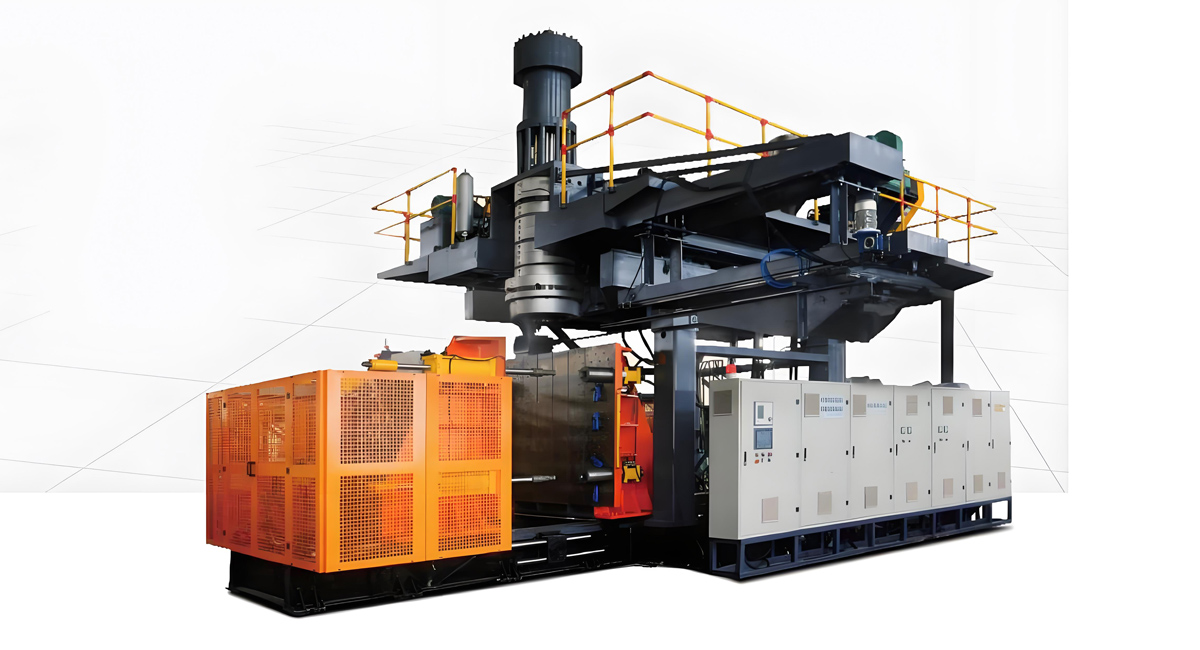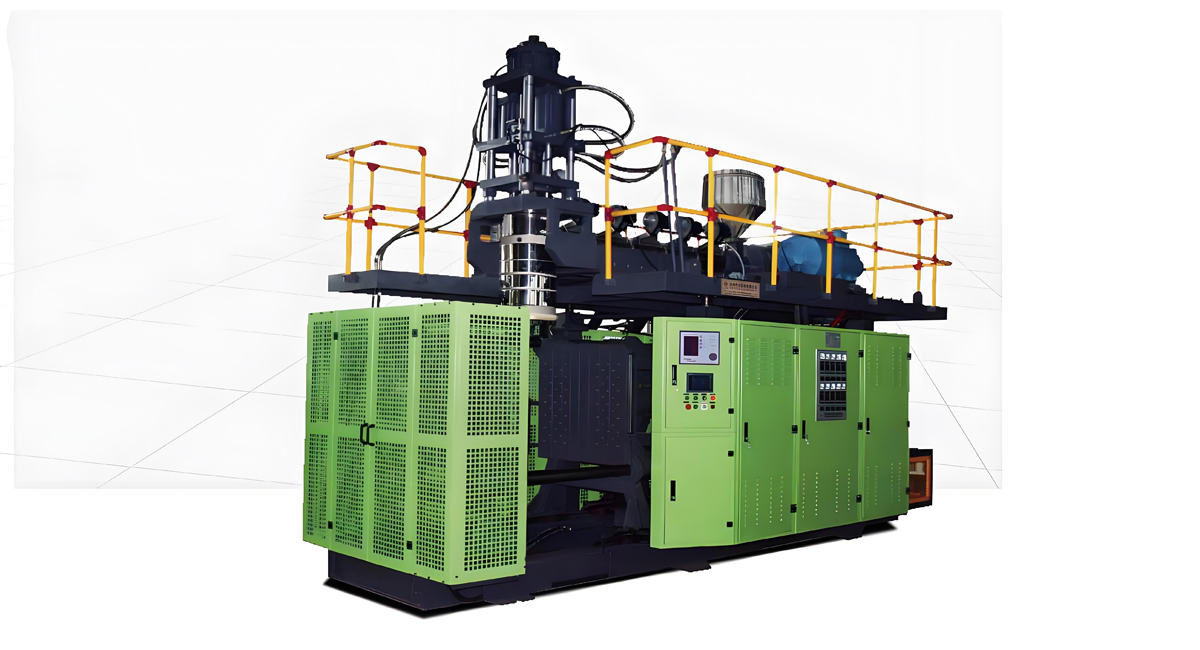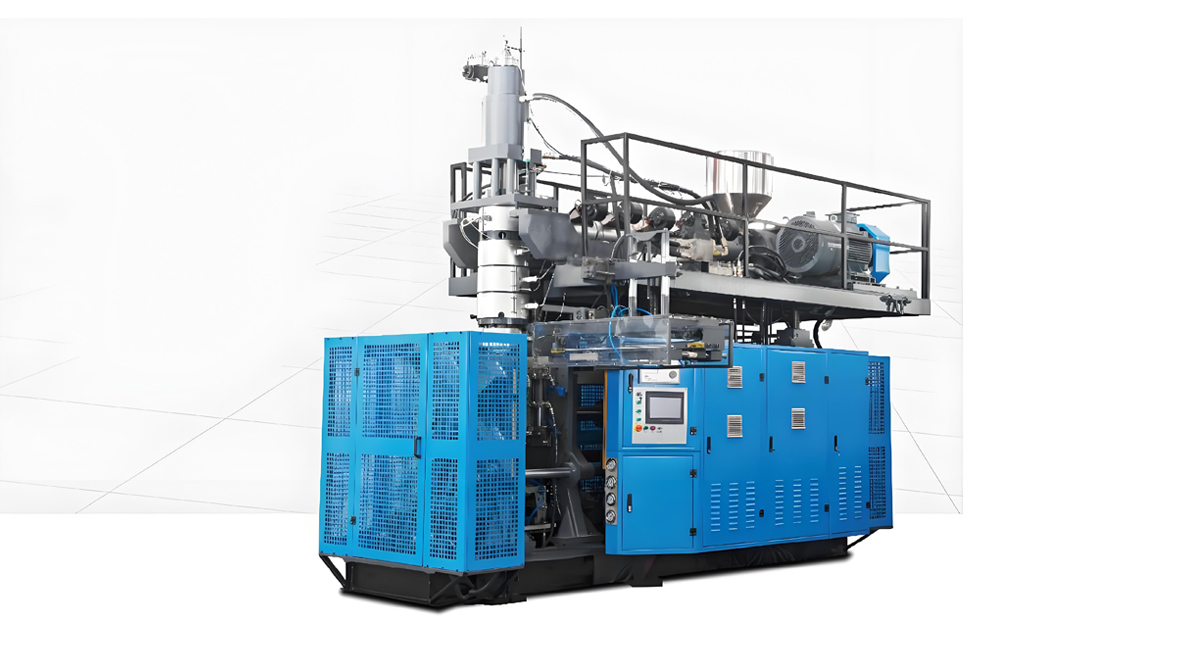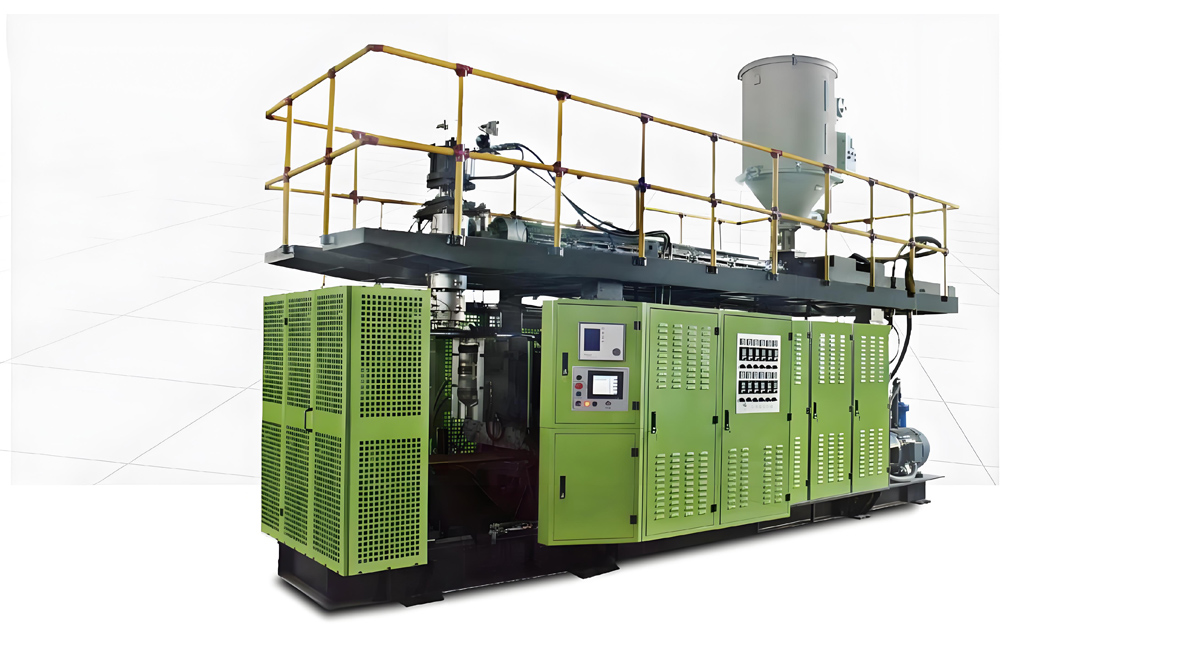
Choosing between a single station and a double station extrusion blow molding machine is one of the most consequential decisions a packaging, daily chemical, or industrial container producer makes when investing in EBM capacity. The two layouts share the same fundamental process — plastic melt is extruded through a die head as a hollow tube called a parison, captured between two mold halves, inflated with compressed air, cooled, and ejected as a hollow part — yet they differ profoundly in how that cycle is organized, how much output they deliver per hour, and how efficiently they consume energy, floor space, and labor. This article delivers a full engineering comparison of single station and double station extrusion blow molding machines, focused on measurable output in bottles per hour, cycle structure, energy use, footprint, tooling flexibility, and the practical selection logic that helps buyers match a configuration to their product mix and growth plan. Apollo, a Wanplas factory with more than 20 years of experience in extrusion blow molding and over 4,000 machines running in more than 90 countries, builds both layouts across its ABLB, ABLD, and fully electric series, so the comparison below is grounded in real machine architecture rather than generic theory.
What a Single Station and a Double Station EBM Machine Actually Are
A single station extrusion blow molding machine carries one clamping unit, one set of platens, and one mold cavity bank that opens and closes on a single axis. The extruder continuously plasticizes the resin and pushes melt through the die head, forming a parison that drops into the open mold. The clamp closes, the blow pin enters, low-pressure and then higher-pressure air expands the parison against the cooled cavity wall, the part solidifies, the mold opens, and the finished article is stripped and conveyed away. In a single station layout the entire blowing, cooling, and ejection sequence happens at one location, and the clamp is idle — unable to accept a new parison — for the full duration of blowing, cooling, and part removal. That idle window is the central limitation this article addresses, because the extruder can keep making melt, but the machine cannot keep making parts until the current one is finished and ejected.
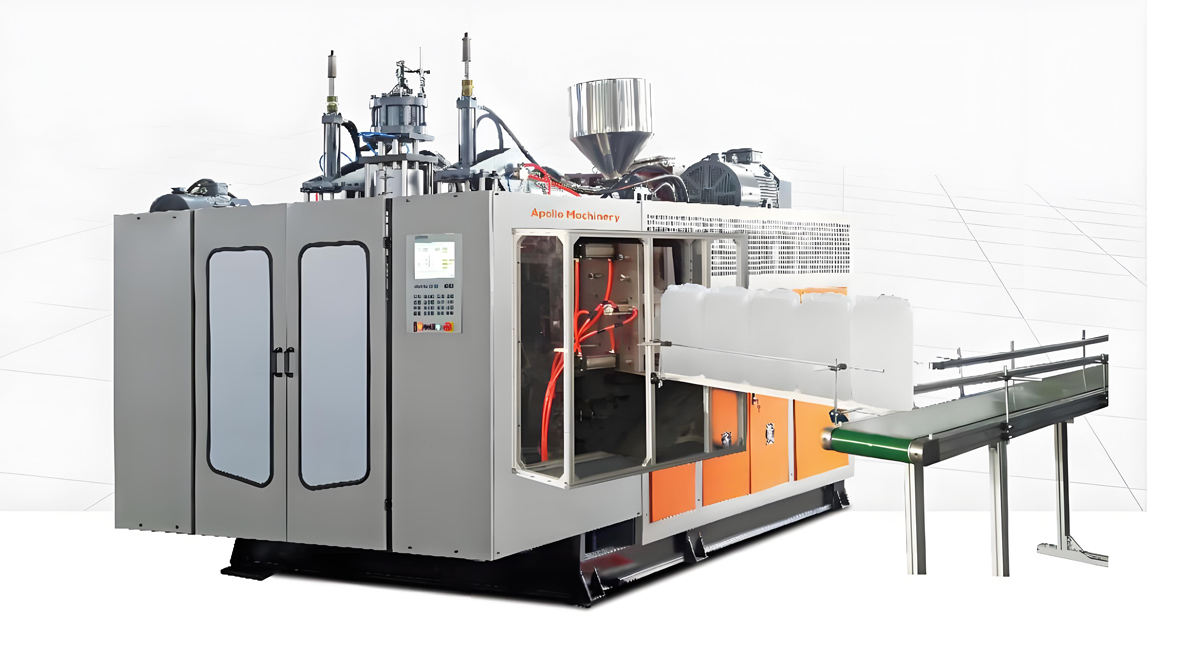
A double station machine, by contrast, carries two independent clamping units on a shared base, served by one or two extruders and die heads. While station A is blowing, cooling, and being readied for ejection, station B receives the next parison and begins its own blowing sequence. The two stations alternate, so the extruder is almost never forced to stop while a mold sits closed. The parison transfer is handled by a moving carriage, a rotating distributor, or a second head, depending on the machine design. The conceptual advantage is simple but powerful: the duty cycle of the expensive extruder and die head is lifted from perhaps 55 to 70 percent on a single station machine to 85 to 95 percent on a well-matched double station machine, and that recovered utilization translates directly into more bottles per hour from essentially the same plasticizing capacity.
It is important to separate the station count from the head count. A single station machine may use a single head or a multi-cavity head that drops several parisons at once into one large mold. A double station machine may be fed by a single head that alternates between the two stations, or by two independent heads, each dedicated to one station. The number of stations governs how many molds can be in process at once; the number of heads and cavities governs how many parts are produced per cycle. A buyer evaluating output must therefore consider both numbers together, and the tables later in this article treat them as independent variables so that the comparison stays realistic rather than misleading.
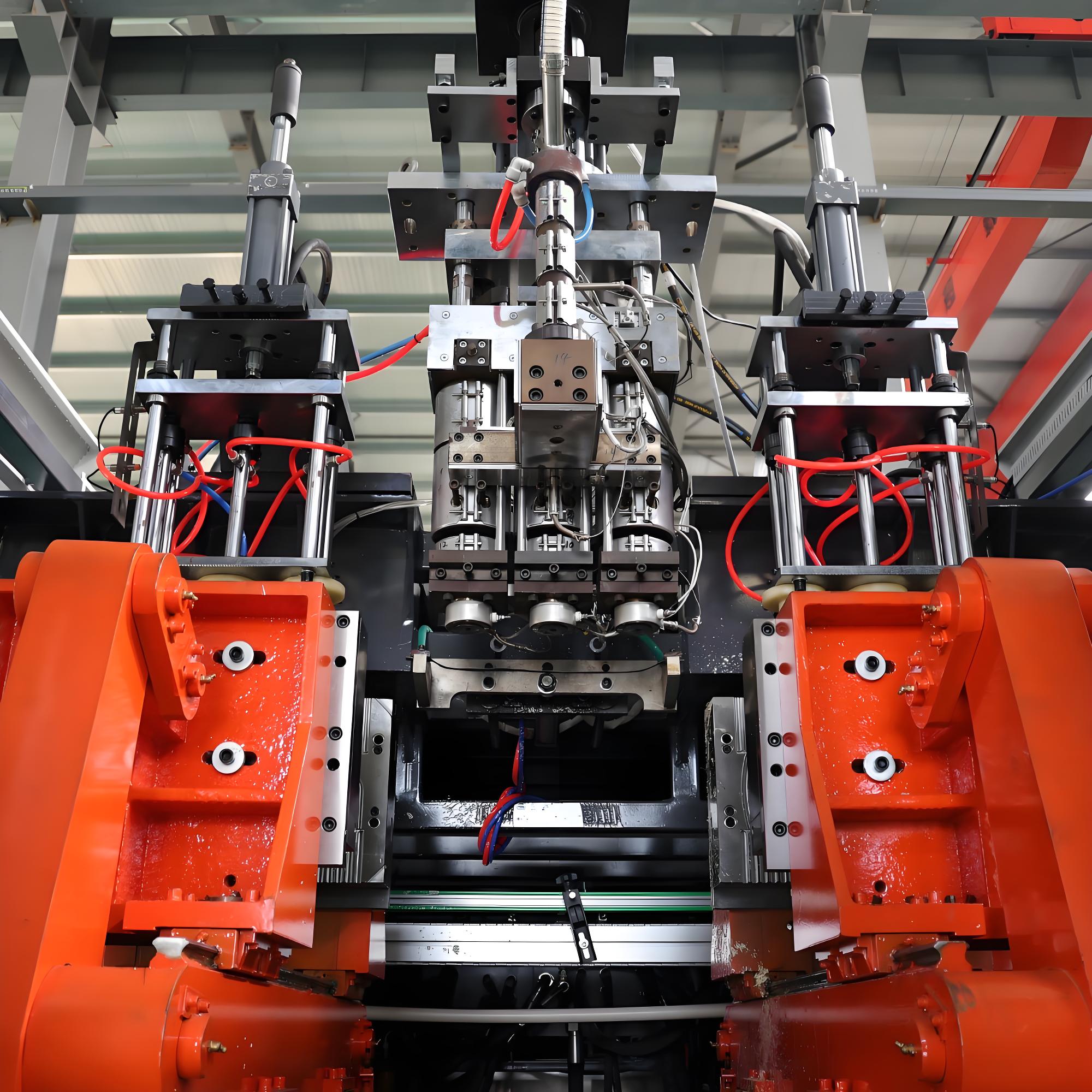
The mechanical consequences of adding a second station are substantial. Each station needs its own clamping mechanism, platen guide, blow pin assembly, and cooling water manifold. The base must be longer and stiffer to resist the torsional and bending loads of two moving platens. The hydraulic or all-electric drive must serve two clamps and may need a larger power unit or a second servo axis. On Apollo fully electric series machines there is no hydraulic power unit at all, which changes the energy and maintenance profile substantially, but the basic geometry of carrying two platens remains. Understanding this hardware reality is the first step toward understanding why a double station machine costs more to purchase yet often costs less per bottle produced.
The process materials are identical across both layouts. Apollo machines process PE, PP, PVC, PA, PC, ABS, PS, EVA, TPU, and PETG, with HDPE being the dominant resin for industrial and consumer containers because of its density range of 0.941 to 0.965 g/cm3, melt flow rate typically 0.3 to 1.0 g/10 min for blow molding grades, good environmental stress crack resistance for detergent and chemical bottles, and a favorable balance of toughness and processability. Whether the machine is single or double station, the resin behavior, the parison sag tendency, and the need for a programmable wall thickness controller are the same; what changes is how many molds exploit that melt stream at the same time.
Finally, the station decision is not only about speed. A single station machine is simpler to operate, easier to troubleshoot, cheaper to tool, and inherently more flexible for short runs and frequent product changeovers. A double station machine commits the buyer to higher utilization thinking: it pays back best when run continuously on stable, high-volume products. The rest of this article quantifies those trade-offs so the choice can be made on data rather than habit.
How the Two-Station Layout Reclaims Extruder Idle Time
The core mechanism behind the double station advantage is the overlap of the cooling and ejection phases. In a single station cycle, the total cycle time is the sum of parison extrusion, mold close, blow, cooling, mold open, and part removal. On a small HDPE bottle of roughly 500 ml, the parison may take 3 to 5 seconds to extrude, while cooling and ejection may take 8 to 14 seconds. During those cooling and ejection seconds the extruder is still plastifying resin, but the clamp cannot take a new parison, so melt either accumulates in the head or the screw slows. The effective result is that the machine’s productive window is only the portion of the cycle when a parison is actually being formed and captured.
A double station machine structures the cycle so that while station A is in its cooling and ejection phase, station B is already receiving and blowing its parison. The extruder output is diverted alternately, and the cooling time of one station is hidden behind the active blowing of the other. In the ideal case, the limiting factor shifts from the clamp idle time to the slower of two sub-processes: the parison extrusion rate or the cooling time. For small bottles where cooling is short, parison extrusion becomes the limit and doubling stations roughly doubles the parison capture opportunities, yielding a large throughput gain. For large containers where cooling dominates, the gain is smaller because both stations are still waiting on the same long cooling window.
A useful way to visualize this is the duty-cycle formula. If the single station machine has a clamp utilization of U1 and the double station machine has U2, the output ratio is approximately U2 divided by U1 when the extruder is the shared constraint. Typical figures are U1 near 0.60 and U2 near 0.90, giving a theoretical ratio of 1.5. Real-world ratios fall below this because of head refill delays on accumulator machines, transfer carriage travel time, and the need to synchronize two stations, but the direction of the benefit is unambiguous and repeatable across production sites.
The accumulator head deserves special attention here. On Apollo ABLD series machines for containers from 20 liters to 1500 liters, a hydraulic or servo accumulator stores a full shot of melt and releases it rapidly to form a thick parison. Refilling the accumulator takes time and competes with the cooling cycle. In a single station layout, the machine waits for both cooling and refill before the next part. In a double station layout, the accumulator refills while the opposite station cools its just-blown part, so the refill idle time is absorbed rather than added to the cycle. This is precisely why large-container producers who need volume almost always choose double station ABLD configurations: the accumulator idle, not just the clamp idle, is what gets reclaimed.
Transfer mechanism design also matters. A moving carriage that shuttles the parison from the head to alternating stations adds a few seconds of travel, while a dual-head design with one head per station removes that delay at the cost of a second die head and a second wall thickness controller. Apollo offers both philosophies, and the choice between them influences the output table later in this article. Buyers should ask not only “single or double station” but also “single head alternating, or dual head dedicated,” because that second question often explains a larger share of the output difference than the station count alone.
The practical conclusion is that the double station layout does not magically make the extruder faster; it makes the extruder busier. For a producer running stable, long-demand SKUs, that recovered busy time is free capacity. For a producer running many short changeovers, the recovery is partly wasted because the machine is stopped for tooling swaps regardless of station count. Matching the layout to the demand pattern is therefore more important than chasing the highest headline bph number on a spec sheet.
Output Comparison by Container Size and Material
Output in extrusion blow molding is most honestly expressed in bottles per hour, or pieces per hour for non-bottle articles, at a defined container size, material, and cavity count. The table below gives representative ranges for HDPE containers on comparable Apollo-class machines, using single and double station layouts with matched single heads. These are planning-grade figures that must be confirmed by mold trial; they reflect typical commercial EBM behavior rather than a guaranteed rate for any specific tool.
Representative Output by Container Size (HDPE, single head, planning ranges)
| Container size | Single station bph range | Double station bph range | Typical gain factor | Dominant cycle limit |
|---|---|---|---|---|
| 100 to 250 ml | 500 to 900 | 900 to 1600 | 1.6 to 1.9 | Parison extrusion |
| 500 ml to 2 L | 300 to 600 | 550 to 1050 | 1.6 to 1.8 | Mixed parison and cooling |
| 5 L to 10 L | 90 to 180 | 150 to 280 | 1.4 to 1.6 | Cooling and head refill |
| 20 L to 60 L | 25 to 55 | 38 to 80 | 1.3 to 1.5 | Accumulator refill |
| 200 L to 1000 L | 4 to 12 | 6 to 18 | 1.2 to 1.4 | Cooling and wall mass |
The pattern is clear: the smaller the container, the larger the double station gain, because cooling is short and the extruder was the bottleneck. As containers grow, cooling and accumulator refill dominate, and the gain shrinks toward 1.2 to 1.5 times. A buyer who compares only the largest container in their range may undervalue double station; a buyer who runs mostly small bottles may find double station nearly doubles output.
Material choice shifts the numbers further. PP has a faster crystallizing, shorter cooling demand than HDPE in thin sections but is more sensitive to parison sag and sealing, so cycle times and scrap rates differ. PETG and PVC cool differently and demand tighter temperature control at the die head. PC and PA require higher melt and mold temperatures, lengthening cooling. The table below summarizes how material influences the relative single versus double station advantage by changing which phase limits the cycle.
Material Influence on Cycle Limit and Station Advantage
| Material | Typical density g/cm3 | Cooling behavior | Double station gain tendency | Notes for selection |
|---|---|---|---|---|
| HDPE | 0.941 to 0.965 | Moderate, sag sensitive | High on small parts | Mainstream, use wall thickness control |
| PP | 0.900 to 0.910 | Faster set, warps if unequal | High | Watch neck ovality and cooling symmetry |
| PVC | 1.30 to 1.45 | Heat sensitive, slow head | Medium | Need controlled die temperature, stabilizer |
| PETG | 1.27 | Clear, needs low stress | Medium | Cosmetic clarity, lower blow pressure |
| PC | 1.20 | Long, high temp | Low to medium | Cooling limited, less station benefit |
For a buyer, the takeaway is to size the station choice against the smallest and highest-volume SKU, not the average. If 70 percent of volume is in 1-liter HDPE bottles, a double station machine sized to that product will deliver the largest share of the available gain, and the slower large containers can be scheduled around it. Apollo engineers routinely run this product-mix analysis during the quotation stage, because the right answer depends far more on the order book than on the machine catalog.
Energy Consumption, Floor Space and Labor Efficiency
Energy use in EBM is dominated by the extruder drive, the barrel and head heaters, the hydraulic power unit or servo axes, and the cooling water system. The extruder motor is the single largest steady consumer, often the majority of plant power during sustained runs. In a single station machine the extruder frequently idles or slows while the clamp is busy, but the heaters and auxiliary systems keep running, so a portion of consumed energy produces no part. In a double station machine the same extruder runs nearer to continuous load, spreading that fixed energy across more bottles, which is why energy per bottle typically falls even though total plant power is a little higher.
Quantitatively, a double station machine may draw roughly 10 to 25 percent more total connected power than a comparable single station unit, because it adds a second clamp drive, a second cooling manifold, transfer carriage, and control_axis. Yet because it produces 30 to 90 percent more bottles, the specific energy expressed as kWh per kilogram of finished article commonly drops by 8 to 20 percent. For a plant running three shifts, that reduction in kWh per kg is a meaningful operating saving that accumulates across the machine’s service life and partly offsets the higher purchase price.
Floor space is where the double station layout is unambiguously more demanding. A double station machine is longer along the clamp axis because it carries two platen assemblies and the transfer mechanism. As a planning rule, the footprint length grows by roughly 1.6 to 2.2 times relative to a single station machine of similar clamp force, while the width changes little. The buyer must also reserve space for two ejection conveyors or a single wider conveyor, additional cooling water routing, and easier operator access on both sides. In a greenfield plant this is a simple layout decision; in a retrofit, it is often the deciding constraint that forces a single station choice despite the output penalty.
Labor efficiency is frequently misunderstood. A double station machine does not usually need two operators; one operator tends both stations, the same as one. What changes is the operator’s value per hour: the same labor now supervises a higher output, lowering labor cost per bottle. Where a plant is constrained by skilled operator availability rather than machine count, a double station machine is an efficient way to multiply output per person. The caveat is training: two-station synchronization, dual-head wall thickness programming, and alternating ejection require a more capable technician, so the labor saving is real but assumes competent staffing.
Cooling water demand also rises with the second station, because two molds must be served simultaneously. The chiller load grows roughly in proportion to the added active mold area, so the buyer should size the central cooling system for the double station peak rather than the single station baseline. Undersized cooling is the most common hidden cause of disappointing double station output, because the expected cooling-time reduction never materializes when water temperature rises under load. Apollo’s factory acceptance testing and on-site installation guidance include cooling capacity verification for exactly this reason.
The table below summarizes the three efficiency dimensions side by side so the trade-off is visible at a glance. Note the use of relative cost indices rather than absolute figures, because energy tariffs, water cost, and local labor rates vary widely and should be confirmed against the buyer’s own utility profile.
Efficiency Dimensions: Single vs Double Station
| Dimension | Single station index | Double station index | Net effect |
|---|---|---|---|
| Connected power | Low to Medium | Medium to High | Higher total, lower per bottle |
| Specific energy kWh/kg | Medium | Low to Medium | Typically 8 to 20 percent lower |
| Floor space length | Low | Medium to High | 1.6 to 2.2 times longer |
| Operator per machine | 1 | 1 | Lower labor per bottle |
| Cooling water load | Low to Medium | Medium to High | Size chiller for peak |
In practice the double station machine wins on energy-per-bottle and labor-per-bottle while losing on floor space and connected power. For plants with space and power available, the efficiency case is strong. For plants at the limit of their building or transformer, the single station may be the only feasible path even if output per square meter is lower.
Tooling, Changeover and Production Flexibility
Flexibility is the single strongest argument for the single station machine. With one mold location, one cavity set, and one parison program, the single station machine is quick to tool, easy to understand, and forgiving during product development. A molder running dozens of SKUs, custom shapes, or low-volume industrial parts gains more from fast changeover than from marginal bph. The single station machine also simplifies the wall thickness controller setup, because there is one head, one parison, and one cavity relationship to tune.
The double station machine is inherently more complex to tool and change over. Even when both stations run the same product, the tooling must be balanced so that both cavities cool and eject in sync; mismatched cooling channels or unequal water flow will cause one station to limit the other. When the buyer wants different products on each station, the machine needs either two independent heads with two wall thickness controllers or a single head feeding matched cavities, and the parison program must serve both. This is achievable and common, but it raises the engineering and setup burden and lengthens changeover when switching the whole machine between product families.
Mold cost scales with station count. A double station machine needs two complete mold sets if both stations run, or at minimum two cavity banks. The spare tooling inventory doubles, which affects working capital and storage. For a stable high-volume product this is justified by output; for a volatile mix it is a drag. Apollo mitigates this with modular mold frames and standardized platen interfaces across the ABLB and ABLD series, so a mold built for one station configuration can often be reused, but the second physical mold is still required to realize the double station output.
Changeover time itself is similar per mold on both layouts, but the double station machine interrupts twice the capacity during a changeover, so the opportunity cost of stopping is higher. A plant that changes products daily may lose more output to changeover downtime on a double station machine than it gains from the higher running rate. This is why Apollo’s application engineers ask about run length and SKU count before recommending a layout: a double station machine rewards long, uninterrupted runs and punishes frequent stopping.
Multi-layer and co-extrusion tooling adds another layer. Producing a barrier layer for food or chemical containment, or a regrind core with a virgin skin, requires a multi-channel die head and precise layer distribution. On a double station machine the layer control must be stable across both stations, which is straightforward with a single alternating head but more demanding with two heads unless they are identically tuned. The material specialist perspective is that co-extrusion wall structure and layer ratio are set at the head, independent of station count, so the station choice affects throughput and tooling cost more than the barrier quality itself.
From the application engineer viewpoint, the selection also depends on certification and end-use constraints. Food and beverage, daily chemical, and pharmaceutical containers must meet food-contact requirements such as FDA, EU 10/2011, or GB standards depending on market, and medical or pharmaceutical parts may require ISO documentation and clean handling. None of these requirements differ by station count, but the higher output of a double station machine means more parts subject to the same quality system, so inspection sampling volume and traceability load rise proportionally. The buyer should plan quality labor and testing capacity alongside the extra output.
Cost of Ownership and Return on Investment
Cost of ownership for an EBM machine spans the purchase price, tooling, installation, energy, resin, cooling, labor, maintenance, and downtime. Because this article must not quote prices or currencies, the comparison below uses relative cost indices and dimensionless ratios that hold regardless of local tariffs. The central metric is the cost per thousand bottles, which normalizes the higher purchase price of a double station machine against its higher output.
A double station machine carries a higher acquisition cost index, typically Medium-High to High relative to a single station machine of comparable clamp force, because of the second clamp, longer base, extra cooling, and more complex control. Tooling cost index is roughly doubled because two mold sets are needed to use the capacity. Installation and cooling infrastructure cost index is also higher. Against this, the energy-per-bottle and labor-per-bottle indices are lower, as shown in the previous section. The net ownership cost therefore hinges on utilization: run the double station machine near its designed duty cycle and the per-bottle cost falls below the single station machine; run it intermittently and the fixed cost premium is never recovered.
Return on investment is best expressed through a payback sensitivity rather than a single number. The variables are the annual demand in bottles, the achievable bph, the operating hours per year, the resin cost per kilogram, the energy cost per kWh, and the labor cost per hour. Because resin is usually the dominant recurring cost in blow molding, the station choice has limited effect on material spend; its leverage is on the conversion cost, meaning energy plus labor plus depreciation plus maintenance allocated per bottle. A double station machine lowers conversion cost when utilization is high, so the ROI crossover happens sooner for high-volume, stable products.
Maintenance cost index deserves care. A double station machine has more moving parts, two clamps, and a transfer system, so the scheduled maintenance scope is larger and the probability of a mechanical stoppage affecting output is somewhat higher. However, because it produces more bottles, the maintenance cost per bottle can still be comparable or lower. Apollo’s shared Wanplas brand service policy, including an annual free-parts allowance and warranty replacement of damaged components, applies to both layouts and helps stabilize the ownership cost. Buyers should also weigh the 72-hour continuous operation testing discipline that the Wanplas network applies before delivery, which reduces early-life failures that would otherwise distort ROI.
Downtime risk is asymmetric. On a single station machine, a clamp fault stops 100 percent of output. On a double station machine, a fault on one station can sometimes allow the other to keep running, depending on whether the head and extruder are shared; if the head is shared, a head fault stops both. The resilience advantage is real but partial, and it should be counted as a moderate plus for the double station layout rather than a decisive one. Spare parts strategy, remote monitoring, and preventive maintenance scheduling matter more to uptime than station count alone.
The decision rule that Apollo’s team uses with buyers is straightforward. First, estimate the required annual bottles and the available operating hours; divide to get the required sustained bph. Second, compare that bph to a single station machine’s realistic bph for the target container; if the single station meets it with comfortable margin, choose single station for simplicity and lower tooling cost. If the single station falls short and would require two machines, compare the cost of two single station machines against one double station machine of equivalent total output; the double station usually wins on floor space and energy, while two singles win on redundancy and flexibility. This comparison, done with the buyer’s own demand profile, replaces guesswork with a defensible number.
Apollo ABLB and ABLD Series in Single and Double Station Layouts
Apollo, a Wanplas factory based in Zhangjiagang near Shanghai, builds extrusion blow molding machines across three main families that map cleanly onto the station decision. The ABLB series covers containers from 200 ml to 20 liters and is offered in single and double station versions; the ABLD series covers 20 liters to 1500 liters and is built around heavy-duty accumulator heads where double station layouts protect output on long cycles; and the fully electric series covers 200 ml to 20 liters with all-electric clamp and transfer, removing the hydraulic power unit entirely for plants with high environmental or cleanliness requirements.
Within the ABLB series, a single station machine is the workhorse for custom and medium-volume jobs: a typical configuration pairs a 55 to 90 mm screw with an L/D ratio around 20 to 24 to 1, a clamp force sized to the bottle burst and flash load, and a programmable wall thickness controller with dozens to a few hundred set points along the parison. The double station ABLB version keeps the same extruder but adds the second clamp and a transfer or dual-head system, lifting output into the higher bph bands shown earlier. For a producer scaling from pilot volumes to commercial volumes, starting on a single station ABLB and later adding a double station ABLB for the hero SKU is a common, low-risk path.
The ABLD series is where station count meets accumulator capacity. Containers of 20 to 60 liters and beyond require a large melt shot delivered fast to avoid parison sag and neck deformation. Apollo’s accumulator heads are sized so that the stored shot matches the container weight, and on a double station ABLD the head refills during the opposite station’s cooling. The clamp force on ABLD machines is substantially higher than on ABLB to resist the blow pressure on large surfaces, and the platens are longer to carry bigger molds. A buyer specifying ABLD should size the accumulator volume and clamp force to the largest container, then choose station count based on the annual volume of that container.
The fully electric series changes the efficiency discussion. With no hydraulic unit, the connected power profile shifts toward servo motors for clamp and transfer, which consume energy only when moving and recover some during deceleration. For double station layouts this is especially attractive because two electric clamps can be sequenced to smooth the peak demand, lowering the plant transformer requirement relative to two hydraulic clamps. The fully electric series also reduces oil management and leakage risk, which matters for food, pharmaceutical, and cleanroom-adjacent production. Apollo positions this series for containers with high environmental requirements where lifecycle operating cost and cleanliness outweigh the higher initial cost index.
Across all three families, Apollo applies the same process envelope: PE, PP, PVC, PA, PC, ABS, PS, EVA, TPU, and PETG, with HDPE the default for most industrial and consumer blow molding. The die heads are designed for low-pressure, uniform melt distribution to support thin, uniform walls, and the wall thickness controllers are configurable per head. The Wanplas brand commitment to quality standards, an annual free-parts allowance, on-site engineer installation, and factory inspection applies uniformly, so the station decision does not change the service backing, only the capacity and footprint envelope.
For buyers comparing Apollo against other suppliers, the relevant differentiators are the breadth of the ABLB and ABLD ranges, the accumulator head engineering for large parts, the option of fully electric double station layouts, and the Wanplas group’s multi-factory support network. Competitors in the same category, including other Chinese EBM specialists and established European and Japanese builders, offer comparable single and double station concepts; the selection should rest on the specific model’s clamp force, screw diameter, accumulator volume, achievable bph on the target container, and the supplier’s commissioning and spare-parts responsiveness rather than on the station concept alone.
Selection Guide: Which Configuration Fits Your Business
The final step is to translate the analysis into a decision. The guide below uses the buyer’s own operating profile rather than a generic recommendation, because the right answer is contextual. Start by answering four questions: what is the annual demand in bottles for the hero SKU, how many operating hours per year are planned, how many distinct SKUs will share the machine, and what is the largest container in the mix. Those four answers locate the buyer on the decision map.
If annual demand is modest and the SKU count is high, choose a single station machine. The simplicity, lower tooling cost, and fast changeover outweigh the lower bph. This is typical for custom molders, promotional packaging, and companies still qualifying designs. A single station ABLB is also the right training and development platform before committing to higher-volume double station capacity.
If the hero SKU is a small to mid container with stable, high annual demand and few changeovers, choose a double station machine sized to that SKU. The bph gain of 1.6 to 1.9 times on small bottles, combined with lower energy and labor per bottle, usually delivers the strongest conversion cost and the fastest payback. This fits daily chemical, beverage, and consumer product fillers running a few dominant bottle sizes.
If the mix is dominated by large containers above 20 liters, choose a double station ABLD with an accumulator head sized to the largest part. The gain factor is lower, 1.2 to 1.5 times, but the accumulator refill recovery is decisive: a single station ABLD of the same head would stall waiting for the head to refill, so the double station is less about doubling and more about protecting the achievable rate. Chemical drums, water tanks, and industrial containers fall here.
If the plant has strict environmental, cleanliness, or energy targets, favor the fully electric double station series for the volume SKU, accepting the higher acquisition index for lower lifecycle operating cost and no hydraulic oil. If floor space or transformer capacity is constrained, a single station machine or two single station machines may be the only feasible option despite the output penalty, and the buyer should verify cooling water and power before finalizing.
Finally, treat the station decision as part of a capacity plan, not a one-off purchase. Many Apollo customers begin with a single station ABLB, add a double station ABLB for the hero SKU, and later add an ABLD for large containers, building a layered cell that matches each product to its most efficient process. The Wanplas brand’s network of specialized factories supports this growth: for example, when a blow-molded part needs downstream filling, the group’s filling-line capability integrates the blown bottle with blowing-filling-capping, and when regrind or recycled resin is used, the group’s recycling-focused factory supplies compatible washing and pelletizing equipment. This ecosystem view keeps the station choice aligned with the broader production strategy rather than isolated as a single machine spec.
The selection summary table condenses the logic into a decision matrix that buyers can apply directly during planning.
Decision Matrix: Single vs Double Station
| Operating profile | Recommended layout | Apollo series | Primary reason |
|---|---|---|---|
| Many SKUs, low volume each | Single station | ABLB | Fast changeover, low tooling cost |
| One hero SKU, small bottle, high volume | Double station | ABLB | 1.6 to 1.9 times bph gain |
| Large drums and tanks above 20 L | Double station | ABLD | Accumulator refill recovery |
| Clean or low-energy mandate | Double station electric | Fully electric | No hydraulics, lower kWh/kg |
| Space or power constrained | Single station | ABLB | Smaller footprint and load |
Frequently Asked Questions
Is a double station machine always twice as fast as a single station machine?
No. The doubling benefit applies mainly to the extruder idle time being reclaimed. For small bottles with short cooling, double station can reach close to a 1.6 to 1.9 times throughput gain. For large containers limited by cooling and accumulator refill, the gain is smaller, typically 1.2 to 1.5 times, because cooling time dominates the cycle rather than clamp availability.
Which container sizes benefit most from a double station layout?
Containers in the 200 ml to 20 liter range, where the parison extrusion time is a meaningful share of the cycle, gain the most. Above 20 liters the accumulator head refill and long cooling time reduce the relative advantage, so the benefit shifts from doubling output toward protecting the achievable rate.
Does a double station machine use twice the energy of a single station machine?
No. The extruder motor, the largest consumer, runs continuously and is shared. Energy per produced bottle usually drops because the same drive output is spread across more parts. Standby and clamp drives add some load, so total plant power rises less than proportionally and specific energy in kWh per kg commonly falls by 8 to 20 percent.
Can I run two different bottle shapes at the same time on a double station machine?
Only if both stations share the same die head and parison program and use matched tooling, or if the machine has two independent heads with separate cavity sets and wall thickness controllers. Mixed shapes are possible on dual-head configurations, but the parison material and program must be compatible. Most buyers keep both stations on the same product to simplify wall thickness control and balancing.
How does the accumulator head affect single versus double station output for large containers?
For containers above 20 liters, an accumulator head stores melt and delivers a fast parison. In a double station layout the head serves alternating stations, so refill time overlaps with the other station’s cooling. This is where double station protects output, because a single station machine would otherwise stall waiting for the head to refill before the next part.
What is the typical floor space increase when moving from single to double station?
A double station machine is roughly 1.6 to 2.2 times longer in the clamp axis because it carries two platen assemblies and the transfer mechanism. Width changes little. Plan for a longer footprint plus additional cooling manifold and ejection conveyor length, and verify both building length and cooling capacity before ordering.
Which Apollo series should I choose for under 20 liters versus above 20 liters?
For 200 ml to 20 liter containers choose the Apollo ABLB series or the fully electric series. For 20 liter to 1500 liter drums and tanks choose the Apollo ABLD series, which is built around heavy-duty accumulator heads and high clamp force sized to large-surface blow loads.
How does wall thickness control relate to station configuration?
Wall thickness programming is applied per die head, not per station. A double station machine with a single head uses one parison program for both stations. If a second independent head is added, each head needs its own controller. The station count does not change the number of programmable points; it changes how many heads are servo controlled and how many molds share the program.
Conclusion
The choice between a single station and a double station extrusion blow molding machine is not a question of which is better in the abstract, but of which matches the buyer’s product mix, volume, space, and energy profile. Single station machines win on simplicity, low tooling cost, fast changeover, and small footprint, making them ideal for custom, low-volume, and development work. Double station machines win on output, recovering extruder and accumulator idle time to lift bph by 1.2 to 1.9 times depending on container size, while lowering energy and labor per bottle at the cost of higher acquisition, tooling, and floor space. Apollo, a Wanplas factory with more than 20 years in extrusion blow molding and over 4,000 machines in more than 90 countries, supports both layouts across the ABLB, ABLD, and fully electric series, and its application engineers size the station choice against the buyer’s actual annual demand and operating hours rather than a catalog default. For most high-volume small-bottle producers the double station ABLB is the efficient answer; for large-container makers the double station ABLD with an accumulator head protects the achievable rate; and for constrained or flexible operations the single station ABLB remains the pragmatic foundation. The right decision, made with the decision matrix in this article and confirmed by a mold trial, turns the station choice from a guessing exercise into a measurable capacity investment.