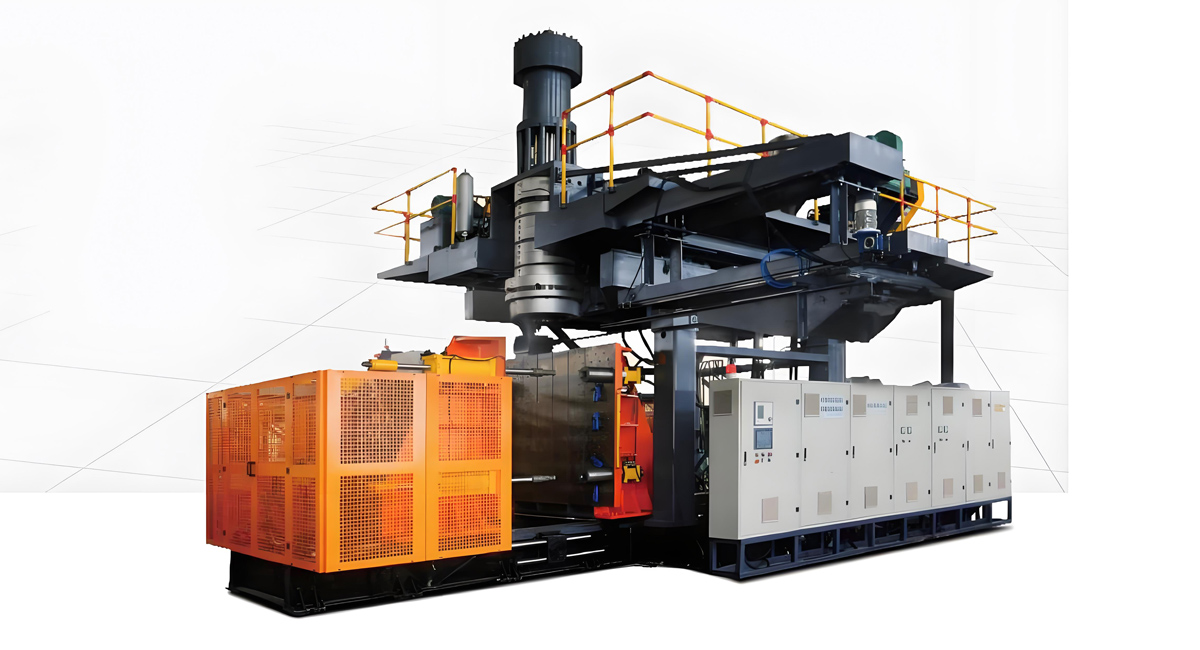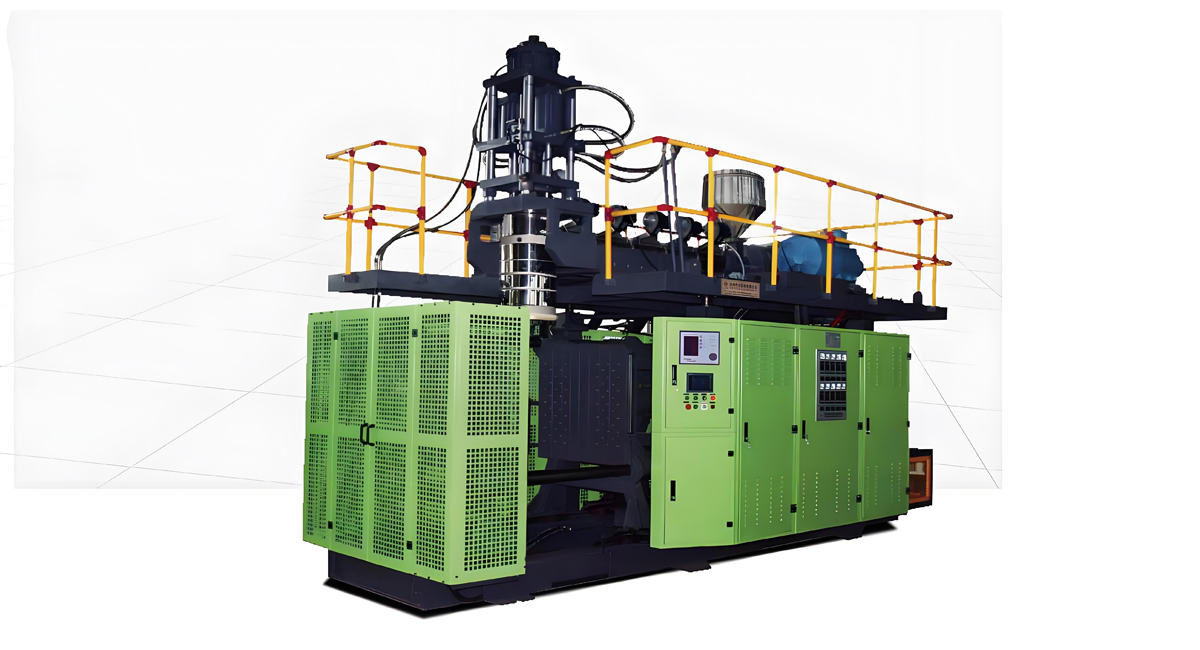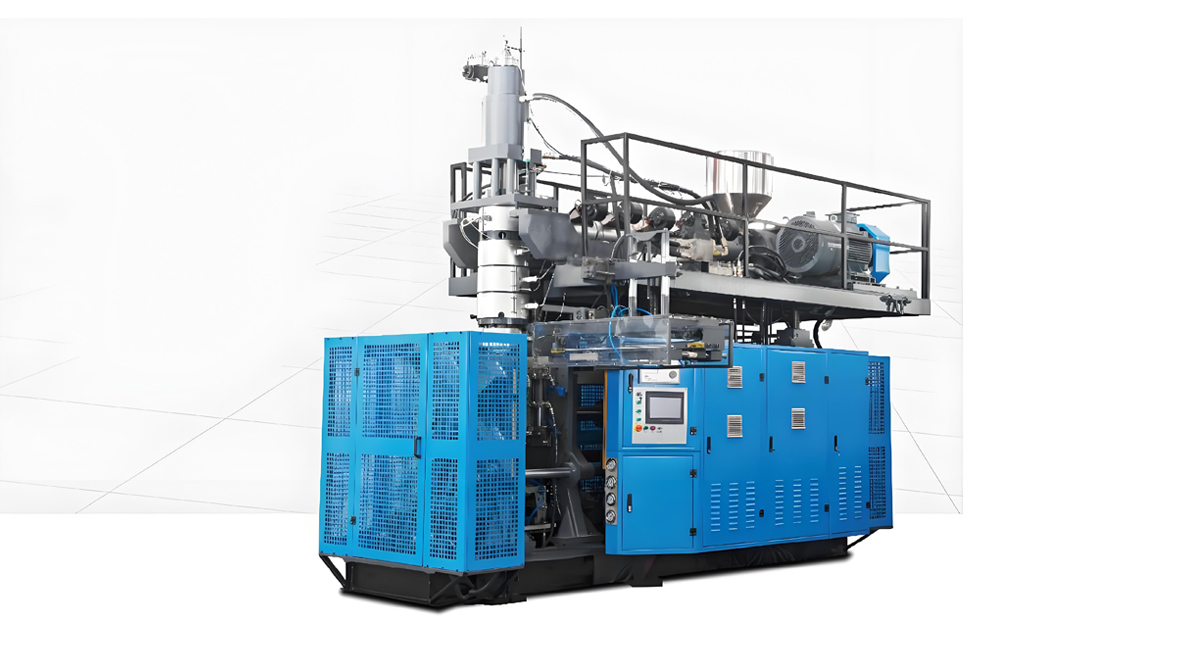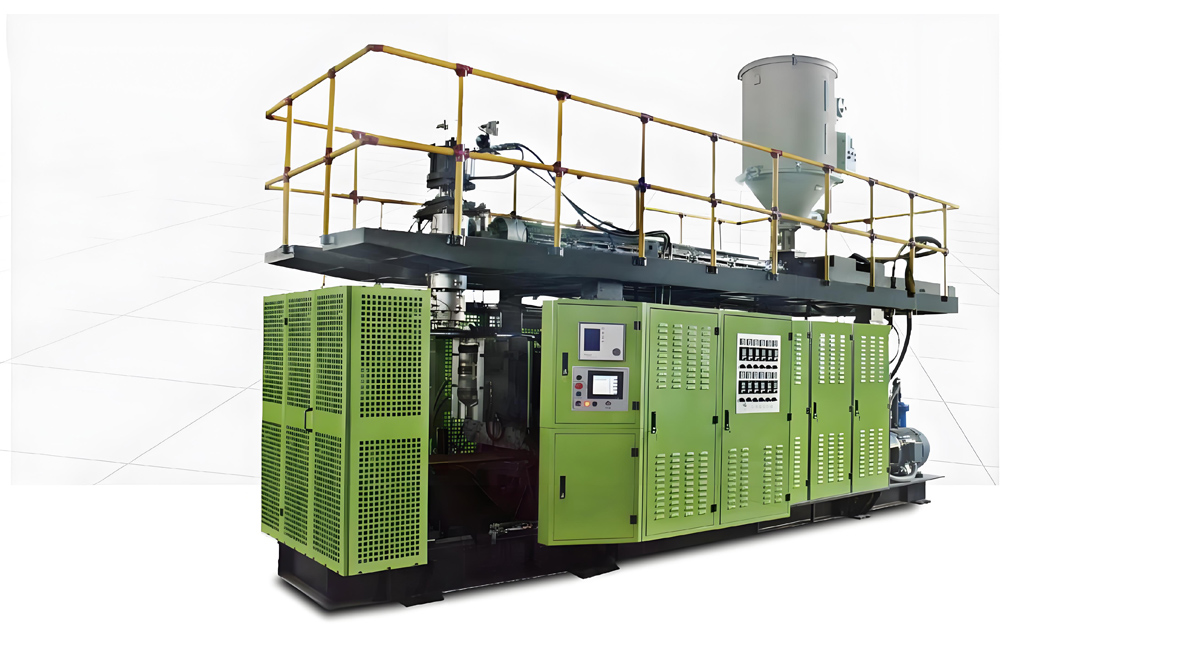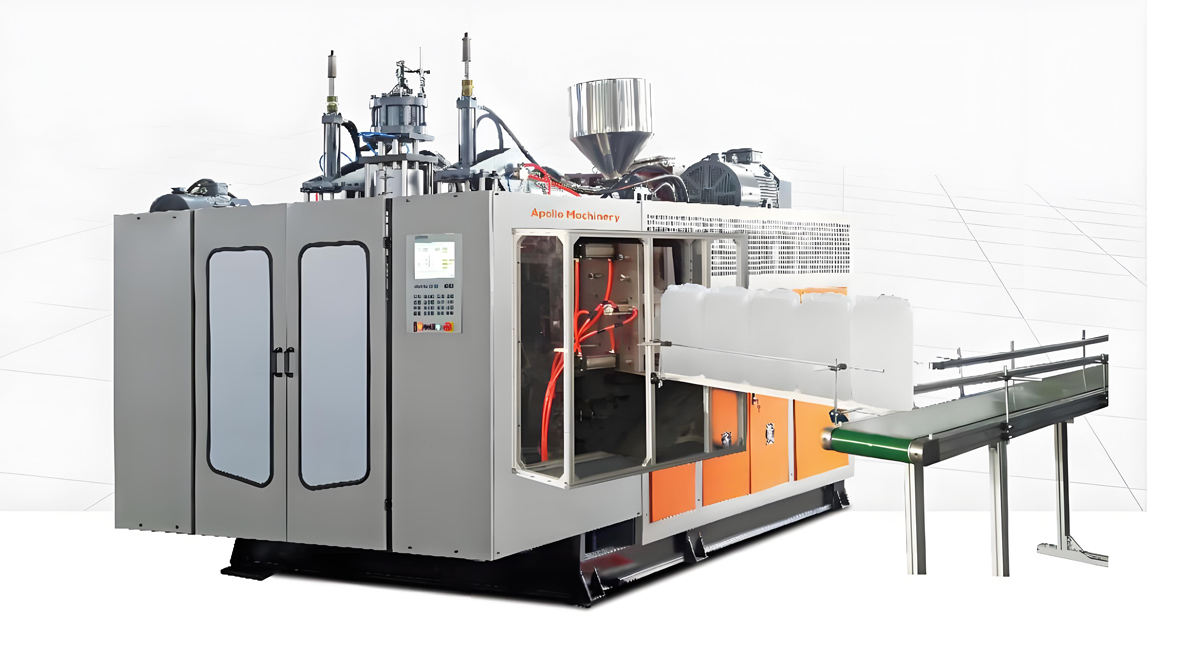
Apollo, a Wanplas factory, is a Zhangjiagang-based manufacturer of automatic extrusion blow molding (EBM) machines with over 20 years of specialization, an 8,000 square meter production base, more than 4,000 machines running across 90-plus countries, and an annual manufacturing capacity of around 100 sets. This article explains how EBM machines are configured for the Oceania region, covering Australia and New Zealand market conditions, the AS/NZS standards that shape machine design, the local product mix, the HDPE and barrier material process windows, parison control strategy, and the concrete Apollo machine modules that meet these requirements. Whether the reader is planning a dairy bottle line in Victoria, an agricultural chemical drum plant in New South Wales, a jerry can operation in Queensland, or a water-filled road barrier business in Auckland, the guidance below maps the technical and compliance path from factory to Oceania shop floor. Wanplas, as the parent brand, backs every Apollo line with shared quality standards, a unified spare parts policy, and group-level export experience across more than 100 regions.
Oceania Market Overview and Localized Equipment Requirements
The Australia and New Zealand plastics packaging sector is defined by strict product stewardship rules, high food-safety expectations, and a utilities environment built around a 230 V single-phase and 400 V three-phase, 50 Hz supply. An EBM machine that performs reliably in a 60 Hz market will not simply drop into a Sydney or Christchurch factory without deliberate localization. Oceania buyers expect documentation, marking, and safety behavior that line up with national standards, and they expect machines to run on the local grid without external frequency converters. The first job of any supplier is therefore to treat Oceania not as a generic export destination but as a regulated, compliance-driven market where the electrical, mechanical, acoustic, and product-contact rules are explicit.
The electrical backbone of the region is the 230 V / 400 V 50 Hz system described in AS/NZS 3000, the Australian and New Zealand Wiring Rules. Three-phase motors, contactors, and heaters on the blow molding machine must be sized for 400 V 50 Hz operation. Single-phase control and auxiliary circuits run at 230 V. Because the grid frequency is 50 Hz rather than 60 Hz, the synchronous speeds of AC motors differ, and cooling fans, hydraulic pumps, and screw drives must be selected accordingly. A machine built for 60 Hz that is merely rewired to 400 V will over-speed its fans and mis-match its pump curves; the correct approach is to specify 50 Hz-rated components from the design stage.
Beyond voltage, the Oceania buyer operates inside a stack of referenced standards that touch nearly every subsystem of an EBM line. AS/NZS 3000 governs the electrical installation and bonding. AS/NZS 60204.1, the joint adoption of IEC 60204-1, sets the safety requirements for the electrical equipment of machines, including emergency stopping, protective bonding, and control reliability. AS 1210 covers unfired pressure vessels, which matters because the machine’s compressed air receiver and any accumulator-related pneumatic tanks are pressure equipment. AS/NZS 2107 provides recommended design sound levels for occupied spaces and is the acoustic reference used when planning the workshop noise envelope. AS 4020 specifies requirements for products in contact with drinking water, directly relevant when the EBM line makes water bottles, water tanks, or any container that stores potable liquid. Standards such as AS/NZS 1080 are referenced where timber-derived or wood-plastic composite packaging substrates enter the supply chain, and they support the documentation trail for packaging materials used around the finished goods.
Localization also means anticipating the operating climate. Much of Australia is hot and dry for long stretches, while New Zealand is cooler and more humid. Both conditions push the machine design in specific directions. High ambient temperature raises the demand on hydraulic oil cooling and barrel cooling, so Oceania-bound lines often receive oversized oil coolers and chilled cooling water loops. Coastal sites in both countries expose control cabinets to salt-laden air, which raises the bar on enclosure IP rating and on the corrosion resistance of fasteners and nameplates. A machine that is perfectly happy in a temperate inland factory can corrode and overheat on a coastal Oceania site unless these factors are designed in.
Regulatory marks complete the picture. Electrical products placed on the Australian and New Zealand markets generally need the Regulatory Compliance Mark (RCM), which signals compliance with the applicable electrical safety and electromagnetic compatibility requirements. For drinking water contact items, the WaterMark certification scheme is the recognized conformity pathway. An EBM supplier serving Oceania should be ready to present the machine’s electrical compliance evidence and, for water-contact products, to support the customer’s material and process documentation that feeds the WaterMark and AS 4020 assessments. None of this is optional in a mature market; it is the baseline for a smooth customs clearance and a trouble-free commissioning.
Localization for Oceania starts at the drawing board: 400 V 50 Hz power, AS/NZS 60204.1 electrical safety, AS 1210 pressure vessels, AS 4020 drinking water contact, and an acoustic envelope planned around AS/NZS 2107.
AS/NZS Compliance Retrofit Points for EBM Machines
Turning the standard list above into an actual machine means a set of concrete retrofit points on the electrical, mechanical, and hydraulic systems of the EBM line. These are the modifications Apollo applies before a machine is crated for Oceania, and they are the difference between a machine that passes site inspection on day one and one that is red-tagged by a local electrician.
Electrical cabinet, components, and IP rating
The main control cabinet is rebuilt around 400 V 50 Hz incoming supply with correctly rated main isolator, circuit breakers, contactors, and motor protection relays. All drives, PLC, and HMI are specified for the 50 Hz grid. Components carry the ratings and approvals expected by local inspectors, and the cabinet is sealed to a higher ingress-protection level, typically IP54 as a baseline and IP55 where the machine sits in a wash-down or coastal environment. Cable glands, conduits, and terminals follow AS/NZS 3000 wiring practice, with clear separation of power and control wiring and labeled terminal blocks for field service.
Emergency stop and safety door interlock
The clamp and parison area is a hazard zone, so the emergency stop system is built to Category 3 / Performance Level d, the well-understood benchmark from ISO 13849-1 for safety-related control. The stop circuit uses dual-channel monitoring with positive-break contacts and a monitored reset, so a single fault does not prevent the safety function from operating. The mold safety door and the parison transfer guard are interlocked so the clamp cannot close and the extrusion cannot index while a guard is open. Light curtains or reinforced door switches are applied at the operator access points, and the stop devices are positioned for easy reach from every normal operating position.
Nameplate and bilingual labeling
Each machine carries a durable nameplate with the model, serial number, electrical rating, year of manufacture, and the Wanplas group identification. Operating labels, hazard symbols, and push-button functions are presented in English, with bilingual labeling available where the customer’s workforce benefits from a second language. Warning plates for hot surfaces, high pressure, and moving clamp are fixed at the relevant points. The labeling is printed on weather-resistant material so it survives the humidity and UV exposure common in Oceania plants.
RCD leakage protection and grounding impedance
Residual current devices (RCDs) are fitted on the appropriate circuits to protect personnel against earth faults, consistent with the protective scheme used in AS/NZS 3000 installations. The machine’s protective bonding is engineered for a low ground impedance path, with a verified equipotential bonding conductor linking the cabinet, the barrel frame, the mold platen, the hydraulic power unit, and the air receiver. A high-resistance insulation test and a continuity-to-earth test are part of the pre-shipment check so the buyer’s electrician sees a clean result on connection.
Hydraulic containment and noise control
The hydraulic power unit is mounted on a leak-containment tray that captures oil in the event of a seal failure, satisfying the environmental and housekeeping expectations of a modern Oceania plant. Hoses and fittings are rated for the system pressure with spillage minimized at couplings. For noise, the target is to keep the operator station below 85 dB(A), the widely applied occupational exposure action level. Measures include acoustically insulated hydraulic pump pods, low-noise blowers, gear pump selection with pressure-compensation, and where needed, partial machine enclosures around the high-speed auxiliaries. The plant layout is also planned so the operator is not standing at the loudest point for the whole shift.
| Compliance area | Governing reference | Retrofit applied on Apollo EBM line |
|---|---|---|
| Electrical supply and wiring | AS/NZS 3000 | 400 V 50 Hz rated breakers, contactors, labeled terminal blocks, separated power/control wiring |
| Machine electrical safety | AS/NZS 60204.1 / ISO 13849-1 | Category 3 / PL d emergency stop, dual-channel monitored reset |
| Pressure equipment | AS 1210 | Air receiver and tanks built and documented as unfired pressure vessels |
| Workplace sound level | AS/NZS 2107 | Operator station target below 85 dB(A) via insulated pump pod and low-noise blowers |
| Drinking water contact | AS 4020 | Material and process documentation support for WaterMark pathway |
| Leakage protection | AS/NZS 3000 | RCD on personnel circuits, low-impedance protective bonding |
| Hydraulic spill | Site environmental rule | Leak-containment tray under hydraulic power unit |
Typical Oceania Products Made by Extrusion Blow Molding
Extrusion blow molding is the natural process for hollow, handle-equipped, and large-volume containers, and the Oceania product mix is a strong fit. Apollo machines serve applications spanning food and beverage, daily chemical, chemical industry, building material, medical and pharmaceutical, automobile production, transportation, and cultural and sports goods. The concrete end products below are the ones Oceania buyers most often ask Apollo to produce.
Agricultural chemical drums in 20 L and 25 L HDPE are a staple of the Australian and New Zealand rural market. Farms across both countries rely on totes and drums for herbicides, insecticides, and liquid fertilizer, and the containers must resist the chemical load while surviving rough handling and outdoor storage. Dairy bottles in 1 L and 2 L HDPE serve the fresh milk and modified-milk-drink segment, where taste neutrality and leak-free sealing matter. Motor oil jugs, often in 1 L to 5 L HDPE with an integrated handle, supply the automotive aftermarket. Garden and horticulture spray bottles and smaller trigger-ready containers support the nursery and home-garden trade, a large category in both nations given the strong DIY and landscaping culture.
The jerry can is a distinct Oceania favorite, used for fuel, water, and AdBlue on farms, boats, and job sites; typically molded in HDPE with a robust wall and a secure cap. The intermediate bulk container (IBC) inner bottle, usually a 1000 L HDPE bladder housed in a steel cage, is produced on heavy-duty EBM lines for bulk chemical and food-liquid logistics. Road safety products such as the water-filled barrier, the classic plastic jersey barrier filled on site with water for traffic management, are molded in HDPE for roadworks across Australia and New Zealand. Fishing and aquaculture use HDPE floats and buoys that must hold up in salt water and UV, a perfect EBM application given the region’s long coastline and strong aquaculture sector.
| Oceania product | Typical size | Material | Apollo series |
|---|---|---|---|
| Agricultural chemical drum | 20 L / 25 L | HDPE | ABLB / ABLD |
| Dairy bottle | 1 L / 2 L | HDPE | ABLB |
| Motor oil jug | 1 L / 4 L / 5 L | HDPE | ABLB |
| Garden spray bottle | 0.5 L / 1 L | HDPE / PP | ABLB |
| Jerry can | 5 L / 10 L / 20 L | HDPE | ABLB / ABLD |
| IBC inner bottle | 1000 L | HDPE | ABLD |
| Water-filled road barrier | 20 L class | HDPE | ABLD |
| Fishing float / buoy | 2 L to 50 L | HDPE | ABLB / ABLD |
Each of these products exercises a different part of the machine’s capability. Thin-wall dairy bottles push cycle speed and cooling efficiency. Chemical drums demand consistent wall distribution and chemical-resistant resin. IBC bottles and road barriers demand high clamp force and a large platen. Floats demand buoyancy and wall uniformity. The Apollo product range is built to cover all of them from a single sourcing relationship, with Wanplas group engineering behind the line.
Materials and Process Parameters for Oceania Applications
Most Oceania EBM output is HDPE, and the resin choice drives the process window. Blow molding grade HDPE for these containers typically shows a melt flow rate (MFR) in the range of 0.3 to 0.8 g/10min measured at 190 degrees C with a 2.16 kg load, and a density in the range of 0.950 to 0.960 g/cm3. Lower MFR resins give better environmental stress crack resistance for detergent and chemical duty, while slightly higher MFR improves processability for thin-wall bottles. PP copolymer is chosen where higher temperature resistance or a more rigid feel is needed, for example in some hot-fill or dishwasher-exposed items. Multi-layer structures with EVOH or PA6 barrier layers are applied when the product demands oxygen or hydrocarbon barrier performance, such as certain agricultural formulations or solvent-based goods.
The die head and barrel temperatures sit in a band that depends on the resin but for HDPE lands around 170 to 200 degrees C at the die head, with the barrel rear zone cooler and the front zone and head hotter to stabilize melt homogeneity. Parison wall thickness is programmed through a servo-driven mandrel or a proportional valve stack, and Apollo machines offer 100-point or 200-point parison control depending on the model, letting the operator thin the parison where the mold cavity is tall and thicken it at the handle or base. Blow pressure is in the range of 6 to 10 bar, higher for small bottles that need sharp definition and lower for large drums where the parison simply needs to reach the cavity wall. Cooling water is held at 8 to 12 degrees C by a process chiller so the mold can extract heat quickly and shorten the cycle.
Cycle time is the commercial heart of the line. A 1 L dairy bottle on a multi-cavity ABLB configuration may run in the low single-digit seconds per cavity, while a 20 L drum on a single-cavity heavy-duty head runs in the tens of seconds. The cycle is the sum of extrusion time, parison transfer, blow and cooling time, mold open, and part ejection; the cooling and blow steps dominate for thick-wall containers. For planning, an Oceania buyer should estimate output from cavity count multiplied by the effective cycle, then discount by the expected utilization and yield. Apollo provides a cycle estimate per configuration during quotation so the capacity claim is tied to a concrete mold and resin, not a generic number.
| Parameter | HDPE (typical) | PP copolymer | Multi-layer (EVOH / PA6) |
|---|---|---|---|
| MFR (g/10min) | 0.3 – 0.8 | 0.5 – 2.0 | 0.3 – 0.8 base layer |
| Density (g/cm3) | 0.950 – 0.960 | 0.900 – 0.910 | blend dependent |
| Die head temperature (degrees C) | 170 – 200 | 190 – 220 | 180 – 210 |
| Parison control points | 100 / 200 | 100 / 200 | 200 |
| Blow pressure (bar) | 6 – 10 | 6 – 10 | 8 – 10 |
| Cooling water (degrees C) | 8 – 12 | 8 – 12 | 8 – 12 |
Material handling also deserves attention in the Oceania context. Resin arrives in bulk bags or gaylords and must be dried only where the grade demands it; most blow molding HDPE is processed from the bag without pre-drying, but masterbatch and regrind need consistent metering. Color and additive masterbatch let a buyer match brand colors for retail products, and a controlled regrind loop from in-house scrap trims material cost. The Wanplas group’s broader compounding and extrusion background supports customers who want matched downstream pelletizing or custom compound supply, but on the Apollo site the focus stays on the blow molding line and its immediate auxiliaries.
Parison Control and Die Head Selection Logic
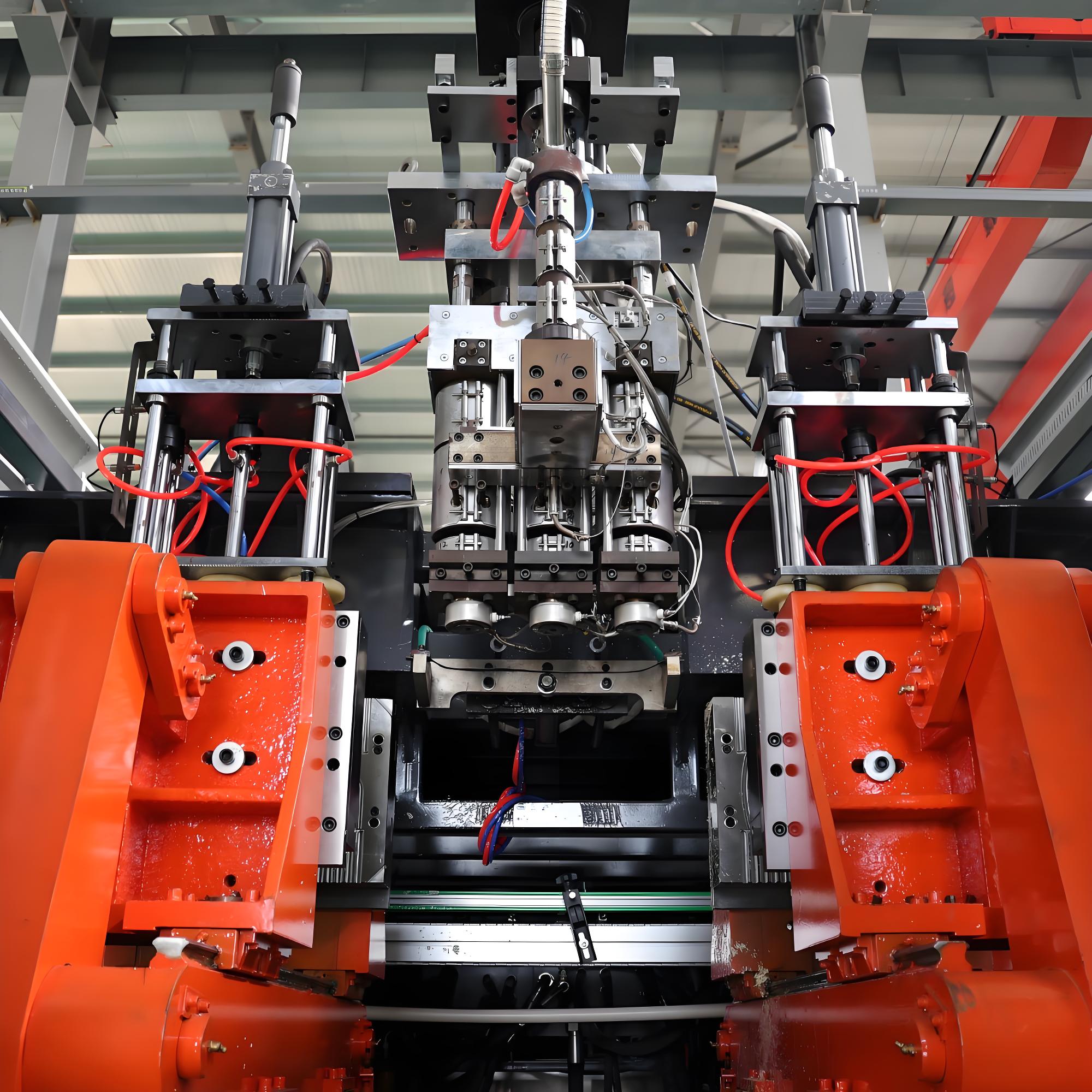
Two decisions shape the economics of an EBM line: how the parison is programmed, and whether the machine uses continuous extrusion or an accumulator head. Parison programming is the practice of varying the annular gap around the die as the parison is extruded, so material is placed where the finished part needs it. A bottle is not a uniform tube; it is thin at the shoulder, thick at the handle, and needs reinforcement at the base. With 100-point or 200-point control, the operator or process engineer builds a thickness profile that optimizes resin use and drop-test performance at the same time. Apollo’s control system stores these profiles as recipes, so a changeover between a dairy bottle and a chemical drum is a recipe selection rather than a re-engineering job.
The die head choice follows the container size. Continuous extrusion is the right answer for small and medium containers up to roughly the 5 to 10 L class, where the parison is light enough to extrude steadily and the head stays simple and economical. The melt is pushed through the head by the extruder screw, the parison drops, the mold closes, and the cycle repeats. For large containers such as 20 L drums, IBC bottles, and road barriers, the parison mass becomes too large to hang from a continuously extruding head without excessive sag and cycle penalty. That is where the accumulator head earns its place: the extruder fills a stored melt cushion, then a rapid shot pushes the full parison out in one fast stroke. The short parison time limits sag and gives a more uniform wall, at the cost of a larger, more complex head.
| Factor | Continuous extrusion | Accumulator head |
|---|---|---|
| Typical container size | Up to 5 to 10 L | 20 L to 1500 L |
| Parison sag risk | Low to moderate | Minimized by fast shot |
| Head complexity | Lower | Higher |
| Best Apollo series | ABLB, Fully Electric | ABLD |
The selection logic is therefore straightforward. A buyer whose whole range sits under 10 L should standardize on continuous extrusion for lower cost and faster changeover. A buyer whose range starts at 20 L and goes up should plan for an accumulator head. A buyer spanning both ends, for example a dairy bottle plus a 20 L chemical drum, is the classic case for two machine families: an ABLB line for the bottles and an ABLD line for the drums, both fed from one resin silo and one quality system. This is exactly the kind of mixed fleet that Apollo supports across the Wanplas group, with shared tooling know-how and one service channel.
Apollo ABLB Series for 200 ml to 20 L Containers
The ABLB series is Apollo’s standard extrusion blow molding range for containers from 200 ml to 20 L, offered in eight configurations that scale screw size, clamp force, and station count with container volume. It is the workhorse for dairy bottles, motor oil jugs, garden spray bottles, agricultural chemical drums up to 20 L, and small jerry cans. The series is built around a single-screw plasticizing unit, a continuous extrusion die head with programmable parison control, a toggle or direct hydraulic clamp, and a servo-driven blow and take-out sequence. For Oceania, every ABLB line is delivered with the 400 V 50 Hz electrical package and the AS/NZS 60204.1 safety architecture described earlier.
Within the series, smaller models such as the ABLB 55 serve the 2 L to 3 L bottle segment with high cavity counts and short cycles, while larger models such as the ABLB 90 reach the 20 L drum with a single or double cavity and an accumulator-assisted head where the parison mass demands it. The table below shows representative specifications for two points in the ABLB range; exact values vary with mold and configuration and are confirmed at quotation.
| Specification | ABLB 55 (representative) | ABLB 90 (representative) |
|---|---|---|
| Container volume range | 200 ml – 5 L | 5 L – 20 L |
| Clamping force | Around 55 kN class | Around 90 kN class |
| Screw diameter | 55 mm | 90 mm |
| L/D ratio | 22:1 to 24:1 | 22:1 to 24:1 |
| Installed power | Medium | Medium to High |
| Die head count | Single or double | Single, double, or accumulator |
| Parison control | 100 / 200 points | 200 points |
| Overall dimension | Compact footprint | Larger footprint |
| Production beat | High speed, multi-cavity | Single to double cavity |
The ABLB line is the natural starting point for an Oceania customer entering bottle or small-drum production. Its modularity means a buyer can begin with one cavity and later add cavities or a second head as demand grows, and the recipe-driven parison control makes the line easy to staff even where experienced blow molding operators are scarce. Apollo’s factory acceptance test runs the actual mold and resin before crating, so the buyer in Australia or New Zealand receives a line that has already produced good parts.
Apollo ABLD Heavy-Duty Series and Fully Electric Line
When the container moves into the 20 L to 1500 L class, the ABLD series takes over. This heavy-duty range, offered in three configurations, is engineered for large parison mass, high clamp force, and a big platen to carry road barriers, IBC inner bottles, large jerry cans, and industrial containers. The ABLD uses an accumulator head as standard for the upper sizes, with a robust clamp frame and reinforced platens that hold the mold square under heavy closing force. Cooling is scaled with a larger chiller and more mold cooling circuits, because the cycle of a large container is dominated by heat removal from a thick wall.
The table below gives representative specifications for an ABLD configuration at the large end of the range. As with the ABLB table, values are representative and confirmed per order; the point is to show how the parameters scale with container size.
| Specification | ABLD heavy-duty (representative) |
|---|---|
| Container volume range | 20 L – 1500 L |
| Clamping force | High, scaled to mold size |
| Screw diameter | 100 mm to 150 mm class |
| L/D ratio | 20:1 to 24:1 |
| Installed power | High |
| Die head count | Accumulator head, single or twin |
| Parison control | 200 points |
| Overall dimension | Large footprint, planned with crane access |
| Production beat | Single cavity, tens of seconds per part |
Complementing the hydraulic ranges, Apollo offers a fully electric series for the 200 ml to 20 L class. Because it is powered entirely by servo motors with no hydraulic power unit, it removes the oil leak risk, runs quieter, and consumes less energy, which matters in Oceania where energy cost and workplace noise are both under scrutiny. The fully electric line is the right choice for customers with high environmental requirements, clean-room-adjacent production, or simply a goal to cut running cost over the machine’s life. The table below contrasts the fully electric line with the hydraulic ABLB on the factors Oceania buyers weigh most.
| Factor | ABLB (hydraulic) | Fully Electric series |
|---|---|---|
| Container range | 200 ml – 20 L | 200 ml – 20 L |
| Drive | Hydraulic clamp and toggle | All-electric servo |
| Energy consumption | Medium | Low to Medium |
| Noise | Moderate, enclosed pump pod | Low |
| Oil leak risk | Present, tray contained | None |
| Procurement cost | Medium | High |
For an Oceania buyer, the decision between hydraulic and fully electric is usually a life-cycle calculation. The hydraulic ABLB carries a lower procurement cost and handles the full 200 ml to 20 L range with proven reliability. The fully electric line costs more up front but pays back through energy saving, quieter operation, and elimination of hydraulic oil handling. Both are delivered with the same AS/NZS electrical and safety package, so the compliance story does not change between them.
Requirement-to-Model Selection Recommendation
The fastest way to choose a machine is to start from the product, the required output, and the material, then map to an Apollo series. The table below is a practical selector for common Oceania cases. Output figures are indicative and assume a concrete mold and resin; Apollo confirms the real number during quotation.
| Product and volume | Target output | Material | Recommended Apollo model |
|---|---|---|---|
| Dairy bottle 1 L – 2 L | High | HDPE | ABLB 55, multi-cavity |
| Motor oil jug 4 L – 5 L | Medium | HDPE | ABLB 65 / 75 |
| Garden spray bottle 0.5 L – 1 L | High | HDPE / PP | ABLB 55, double head |
| Jerry can 10 L – 20 L | Medium | HDPE | ABLB 90 |
| Agrichemical drum 20 L – 25 L | Medium | HDPE | ABLB 90 or entry ABLD |
| IBC inner bottle 1000 L | Low to Medium | HDPE | ABLD heavy-duty |
| Water-filled road barrier | Medium | HDPE | ABLD heavy-duty |
| Fishing float 5 L – 30 L | Medium | HDPE | ABLD heavy-duty |
| Clean-room or low-noise bottle | High | HDPE / PP | Fully Electric series |
The selector is a starting point, not a substitute for a proper quotation. Output depends on cavity count, resin grade, cooling water temperature, and the ambient condition of the Oceania plant. Apollo’s engineers review the buyer’s product drawing, annual volume, and site constraints, then propose a configuration with a confirmed cycle estimate and a layout drawing. Where a buyer spans both small bottles and large drums, the recommendation is usually a mixed fleet: one or more ABLB lines for bottles and an ABLD line for drums, with shared resin handling and one service agreement under the Wanplas group umbrella.
Export Logistics and Local Support for Oceania Delivery
Getting an EBM line to an Oceania customer is more than putting it on a ship. Apollo manages the path from the Zhangjiagang factory to the buyer’s floor in Australia or New Zealand, with packaging, documentation, installation, and long-term support built into the offer. The Wanplas group’s experience across more than 100 exported regions underpins this logistics competence.
Sea freight packaging and moisture protection
Each machine is wrapped in anti-rust paper and stretch film, mounted on a wooden skid, and blocked and braced so it cannot shift in transit. Because sea freight crosses the equator and faces high humidity, desiccant and moisture-absorbent packets are placed inside the wrapping, and critical machined surfaces such as the platen and tie bars are coated with temporary rust preventive. The control cabinet is sealed and the open interfaces are capped. This packaging is what protects a precision machine through a multi-week ocean voyage to a coastal Oceania port.
40HQ container loading plan
The standard export route uses a 40-foot high-cube (40HQ) container. A compact ABLB line with its molds and auxiliaries is engineered to fit one 40HQ where possible, with the main machine body, the chiller, the compressor, spare parts crate, and tooling laid out in a fixed loading diagram so the forklift and crane work at the destination is predictable. Larger ABLD lines may need more than one container, and Apollo supplies a per-container packing list and a reload plan so the buyer’s rigging team knows the sequence. The loading diagram also notes the center of gravity and the lift points, which local ports and the buyer’s installer both rely on.
Customs documents and declarations
For Oceania clearance, Apollo prepares a commercial invoice, packing list, bill of lading, and a declaration that the machine meets the relevant AS/NZS references, including the AS/NZS 60204.1 electrical safety position and the AS 1210 pressure vessel documentation where an air receiver is supplied. A CE declaration is provided where applicable as supplementary evidence, but the primary compliance narrative for the market is the AS/NZS alignment. The buyer’s customs broker uses these documents together with the local RCM and, where relevant, WaterMark evidence for the finished product, to clear the line without surprise holds.
Local installation, commissioning, and training
Apollo dispatches engineers for on-site installation and commissioning, connecting the machine to the buyer’s 400 V 50 Hz supply, setting the parison recipe for the actual mold and resin, and running the factory acceptance parts on the customer’s floor. Operator training covers safe operation, recipe management, mold change, routine maintenance, and basic fault response, so the local team can run the line independently. The Wanplas group’s policy of tracking usage status and conducting irregular customer visits means the relationship continues after commissioning rather than ending at handover.
Spare parts and remote support
Every Apollo EBM machine is covered by the Wanplas group spare parts policy of USD 500 free parts every year within the support period, alongside warranty replacement of damaged parts. A recommended spare parts list is supplied at delivery so the buyer stocks the wear items that matter most, such as seals, heaters, and sensors. Remote support lets Apollo engineers read PLC data and guide the local team through adjustments, shortening downtime when a fault appears. The open-factory policy also welcomes Oceania customers to visit the Zhangjiagang plant for inspection, mold trial, and deeper technical exchange before or after purchase.
Common Faults and Remedies in EBM Production
Even a well-configured line shows defects when the process drifts. The table below lists the faults Oceania operators most often meet on EBM lines, with the root cause and the remedy Apollo applies. Keeping this table on the shop floor helps a new operator recover quickly.
| Fault | Likely cause | Remedy |
|---|---|---|
| Parison sag | Melt too hot, head too slow, resin MFR too high | Lower die head temperature, shorten extrusion time, switch to lower-MFR HDPE, or use accumulator head for large parts |
| Uneven wall thickness | Poor parison program, mandrel offset, melt instability | Re-profile parison control points, center the mandrel, stabilize barrel temperature and back pressure |
| Excess flash | High clamp pressure demand, worn mold parting, over-blow | Confirm clamp force, refurbish parting line, reduce blow pressure to window, check parison length |
| Mold parting line stringing | Resin degradation, contaminated regrind, hot parting line | Lower melt temperature, clean regrind, inspect parting line cooling, verify resin lot |
| Bottle neck deformation | Early ejection, poor neck cooling, blow pin misalignment | Extend cooling, improve neck cooling circuit, align blow pin, adjust ejection timing |
Most of these faults trace back to three controllable variables: melt temperature, parison program, and cooling time. A disciplined setup sheet per product, stored as a recipe in the Apollo control system, prevents drift and makes changeovers repeatable. The remote support channel means an Oceania operator can send the recipe and fault photo to Apollo and receive a tuned profile without waiting for an on-site visit, which is valuable given the distance between the factory and the region.
Frequently Asked Questions
What AS/NZS standards apply to extrusion blow molding machines sold to Australia and New Zealand?
The core electrical and safety references are AS/NZS 3000 for electrical installations, AS/NZS 60204.1 for machinery electrical equipment, AS 1210 for unfired pressure vessels such as air receivers, AS/NZS 2107 for recommended workplace sound levels, and AS 4020 for products in contact with drinking water. Apollo configures EBM machines to these references before shipment, and the buyer’s electrician and certifier see a consistent compliance package on arrival.
Which Apollo EBM model suits a 20 L agricultural chemical drum in HDPE?
A 20 L HDPE agricultural chemical drum sits at the top of the ABLB range and the start of the ABLD heavy-duty range. The ABLB 90 configuration or the entry ABLD model both apply, with accumulator head and single or double cavity tooling selected by the target output. Apollo confirms the cycle estimate against the actual drum drawing and resin grade during quotation.
Do EBM machines need 50 Hz or 60 Hz power for Oceania?
Australia and New Zealand operate a 230 V / 400 V, 50 Hz supply. Apollo builds Oceania-bound machines with 50 Hz motors, contactors, and heaters matched to AS/NZS 3000, so no site-side frequency conversion is required. Building on the correct frequency from the design stage avoids over-speed fans and mis-matched hydraulic pump curves that would otherwise shorten component life.
Can Apollo machines produce food and drinking water contact bottles for the Oceania market?
Yes. HDPE and PP grades suitable for food and water contact are processed on Apollo EBM lines, and where the end product is a drinking water container the relevant AS 4020 assessment and the WaterMark certification pathway are supported through material and machine documentation. The machine itself is delivered with the cleaning and material-handling practice needed for hygienic production.
What spare parts policy does Apollo provide after delivery to Oceania?
Every Apollo EBM machine ships with the Wanplas group policy of USD 500 free parts every year within the support period, plus warranty replacement of damaged parts and remote monitoring support for commissioning and troubleshooting. A recommended spare parts list is supplied at handover so the buyer stocks the wear items that matter most.
How are EBM machines packed and loaded for sea freight to Australia or New Zealand?
Machines are wrapped in anti-rust paper and stretch film, secured on wooden skids, and loaded into 40HQ containers with moisture absorbent packets and desiccant. The layout is engineered so that the main machine body, molds, and auxiliary units fit one container where possible, with a packing list and lift-point diagram supplied for the destination rigging team.
Is the fully electric EBM line worth the higher procurement cost for an Oceania buyer?
For buyers with high output, strict noise limits, or a goal to cut life-cycle energy and eliminate hydraulic oil handling, the fully electric line pays back through lower energy use, quieter operation, and no oil leak risk. For lower-volume or budget-led projects, the hydraulic ABLB delivers the same AS/NZS compliance at a Medium procurement cost. The right choice depends on the expected annual running hours and the site’s environmental targets.
Conclusion
Supplying the Oceania market with extrusion blow molding machines is a compliance discipline as much as a manufacturing one. Australia and New Zealand demand a 230 V / 400 V 50 Hz electrical design, AS/NZS 60204.1 machine safety with Category 3 / PL d emergency stopping, AS 1210 pressure vessel documentation, AS/NZS 2107 acoustic planning, and AS 4020 drinking water contact support, all wrapped in an RCM and WaterMark-ready package. Apollo, a Wanplas factory with over 20 years of EBM specialization, 4,000-plus machines in 90-plus countries, and an 8,000 square meter base, delivers this package across the ABLB, ABLD, and fully electric series, covering everything from 200 ml dairy bottles to 1500 L IBC bottles and road barriers.
The right machine follows the product: continuous extrusion ABLB lines for bottles and small drums, accumulator-head ABLD lines for large containers, and the all-electric option where energy and noise lead the business case. With HDPE process windows of 170 to 200 degrees C die head temperature, 6 to 10 bar blow pressure, 8 to 12 degrees C cooling water, and 100 or 200-point parison control, Apollo lines are tuned to the Oceania product mix of agrichemical drums, dairy bottles, jerry cans, IBC bottles, road barriers, and fishing floats. Export support covers moisture-protected 40HQ packing, AS/NZS-aligned documentation, on-site commissioning, operator training, USD 500 free parts every year, and remote troubleshooting under the Wanplas group umbrella.
If you are planning an EBM line for Australia or New Zealand, send your product drawings, target annual volume, and site constraints to Apollo for a tailored configuration, a confirmed cycle estimate, and an invitation to inspect the line at the factory before shipment. A sample trial on your actual mold and resin is the most reliable way to validate the AS/NZS compliance and the part quality before the container leaves the port.