- Introdução: Produção estável 24 horas por dia, 7 dias por semana como vantagem competitiva
- Por que a disponibilidade contínua é importante para a produção de plásticos hifossos.
- A gama de máquinas Apollo EBM para trabalhos contínuos.
- Série ABLB (200 ml a 20 L) - Extrusão e moldagem por injeção padrão.
- Série ABLD (20 l a 1500 l) frio com moldagem por sopro de alta performance
- Série totalmente elétrica (200 ml a 20 L) sem hidráulico e com eficiência energética
- Engineering for Stability: How Máquinas Apollo Run 24/7
- Prevenção de falhas e autodiagnóstico
- Indústrias de Aplicação and Produtos finais de concreto
- A Garantia de Suporte Apollo que mantém as linhas funcionando
- Guia de seleção: escalas de produção para modelos Apollo recomendados
- Operação em várias turnos e escalonamento da capacidade
- Perguntas Frequentes
- Conclusão e passo seguinte
Introdução: Produção estável 24 horas por dia, 7 dias por semana como vantagem competitiva
A Apollo, uma fábrica da Wanplas, investiu mais de 20 anos na construção de máquinas de extrusão e blow molding que mantêm as linhas de produção de plástico em forma circular sem interrupções. Com uma ampla presença global, mais de 4.000 conjuntos operando em mais de 90 países, a única lição que norteia todas as decisões de projeto é simples: na blow molding, tempo de funcionamento é o produto. Uma máquina que para custar muito mais do que a energia que economiza, porque uma linha parada implica mão-de-obra perdida, envios perdidos e pedidos de contentores que os concorrentes absorvem com prazer. Este artigo explica como as máquinas Apollo de extrusão e blow molding são projetadas para a produção contínua 24 horas por dia, quais as escolhas de projeto que protegem a estabilidade do equipamento e como a garantia de suporte da Apollo remove o risco de que um mau funcionamento interrompa uma linha por um longo período.
O mercado de recipientes de plástico em formato côncavo é exigente em relação à entrega. Preenchedores de alimentos e bebidas, embaladores de produtos químicos diários, fabricantes de tambores de produtos químicos e embaladores farmacêuticos planejam as suas linhas de envase para baixo conforme um fornecimento constante de garrafas, bidões e tanques. Quando o moldador de sopro é o ponto de colisão, toda a fábrica desacelera. É por isso que a Wanplas, como marca mãe, estabelece um padrão compartilhado para as suas fábricas especializadas: desenvolver máquinas que possam trabalhar em três turnos por dia, todos os dias, e apoiar as mesmas com compromissos reais de serviço, em vez de promessas vagas.
Nas páginas que seguem, você aprenderá as características de engenharia concretas que permitem que uma máquina Apollo funcione continuamente, o ritmo de manutenção que evita falhas, todo o conjunto de garantias que protege sua produção e exatamente qual modelo Apollo se adapta ao seu escopo de produção. Você também encontrará uma tabela de especificações para cada uma das três principais séries e uma tabela de seleção que mapeia o volume de produção para a máquina certa. O objetivo é oferecer aos gerentes de planta, engenheiros de processo e equipes de aquisição uma visão clara e técnica de como o blow molding contínuo estável parece em
A produção estável 24 horas por dia, sete dias por semana, não é uma característica adicionada no final do projeto. É a suposição inicial. Todas as máquinas de moldagem por sopro de extrusão Apollo são construídas de modo que a linha, e não a máquina, decida quando encerrar a produção.
Por que a disponibilidade contínua é importante para a produção de plásticos hifossos.
O tempo contínuo de operação é mais crítico na moldagem por sopro do que em praticamente qualquer outro processo de plástico, pois o produto é um bem com margens estreitas e janelas de entrega apertadas. Uma linha de garrafas de classificação alimentar que falha na entrega de uma remessa pela manhã pode deixar um injetor acionado a milhares de garrafas por hora inactivo, e o tempo perdido na preenchimento não pode ser recuperado mais tarde no mesmo dia. A economia da produção de peças cônicas recompensa as máquinas que mantêm um tempo de ciclo estável hora após hora, e não as máquinas que alcançam um pico breve e depois deslamam.
Considerar a estrutura típica de custo de uma célula de estampagem por injeção a frio. A matéria-prima, polietileno de alta densidade ou polipropileno, é uma parcela moderada do custo total. A mão-de-obra, a depreciação e as despesas gerais são distribuídas entre cada garrafa produzida. Quando a produção cai devido a uma falha da máquina, esses custos fixos são distribuídos para menos unidades, elevando imediatamente o custo unitário. Uma linha que atua em 92% de disponibilidade em comparação com uma que atua em 78% pode variar em mais de dez por cento no custo unitário totalmente carregado, mesmo quando as máquinas parecem semelhantes no papel. Essa diferença é a verdadeira razão pela qual os gerentes de fábrica se preocupam com o tempo médio entre as falhas e os intervalos de manutenção planejados.
Há também uma dimensão qualitativa. A moldagem por extrusão depende de um empirador estável, que depende de uma temperatura de fusão estável, que depende de uma temperatura do barril estável e da velocidade da engrenagem. Uma máquina que cicla termicamente ou cuja pressão hidráulica se reduza sob carga resultará em variação do espessamento da parede, formação de franjas e soldas fracas. Uma execução contínua estável protege, então, tanto a quantidade quanto a qualidade simultaneamente. A Apollo trata a estabilidade térmica e a estabilidade hidráulica como os dois pilares do tempo de atividade e ambos são abordados diretamente no projeto da máquina, em vez de serem deixados para o operador.
Para compradores que avaliam uma nova linha, a pergunta prática não é se uma máquina pode produzir uma garrafa boa durante uma demonstração. A pergunta é se ela ainda vai produzir a mesma garrafa boa às 03:00 da manhã do terceiro turno, seis meses depois de iniciar a produção, com um operador relativamente novo no HMI. O resto deste artigo mostra como a Apollo projeta exatamente esse cenário.
A gama de máquinas Apollo EBM para trabalhos contínuos.
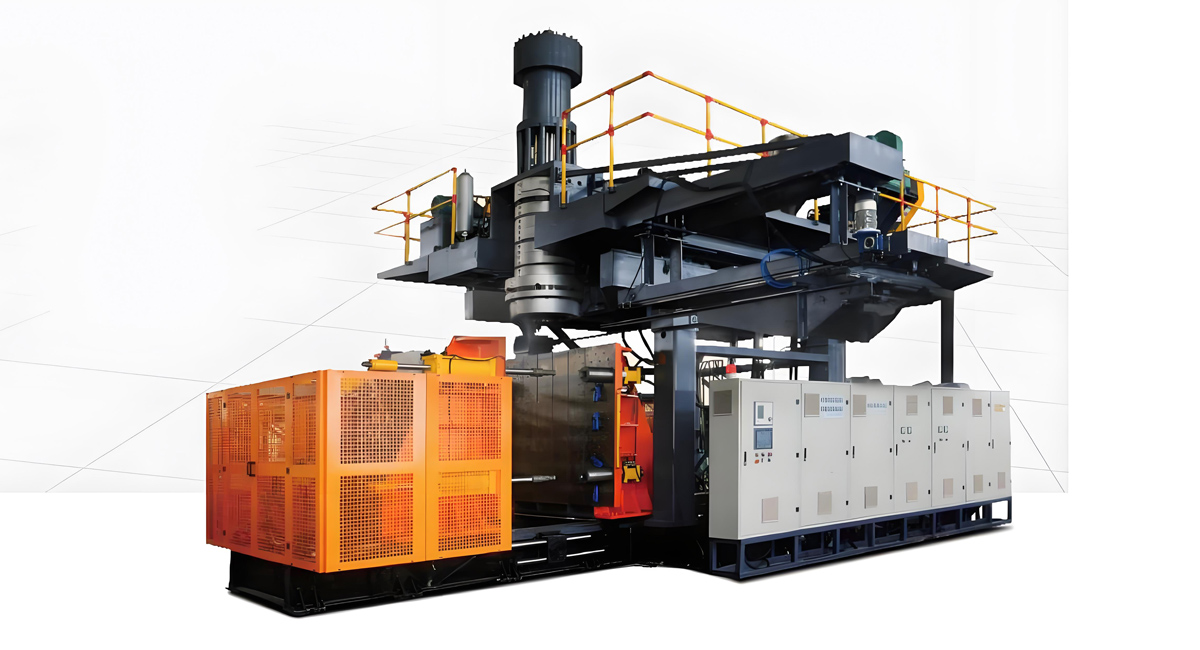
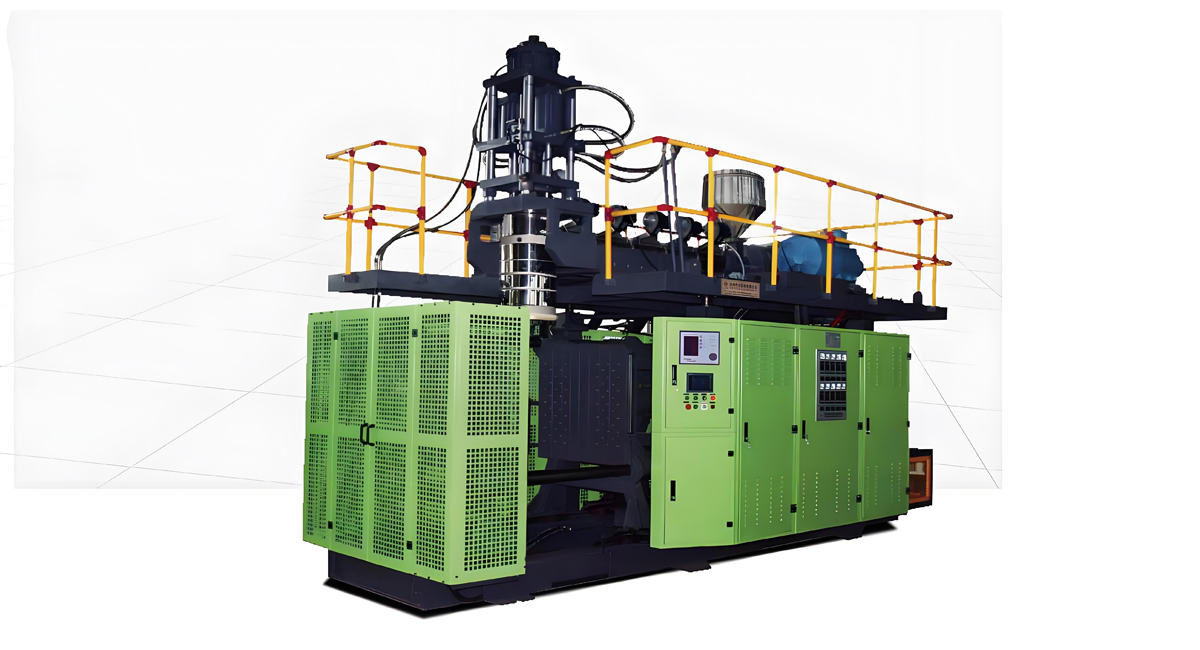
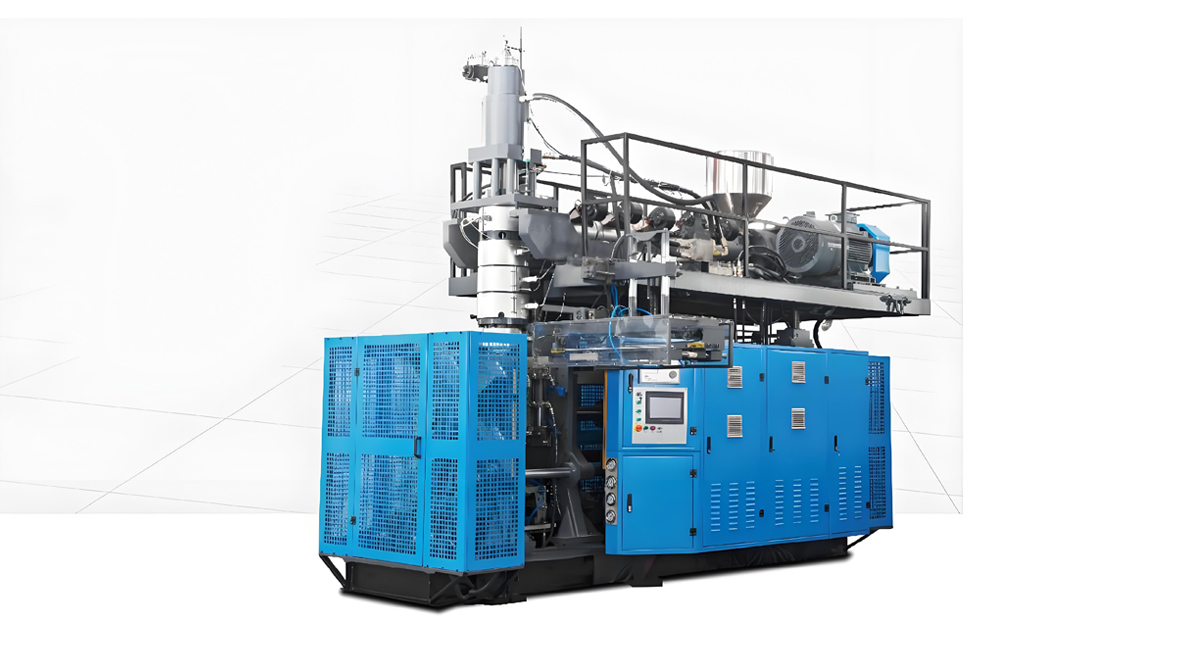
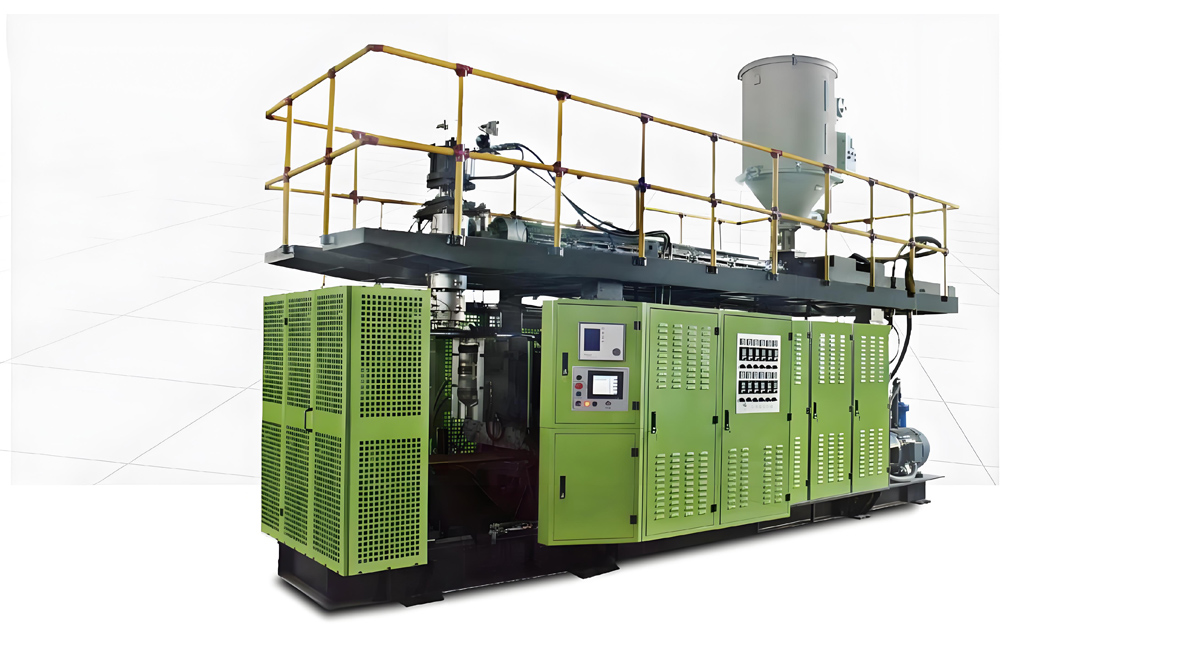
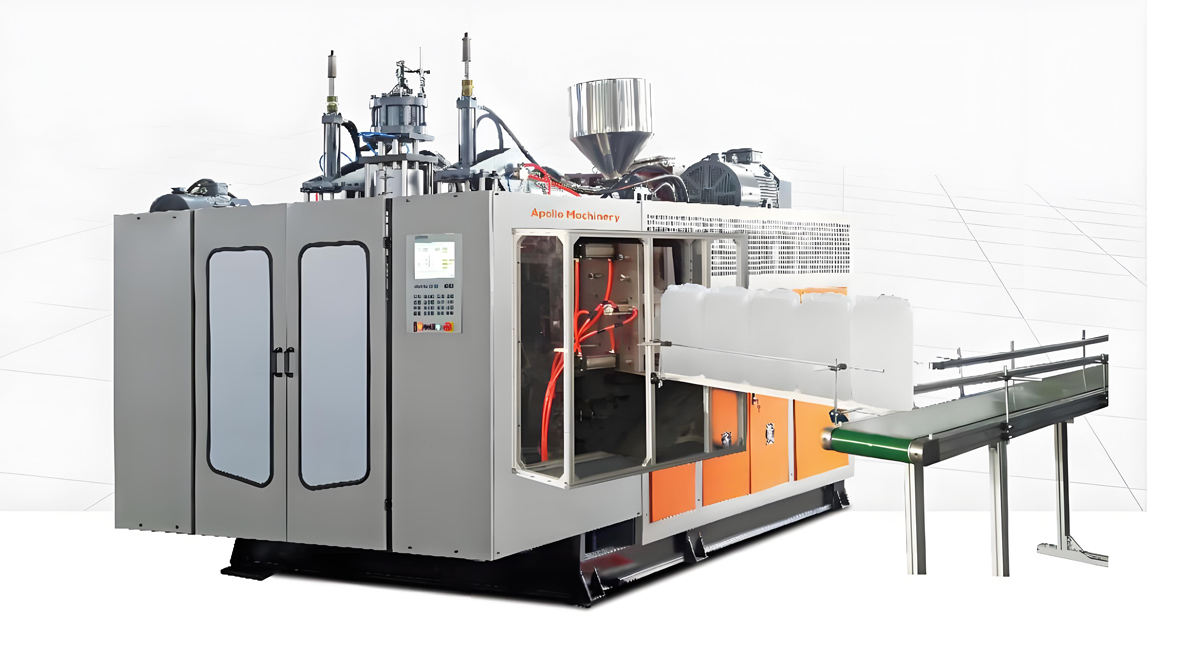
A fábrica Apollo, da Wanplas, organiza suas máquinas de injeção com sopro em dez séries e mais de oitenta modelos, mas três famílias levam a maior parte da produção contínua: a Série ABLB, para recipientes padrão de 200 ml a 20 L, a Série ABLD, para recipientes de alta carga de 20 L a 1500 L, e a Série totalmente elétrica, para operações sem uso de hidráulica, eficientes em termos de energia, de 200 ml a 20 L. Cada família é construída em torno da mesma filosofia de confiabilidade, mas ajustada para um perfil de operação diferente, um conjunto de materiais e uma faixa de tamanhos de recipientes.
Todas as máquinas Apollo processam a mesma ampla gama de resinas: PE, PP, PVC, PA, PC, ABS, PS, EVA, TPU e PETG. Essa flexibilidade do material é importante para linhas contínuas, porque muitas fábricas executam vários produtos em uma máquina, alternando entre uma garrafa de detergente e uma garrafa de shampoo ou entre uma garrafa de produtos químicos e um tanque de água. A capacidade de manter um processamento estável entre os materiais sem uma janela longa de recalibração é em si mesma uma forma de disponibilidade, e a Apollo projeta a unidade de plastificação e a cabeça de moldagem para recuperar os pontos predefinidos rapidamente após uma mudança de material ou cor.
As três séries centrais são detalhadas abaixo, com tabelas completas de especificações. Antes de as abordarmos, vale a pena mencionar a linha de base de confiabilidade comum: refrigeração a força na unidade de potência hidráulica, alimentação pneumática redundante, um PLC autodiagnóstico com histórico de falhas e uma estrutura estrutural dimensionada para força de fixação contínua. Estes não são opções. São a base para todas as máquinas de moldagem por injeção e sopro Apollo destinadas a serviços 24 horas por dia, sete dias por semana.
| Séries | Container Range | Modelos da família | Tipo de motorização | Duties típicas | Melhor para |
|---|---|---|---|---|---|
| ABLB Series | 200 ml a 20 L | 8 types | Grampeces hidráulico, unidade de extrusão | Padrão contínuo | Garrafas, latas de gasolina, tambores pequenos |
| Série ABLD | 20 L a 1500 L | 3 tipos de motores | Hidráulica de alta resistência | Contínuo pesado | Tambores, tanques, grandes recipientes |
| Totalmente elétrica Series | 200 ml a 20 L | Múltiplas | Fully electric, no hydraulics | Produção contínua | Alimentos, farmácia, linhas ecológicas |
Série ABLB (200 ml a 20 L) - Extrusão e moldagem por injeção padrão.
A série ABLB é o carro-chefe da gama Apollo e o modelo mais escolhido para a produção de garrafas e bidões pequenos, 24 horas por dia, 7 dias por semana. Com oito tipos que cobrem recipientes de 200 ml a 20 L, abrange o envoltório hélix cotidiano que enche as prateleiras dos supermercados e das fábricas. A prioridade de design para o serviço contínuo é um extrusor estável e uma unidade de fixação robusta que suporta a capacidade em milhões de ciclos sem incorrer em oscilação.
Cada ABLB equipa uma unidade de plastificação com suporte único com uma cabeça de moldagem contínua ou acumulativa, dependendo do tamanho do recipiente, e uma pega hidráulica adaptada à placa. A hélice é projetada com auxílio de computador para uma limpeza automática e uma fundição estável, com uma relação L/D selecionada para fornecer uma plastificação consistente em misturas de HDPE, PP e conteúdo reciclado. Para uma garrafa de HDPE de 1 L, uma máquina ABLB de uma estação típica suporta um ciclo estável que resultará em centenas de garrafas boas por hora, enquanto as configurações de várias estações e várias cavidades multiplicam essa produção para linhas de grande volume.
As máquinas ABLB são a escolha natural quando a questão não se trata de tamanho extremamente grande dos recipientes, mas de volume constante e repetível, dia após dia. É por isso que, no artigo complementar, que aborda a mudança rápida de moldes para máquinas EBM, a ABLB é a plataforma de referência para a flexibilidade de alteração rápida. Aqui, o foco está na outra metade da história: uma vez que um molde está configurado, a ABLB foi criada para executá-lo de forma contínua, com uma porção mínima de intervenção.
| Parâmetro | Pequena (200 ml a 2 L) | Médio (de 2 L a 5 L) | Grande (5 L a 20 L) |
|---|---|---|---|
| Container capacity range | 200 ml a 2 L | 2 L to 5 L | 1,5 L a 20 L |
| Diâmetro do parafuso do extrusor | 50 a 60 mm | 65 a 75 mm. | 80 a 90 mm |
| Relação L/D da rosca | 20 a 24:1 | 20 a 24:1 | 22 a 25: 1 |
| Número de estações | 1 a 4 | 1 to 3 | 1 a 2 |
| Força de fechamento / platen | Tonagem média, manta fixa | Maior tonelagem, placa fixa | Grande capacidade, placa grande |
| Produção típica (garrafa de HDPE de 1 L). | Centenas de garrafas por hora por estação | Escala pelo número de estações | Menos peças maiores por hora |
| Materiais processáveis | PE, PP, PVC, PS, PETG, TPU | PE, PP, PVC, PS, PETG, TPU | PE, PP, PVC, PA, PC, ABS |
| Classificação de funcionamento contínuo | Three-shift 24/7 | Three-shift 24/7 | Three-shift 24/7 |
A grampe ABLB utiliza um layout generoso da placa e da barra para que os moldes com várias cavidades se posicionem retos e mantenham o alinhamento durante as operações em série. O alinhamento do molde é uma contribuição silenciosa para o tempo de atividade: um molde desalinhado provoca arranhões, vazamentos e, eventualmente, avarias. Ao dimensionar a estrutura da grampe para uma força contínua e não para uma força máxima, a Apollo mantém a placa no lugar adequado durante toda a vida útil do molde.
Série ABLD (20 l a 1500 l) frio com moldagem por sopro de alta performance
Quando o recipiente muda de uma garrafa para um tambor, um bidão ou um tanque de grande volume, as leis da física mudam. Parâmetros maiores exigem mais fusão, maior força de fixação e uma estrutura mais robusta. A série ABLD abrange recipientes de 20 L a 1500 L em três tipos de alta capacidade e é a solução Apollo para a produção contínua de artigos cónicos industriais, onde uma única interrupção pode significar a falta de uma partida de produtos químicos em grande quantidade ou um pedido de tanque de água atrasado.
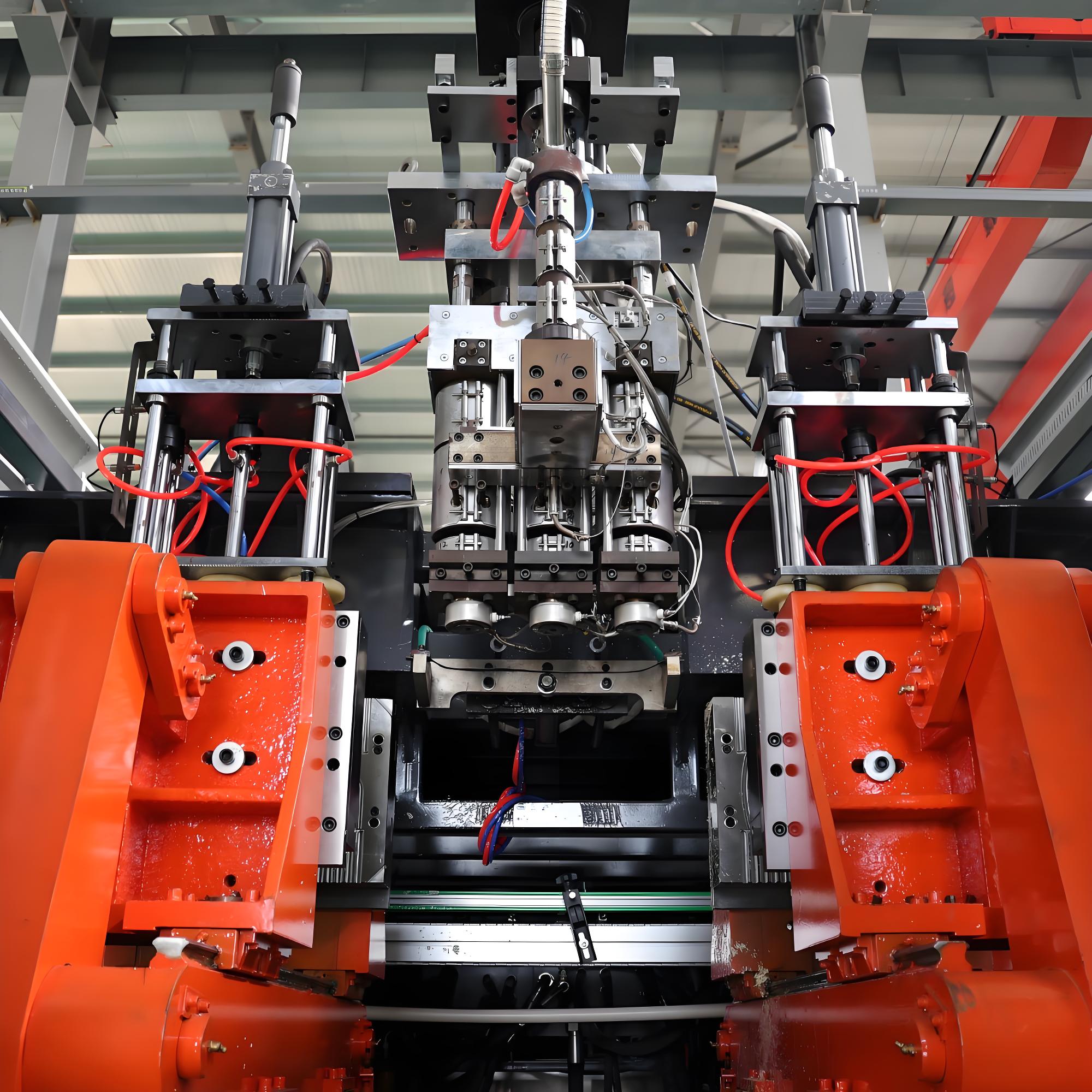
As máquinas ABLD utilizam uma cabeça de matriz para acumular rapidamente o enxerto grande e despejá-lo na matriz aberta num só tiro, evitando o tamanho e o encolhimento das paredes nos recipientes de grandes dimensões. O sistema hidráulico foi reforçado para a fixação mais pesada e a unidade de plastificação mais grande, e a estrutura foi projetada para absorver a carga de reação contínua do moldagem em grande formato. Para as atividades 24/7, o acumulador e a fixação são os dois componentes que decidem a fiabilidade, e ambos são especificados com margem contínua em vez de margem máxima.
Fortemente robusto não significa lento. Uma linha ABLD bem ajustada para tambores de 200 L executa consistentemente um ciclo multiminutos, em continuação, e a fábrica planeja suas atividades em função deste ciclo, porque é aprovável. A previsibilidade é o centro de disponibilidade: quando o tempo de ciclo é estável, todo o processo downstream – enchimento, rotulagem e paletização – permanece em sincronia, o que permite que toda a cadeia logística funcione sem acumulação de lixo.
| Parâmetro | 20 a 60 L | 60 L a 220 L | De 220 L a 1500 L |
|---|---|---|---|
| Container capacity range | 20 a 60 L | 60 L a 220 L | De 220 L a 1500 L |
| Diâmetro do parafuso do extrusor | 90 a 100 mm | 100 a 120 mm | 120 a 150 mm |
| Die head type | Acumulador contínuo | Accumulator | Acumulador de grande capacidade |
| Força de fechamento / platen | Muitas toneladas. | Tráfego muito intenso, grande platina | Massa máxima, placa extra-grande |
| Número de estações | 1 a 2 | 1 | 1 |
| Produção típica | Tambores estáveis por hora | Tambores estáveis por hora | Tanques estáveis por turno |
| Materiais processáveis | PE, PP | PE, PP, XLPE grades | PE, PP e tipos desenvolvidos |
| Classificação de funcionamento contínuo | Three-shift 24/7 | Three-shift 24/7 | Three-shift 24/7 |
Para fábricas que operam tanto garrafas quanto tambores, as famílias ABLB e ABLD compartilham a lógica de controle e convenções de HMI, o que permite que um operador treinado possa passar para a outra com um mínimo de reaprendizagem. Essa consistência entre famílias é uma vantagem de uptime silenciosa em fábricas com várias linhas onde a flexibilidade da mão-de-obra mantém todas as linhas ocupadas após o início do turno.
Série totalmente elétrica (200 ml a 20 L) sem hidráulico e com eficiência energética
A série totalmente elétrica abrange o mesmo intervalo de 200 ml a 20 L do ABLB, mas elimina completamente o sistema hidráulico, substituindo-o por uma trava servo-elétrica e um movimento de transferência. Para linhas de 24 horas por dia, isto muda o quadro de confiabilidade de duas formas importantes. Em primeiro lugar, não há óleo hidráulico a aquecer, a deixar escorrer, filtrar ou degradar, o que remove uma classe inteira de modos de falha e uma tarefa de manutenção recorrente. Em segundo lugar, o consumo de energia diminui porque o movimento só consome energia quando se move, e não há uma carga constante da bomba hidráulica.
A operação sem hidráulica é especialmente atraente para as linhas de contentores de alimentos, farmacêuticos e com elevadas exigências ambientais, onde a névoa de óleo e possíveis respostas são pouco bem-vindas perto da produção limpa. Ao eliminar a unidade de energia hidráulica, a série totalmente elétrica também funciona de forma mais fria e silenciosa, o que ajuda o ambiente da fábrica circundante durante a operação em três turnos. O contraponto é uma banda de custos iniciais mais elevada, que o grupo Wanplas considera Premium e não uma cifra em moeda específica, compensado pelos menores gastos de energia e manutenção a vida útil.
Do ponto de vista da estabilidade, o parafuso servo-elétrico fixa a posição com feedback em loop fechado, de modo que a carga não afunda como a temperatura do óleo faria em um sistema hidráulico. Essa carga constante protege o espessamento da parede e o controle de flashover durante todo o ciclo 24 horas por dia, 7 dias por semana. Para as usinas nos quais o custo de energia e a operação limpa são tão importantes quanto o tempo de atividade contínuo, a série Totalmente elétrica é a plataforma recomendada para serviços contínuos.
| Parâmetro | Completamente elétrico (200 ml a 20 l) |
|---|---|
| Container capacity range | 200 ml a 20 L |
| Tipo de unidade de acionamento | Completamente elétrico, sem sistema hidráulico |
| Movimentação das ferramentas de fixação | Servo-eletrónico, tonagem em circuito fechado |
| Diâmetro do parafuso do extrusor | 50 a 90 mm por modelo |
| Relação L/D da rosca | 20 a 24:1 |
| Perfil de energia | Linhas a ar versus hidráulicas |
| Carga de manutenção | Redução no consumo de óleo hidráulico |
| Melhor aplicação. | Linhas alimentares, farmacêuticas, ecológicas, salas limpas |
| Classificação de funcionamento contínuo | Three-shift 24/7 |
Engineering for Stability: How Máquinas Apollo Run 24/7
A estabilidade dos equipamentos sob carga contínua é a soma de muitas decisões pequenas, e a Apollo toma essas decisões com os mesmos princípios em toda a gama. Os quatro pilares são força de fluidos redundantes, comportamento térmico controlado, auto-diagnóstico inteligente e um ritmo de manutenção que previne falhas antes de elas ocorrerem. Cada um é descrito abaixo.
Design hidráulico e pneumático redundante
Nas máquinas hidráulicas, a Apollo constrói a unidade de potência com bombas redundantes e circuitos paralelos, de modo que uma anomalia de uma única bomba não interrompe a linha. O sistema pneumático, que aciona as hasteiras de vante, o resfriamento e os movimentos auxiliares, utiliza um esquema de dupla alimentação com buffers, de modo que uma redução temporária da pressão de ar não afeta o ciclo. A redundância aqui não é um luxo; é o seguro mais barato contra a causa mais comum de paradas não programadas, que é uma falha na rede de utilidades.
Gerenciamento térmico para fusão estável
A formação estável de colunas exige um gofre estável, e um gofre estável necessita de uma temperatura de fusão estável. O Apollo força o resfriamento na unidade de energia hidráulica e utiliza um controle de temperatura do cilindro zonado com regulação de ciclo fechado para que a fusão se mantenha dentro da janela de referência mesmo que a temperatura da instalação varia entre o dia e a noite. A cabeça do matriz e o acumulador são controlados por temperatura para prevenir zonas frias que causam narizes de solda fracos. O gerenciamento térmico é a razão pela qual uma máquina Apollo pode manter o mesmo peso do frasco e o mesmo perfil das paredes às 3:00 h que mantinha às 10:00 h.
Diagnóstico automático e histórico de falhas
Every Apollo machine runs on a PLC with an HMI that records fault history, cycle counts, and key process values. When something drifts, the control flags it before it becomes a stop. Auto-diagnóstico. cover heater band failure, melt pressure deviation, clamp position error, and cooling flow loss. The fault history lets an engineer analyze the trend during a visit rather than guessing from a single alarm, which shortens repair time and prevents repeat faults.
Tempo médio entre as falhas e a manutenção programada
O tempo médio entre falhas para uma linha de operação contínua da Apollo é determinado pelos itens de desgaste: vedadores, faixas de aquecimento, filtros e estranguladores de pinos de pulverização. Com a manutenção planejada adequada, o intervalo de manutenção principal é de cerca de
| Fator de design. | O que o Apollo faz | Efeito de disponibilidade operacional |
|---|---|---|
| Redundância hidráulica | Bombas paralelas e circuitos. | Falha na única bomba não interrompe mais a linha |
| Redundância pneumática | Fonte dupla com buffers | 000 horas de operação, o que, no caso de uma operação 24 horas por dia, é cerca de sete meses de operação contínua entre as paradas programadas. A manutenção menor, que envolve lubrificação, troca de filtros e inspeção, ocorre em intervalos menores e está projetada para ser realizada durante janelas de programação da linha, em vez de paradas de emergência. A disciplina da manutenção planejada é o que transforma uma máquina boa em uma confiável. |
| Controlo térmico | Forced cooling, zoned barrel control | Liquidação estável, espessura da parede estável |
| Auto-diagnóstico. | Histórico de falhas do PLC e indicadores de tendências | Correção da tendência antes do ocorrido |
| Manutenção programada | Manutenção periódica a ~4.000 horas. | Paradas previsíveis, sem surpresas |
| Quadro e ferramenta de fixação | Dimensionamento de tonelagem contínua. | Dipar de ar sem falhas mais |
Prevenção de falhas e autodiagnóstico
A prevenção de falhas em uma linha de moldagem a frio 24/7 consiste em detectar a deriva lenta antes que se torne uma parada definitiva. A abordagem de prevenção da Apollo tem três camadas: eliminar os defeitos comuns, monitorar os que permanecem e planejar o serviço para que o dono da linha escolha o momento da parada.
Alinhamento preservado durante a vida do molde
A terceira camada é o relacionamento de serviços. Como a Apollo monitora o status de utilização e realiza visitas irregulares aos clientes, os dados da tendência chegam a um engenheiro que pode analisá-los e recomendar ações. É aí que o modelo do grupo Wanplas ajuda: uma fábrica especializada focada em um tipo de máquina desenvolve um conhecimento aprofundado de como as máquinas envelhecem, e esse conhecimento é aplicado à sua linha antes que uma falha interrompa a produção.
Uma parada não planeada é o fracasso da prevenção, e não do componente. A Apollo concebe a máquina para que o componente seja a última coisa que falha e a tendência seja a primeira a ser avisada.
Para as usinas que executam várias linhas Apollo, o mesmo HMI e o mesmo formato de dados nas famílias ABLB, ABLD e Totalmente elétrica significam que uma rutina de monitoramento cobre toda a usina. Essa concordância reduz a barreira de competências para a turno noturno e diminui o tempo entre um aviso e uma correção.
Indústrias de Aplicação and Produtos finais de concreto
As máquinas de moldagem por sopro e extrusão da Apollo servem uma ampla gama de indústrias, e o projeto de operação contínua é o que as torna adequadas para cada uma delas. No perfil da empresa, alimentação e bebidas, produtos químicos diários, indústria química, material de construção, saúde e farmácia, produção de automóveis, transportes e setores cultural e desportivo são listados como áreas principais de aplicação. Cada uma delas corresponde a produtos finais concretos que uma linha 24 horas por dia, 7 dias por semana deve produzir sem falhas.
- Alimentos e bebidas—garrafas de água, garrafas de óleo comestível, recipientes de molhos e garrafas de leite, onde o fornecimento constante de qualidade alimentar protege o calendário de abastecimento.
- Produtos químicos diários.- Garrafas de detergente, garrafas de shampoo e condicionador, garrafas de loção e cestos de limpador produzidos em grande escala para venda ao detalhe.
- Indústria químicaTambores químicos, estojos de segurança e recipientes de ácidos que devem conter substâncias agressivas sem fugas.
- Building material— baldes de cola, tambores de vedante e tanques químicos de espuma utilizados em obras de construção.
- A primeira camada é projetada de modo a eliminar os pontos de falha individuais no sistema hidráulico, dimensionando a estrutura para manter uma força de fixação constante e usando geometria de parafusos auto-limpantes. Com isso, a Apollo elimina as falhas que costumavam aparecer após algumas centenas de horas. A segunda camada é a de monitoramento. O PLC monitora o tempo de ciclo, a pressão de fundição e as temperaturas das zonas, e o HMI mostra a desvio da receita. Um bandamento de aquecimento que perde entrada, por exemplo, aparece como uma tendência de temperatura bem antes que a garrafa falhe, o que permite que a fábrica programe a substituição durante uma janela de manutenção programada.— garrafas médicas e recipientes farmacêuticos, onde a moldagem limpa e estável protege a integridade do produto
- Produção de automóveis.— garrafas de líquido de lavagem de vidros, reservatórios de refrigeração e componentes de dutos moldados para a cadeia de abastecimento do setor automóvel.
- Transportes— recipientes para combustíveis e líquidos, e recipientes de transporte para cargas volumosas, especificamente destinados às aplicações logísticas e marítimas.
- Cultura e desporto.– corpos de brinquedos infláveis, flutuadores de equipamento desportivo e estruturas de brinquedos sólidas produzidos para mercados de consumo.
Os produtos finais em concreto são importantes para a discussão sobre o tempo de atividade, porque cada um possui sua própria norma de qualidade. Uma garrafa farmacêutica que fura pode falhar um padrão mais elevado do que um brinquedo, mas ambas as falhas interrompem uma expedição. A Apollo ajusta a máquina e a cabeça de molde ao produto, portanto a mesma filosofia de estabilidade serve para uma garrafa de alimentos e para um tambor químico, com os controles adequados para cada material e necessidade de certificação. Para o contato com alimentos e farmacêuticos, as normas relevantes, como a FDA e a UE 10/2011, são cumpridas através da prática de material e limpeza, e as máquinas são construídas para suportar esses requisitos sem necessitar de retrofits.
| Industry | Recommended Series | Produtos finais de concreto |
|---|---|---|
| Alimentos e bebidas | ABLB, Totalmente elétrica | Garrafas de água, óleo, molho e leite |
| Química diária. | ABLB, Totalmente elétrica | Garrafas de detergente, xampu e loção |
| Químico | ABLD, ABLB | Tambores, caquéticas, contêineres de agente. |
| Building material | ABLD, ABLB | Baias adesivas, tambores de selante. |
| A primeira camada é projetada de modo a eliminar os pontos de falha individuais no sistema hidráulico, dimensionando a estrutura para manter uma força de fixação constante e usando geometria de parafusos auto-limpantes. Com isso, a Apollo elimina as falhas que costumavam aparecer após algumas centenas de horas. A segunda camada é a de monitoramento. O PLC monitora o tempo de ciclo, a pressão de fundição e as temperaturas das zonas, e o HMI mostra a desvio da receita. Um bandamento de aquecimento que perde entrada, por exemplo, aparece como uma tendência de temperatura bem antes que a garrafa falhe, o que permite que a fábrica programe a substituição durante uma janela de manutenção programada. | Por completo elétrica, ABLB. | Frascos médicos e recipientes farmacêuticos. |
| Automobile | ABLB, ABLD | Washer bottles, reservoirs, ducts |
| Transportes | ABLD | Combustível, fluidos, tanque de molhos. |
| Cultura e desporto. | ABLB | Brinquedos, flutuações, estruturas hendecas |
A Garantia de Suporte Apollo que mantém as linhas funcionando
Uma máquina estável é apenas metade da história. A outra metade é a promessa que está por trás disso, e a Apollo, como uma fábrica da Wanplas, garante cada linha de serviço contínuo com uma garantia de suporte construída para manter a produção em marcha. As garantias são concretas, escritas e compartilhadas em toda a gama Wanplas para que o cliente saiba exatamente o que pode esperar.
Instalação e comissionamento do engenheiro no local.
Cada máquina Apollo é instalada e comissionada por um engenheiro Apollo no local. O engenheiro realiza testes de produção no molde e no material do cliente, confirma a produção e treina os operadores antes de sair. Este único passo evita a parada mais cara: aquela causada por uma linha que nunca foi configurada corretamente. A comissionamento inclui a verificação do tempo de ciclo, do espessamento da parede e do transbordamento, de modo que a linha seja iniciada com as condições corretas.
Rastreamento de utilização e visitas irregulares de clientes.
O programa Apollo monitora o estado de uso das máquinas instaladas e efetua visitas frequentes ao cliente para revisar os dados de estado e tendências. Como o PLC registra contagens de ciclos e falhas, o engenheiro pode analisar o desgaste antes que esta se transforme em uma falha e recomendar o serviço durante um intervalo de tempo planejado. Trata-se de uma manutenção proativa prestada como serviço, e não de uma reparação reativa após uma parada.
Inspecção de máquinas na fábrica
Antes do envio, cada máquina é inspecionada e testada na fábrica. A política de fábrica aberta significa que os clientes são bem-vindos para visitar a Zhangjiagang, ver a construção e testemunhar a execução do teste. Testar a máquina antes de deixá-la elimina a surpresa de uma linha que não está funcionando quando chega, o que em si é uma forma de proteção da atividade contínua.
USD 500 Free Parts Per Year
Sob o compromisso do Grupo Wanplas, todos os clientes da Apollo recebem US$ 500 em peças gratuitas por ano. Isto cobre os itens de desgaste comuns que mantêm uma linha em funcionamento 24/7: vedadores, faixas de aquecimento, filtros, mossas de pinões de jacto e outros materiais de consumo. As peças danificadas cobertas pela garantia são substituídas gratuitamente. A alíquota de peças gratuitas significa que as manutenções pequenas e previsíveis nunca são adiadas por um pedido de compra, o que é exatamente o momento em que atrasos pequenos se transformam em paradas.
GARANTIA DE TRANSPORTE
A garantia de transporte cobre o fornecimento da máquina ao cliente completa e imaculada. Uma linha que chega em deterioramento ou com peças faltantes representa uma interrupção antes mesmo do início da produção, portanto, na Apollo, a entrega segura é considerada um elemento da promessa de confiabilidade e não um risco de logística independente.
Garantia da capacidade de produção
A Apollo garante que a máquina entregue atende à capacidade de produção pedida. Se a linha não conseguir atingir a produção acordada em funcionamento estável, isso é um erro de fornecimento, e não um problema do cliente a absorver. Esta garantia alinha o incentivo da fábrica com o objetivo de disponibilidade do comprador: a Apollo só tem sucesso quando a linha alcança seus números.
Garantia do padrão de qualidade.
Se uma máquina entregue não atende ao padrão de qualidade acordado, a Apollo fornece um reembolso, mais um subsídio de 10%, na base da promessa de qualidade do grupo Wanplas. Em combinação com as garantias de transporte e capacidade, isto confere ao comprador uma rede de segurança completa: a máquina chega, funciona corretamente e cumpre o padrão, ou o cliente é indenizado integralmente. Esta é a confiança operacional que uma fábrica 24/7 precisa antes de comprometer uma linha para atuação 24 horas por dia.
Guia de seleção: escalas de produção para modelos Apollo recomendados
A escolha do modelo Apollo adequado para uma produção contínua começa pelo tamanho do recipiente e pelo volume diário, levando em conta, em seguida, as necessidades de materiais e salas limpas. A tabela abaixo relaciona as escalas de produção comuns às séries recomendadas. Como a Apollo oferece dez séries e mais de oitenta modelos, a recomendação pode ser refinada para um tipo específico e o número de cavidades durante a configuração.
| Escala de produção | Tamanho do recipiente | Recommended Series | Why |
|---|---|---|---|
| Início pequeno, com apenas uma mudança de turno. | 200 ml a 5 L | ABLB Series | Entrada mais baixa, base contínua estável |
| Garrafas de alto volume | 200 ml a 20 L | ABLB ou totalmente elétrico | Rendimento multiestação, elétrico para linhas limpas |
| Foce em alimentos ou farmácia. | 200 ml a 20 L | Totalmente elétrica Series | O óleo hidráulico é estável em termos de peso. |
| Baixas industriais | 20 L a 220 L | Série ABLD | Cabo de acumulator, gancho pesado |
| Bulk tanks | De 220 L a 1500 L | Série ABLD | Placa maior e capacidade maior. |
| Frasco misto e tambor | 200 ml a 1500 L | ABLB mais ABLD | HMI partilhado, labor flexível |
A seleção não se resume apenas à máquina que pode fabricar o recipiente. Trata-se da máquina que pode fazer isto continuamente no volume exigido, com a mão-de-obra disponível e os padrões de limpeza. Para a maioria das linhas de garrafas, a família ABLB ou totalmente elétrica é a correta; para qualquer tambor ou tanque superior a 20 L, a família ABLD é a opção com carga contínua. Os engenheiros da Apollo ajudam a finalizar o número de cavidades e o número de estações para que a capacidade pedida coincida com o plano real de turno.
Operação em várias turnos e escalonamento da capacidade
Executar três turnos é o normal para uma linha contínua da Apollo, e não um caso extremo. A máquina foi construída para isso, o intervalo de manutenção o assume e a garantia de suporte o cobre. O caminho prático de uma nova linha para a produção 24 horas por dia tem quatro etapas: comissão com o engenheiro Apollo, um período de estabilização em um único turno para a confirmação dos intervalos do processo, uma transição em dois turnos enquanto é treinada a força de trabalho e, finalmente, a conexão contínua em três turnos.
A escalada da capacidade segue a mesma lógica da seleção. Uma fábrica que ultrapassa a capacidade de uma linha ABLB adiciona uma segunda linha ou passa a funcionar em mais estações e cavidades em um tipo maior. Uma fábrica que passa de frascos para tambores adota uma linha ABLD. Como todas as famílias partilham as convenções de controle, a linha adicionada não acrescenta uma nova carga de treinamento e a rotina de monitorização permanece a mesma. A garantia de capacidade de produção aplica-se a cada linha encomendada, pelo que a escalada é previsível e não experimental.
Para as plantas que planejam um crescimento agressivo, a capacidade anual de produção de 100 conjuntos da Apollo e sua fábrica de 8.000 metros quadrados em Zhangjiagang fazem com que o prazo de entrega e o volume sejam gerenciáveis para o lançamento de frotas. A política de fábrica aberta permite que um cliente em crescimento observe várias linhas sendo construídas ao mesmo tempo e aligne a entrega com a pronta utilização do seu próprio local. Esta coordenação entre a construção do local do cliente e o horário da fábrica Apollo é uma parte silenciosa, mas importante, para manter a nova capacidade on-line no prazo.
Perguntas Frequentes
As máquinas Apollo EBM podem realmente funcionar 24 horas por dia, 7 dias por semana, sem paradas?
Sim. As máquinas de moldagem por sopro de extrusão Apollo foram projetadas para operação contínua em três turnos. Circuitos hidráulicos e pneumáticos redundantes, gestão térmica forçada e um sistema de controle com diagnóstico automático minimizam as paradas imprevistas. Com um intervalo de manutenção planejado de cerca de
Quais são os componentes de reposição incluídos na garantia de suporte?
Todos os clientes da Apollo recebem US$ 500 em peças gratuitas por ano como parte do compromisso do Grupo Wanplas, que cobre itens de desgaste, como vedadores, aquecedores, filtros e materiais de uso comum. As peças danificadas cobertas pela garantia são substituídas gratuitamente e a Apollo monitora o estado de utilização para enviar a peça certa antes que uma falha interrompa a linha.
O Apollo oferece monitoramento remoto para linhas contínuas?
Sim. O Apollo registra o estado de utilização através do PLC e do HMI da máquina, e os engenheiros podem analisar os dados operacionais e o histórico de falhas durante visitas imprevistas dos clientes ou sessões de revisão remota. Isto permite corrigir tendências anormais antes que se transformem em paragens, o que é fundamental para a prevenção de falhas em uma linha 24 horas por dia, 7 dias por semana.
O que a garantia do padrão de qualidade realmente promete?
Se uma máquina entregue não cumprir o padrão de qualidade acordado, a Apollo fornece um reembolso mais um compensação de 10% no âmbito da promessa de qualidade do grupo Wanplas. Isto se junta à garantia de transporte e à garantia de capacidade de produção, que asseguram que a máquina atende à produção encomendada, proporcionando ao comprador uma rede de segurança completa.
As máquinas Apollo são adequadas para operação em várias turnos desde o primeiro dia?
Sim. A Apollo instala e comissiona cada máquina no local com um engenheiro, executa testes de produção e treina os operadores. As máquinas são construídas para que funcione em três turnos, de modo que uma nova linha possa passar diretamente para produção 24 horas por dia assim que a comissão estiver completa e os intervalos do processo confirmados.
Como posso aumentar a capacidade à medida que cresce minha demanda?
A Apollo oferece dez séries com mais de oitenta modelos nas famílias ABLB, ABLD e totalmente elétrica, de modo que a capacidade pode ser ampliada adicionando estações ou passando para uma série maior. A garantia de capacidade de produção confirma a produção encomendada, e a Apollo ajuda a planear a transição de 1 turno para 24/7 sem ter que reaprender o sistema de controlo.
Qual modelo Apollo se adequa a uma linha de garrafas de alta capacidade 24 horas por dia?
Para garrafas de 200 ml a 20 L em grande escala, as séries ABLB ou a série totalmente elétrica são as opções padrão. Para tambores de 20 L a 1500 L, canecas e tanques, a série ABLD robusta foi projetada para moldagem por sopro em grande formato contínua, com uma cabeça do molde acoplada a um acumulador e uma presa para tamanhos maiores.
Conclusão e passo seguinte
Uma produção estável 24 horas por dia é a exigência definidora da moderna fabricação de plástico a vácuo e a Apollo, uma fábrica Wanplas, constrói suas máquinas de moldagem por injeção e sopro em torno desta exigência, desde o primeiro esboço até o teste final em fábrica. Circuitos hidráulicos e pneumáticos redundantes, comportamento térmico controlado, controle PLC de autodiagnóstico e um ritmo de manutenção planejado de aproximadamente
A máquina é apenas metade da promessa. A garantia de suporte da Apollo, a instalação no local, o rastreamento do uso, as visitas irregulares dos clientes, a inspeção da fábrica, as peças gratuitas de US$ 500 por ano, a garantia de transporte, a garantia de capacidade de produção e a garantia de padrão de qualidade com reembolso mais o compenso de 10%, eliminam o risco operacional que mantém os gestores de instalações acordados. Juntamente, a engenharia e a garantia significam que a linha, e não a máquina, decide quando parar.
Se está planejando uma linha de moldagem por fusão contínua, envie ao Apollo os tamanhos dos recipientes, o volume diário alvo e a lista de materiais. A equipe do Apollo configurará o modelo certo ABLB, ABLD ou totalmente elétrico, confirmará a capacidade por escrito e o convidará à fábrica de Zhangjiagang para testemunhar o primeiro teste antes da expedição. É assim que deve começar uma linha 24/7: comprovada, garantida e pronta para funcionar.