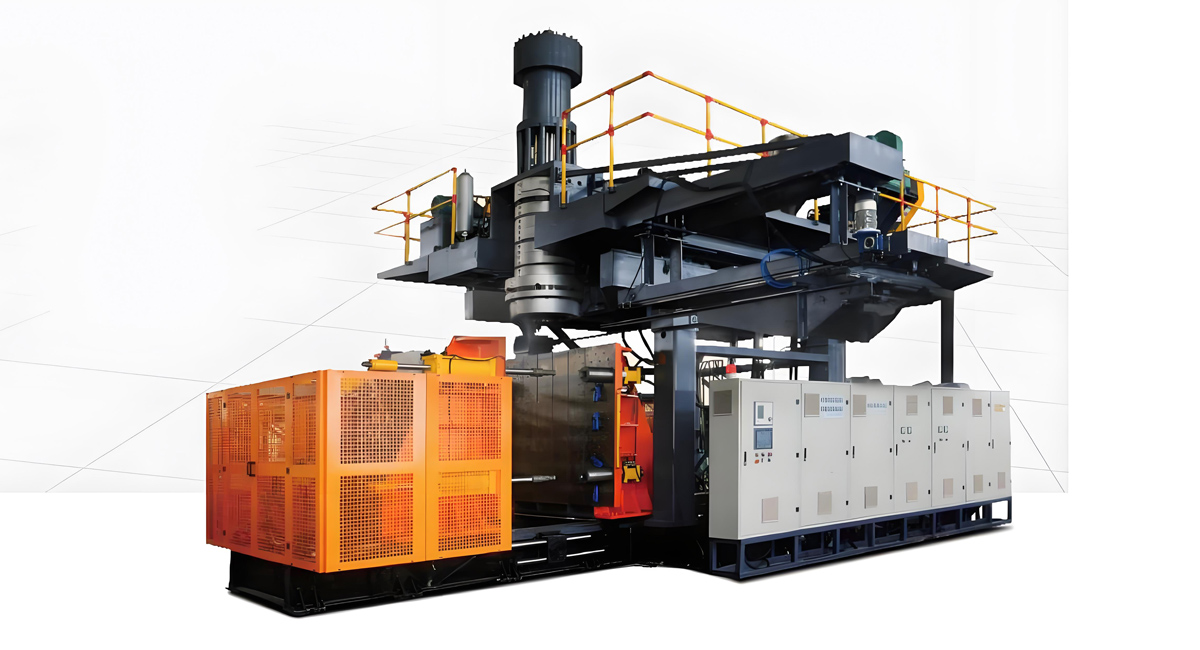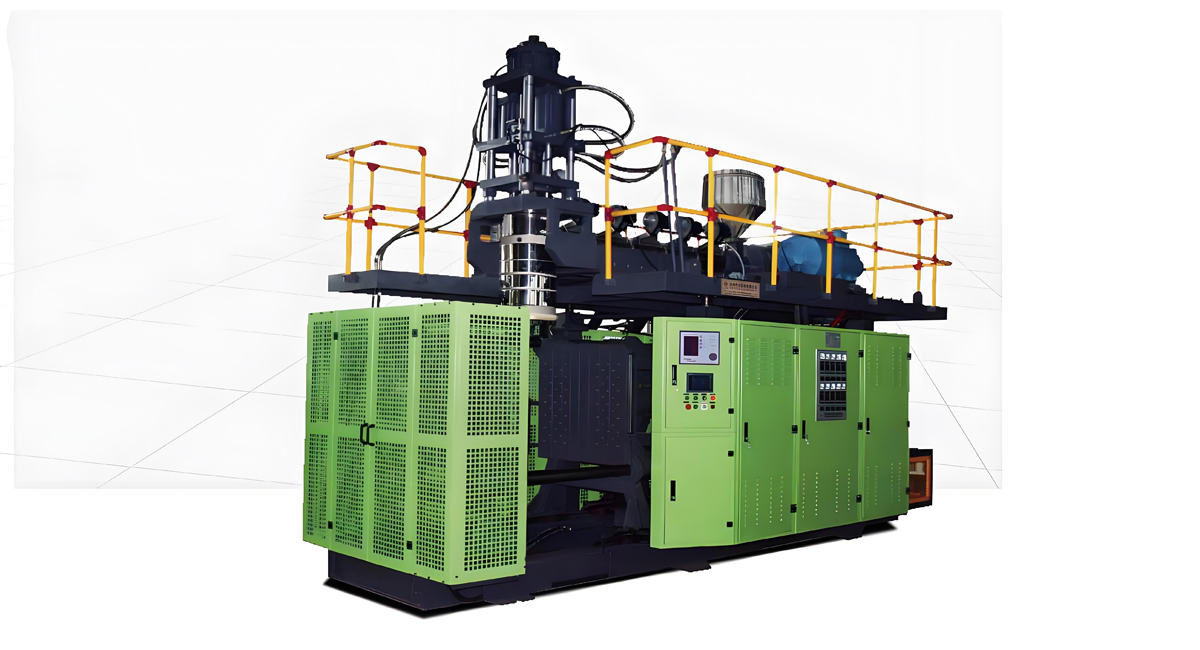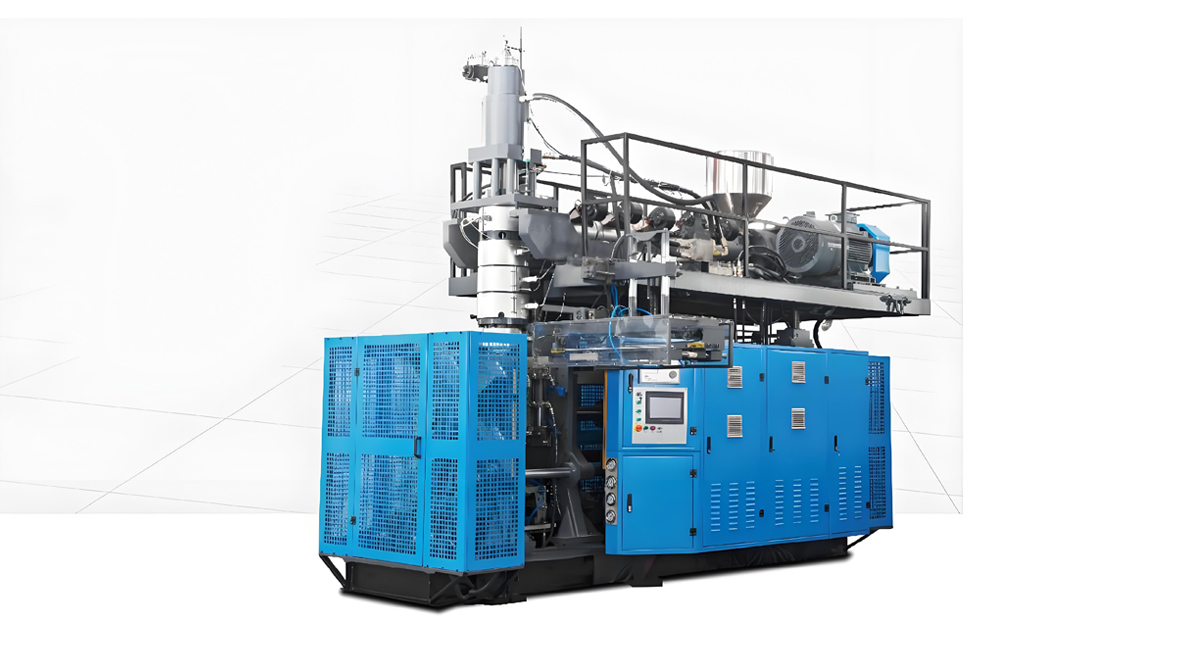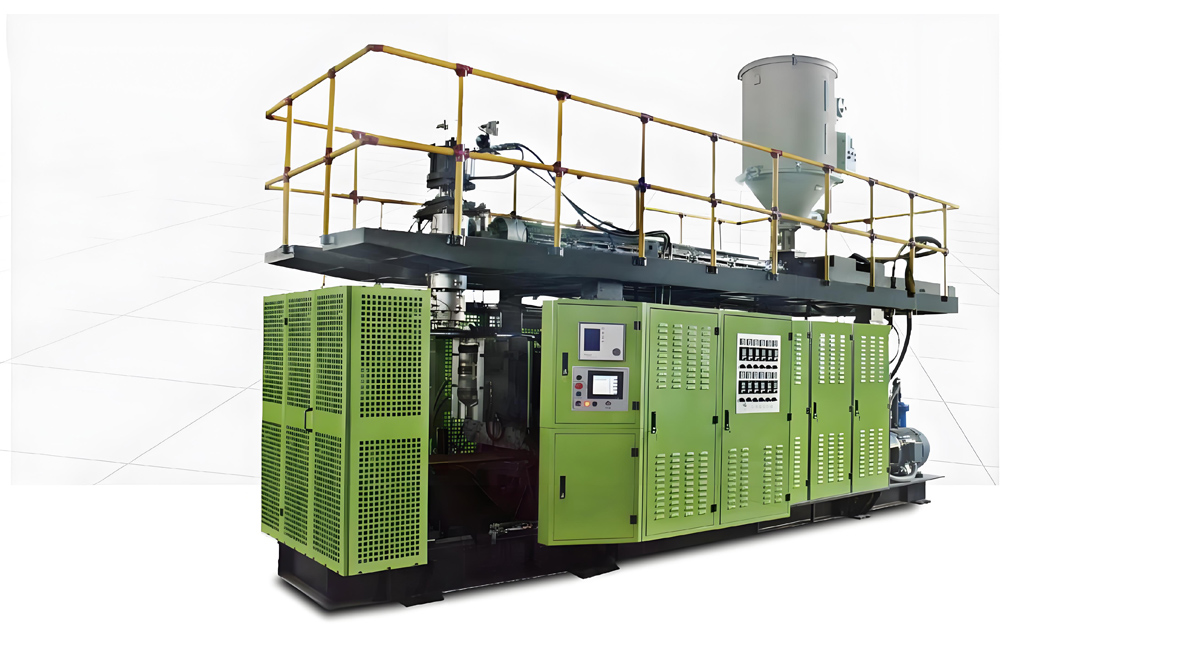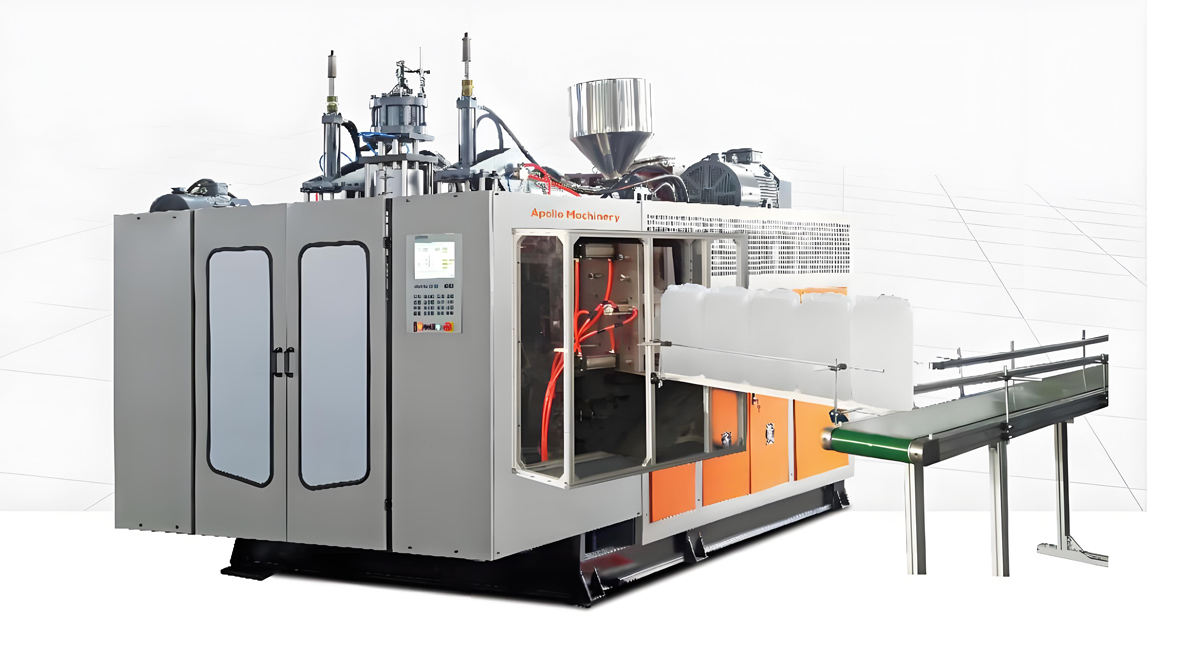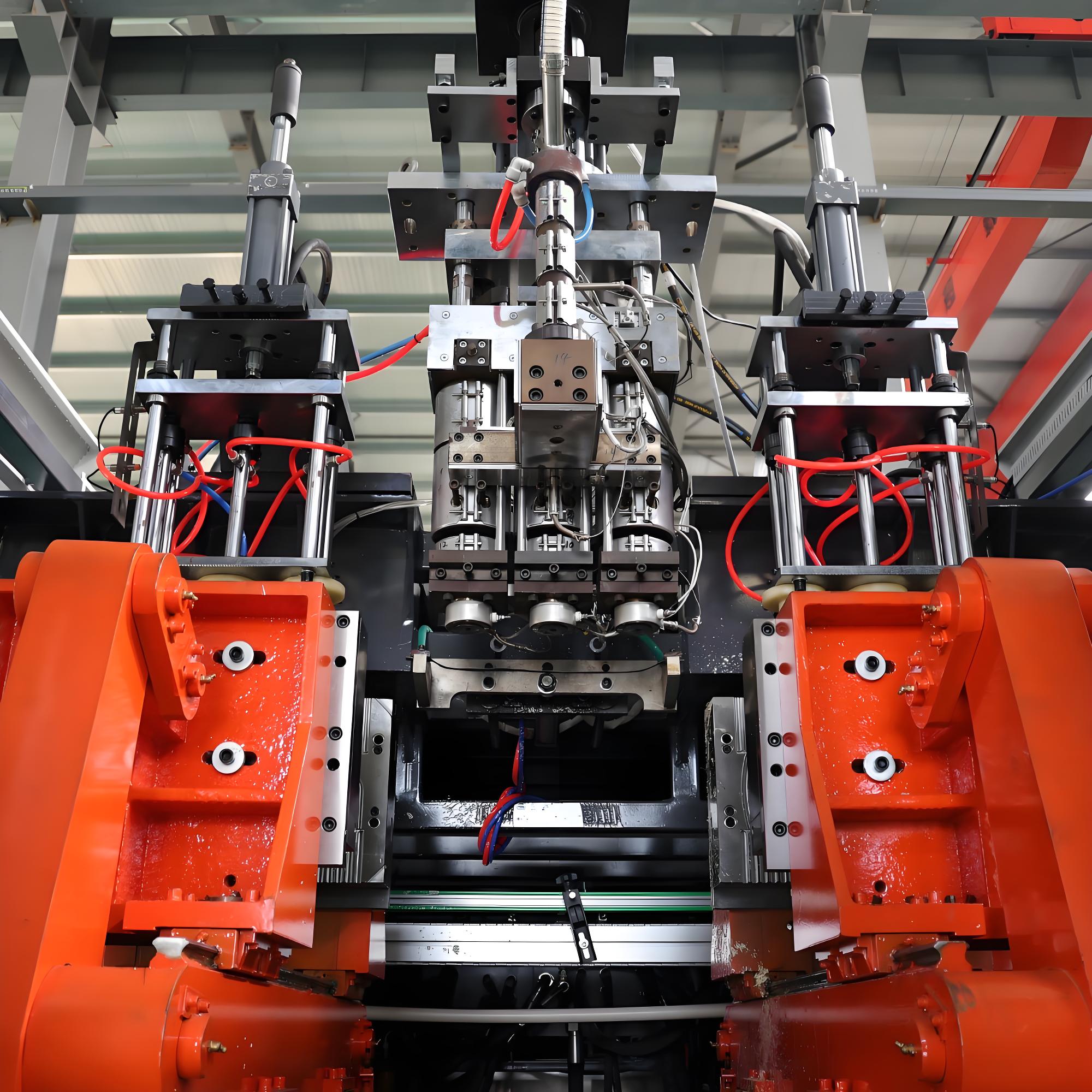
La moldeo por soplado por extrusión (EBM) es el proceso principal detrás de la mayoría de los recipientes plásticos huecos que no se fabrican a partir de preformas de PET: tambores químicos, bidones, tanques de agua, tarros cosméticos, botellas farmacéuticas y una larga lista de artículos industriales huecos. Apollo, una fábrica de Wanplas, construye máquinas EBM como plataformas configurables en lugar de productos fijos. La misma máquina de base puede convertirse en una línea de tarros cosméticos de una sola cavidad, una línea de botellas de detergente de cuatro cavidades o una línea de tambores químicos biestaciones simplemente cambiando el molde, el paquete eléctrico y los módulos de funcionamiento. Esta guía explica exactamente cómo personalizar una máquina EBM para que la línea final coincida con su recipiente, su resina, su red local y sus requisitos de calidad. Describe el diseño de moldes y cavidades, las opciones de voltaje y PLC y los módulos de funcionamiento que convierten una máquina estándar en una herramienta de producción diseñada en torno a su producto. A lo largo de todo el manual se utilizan series de Apollo y especificaciones representativas para que pueda traducir las opciones de personalización en una propuesta de máquina concreta.
Por qué personalizar una máquina EBM.
Personalizar una máquina EBM significa adaptar tres capas independientes del equipo para que todo el sistema esté diseñado alrededor de una familia de productos en lugar de obligar al producto a ajustarse a una máquina genérica. La primera capa es el diseño del molde y la cavidad, que decide la forma del recipiente, el acabado del cuello, la distribución del espesor de la pared y cuántas piezas se fabrican por ciclo. La segunda capa es la configuración eléctrica: voltaje, frecuencia, plataforma PLC y lenguaje de interfaz hombre-máquina, todos los cuales deben coincidir con la red de la fábrica y los operadores. La tercera capa es el conjunto de módulos de funciones como la banda de vista, el desengrasado automático, la prueba de fugas en la máquina y la coextrusión de múltiples capas, que deciden lo que la máquina puede hacer más allá del ciclo básico de extrusión y soplado.
Una máquina que no está personalizada para el producto desperdicia material, ralentiza el ciclo y obliga a realizar trabajo manual en la línea. Un productor de tambores químicos que utiliza una máquina de una sola capa cuando el mercado necesita una capa de barrera fracasará en las pruebas de conformidad. Un productor de tarros cosméticos que adquiere un molde de cuatro cavidades cuando una sola cavidad es suficiente gastará demasiado en fuerza de sujeción y espacio en el suelo. Un comprador de un mercado de 60 Hz que recibe una máquina de 50 Hz se enfrenta a costos de transformador y recálculo del motor. Por lo tanto, la personalización no es una opción de lujo; es la diferencia entre una línea que se recupera rápidamente y una línea que te perjudica en cada turno.
Apollo considera la personalización como un ejercicio de configuración en plataformas probadas. La serie ABLB abarca recipientes de 200 mililitros a 20 litros, la serie ABLD cubre recipientes de 20 litros hasta 1.500 litros para tambores, tanques y piezas industriales de gran tamaño, y la serie Totalmente eléctrica abarca recipientes de 200 mililitros a 20 litros con un sistema todo eléctrico, sin hidráulica, para plantas limpias y sensibles al consumo de energía. Dentro de cada serie, el molde, el paquete eléctrico y los módulos de función se seleccionan según el pedido, por lo que una sola serie puede servir para botellas de detergente, tarros farmacéuticos, tambores de lubricantes y recipientes de líquidos para automóviles sin cambiar la estructura de la máquina.
Personalización de moldes y cavidades: el corazón del pedido
El molde de colada es el componente personalizado más importante de una máquina EBM. Determina la forma exterior, el acabado del cuello (la rosca y la superficie de sellado), la geometría de la empuñadura, el relieve superficial y el número de cavidades que funcionan en paralelo. Debido a que el molde se encuentra en la estación de fijación y recibe el parison, su diseño también interactúa con la fuerza de fijación, el tiempo de enfriamiento y el tiempo de ciclo. Hacer bien el molde es la base de todas las otras opciones de personalización.
Número de cavidades y relación de producción
El número de cavidades es la primera decisión porque escala la producción directamente. Un molde de una cavidad produce un solo contenedor por ciclo; un molde de cuatro cavidades produce cuatro. Pero las cavidades adicionales requieren una placa de fijación más grande, más fuerza de fijación, una cabeza de parison más grande y una velocidad de extrusión superior. El techo práctico para un bastidor dado está establecido por la fuerza de fijación y el rendimiento del extrusor. Los bastidores ABLB de Apollo están diseñados para una a seis cavidades en el rango de pequeños contenedores, mientras que los bastidores ABLD soportan una o dos cavidades para piezas muy grandes en las que una pieza de
La relación entre las cavidades y la producción no es perfectamente lineal porque el tiempo de enfriamiento crece con el espesor de la pared y el tamaño de la pieza. En el caso de una botella de 1 litro con pared delgada, el ciclo puede durar unos segundos, por lo que cuatro cavidades proporcionan aproximadamente cuatro veces la cantidad de unidades por hora; en el caso de una cubieta de 10 litros con pared gruesa, el ciclo es mucho más largo y el beneficio de añadir cavidades está limitado por el enfriamiento en lugar de por la extrusión. Este es el motivo por el cual una especificación adecuada comienza por determinar la producción horaria o anual deseada, y posterior se calculan los sectores de la cavidad que la máquina puede soportar de forma realista.
Material del molde y diseño de refrigeración
Los moldes de soplado generalmente se mecanizan en aluminio para pequeños volúmenes y rapida extracción de calor, o en acero (a menudo bimetálico o acero para herramientas endurecido) para volúmenes de producción prolongados y resinas con materiales abrasivos. El aluminio se enfría más rápido y resulta más económico de cortar, por lo que reduce el tiempo de espera y el ciclo, pero se desgasta más rápido con compuestos de re-granulación o de láminas de vidrio. El acero dura mucho más y mantiene tolerancias cercanas a las mínimas en el acabado del cuello, pero es más caro y se enfría un poco más despacio. Apollo selecciona el material del molde para ajustarlo a la resina y al largo de la carrera prevista, y diseña los canales de enfriamiento de forma que sigan el contorno de la pieza para que el grosor de las paredes sea uniforme y el tiempo de ciclo sea corto.
El enfriamiento suele ser el cuello de botella oculto. Un molde con canales mal posicionados obliga al operador a prolongar la fase de enfriamiento, lo cual alarga el ciclo y reduce la producción. Un buen diseño del molde pone el enfriamiento de flujo turbulento directamente detrás de las secciones gruesas, como la empuñadura y la base, y mantiene el enfriamiento del cuello separado para que no se distorsione el hilo. Cuando personaliza el molde, por tanto, debe especificar no sólo la forma, sino también la resina y la producción previstas, ya que esas entradas determinan el diseño de enfriamiento.
Acabado del cuello, superficie y características secundarias
El acabado del cuello debe coincidir con el tapón y la línea de llenado. Los acabados comunes incluyen cuellos de hilo continuo, a presión, a prueba de manipulación y de pulverización por disparador, cada uno con un diámetro, paso de hilo y borde de cierre definido. Las máquinas de Apollo afilan la cavidad del cuello según el dibujo del tapón para que el cierre se encaste correctamente en la primera tanda. Las opciones de acabado de la superficie incluyen pulido de alta brillo para tarros cosméticos, textura mate para el agarre y logotipos grabados o escalas de medición directamente en la cavidad. Las características secundarias, como las asas integradas, los orificios de colgadura y las marcas graduadas del volumen, se incluyen en el molde en lugar de añadirlas posteriormente.
Tabla de especificaciones de personalización de moldes
En la tabla inferior se asignan las decisiones de molde al efecto que tienen sobre la máquina y la línea, lo que ayuda a traducir una idea de producto a una especificación de molde.
| Decisión del molde | Opciones típicas | 000 litros ya llena el área de fijación. |
|---|---|---|
| Número de cavidad | 1, 2, 3, 4, 6 (partes pequeñas) | Efecto en la máquina y en la línea |
| Material del molde | Aluminio, acero endurecido, bimetálico | Afecta la velocidad de enfriamiento, la vida útil de la herramienta y el costo. |
| Neck finish | CT, de montaje rápido, resistente a alteraciones, accionador | Debe coincidir con el tapón y el relleno; maquinado según el dibujo del tapón |
| Textura de la superficie | Alto brillo, mate, logotipo grabado, escala | Personaliza la apariencia de la marca sin penalizaciones en el ciclo de fabricación |
| Diseño y características | Manija integrada, agujero, marcas graduadas | Construida en la cavidad; afecta al enfriamiento y la distribución de la pared |
| Disposición de enfriamiento | Canales turbulentos que siguen los contornos | Ciclo más corto, pared uniforme, menos residuos |
Referencia de moldes y cavidades de la serie ABLB
La serie ABLB es la plataforma EBM principal de Apollo para recipientes de 200 mililitros hasta 20 litros, utilizados para botellas, jarras, latas y recipientes industriales pequeños. Se ofrece en varios tamaños de bastidor, cada uno utiliza un extrusor con una estación de fijación diseñada para una variedad de cavidades. Dado que la serie se construye como un bastidor configurable, el número de moldes y recipientes se elige según el pedido. En la tabla siguiente se enumeran los bastidores representativos de la serie ABLB y los rangos de cavidades y recipientes que admiten; los números exactos se confirman en la propuesta de ingeniería, ya que el tornillo, la fuerza de sujeción y la potencia se ajustan al resina final y la producción.
| Modelo (representativo) | Diámetro del tornillo (mm) | Gama de recipientes | Cavidades típicas | Fuerza de fijación (kN) | Potencia instalada aproximada (kW) |
|---|---|---|---|---|---|
| ABLB 55 | 55 | 0.2 – 2 L | 1 – 4 | 50 – 80 | 22 – 30 |
| ABLB 65 | 65 | 1–5 l | 1 – 4 | 80–120 | 30–45 |
| ABLB 75 | 75 | 3–10 l | 1 – 3 | 120 – 180 | 45 – 60 |
| ABLB 90 | 90 | 5–20 l | 1–2 | 180–260 | 55–75 |
Estos valores son representativos de la plataforma ABLB y ilustran cómo la estructura se escala según el tamaño del envase. A medida que el envase crece hacia los 20 litros, cabe menos cavidades en la placa y se incrementa la fuerza de ajuste, por lo que el extrusor y la abrazadera se dimensionan de forma conjunta. Para una botella de detergente de 2 litros, un ABLB 65 con cuatro cavidades y una cabeza de extrusión continua generalmente ofrece el mayor rendimiento por metro cuadrado de espacio. Para una lata de aceite lubricante de 10 litros, un ABLB 75 con una o dos cavidades y un programa de parison calibrado es el mejor equilibrio de rendimiento y control de la pared.
Escala la producción; aumenta la exigencia de fuerza de fijación y de velocidad de extrusión
Personalización eléctrica de voltaje y PLC.
El paquete eléctrico es la segunda capa de personalización y la que más se suele pasar por alto hasta que llega el equipo. Cada mercado tiene un estándar de red diferente, y una máquina EBM contiene motores (accionamientos de extrusor, abrazadera, soplador, control de paro), calentadores (cuerpo y cabezal de troquel), válvulas servo y un sistema de control que todos tienen una tensión y una frecuencia específicas. Especificar el estándar eléctrico incorrecto significa transformadores, motores con capacidad reducida o, en el peor de los casos, daños en el accionamiento.
Cuando personaliza una máquina ABLB, el número de cavidades del molde se ajusta al rendimiento del tornillo de alimentación para que el parison esté siempre disponible cuando se cierra la fijación. Si las cavidades exigen más material que el tornillo puede suministrar, el ciclo se bloquea mientras espera el material; si el tornillo suministra de más, se acumula material y la presión de la cabeza varía. Apollo establece el diámetro del tornillo, la relación L/D y el diseño de la cabeza junto con el número de cavidades para que la línea funcione a una cadencia estable y repetible.
Apollo configura la máquina para la red nacional del cliente. Los estándares más comunes son 380 a 415 voltios a 50 hertz de tres fases, utilizados en Europa, Oriente Medio, África y la mayor parte de Asia; 220 a 240 voltios o 440 a 480 voltios a 60 hertz de tres fases, utilizados en América; y 200 voltios a 50 o 60 hertz para Japón. Los circuitos de control de una sola fase se derivan internamente independientemente de la fuente principal, pero las características principales de la unidad de accionamiento y el calorizador se establecen en la fábrica. Los calorificadores en particular deben rebobinarse para la tensión correcta, ya que un calorificador de 415 voltios alimentado a 480 voltios se sobrecalentará y fallará rápidamente.
| Región / mercado | Tensión principal | Frecuencia | Nota de configuración de los moldeadores Apollo |
|---|---|---|---|
| Europa, Oriente Medio, África. | 380–415 V | 50 Hz | Trifásico estándar; resistencias y motores coordinados |
| Norteamérica | 440 – 480 V | 60 Hz | Calentadores reelimados; placa de identificación del motor de 60 Hz |
| América del Sur. | 220 – 240 V o 380 V | 60 Hz | Confirme la red eléctrica local antes de realizar el pedido |
| Japón | 200 V. | 50/60 Hz | Frecuencia dependiente de la región |
| Australia, Nueva Zelanda | 415 V | 50 Hz | Trifásico estándar |
PLC, HMI y lenguaje de control
Opciones de tensión y frecuencia
La personalización del control también abarca la seguridad y los datos. Una cortina de luz o un bloqueo de puertas en la estación de ajuste, sensores digitales de posición para la seguridad del molde y control de espesor de pared de parison en ciclo cerrado se integran todos en el programa del PLC. Para clientes bajo sistemas de calidad como ISO 9001 o estándares de contacto con alimentos, la HMI puede registrar el número de ciclos, las temperaturas y el historial de fallos para apoyar la trazabilidad. La opción de personalización aquí son el idioma, el número de recetas guardadas y el nivel de características remotas y de datos que necesita su operación.
Personalización del motor y el accionamiento
Más allá del voltaje, el tipo de accionamiento es una decisión de personalización. Las máquinas hidráulicas utilizan una bomba y válvulas para el movimiento de fijación y parison; las máquinas servo-hidráulicas incluyen una bomba controlada por servo que reduce la energía en reposo; las máquinas completamente eléctricas reemplazan por completo las hidráulicas con motores servo. La elección adecuada depende de los costos de energía, de los requisitos de limpieza y de las preferencias de mantenimiento, y se selecciona junto con el paquete de voltaje. Este tema se trata con más detalle en la sección completamente eléctrica a continuación.
Personalización del módulo de funciones
Los módulos de funciones son las capacidades opcionales fijadas en el ciclo básico de extrusión y soplado. Se seleccionan en función del producto y del mercado, y son lo que separan una máquina de EBM básica de una célula de producción diseñada específicamente para una determinada aplicación. Los módulos más solicitados para las máquinas de Apollo son la tira de visualización, el control programable del espesor de la pared contraria, la eliminación automática de picos, la prueba de fugas en la máquina y la coextrusión de varias capas.
Vista de rayas (línea de vista, franja visible).
Una vía de vista es una banda vertical de material contraste o transparente sujeta por soldadura en el lateral del recipiente, de modo que el usuario pueda ver el nivel del líquido. Se produce alimentando una fina corriente de resina de colores o transparente en la mezcla situada en una posición definida mientras la mezcla principal se extruye y luego se sujeta durante el llenado. Las vías de vista son habituales en las botellas de detergente, las botellas de cosméticos y los recipientes farmacéuticos donde el consumidor lee el nivel de llenado. Cuando personalizas una vía de vista, Apollo agrega una alimentación de material secundaria y un inserto de vaciado de la vía de vista, y los ajusta a la cavidad del molde para que la vía de vista aparezca en la cara frontal de la botella.
Control programable de la espesura de la pared de paro
El control del espesor de la pared del parison, a menudo preparado alrededor de un mandril (tipo Moog), varía el espacio de la matriz a medida que el parison es extruido, de manera que la pared sea gruesa en las partes que necesitan resistencia (bases, asa) y delgada en las partes donde se puede ahorrar material (parte superior). Este módulo reduce directamente el peso de la resina y mejora el rendimiento de la salida. Es una de las personalizaciones de mayor valor debido a que reduce el costo del material en cada parte durante la vida útil de la máquina. El programa Apollo ajusta el perfil de la pared contra el dibujo del molde y del recipiente durante la puesta en servicio.
Desbarbado automático
En el moldeo por soplado por extrusión, el paro deje rastros en la soldadura inferior y alrededor del cuello. El recorte manual es lento e inconsistente. El desparlante automático elimina los rastros dentro de la máquina mediante herramientas de corte sincronizadas programadas para el ciclo abierto, lo que entrega una pieza acabada sin necesidad de una estación de recorte secundaria. Este módulo reduce el trabajo, mejora la consistencia y mantiene los rastros confinados para el reciclaje del material de reciclado. Para las líneas de botellas de alta producción, es efectivamente obligatorio.
El sistema de control es la interfaz diaria del operador, por lo que su personalización es tan importante como el hardware. Apollo construye la máquina alrededor de un controlador de lógica programable (PLC) estándar con una interfaz hombre-máquina (HMI) con pantalla táctil. La HMI puede configurarse en inglés, español, árabe, francés, ruso, portugués u otros idiomas, y la gestión de recetas almacena múltiples recetas de contenedores para que el operador cambie de productos seleccionando una receta guardada en lugar de volver a ingresar las temperaturas y los tiempos. Para las plantas que desean una supervisión remota, Apollo configura la monitorización remota para que el equipo de ingeniería pueda leer los datos del PLC y recibir alertas de defectos, lo que reduce el tiempo de respuesta cuando un parámetro se desvía.
Una prueba de fugas dentro de la máquina presuriza el recipiente terminado con aire y comprueba la pérdida de presión, rechazando cualquier parte que no pueda mantener la presión. En el caso de recipientes químicos, farmacéuticos y alimentarios, esto reemplaza las pruebas fuera de línea y detecta las fugas antes de que el envase salga de la máquina. Apollo integra la prueba en la estación de salida o en una estación posterior y conecta la señal de rechazo al HMI para que el operador visualice los índices de defectos en tiempo real.
Extrusión en varias capas
La coextrusión multicapa utiliza una cabeza que combina dos o más flujos fundidos en un parison estructurado: por ejemplo, un núcleo reciclado o regenerado entre capas de piel virgen, o una capa barrera (resina de unión más barrera) para el envasado de hidrocarburos, como tambores de productos químicos. Este módulo se especifica cuando el recipiente debe cumplir con las reglas de contenido reciclado o barrera. Añade una segunda o tercera extrusora y una cabeza de matriz en capas, y se combina con frecuencia con los bastidores de alta resistencia de ABLD para tambores y cisternas.
Tabla de selección de módulos de funciones
| Módulo de funciones | Qué hace | Productos típicos. | Efecto de personalización. |
|---|---|---|---|
| Vía de vista | Solda una banda de nivel de relleno visible en la pared | Botellas para detergente, cosméticos y productos farmacéuticos | Añade alimentación secundaria y una matriz de tiras |
| Control de las paredes del preformulario | Variación del contorno según la posición para ahorrar resina. | Prueba de fuga dentro de la máquina | Añade un mandril servo y un programa de perfil |
| Desenframado automático | Cabezales de corte flash dentro de la máquina | Líneas de embotellamiento y envasado con alta producción. | Elimina el recorte manual y permite el reciclaje. |
| Prueba de fugas en la máquina | Verificación de la disminución de la presión del aire, rechazo automático | Contenedores químicos, farmacéuticos, alimenticios | Añade una estación de prueba y lógica de rechazo |
| Extrusión en varias capas | Construcción de 2-3 capas u obtenimiento de una estructura de 2-3 capas en el molde de parison. | Tambores químicos, envasado con barrera | Añade extrusoras y una cabeza de matriz en capas |
| Reciclaje flash / transportador | Recolección y reafilado del flash en línea | Producción en volumen. | Incluye granulator y transportador. |
Serie ABLD Heavy-Duty y personalización de varios capas.
500 litros: tambores químicos, depósitos de agua, recipientes para almacenamiento de líquidos, tanques de fluidos para el sector automotor y grandes objetos huecos industriales. Estas piezas son demasiado grandes para la extrusión en una sola operación continua a alta velocidad, por lo que la serie ABLD utiliza una cabeza de matriz de acumulador que crea un proyectil medido de fundición y luego lo expulsa como una toma única. El desafío de la personalización a esta escala es la uniformidad de las paredes a través de una pieza muy grande y, en el caso de tambores químicos, el rendimiento de la barrera.
Para los tambores que contienen productos agresivos, el módulo multicapa es la clave para la personalización. Una estructura de tambor de tres capas coloca un núcleo reciclado o reciclado entre dos capas de polietileno de alta densidad virgen, reduciendo el costo del material sin sacrificar la superficie interior limpia. Cuando se regula la permeación de hidrocarburos, se añade una capa de unión y barrera para que el tambor cumpla con el estándar de transporte mientras mantiene la mayor parte de la pared en resina de bajo coste. Apollo configura el número de capas, la relación de capas y el tamaño del extrusor secundario o terciario según las especificaciones del tambor y la regulación local.
| Modelo (representativo) | Diámetro del tornillo (mm) | Gama de recipientes | Fuerza de fijación (kN) | Capas compatibles | Potencia instalada aproximada (kW) |
|---|---|---|---|---|---|
| ABLD 100/120 | 100 – 120 | 20–200 l | 300 – 600 | 1 – 3 | 90 – 150 |
| ABLD 150 | 150 | 100-500 L. | 600-900 V. | 1 – 3 | Ampliamente utilizado en unidades de producción de automóviles: motores, cajas de herramientas y cajas de engranajes. |
| ABLD 200 | 200 | 500–1500 l | 1000 – 1600 | 1 – 3 | 250 – 350 |
Todas las piezas sensibles al volumen
Totalmente eléctrica Series for Clean & Eco Production
La serie totalmente eléctrica abarca desde 200 mililitros hasta 20 litros, como la ABLB, pero reemplaza el sistema hidráulico por unidades servoeléctricas para el sujetado, el movimiento de paración y el soplado. Esto elimina el aceite hidráulico de la máquina, lo que es importante en entornos farmacéuticos, de contacto con alimentos y salas limpias donde las neblinas e escapes de aceite son inaceptables. Además, ahorra energía en reposo porque las unidades eléctricas solo consumen energía cuando se están moviendo, mientras que la bomba hidráulica funciona de forma continua.
La personalización de una máquina totalmente eléctrica sigue la misma lógica de molde y función que la ABLB, con la decisión adicional de la arquitectura de transmisión. Los beneficios incluyen una fuerza de sujeción uniforme, repetibilidad precisa y un menor nivel de ruido, lo que ayuda en plantas con estrictas normas de energía o de seguridad en el lugar de trabajo. Para una línea de jarros cosméticos o botellas farmacéuticas donde la limpieza y la consistencia de las piezas son las prioridades, la plataforma eléctrica es el objetivo de personalización natural, aunque el nivel inicial es más alto que el equivalente hidráulico. Cuando especifica esta serie, Apollo confirma la marca de servomotores, la clase de fuerza de sujeción y los módulos de función, y luego valida el molde sobre el bastidor eléctrico durante las pruebas en fábrica.
El cuadro a continuación resume las tres plataformas de Apollo de modo que la elección de personalización entre hidráulica, de alta resistencia con acumulador y completamente eléctrica sea clara.
| Plataforma. | Gama de recipientes | Tipo de unidad de accionamiento. | Mejor para | Multicapa |
|---|---|---|---|---|
| ABLB | 0,2 – 20 L | Hidráulico / hidráulico servo | Botellas, tarros, latas | Opcional. |
| ABLD | 20–1500 l | Accionador, hidráulico | Tambores, depósitos, piezas de gran tamaño. | Sí, 1-3 capas. |
| Totalmente eléctrica | 0,2 – 20 L | Plataforma recomendada | Limpio, alimentación, farmacéutico, ecológico | Opcional. |
Industrias de aplicación y productos finales
Las máquinas Apollo EBM sirven a una amplia variedad de sectores industriales, y cada sector requiere una receta de personalización diferente. El mismo marco ABLB personalizado con un molde para jarras cosméticas, una cavidad con brillo y una prueba de fugas sirve al mercado de productos para el cuidado personal, mientras que el mismo marco con un molde para bidones, una línea de visualización y un sistema de desincrustación automático sirve al mercado de lubricantes. Comprender el producto final es la clave para elegir la personalización apropiada.
- Los bastidores ABLD están construidos en torno a cabezales acumuladores, por lo que la discusión de personalización se traslada desde el número de cavidades al tamaño de la inyección del acumulador, la presión del cabezal y la programación del parison para una sola pieza muy grande. La fuerza de fijación debe mantener el gran molde cerrado contra la presión de la colada, y el tiempo de enfriamiento rige el ciclo. Apollo ajusta el acumulador, la fijación y el enfriamiento para que el tambor se desmoldee limpiamente sin resquebrajamiento ni debilidad en la línea de soldadura. Para los clientes que también fabrican piezas industriales más pequeñas, se puede reconfigurar el mismo bastidor con un molde diferente y una inyección de acumulador más pequeña, lo que es una forma de personalización que protege la inversión a medida que cambia el rango de productos.
- Envases de detergentes, champú, gel corporal y limpiadores domésticos. Se especifican habitualmente con rayas de visión, desbloqueo automático y moldes de múltiples cavidades para un alto rendimiento.
- Industria química:Botellas de productos agroquímicos, latas de solvente y tambores de 20 a 200 litros. Personalizado con estructuras de múltiples capas de barrera y prueba de fugas para un transporte seguro.
- Materiales de construcción:barriles de adhesivos y selladores, recipientes de espuma y tambores de unión de tuberías. A menudo piezas grandes con sujeción robusta.
- Medicina y farmacia:Tarros para ungüentos, botellas para pastillas y recipientes de diagnóstico. Preferiblemente, la serie totalmente eléctrica para una producción sin aceite y limpia, con prueba de fugas estricta y trazabilidad.
- Producción de automóviles:Tanqueros de líquido de lavavajillas de parabrisas, depósitos de líquido refrigerante y conductos. Grandes componentes huecos ABLD o diseñados a medida, frecuentemente con características integradas.
- Transporte:Tanques de combustible y urea (AdBlue), recipientes de fluido hidráulico. Las capas de barrera y las estrictas pruebas de fugas son la norma.
- Cultural y deportivo:Artículos deportivos inflables y huecos, componentes de juguetes y artículos promocionales con formas personalizadas.
Dado que la personalización está basada en el producto, la forma más rápida de definir una máquina es comenzar desde el producto final y trabajar hacia atrás: definir el contenedor, la resina, el rendimiento y las reglas de calidad, y luego permitir que estas entradas seleccionen la plataforma, el molde, el paquete eléctrico y los módulos de función.
OEM/ODM y cómo especificar una máquina EBM personalizada
Apollo soporta tanto la personalización OEM como la ODM. En un arreglo OEM, el cliente proporciona el dibujo del producto o la muestra, y Apollo construye la máquina y el molde según esa especificación, a menudo con la marca del cliente en la HMI y la placa de nombre. En un arreglo ODM, Apollo también aporta el diseño del producto y el molde, basándose en su biblioteca de experiencia en contenedores y moldes para proponer una forma y una solución de producción. Ambos métodos comienzan con la misma recepción de las especificaciones.
Lista de comprobación de especificaciones
La tabla inferior muestra el entrante que utiliza Apollo para transformar una idea de producto en una propuesta de máquina concreta. Enviar estos datos de entrada al principio evita la causa más común de retraso: una propuesta construida en torno a suposiciones equivocadas sobre el recipiente.
| Entradas. | Que proporcionar. | Ejemplo |
|---|---|---|
| Dibujo del contenedor o muestra | Dibujo 2D, archivo 3D o muestra física | Botella redonda de 1 L, cuello de 28 mm |
| Rango de volumen | Volumen mínimo y máximo de relleno | 0.9 – 1.0 L |
| Producción anual | Piezas por año o por turno. | 6.000.000 botellas/año |
| Grado de resina | Material y MFI. | HDPE, MFI 0,3-0,5. |
| Diseño multicapa, ensayo de fugas, desconflechado | Estándar de rejilla | 415 V, 50 Hz |
| Módulos de función | Capacidades requeridas | Visualización de rayas, desbloqueo, prueba de fugas. |
| Normas de calidad | Cumplimiento requerido. | Contacto con alimentos, ISO 9001 |
Tabla de recomendaciones de selección
Una vez conocidos los inputs, se selecciona la plataforma. La tabla siguiente relaciona las necesidades comunes de los clientes con una configuración recomendada de Apollo.
| Necesidad del cliente | Preparación de medicamentos y reacciones químicas | Módulos recomendados |
|---|---|---|
| Vaso cosmético pequeño, sala limpia | Modelo completamente eléctrico, 0,2 – 2 L | Prueba de escapes, cavidad de brillo |
| Botella de detergente de 1 a 5 L con alta producción. | ABLB 65, 4 cavidades | Visualización de la banda, desenmazado, control de la pared. |
| Latiguillo de lubricante de 10 l | ABLB 75/90, 1 – 2 cavidades | Control de la pared, eliminación de picos, prueba de fugas. |
| Tambor químico de 20 a 200 litros, barrera | ABLD 100/120 | Secado y diseño de capas para uso de barrera |
| Depósito de agua de 500 a 1500 L | ABLD 150/200 | Cabezal del acumulador, control de pared |
| Botella para farmacéutica, baja energía | Del todo eléctrico, 0,2 – 5 L | Prueba de escapes, registro de trazabilidad |
La selección nunca es final hasta que se pruebe el molde en la máquina real. Apollo valida la cavidad, el programa de parison y los módulos de función en el taller, hace pasar el recipiente por una prueba de fugas y una prueba de caída cuando es pertinente, y solo después confirma la hoja de especificaciones. Este paso de validación forma parte de la personalización, no es un trabajo adicional, porque un molde que parece correcto en el papel aún puede necesitar un ajuste de los perfiles de paredes para funcionar de manera limpia.
Logica de personalización de materiales y en capas múltiples.
La resina determina gran parte de la personalización porque cada material tiene un comportamiento diferenciado del derretimiento, la contracción y las necesidades de enfriamiento. Las máquinas de Apollo procesan PE, PP, PVC, PA, PC, ABS, PS, EVA, TPU y PETG, y las temperaturas del tornillo, la cuba y la cabeza de la horquilla se establecen por material. La tabla siguiente relaciona los resinas comunes con las notas de personalización que siguen.
| Material | Productos típicos. | Nota de personalización |
|---|---|---|
| HDPE/LDPE | Botellas, tambores, bidones | La serie ABLD es la robusta plataforma EBM de Apollo para contenedores de 20 litros a |
| PP | Alimentos, farmacéutica, paredes delgadas | Temperatura de fusión más baja, enfriamiento cuidadoso para evitar la dobladura |
| PVC | Nivel premium: | Sensible al calor; perfil de tornillo y temperatura adaptado |
| PC/ABS/PS. | Tecnología, visualización, componentes duros | Temperatura de fusión más alta, molde pulido para lograr un brillo óptimo |
| PA / PETG / TPU | Ingeniería, barrera, flexible | Estándar; control de paredes fácil, enfriamiento rápido |
| EVA – refuerzo del núcleo, capa de PVC, cojinete de nylon y carcasa de PC. | Flexible, apremiante | Competición más suave; control de la pared crucial |
La personalización multilicita es donde se cruzan la lógica del material y los módulos de función. Un tambor con alto contenido de materiales reciclados utiliza un núcleo de reciclaje, lo que reduce los costos, pero puede contener olores o colores; las capas virgenes de la piel separan el contenido de ese núcleo. Un tambor con barrera utiliza una capa de unión y barrera fina que puede representar solo una pequeña parte de la pared, pero que decide si el tambor cumple las reglas de permeabilidad. Apollo dimensiona cada capa como porcentaje de la pared total y ajusta la extrusora para cada capa para que la estructura sea reproducible en cada tanda. Por tanto, la decisión de personalización es el número de capas, la relación de capas y las resinas, todo ello confirmado mediante pruebas en el tambor terminado.
Instalación, puesta en funcionamiento y soporte de servicio
Una banda de visión, también llamada línea de visión o tira de visión, es una banda vertical de material de color o limpio soldada en el parison para que el nivel de llenado sea visible. Es común en las botellas de detergentes, cosméticos y farmacéuticos, donde el consumidor consulta el nivel del líquido, y se añade como alimentación de un material secundario con una inserción de embutición en forma de banda.
El grupo Wanplas respalda todas las plantas, incluida Apollo, con un presupuesto de 500 USD para piezas gratuitas por año, una garantía que reemplaza las piezas dañadas, una garantía de transporte y una garantía de capacidad de producción. Cuando la calidad no cumple con el estándar acordado, la promesa de Wanplas incluye un reembolso más un diez por ciento de compensación. El monitoreo remoto permite al equipo de ingeniería leer los datos de los PLC y responder a los fallos sin tener que esperar a una visita al sitio, lo cual es especialmente valioso para los clientes en mercados remotos. Apollo también implementa una política de planta abierta: los clientes están invitados a visitar la fábrica, ver cómo se construye y aprueba su máquina y auditar el proceso antes de aceptar su entrega.
En el caso de líneas personalizadas, la puesta en marcha incluye una prueba de producción con la resina y el molde del cliente, por lo que se demuestra el tiempo de ciclo documentado y la tasa de desperdicio, y no se estiman. Los componentes de los moldes de repuesto, los calentadores y las juntas se cotizan como un inventario recomendado para que la línea no se detenga debido a una pieza con un tiempo de entrega prolongado. La formación abarca el cambio de moldes, el ajuste del programa de formación y los módulos de función que ha seleccionado el cliente, de modo que la planta pueda cambiar de producto y ajustar la línea sin ayuda externa para los trabajos de rutina.
Niveles de coste de la personalización
El costo de personalización se expresa mejor en niveles relativos en lugar de números fijos, ya que el cifra final depende de la complejidad del molde, del número de cavidades, del estándar eléctrico y del número de módulos. La siguiente orientación utiliza el lenguaje de los niveles Wanplas (bajo, medio, alto, muy alto y premium) para que pueda presupuestar la dirección de la inversión.
- Nivel bajo:Un marco estándar de ABLB con un molde de una sola cavidad, sistemas eléctricos de tensión local y sin módulos de función adicionales aparte del desengrasado básico. Adecuado para empresas emergentes y formas personalizadas de bajo volumen.
- Nivel medio:ABLB con fundición de múltiples cavidades, visualización de la franja y control del espesor de la pared. Normalmente utilizada en líneas de botellas para detergentes y productos de cuidado personal, donde la producción y el ahorro de materiales son importantes.
- Nivel alto:ABS o completamente eléctrico con prueba de fugas, conjunto de funciones completo y un molde estético pulido. Tipico para el envasado de alimentos, farmacéuticos y de marcas.
- Nivel muy alto: Maquina acumuladora ABLD para tambores y tanques, frecuentemente con coextrusión de varias capas y prueba de fugas. Útil para el embalaje químico e industrial.
- Nivel Premium: línea multicaseta completamente eléctrica con completa automatización, monitorización remota y trazabilidad para la producción de alta calidad y regulada.
La personalización de mayor valor suele ser el control del grosor de la pared de comparación, porque reduce el uso de resina en cada pieza durante la vida útil de la máquina, y el descascarillado automático, porque elimina la mano de obra recurrente. El multi-estratos añade costes, pero abre mercados a los que no pueden acceder los contenedores de una sola capa. El nivel adecuado es el que se adapta a su volumen, su costo de resina y sus necesidades de cumplimiento, no el que tiene la lista de opciones más larga.
Preguntas frecuentes
¿Qué se incluye exactamente cuando personaliza una máquina EBM?
La personalización de una máquina EBM abarca tres capas: el diseño del molde y de la cavidad que definen la forma del recipiente y la producción, la configuración eléctrica (voltaje, frecuencia, marca de PLC y HMI, así como el idioma) y los módulos de función, como la estriada de vista, el destello automático, la prueba de fugas en la máquina y la coextrusión de varias capas. Juntos, transforman un marco base en una línea construida en torno a tu producto.
¿Puede Apollo construir el molde para la forma específica de mi botella o tarro?
Sí. Apollo diseña y fabrica moldes de soplado según los dibujos, las muestras o los archivos 3D del cliente. El molde define el número de cavidades, el acabado del cuello, los canales de enfriamiento y la textura de la superficie, y es validado en la máquina real antes del envío para que la primera tanda de producción coincida con la muestra aprobada.
¿Qué voltaje y frecuencia debería especificar para mi país?
Defina la red local: los estándares más comunes son 380 a 415 V 50 Hz trifásico (Europa, Oriente Medio, África, gran parte de Asia), 220 a 240 V o 440 a 480 V 60 Hz trifásico (Américas) y 200 V 50 o 60 Hz (Japón). Apollo reconecta los motores, transformadores y calentadores para que coincidan con el estándar suministrado, de forma que la máquina funcione sin conversión externa.
¿Cuáles son las opciones de lenguaje PLC y HMI disponibles?
Se admiten las plataformas PLC y HMI habituales, con idiomas de interfaz que incluyen inglés, español, árabe, francés, ruso y otros. La administración de recetas, la supervisión remota y la adquisición de datos se configuran para adaptarse al flujo de trabajo del operario y al registro del sistema de calidad que requiere la planta.
¿Qué es una línea de visualización y cuándo la necesito?
Botellas limpias, médicas
¿Cómo mejora el desflasado automático una línea de EBM?
El descascarillado automático elimina el rebote inferior y la parte superior del cuello dentro de la máquina mediante corte sincronizado, eliminando el ajuste manual. Mejora la coherencia de la pieza, reduce la mano de obra y mantiene el rebote contenido para reciclarlo, por lo que es efectivamente estándar en las líneas de botellas de alta producción.
¿Puede una máquina EBM personalizada producir contenedores de barrera de múltiples capas?
Sí. Pueden especificarse cabezas de coextrusión multicapa con dos, tres o más capas, por lo general un núcleo de triturado o reciclado entre capas de piel virgen, o una capa de unión y una capa de barrera para el envasado de hidrocarburos, como tambores químicos. El número de capas, la relación y la resina se confirman mediante pruebas del recipiente terminado.
¿Qué información debo enviar para obtener un presupuesto personalizado de EBM?
Envía el dibujo del recipiente o la muestra, el rango de volumen objetivo, la producción anual, la calidad de la resina, el voltaje y la frecuencia locales, los módulos de función requeridos y cualquier estándar de calidad. Apollo devuelve una propuesta adaptada con el molde, el modelo de la máquina y una hoja de especificaciones confirmada después de la validación en fábrica.
¿Cuál es el plazo medio típico para una máquina EBM personalizada?
El tiempo de entrega depende de la complejidad del molde, el número de cavidades y el número de módulos, y normalmente es el molde el que determina el cronograma. Apollo confirma un periodo de entrega realista en la propuesta y mantiene al cliente informado mediante las pruebas realizadas en la fábrica, ya que el molde y la máquina se validan conjuntamente antes del envío.
Conclusión
Personalizar una máquina EBM significa ajustar tres capas –el molde, el paquete eléctrico y los módulos de función– a una familia de productos, de manera que la línea entregada esté lista para funcionar desde el primer día. Apollo, una fábrica de Wanplas, crea esta personalización en plataformas comprobadas: la serie ABLB para 200 mililitros a 20 litros, la serie ABLD para 20 a 1500 litros con opciones de barrera multiestratificada, y la serie Totalmente eléctrica para una producción limpia, sin aceite, y con conciencia energética. El molde determina el rendimiento y la forma, el paquete de voltaje y PLC decide la compatibilidad del sitio, y los módulos de función –trayecto visual, control de la pared de parison, apagado automático, prueba de fugas en la máquina y coextrusión de múltiples capas– determinan la capacidad. Empezando por el producto final y trabajando hacia atrás a través de la lista de especificaciones, convierte una vaga frase de "necesito una máquina moldeadora por soplado" en una propuesta de máquina concreta y validada.
Si está evaluando un nuevo contenedor o reconfigurando una línea existente, envíe el dibujo o la muestra junto con el rango de volumen, la resina, la cuadrícula local y los módulos requeridos. Apollo le ofrecerá una configuración personalizada en la plataforma adecuada, validará el molde y la máquina juntas en la fábrica y apoyará la instalación, la puesta en funcionamiento y la producción continuada gracias a la promesa de servicio de Wanplas. También está bienvenido a visitar la fábrica, ver cómo se construye y aprueba su máquina y realizar una prueba en su propia resina antes de aceptar la entrega.