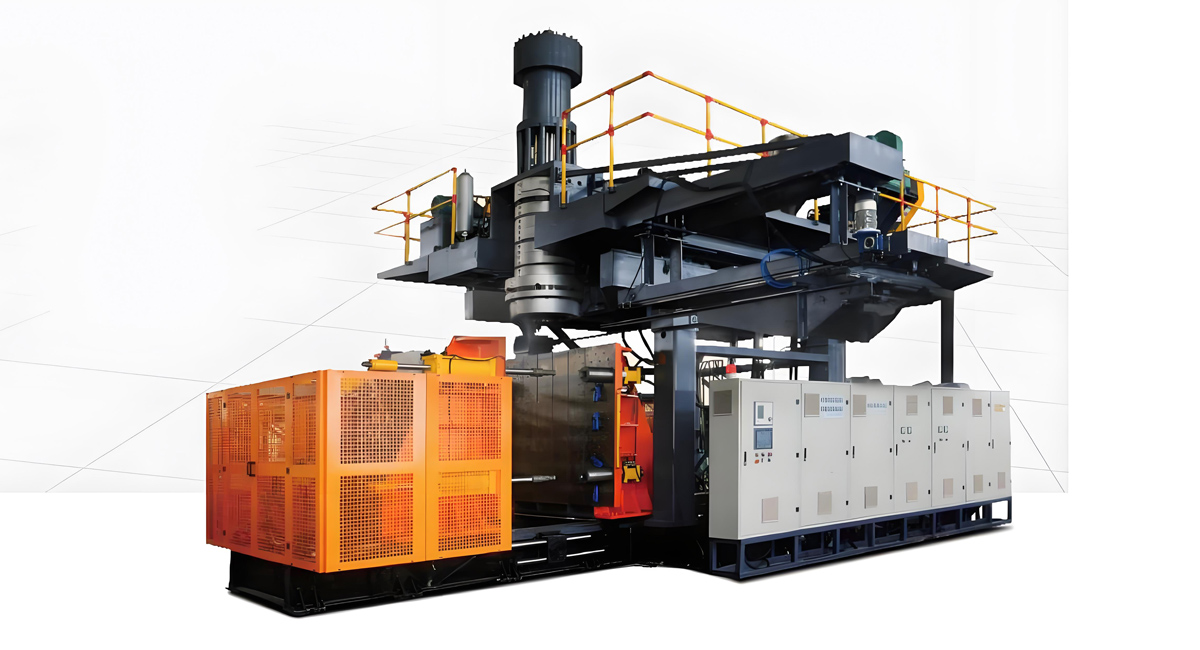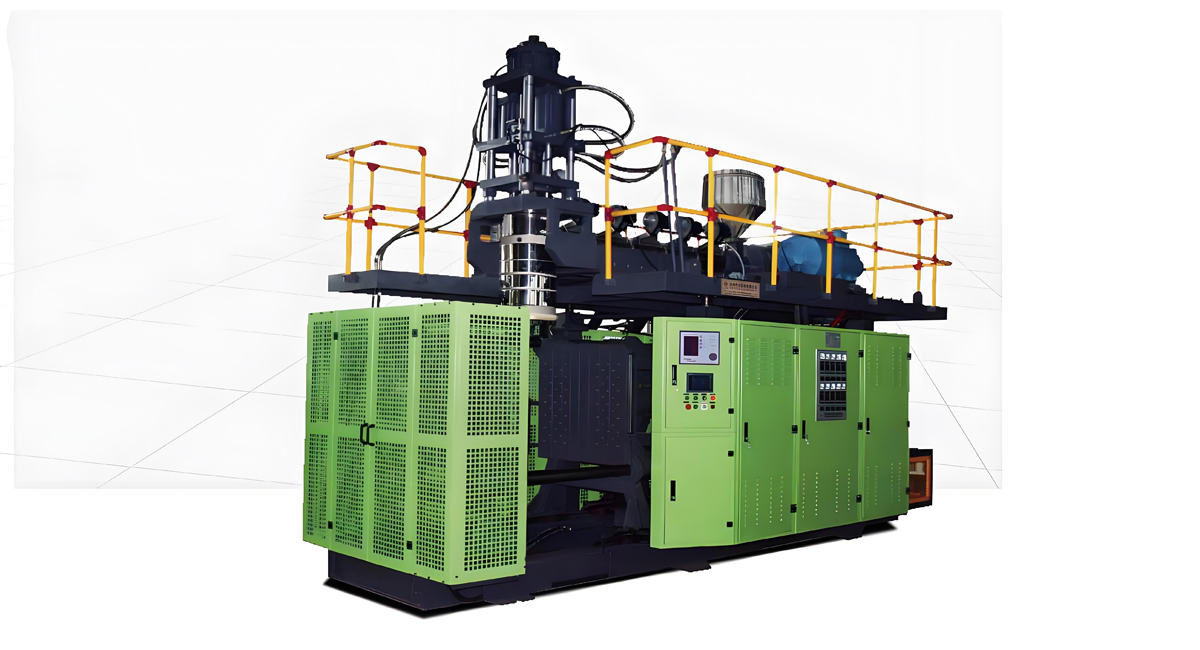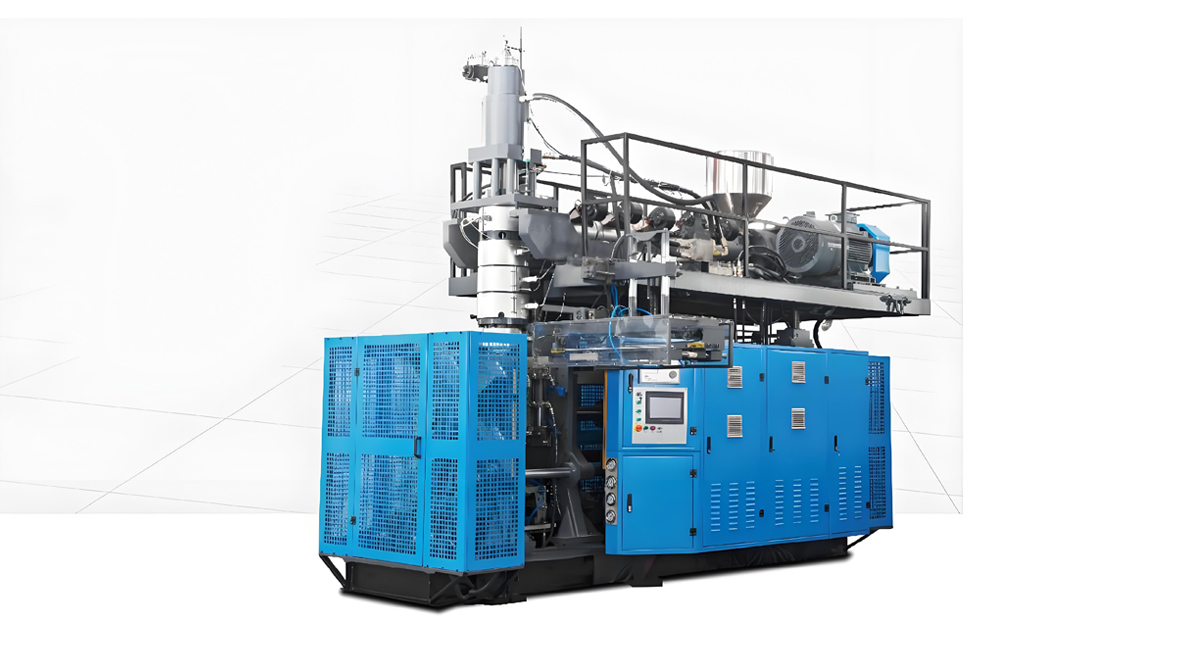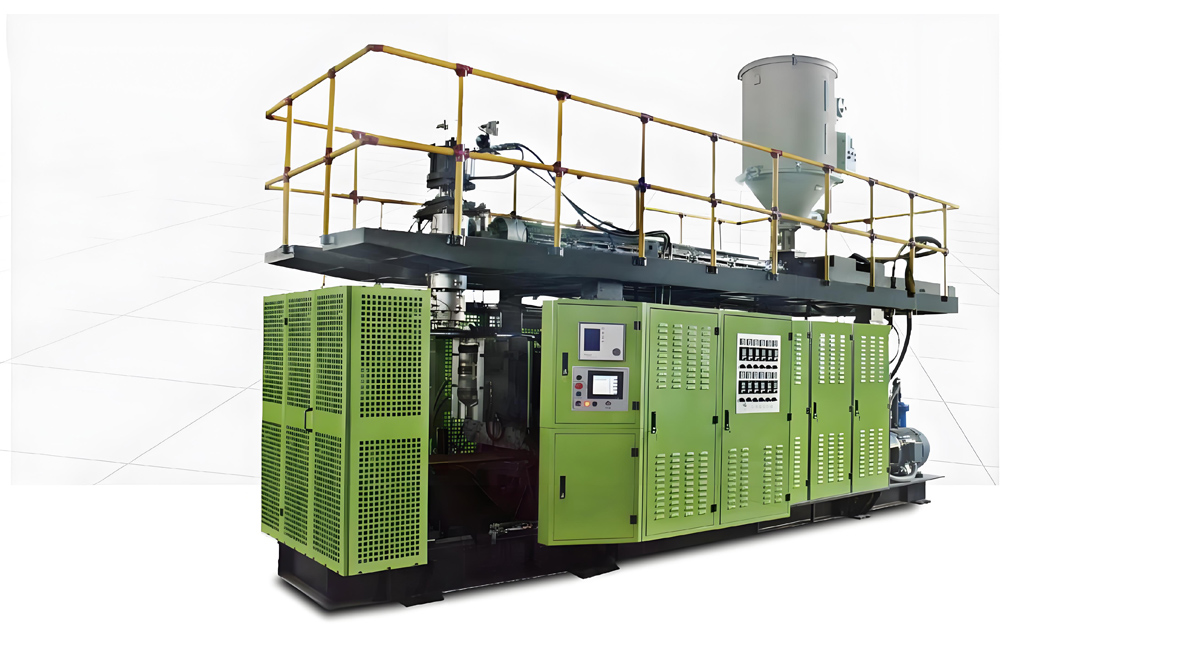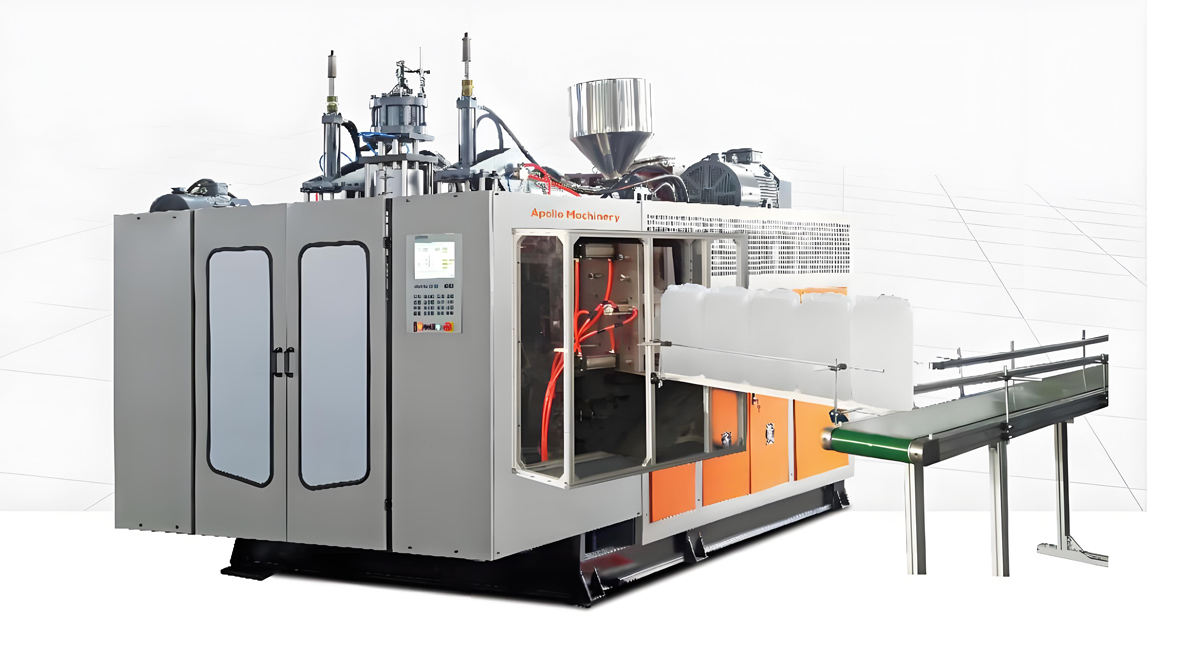
Choosing between a used and a new extrusion blow molding machine is one of the most consequential capital decisions a hollow-container producer can make. The temptation of a lower upfront ticket on a second-hand EBM unit is strong, yet the true cost of ownership rarely stops at the purchase price. This guide delivers a full comparison of cost and risk for global buyers evaluating extrusion blow molding machines sourced from China, covering where used machines actually originate, which wear points decide their remaining life, how control-system generation and energy architecture change operating cost, where compliance traps hide, and how to build a decision matrix that fits your production reality. Apollo, a Wanplas factory, has built extrusion blow molding machines for over 20 years, operates an 8,000 square meter factory, and has more than 4,000 sets running in over 90 countries, giving the observations below a practical, field-tested foundation rather than a theoretical one.
Where Second-Hand EBM Machines Really Come From
The second-hand extrusion blow molding market is not a single, uniform channel. Understanding the actual source of a used machine is the first step in judging its risk, because each source carries a different failure signature. Treating all pre-owned units as equivalent is the most common mistake global buyers make, and it is the one that produces the costliest surprises after installation.
Factory decommissioned machines
The first category is the factory decommissioned machine, retired when an original owner upgraded to higher output or changed product mix. These units often come from domestic Chinese plants that modernized their lines. The advantage is that the machine usually ran a known material on a known product, so wear is somewhat predictable. The disadvantage is that the retirement itself signals the previous owner judged the unit no longer competitive, which often means efficiency, speed, or capability gaps that a new buyer will inherit.
Lease and rental retired units
The second category is lease or rental retired units returned after a fixed service period. These machines may have been maintained on a schedule, but they also tend to carry accumulated cycle counts from continuous commercial use and may have been handled by multiple operators. Service records, when they exist, are the deciding evidence. Without them, a lease-return unit is effectively an unknown-history purchase.
Refurbished and reconditioned machines
The third category is the refurbished or reconditioned machine, where a trader has cleaned, repainted, and partially rebuilt the unit before resale. Refurbishment quality varies enormously. A credible refurbishment replaces wear items, recalibrates hydraulics, and verifies the control program. A cosmetic refurbishment simply hides problems under fresh paint. The buyer must distinguish between the two, because a painted-over cracked frame or a reused screw inside a polished barrel is a liability disguised as an asset.
Reassembled and cannibalized lines
The fourth and riskiest category is the reassembled or cannibalized line, built by combining a used clamping unit, a used extruder, and assorted components from different machines into one functioning system. These hybrid units can appear attractive on paper, but their long-term reliability is poor because the subassemblies were never engineered to work together, documentation is fragmented, and spare-part interchangeability is uncertain. For a global buyer shipping the machine across an ocean, this category should be approached with extreme caution.
Hidden risk summary by source
Across all four sources, the recurring hidden risks are the same in nature even if they differ in degree: undocumented runtime hours, unknown maintenance history, mismatched or missing control programs, concealed hydraulic leaks, and worn plasticizing components that were never measured. A lower purchase price does not erase these risks; it transfers them into your commissioning period, your scrap rate, and your unplanned downtime. The remainder of this guide shows how to quantify and weigh each of those risks against the predictability of a new machine.
Critical Wear Points You Must Evaluate Before Buying Used
A used extrusion blow molding machine is only as good as the condition of its core mechanical and hydraulic subsystems. The single most important rule is to measure, not trust appearance. A clean exterior tells you nothing about internal clearance, and many high-cost failures originate in components that look acceptable during a visual walk-around. The points below are the ones that most directly determine remaining service life and recurring cost.
Screw and barrel wear clearance
The screw and barrel form the plasticizing heart of the machine. Over thousands of hours the screw flights and barrel inner surface wear, opening a radial gap that reduces melt pressure, weakens mixing, and raises the risk of degradation. A healthy clearance typically sits in the 0.15 mm to 0.30 mm band. Once clearance exceeds 0.50 mm the pair should be replaced, because output stability and material homogeneity deteriorate enough to push scrap rate upward and make wall thickness control difficult. Measuring this clearance with a feeler gauge or a melt plastometer test is non-negotiable before any used purchase.
Die head flow channel carbon buildup
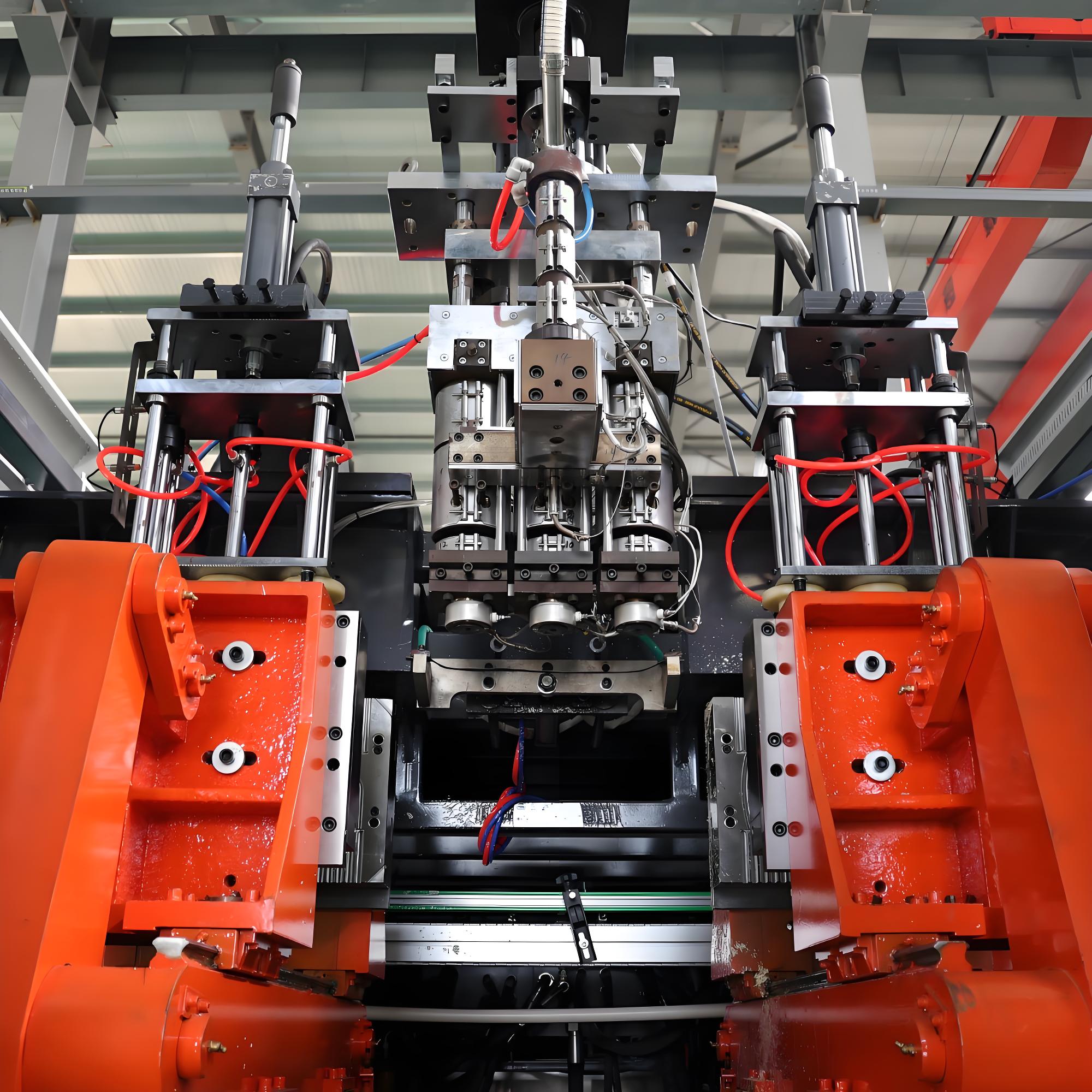
The die head flow channel accumulates carbon deposits from degraded polymer, especially if the previous owner ran recycled material or dark colors. Carbon pockets act as dead spots where melt stalls, overheats, and eventually releases black specks into the parison. On a used machine the die head should be disassembled and inspected; heavy carbonization means a full strip, clean, and possibly re-machining of flow surfaces. This is labor-intensive and is frequently underestimated in refurbishment quotes.
Platen parallelism and tie bar wear
The clamping system depends on platen parallelism and uniform tie bar loading. If the platens are no longer parallel within tolerance, the mold sees uneven force, which produces flash on one side, accelerated mold wear, and inconsistent part weight. Tie bars, also called tie rods, wear or develop ovality at the guide surfaces; excessive ovality lets the moving platen drift and compounds the parallelism problem. Both are measurable with dial indicators and should be checked at four corner positions under clamp force.
Hydraulic internal leakage and accumulator bladder aging
Hydraulic internal leakage in valves and cylinders steals energy and slows motion, and it is hard to see because it happens inside sealed components. A pressure-drop test under load reveals it. On accumulator-equipped large machines, the accumulator bladder ages and loses pre-charge; a hardened or cracked bladder cannot deliver the stored energy needed for fast parison transfer, which distorts large parts. Bladder condition is a classic overlooked item on used lines.
| Wear point | Normal condition | Warning zone | Replace or rebuild |
|---|---|---|---|
| Screw and barrel radial clearance | 0.15 mm to 0.30 mm | 0.30 mm to 0.50 mm | above 0.50 mm |
| Tie bar surface ovality | within 0.05 mm | 0.05 mm to 0.15 mm | above 0.15 mm |
| Platen parallelism under clamp | within 0.10 mm | 0.10 mm to 0.20 mm | above 0.20 mm |
| Accumulator bladder | no crack, correct pre-charge | surface aging, soft pre-charge loss | cracked or hardened bladder |
| Die head flow channel | clean, polished surface | light carbon film | heavy carbonization, dead spots |
The practical takeaway is simple: a used purchase decision should be built on measured values from the table above, not on a seller’s description. If the seller refuses disassembly inspection or cannot produce measurement records, the risk grade moves from Medium to Very High regardless of the low sticker price.
Control System Generation Risk on Older Lines
The control system is where the age gap between a used and a new extrusion blow molding machine becomes most visible over time. Electronics and software age differently from steel. A mechanical frame may still be sound while the controller is already obsolete, and obsolescence is what turns a manageable repair into an unavailable repair.
Relay and early PLC platforms
Older-generation lines frequently rely on relay logic or early programmable logic controllers that the original manufacturer no longer produces. When a relay panel or an early PLC module fails, the replacement may be unavailable from the original source. Substitution is possible but requires reverse-engineering the logic, which is slow, expensive, and error-prone. A new machine built on a current PLC platform with documented programs avoids this entire failure mode.
Servo drive spare part discontinuation
Many mid-age machines use servo drives whose specific model has been discontinued. Drive failure on such a line can stall production for weeks while a compatible substitute is sourced and tuned. Even when a substitute is found, re-tuning the closed loop to match the original motion profile takes engineering time. On a new machine, the drive family is current and the supplier maintains a spare parts pipeline.
No remote diagnostic interface
Modern EBM lines include remote monitoring and data acquisition so the supplier can read PLC data, spot anomalies, and guide the operator from a distance. Older lines lack this interface entirely. The absence of remote diagnostics means every fault must be solved on site, which raises the cost and duration of each stoppage, especially for buyers located far from the machine’s origin. For global plants, this gap is not a convenience issue; it is a downtime issue.
Recipe management and traceability
Current control systems store recipes, log cycle data, and support traceability for regulated products. Older controllers often store little or nothing, making consistent changeovers and quality documentation harder. If your market requires lot traceability or validated processes, a legacy controller becomes a compliance liability rather than just a technical limitation.
Energy Consumption: Old Hydraulic vs Servo and All-Electric
Energy is a recurring cost that accrues every operating hour for the entire life of the machine, so the drive architecture matters as much as the purchase price. Conventional hydraulic machines with fixed-displacement pumps run the motor at near-constant speed and dump excess flow through relief valves, which wastes energy continuously even when the machine is between movements. Newer servo-hydraulic and fully electric architectures cut this waste sharply.
To keep the comparison readable without currency, the table below uses an indexed energy basis. A conventional fixed-pump hydraulic line is set at 100 index points per unit of produced container weight. Lower numbers mean lower energy per kilogram of throughput.
| Drive architecture | Energy index per kg (baseline 100) | Relative energy grade | Typical note |
|---|---|---|---|
| Conventional fixed-pump hydraulic | 100 index points | Baseline reference | Common on older-generation lines |
| Variable pump hydraulic | around 85 index points | Moderate saving | Better matching, partial waste cut |
| Servo hydraulic | around 65 to 70 index points | Strong saving | Motor runs only on demand |
| Fully electric | around 50 index points | Highest efficiency | No hydraulic unit, clean operation |
The grade gap between a 100-index legacy hydraulic unit and a 50-index all-electric unit is large enough that energy saving alone can justify a new-machine purchase in markets with high electricity cost or carbon constraints. Even against a servo-hydraulic used unit, a current new servo or electric line usually offers a measurable efficiency edge plus a known, documented consumption profile that supports energy budgeting. For buyers comparing a cheap old hydraulic unit against a new efficient line, the energy dimension should be scored High on the risk side for the used option.
Parison Programmer Resolution and Material Utilization
The parison programmer controls wall thickness along the length of the parison by varying die gap during extrusion. Its resolution directly determines how closely the finished container matches the ideal weight distribution, which in turn drives material cost and part performance. This is one of the clearest capability gaps between older and modern extrusion blow molding machines.
Older machines typically offer 20 to 32 programmable points along the parison. That coarse resolution forces the programmer to approximate the ideal thickness curve with few steps, which leads to over-thickening in some zones and thinning in others to stay safe. Modern machines commonly provide 100 points or more, letting the operator follow the target profile closely. The result is a tighter wall thickness deviation and a lower average part weight for the same performance.
| Attribute | Older machines (20 to 32 points) | Modern machines (100 plus points) |
|---|---|---|
| Program points along parison | 20 to 32 | 100 to 256 |
| Wall thickness deviation | up to about 12 percent | within about 4 percent |
| Material utilization | baseline 100 index | up to 8 to 15 percent less material |
| Process repeatability | Medium | High |
Material is a per-unit recurring cost, so the saving from finer parison control compounds across every container produced. On a high-volume line, the difference between baseline material use and an 8 to 15 percent reduction is a meaningful share of total production cost. A used machine with a coarse programmer can still make acceptable parts, but it will consume more resin per part than a modern line, and that gap never goes away. For cost-sensitive commodity containers, this single factor often flips the used-versus-new calculation.
Safety and Compliance Pitfalls With Used Equipment
Safety and compliance are where used-equipment risk stops being a matter of money and becomes a matter of legal and operational exposure. The rules differ by region, but several pitfalls are consistent for global buyers importing a second-hand extrusion blow molding machine.
The non-transferable CE certificate trap
A CE certificate is issued to a specific original purchaser and a specific machine configuration. When that machine is resold, relocated, modified, or rebuilt, the original certificate generally no longer applies to the new owner or the new setup. Buyers who assume the CE mark on the nameplate covers them are frequently wrong. A fresh conformity assessment against the actual installed configuration is normally required, and that assessment is the buyer’s responsibility after import. This is a compliance trap precisely because it is easy to overlook until customs or a local inspector raises it.
Safety door interlock and emergency stop circuit
Modern machines use guarded safety door interlocks and a verified emergency stop circuit that drops clamp and extruder motion on activation. Older or reassembled lines may have bypassed interlocks, missing guards, or a stop circuit that was modified during previous repairs. Restoring full safety function on a used machine can require new sensors, new relays, and a fresh validation, which is both cost and downtime. For any plant with workplace safety regulation, this is not optional.
Food and pharmaceutical contact compliance
When the container contacts food or pharmaceutical product, regulations such as EU 10/2011 for food contact or FDA requirements for materials and processes apply. A used machine of unknown cleaning and material history cannot provide the traceability and validation needed for these applications. Even if the steel is food-grade, previous runs of non-compliant materials or inadequate cleaning can compromise the line. New machines supplied with documented material contact surfaces and cleaning procedures are far safer for regulated output.
Documentation and local approval
Local electrical and machinery approvals often require original drawings, test reports, and declared components. Used machines with missing documentation may fail local inspection regardless of how well they run. The cost of recreating documentation after the fact is high and sometimes impossible if the original controller or components are obsolete.
Spare Parts Availability and Mold Compatibility
Two practical questions decide whether a used machine will integrate smoothly into your plant: can you get spare parts, and can you use your existing molds. Both are frequently underestimated during the purchase decision.
Spare parts lead time and interchangeability
Spare parts for a current new machine are sourced through an active supply chain with known part numbers and short lead times. Spare parts for a used unit of unknown or discontinued origin may require custom machining, substitute components, or a search through secondary markets. The longer the lead time, the higher the downtime risk when a wearing part eventually fails. For global buyers, ocean freight and customs add further delay to any part that must be shipped from the machine’s country of origin.
Mold interface and platen compatibility
Mold compatibility depends on platen dimensions, tie bar spacing, mold mounting hole pattern, water circuit interface, and blow pin location. Newer frames tend to follow more standardized layouts, while older-generation lines often used proprietary or idiosyncratic interfaces. If you already own molds, verify their fit on the candidate used machine before purchase. A mismatch can mean re-machining the mold frame, building an adapter platen, or buying new tooling, any of which erodes the used-machine saving. A new machine from a structured supplier documents its mold interface clearly so tooling decisions are made up front.
Process material flexibility
Apollo machines process PE, PP, PVC, PA, PC, ABS, PS, EVA, TPU, and PETG across their series. A used machine’s material flexibility depends on what screws, barrels, and die heads it carries, and whether those are still supported. If your product mix may shift toward a material the used unit cannot run, you inherit a future limitation that a configurable new line would avoid.
Hidden Cost Dimensions: Used vs New at a Glance
The most useful way to compare a used and a new extrusion blow molding machine is to score each hidden cost dimension on a relative grade rather than chase a single number. The table below uses Low, Medium, High, Very High, and Premium as relative grades. Premium here means the most favorable outcome, not a higher cost. This framing keeps the comparison honest without inventing currency figures.
| Cost dimension | Used (older-generation) | New (current generation) |
|---|---|---|
| Refurbishment labor before run | High to Very High | Low |
| Freight and lifting | Medium to High | Medium |
| Missing documentation | High | Low |
| Commissioning period | High | Low |
| Trial production scrap rate | Medium to High | Low |
| Unplanned downtime risk | Very High | Low |
| Spare parts lead time | High to Very High | Low |
| Energy cost per kg | Medium to High | Low to Medium |
| Compliance re-certification | High | Low |
| Total predictability | Low | Premium |
The pattern is consistent: a used machine scores well only on the single upfront purchase line, while a new machine scores Premium or Low across nearly every recurring and risk dimension. The decision therefore hinges on whether your operation can absorb Low predictability in exchange for a lower initial outlay.
Apollo’s Current EBM Lines for New-Machine Buyers
For buyers who conclude that predictability, efficiency, and compliance outweigh a lower sticker price, Apollo offers three current series that cover the full container range from 200 ml to 1500 L. Each series below is presented with a representative specification table so the capabilities are concrete rather than abstract.
ABLB Series (200 ml to 20 L)
The ABLB series is Apollo’s standard extrusion blow molding line for small and medium containers, spanning 200 ml to 20 L. It suits bottles, jerry cans, cosmetic jars, and daily-chemical containers in PE, PP, PVC, PS, and PETG. The line is built for stable continuous production with a modern parison programmer and current PLC control.
| Parameter | ABLB Series (representative) |
|---|---|
| Container volume range | 200 ml to 20 L |
| Stations | single to double station |
| Screw diameter | 50 mm to 90 mm |
| L/D ratio | 20:1 to 24:1 |
| Clamping force | 40 kN to 150 kN |
| Installed power | 22 kW to 75 kW |
| Dry cycle time | 6 s to 12 s |
| Processable materials | PE, PP, PVC, PA, PC, ABS, PS, EVA, TPU, PETG |
ABLD Series (20 L to 1500 L)
The ABLD series is Apollo’s heavy-duty line for large containers, covering 20 L to 1500 L with accumulator head technology for fast parison transfer on big parts. It targets chemical drums, water tanks, intermediate bulk container components, and automotive tanks in HDPE, PP, and related materials. The robust clamping frame and large accumulator make it suitable for demanding industrial hollow products.
| Parameter | ABLD Series (representative) |
|---|---|
| Container volume range | 20 L to 1500 L |
| Head type | accumulator head, continuous or storage type |
| Screw diameter | 100 mm to 200 mm |
| L/D ratio | 20:1 to 22:1 |
| Clamping force | 300 kN to 1000 kN |
| Installed power | 110 kW to 400 kW |
| Cycle time | 40 s to 180 s |
| Processable materials | HDPE, PP, XLPE, PA |
Fully Electric Series (200 ml to 20 L)
The Fully Electric series covers 200 ml to 20 L with an all-electric drive, eliminating the hydraulic unit entirely. It is designed for containers with high environmental or cleanliness requirements, such as food and pharmaceutical packaging, where oil-free operation and the lowest energy index are decisive. The series pairs an electric clamp and servo extrusion with a high-resolution parison programmer.
| Parameter | Fully Electric Series (representative) |
|---|---|
| Container volume range | 200 ml to 20 L |
| Drive type | fully electric, no hydraulic unit |
| Screw diameter | 45 mm to 80 mm |
| L/D ratio | 22:1 to 24:1 |
| Clamping force | 40 kN to 120 kN |
| Installed power | 18 kW to 55 kW |
| Energy index | around 50 index points vs 100 baseline |
| Processable materials | PE, PP, PS, PETG, PVC |
All three series are delivered with current control software, documented interfaces, and the Wanplas group spare parts policy, which removes the obsolescence and documentation risks described earlier. The choice among them follows the container size and material, as the selection table below shows.
Application Industries and End Products
Apollo extrusion blow molding machines serve a broad set of industries, and the end products determine which risk tolerance is acceptable. The profiles below map machine capability to concrete containers.
- Food and beverage: water bottles, edible-oil containers, juice and dairy bottles, and wide-mouth food jars, typically in HDPE and PP with food-contact grade compounds.
- Daily chemical products: detergent bottles, shampoo and cosmetic jars, personal-care containers, and trigger-spray bottles in PE and PETG.
- Chemical industry: 20 L to 200 L chemical drums, agrochemical containers, and solvent jerry cans built for stacking strength and chemical resistance in HDPE.
- Building material: water storage tanks, conduit and duct components, and structural hollow profiles where wall uniformity and impact resistance matter.
- Medical and pharmaceutical: cleanroom-grade containers, sterile packaging, and device housings where traceability and cleanliness are mandatory.
- Automobile production: windshield washer reservoirs, coolant tanks, and ducting produced in engineering materials with tight dimensional control.
- Transportation: fluid reservoirs and storage vessels for commercial and recreational vehicles.
- Cultural and sports: buoyancy elements, equipment housings, and recreational product components.
The pattern is clear: industries with regulated contact, continuous demand, or high precision lean toward new machines, while non-critical, short-run, or trial categories can tolerate a carefully inspected used unit.
Requirement-to-Model Selection Table
The table below connects common buyer requirements to the recommended Apollo series. It is intended for new-machine evaluation; if you are weighing a used option instead, read it as the capability baseline the used unit must meet.
| Requirement | Recommended Apollo model | Why |
|---|---|---|
| 200 ml to 5 L bottles and jars, PE or PP | ABLB series | Compact, fast, broad material support |
| 5 L to 20 L jerry cans, food grade | ABLB series or Fully Electric series | Food contact favors cleanliness and control |
| 20 L to 200 L chemical drums | ABLD series | Heavy-duty clamp and accumulator head |
| 200 L to 1500 L water tanks or IBC parts | ABLD series | Large volume and structural strength |
| Food or pharma, low energy, clean operation | Fully Electric series | Oil-free, lowest energy index |
| High-precision or multi-layer structures | ABLB or ABLD with modern parison programmer | Fine wall control and repeatability |
Service and Support Commitment
Buying new from a structured supplier is not only about the steel; it is about the support ecosystem that keeps the line running for its whole life. Apollo, as part of the Wanplas group, applies the group’s shared service commitments to every machine.
- Testing before shipment: each machine is run and verified at the factory prior to dispatch, including a factory acceptance check on key functions so deviations are corrected before the unit leaves the plant.
- Installation and commissioning: engineers support on-site installation, commissioning, and trial production so the line reaches stable output on a predictable schedule.
- Spare parts policy: the Wanplas group provides USD 500 free parts per year plus free replacement for damaged parts within warranty, which directly lowers the recurring-risk grades shown earlier.
- Training: operator and maintenance training is provided so your team can run, clean, and service the machine correctly from day one.
- Remote support: modern control systems allow remote monitoring and data review, shortening fault diagnosis and reducing on-site downtime.
- Open factory: customers are welcome to visit the factory for inspection, discussion, and verification of build quality before commitment.
This support structure is the practical counterpart to the hidden-cost table: it is what converts the new-machine column from Low risk to Premium predictability.
Decision Matrix: When to Choose Used, When to Choose New
The final judgment should be explicit rather than emotional. The matrix below states where a used machine is reasonable and where a new machine is the responsible choice.
Scenarios where used can be considered
- Short-term or pilot orders: when you need capacity for a defined, time-limited contract and will not carry the machine long term.
- Backup or peak capacity: a second unit that runs only during demand spikes, where a stoppage is inconvenient but not catastrophic.
- Trialing a new product category: testing market response before committing to a full new line, provided the product is non-regulated.
- Non-critical industrial parts: containers with no food, pharma, or export-certification requirement and tolerant quality limits.
Scenarios where new is required
- Food or pharmaceutical contact: traceability and cleanliness cannot be assured on unknown history.
- 24/7 continuous production: unplanned downtime cost is too high to accept obsolete controls or undocumented wear.
- Export certification requirement: EU 10/2011, FDA, or equivalent compliance needs documented, validated processes.
- High-precision multi-layer structures: wall control, repeatability, and material saving demand a modern parison programmer and current controls.
- Energy or carbon targets: only servo or all-electric new lines deliver the lowest energy index consistently.
If your scenario sits in the second list, the lower used-machine price is false economy. If it sits in the first list, a carefully inspected used unit may be rational, but only after the wear, control, energy, and compliance checks in this guide are completed and documented.
Risk Mitigation Checklist for Buying Used
For buyers who proceed with a used extrusion blow molding machine, the following mitigation steps reduce but do not eliminate risk. Each step costs time and money, and should be weighed against simply buying new.
- Third-party inspection: engage an independent inspector to measure screw and barrel clearance, platen parallelism, tie bar ovality, and hydraulic pressure retention before payment.
- Powered trial run with material: insist on a live run using your resin and your target product, not an empty demonstration, so real cycle time and part quality are verified.
- Retain tail payment: structure the contract so a meaningful portion of the price is paid only after successful commissioning at your site, protecting you against hidden faults.
- Warranty and documentation terms: secure written warranty on key subsystems and obtain the original manual, electrical and hydraulic drawings, PLC backup, and spare parts list.
- Compliance plan: budget for a fresh conformity assessment and any safety restoration needed for your local regulations.
- Spare parts pre-check: confirm availability and lead time for wear items before purchase so you are not stranded by a discontinued component.
Even with all of these in place, the used machine still carries higher unpredictability than a new line. The mitigation steps simply move the grade from Very High toward Medium; they do not reach the Premium predictability of a current-generation machine.
Frequently Asked Questions
Is a CE certificate on a second-hand EBM machine valid for my own factory?
In most cases no. A CE certificate is issued to the original purchasing entity and the original machine configuration. Once the machine is resold, moved to another country, modified, or rebuilt, the original certificate no longer covers the new owner or the new setup. The buyer must arrange a fresh conformity assessment for the actual installed configuration, which is a separate cost and responsibility after import.
How do I check screw and barrel wear on a used extrusion blow molding machine?
Measure the radial clearance between screw and barrel at several points along the length using a feeler gauge or a plastometer test. A healthy clearance sits in the 0.15 mm to 0.30 mm range. Above 0.50 mm the pair should be replaced because plasticizing capacity and melt homogeneity degrade and scrap rate climbs. Always measure rather than trust a visual inspection, because external cleanliness reveals nothing about internal clearance.
What energy saving does a new servo or all-electric machine deliver versus an old hydraulic unit?
On an indexed energy basis where a conventional fixed-pump hydraulic line equals 100 index points, a servo-hydraulic drive typically lands near 65 to 70 index points and a fully electric drive near 50 index points. The exact gap depends on cycle profile, but the relative reduction is consistent across container families and compounds every operating hour of the machine’s life.
Can a second-hand machine run the same molds as a new Apollo machine?
Only after verifying platen dimensions, tie bar spacing, mold mounting hole pattern, water circuit interface, and blow pin location. Older-generation frames often use different platen layouts and mold interfaces, so direct mold transfer is not guaranteed and may require re-machining the mold frame or building an adapter. A new machine documents its mold interface up front so tooling decisions are made before purchase.
Which applications should never rely on a second-hand machine?
Food and pharmaceutical contact containers, 24/7 continuous production lines, products requiring export certification such as EU 10/2011 food contact or FDA compliance, and high-precision multi-layer structures are poor candidates for used equipment because traceability, cleanliness, and process stability cannot be assured on an unknown history. The compliance and downtime exposure outweighs the lower purchase price.
What documents should the seller provide with a used machine?
Request the original manual, electrical schematics, hydraulic diagram, PLC source program and backup, spare parts list with supplier codes, proof of original purchase, service history, and any available run logs. Missing documentation is one of the most expensive hidden costs of a used purchase because it slows troubleshooting and blocks safe modification or local approval.
How long does commissioning take for a used machine versus a new one?
A new machine from a structured supplier is typically installed, commissioned, and at stable output within a predictable window because drawings, programs, and spare parts are current. A used unit can need extended commissioning if wear parts, controls, or molds must be reworked first, and the risk of repeat stoppages during the first production months stays elevated until the line proves itself.
Does Apollo supply spare parts for older-generation lines?
Apollo supports its own current and recent series with a documented spare parts program that includes a free parts allowance each year under the group policy, plus warranty replacement. For machines of unknown origin the buyer should confirm part interchangeability before purchase because generic older lines may use discontinued components that are no longer sourced through normal channels.
Conclusion
The choice between a used and a new extrusion blow molding machine is not a simple price comparison; it is a comparison of predictable cost versus transferred risk. A used unit can lower the initial outlay, but it imports wear uncertainty, control obsolescence, energy penalty, compliance gaps, and spare-part fragility that surface as recurring cost after installation. A new machine from Apollo, a Wanplas factory, converts those uncertainties into documented, supported, and efficient operation across the ABLB, ABLD, and Fully Electric series. For food and pharmaceutical contact, continuous production, export certification, and high-precision work, new is the responsible choice. For short-term, backup, or trial non-regulated runs, a carefully inspected used unit may be rational if every check in this guide is completed and the tail payment is retained. The right decision is the one that matches your risk tolerance to your production reality, not the one with the lowest number on the quotation.
If you are evaluating a new extrusion blow molding line, Apollo welcomes you to share your container volume, material, and output target so the right series and configuration can be recommended, and to visit the factory for a direct inspection of build quality and a live machine run.