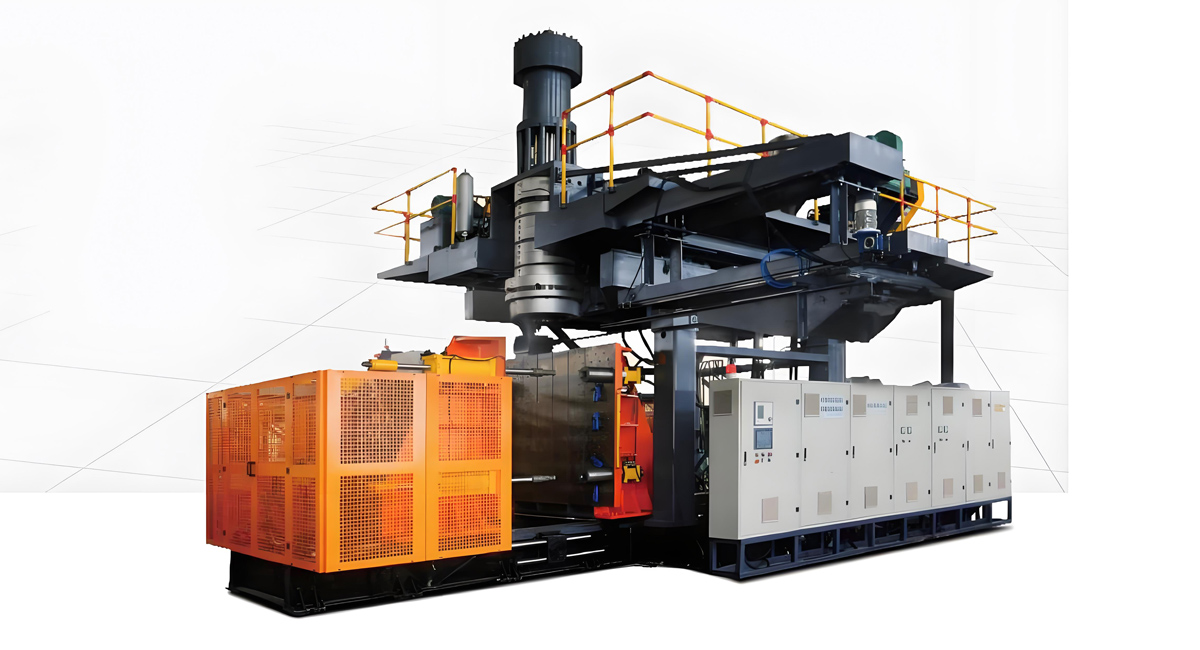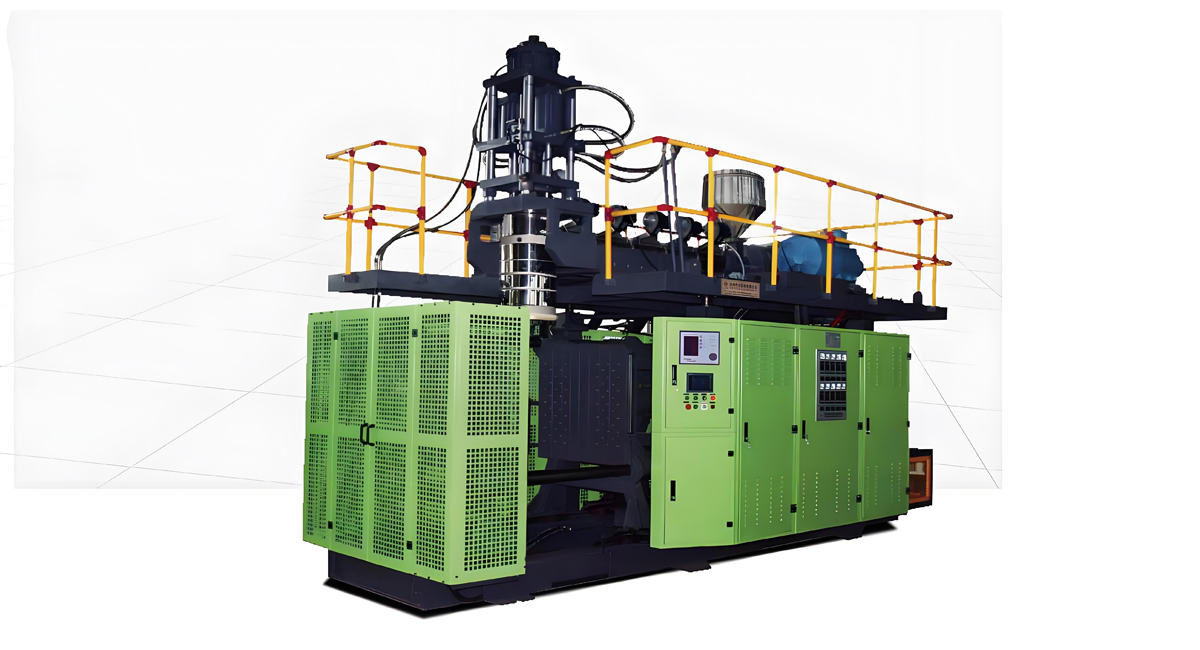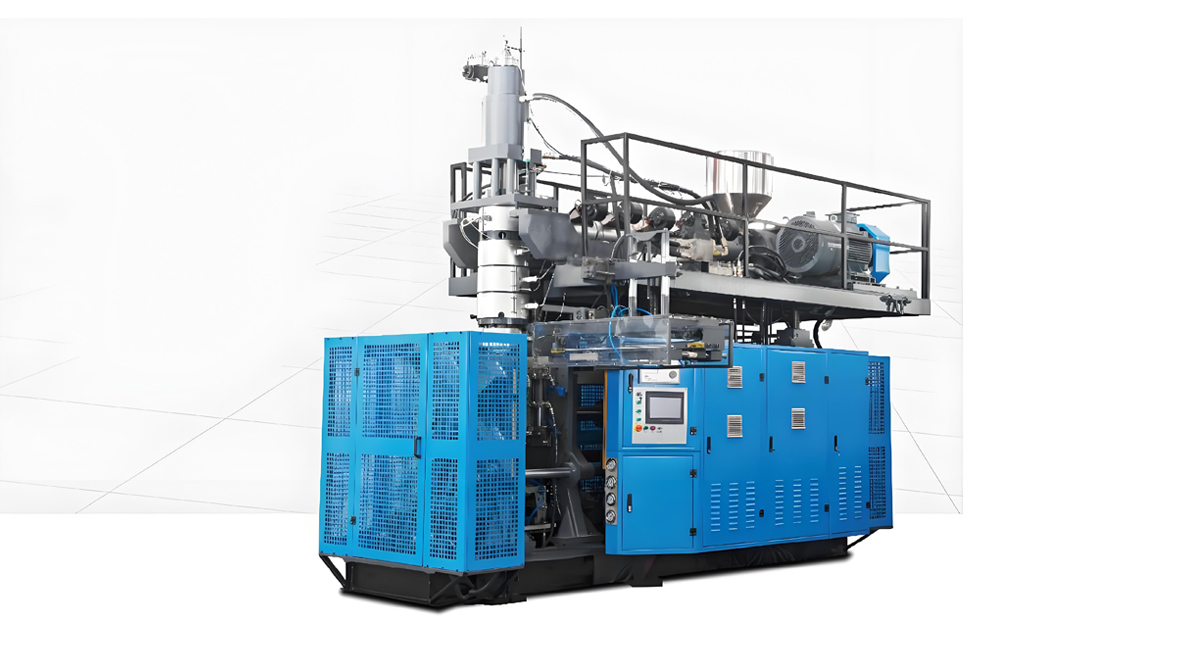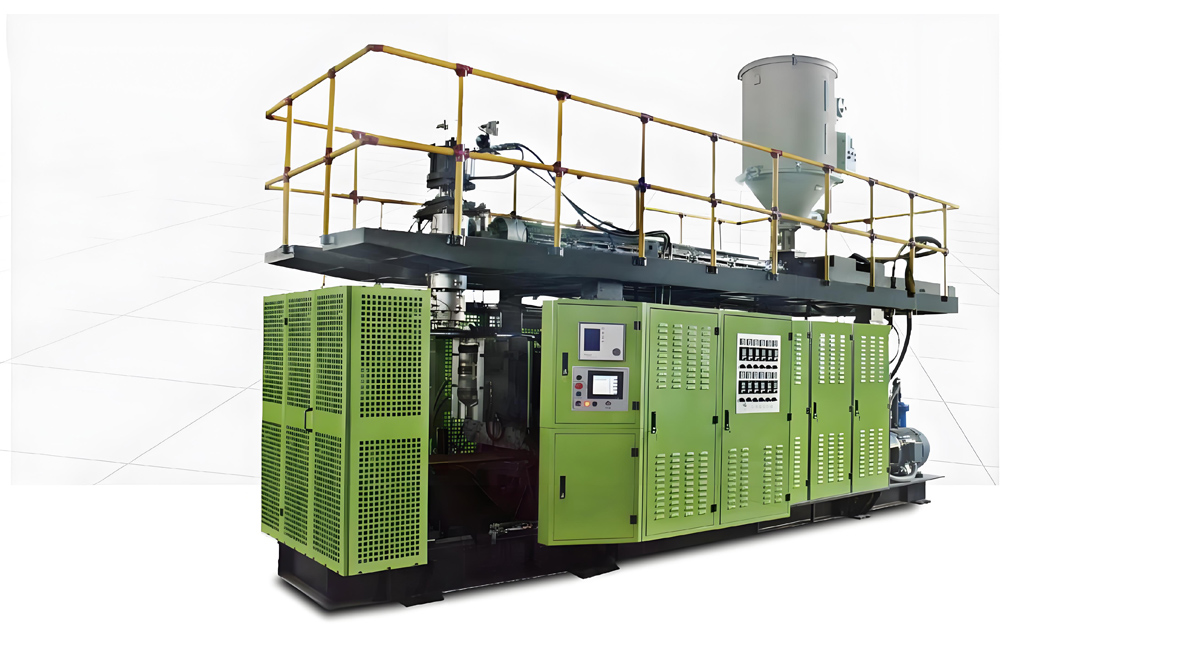
Choisir votre première machine EBM n'est pas une décision d'achat, c'est une décision d'ingénierie qui se traduit par une commande d'achat. Le moulage par soufflage par extrusion est l'un des points d'entrée les plus accessibles de la fabrication de plastique, car une seule machine, un seul ensemble de moules et une poignée d'accessoires peuvent transformer des graines de matière plastique en un contenant fini et commercialisable en moins de vingt secondes. Cette accessibilité est aussi un piège : les équipements apparaissent similaires dans les catalogues, les gammes de volumes se chevauchent, et une spécification qui est erronée de la taille d'un écrou ou de la classe de serrage peut silencieusement limiter votre production pour la prochaine décennie.
Ce guide explique à un premier producteur tout le processus de décision, dans l'ordre dont un ingénieur en activité l'utiliserait : produit cible, enveloppe de volume, matériau, production requise, architecture de la machine, outillage, équipements supplémentaires, et enfin l'installation elle-même, étape que les nouveaux entrants découvrent généralement seulement après l'arrivée des boîtes. Chaque recommandation contenue dans cet article s'exprime en termes de caractéristiques techniques, et non en slogans, car ce sont les chiffres inscrits sur la fiche technique qui déterminent si votre ligne travaille à 300 ou à 900 contenants par heure.
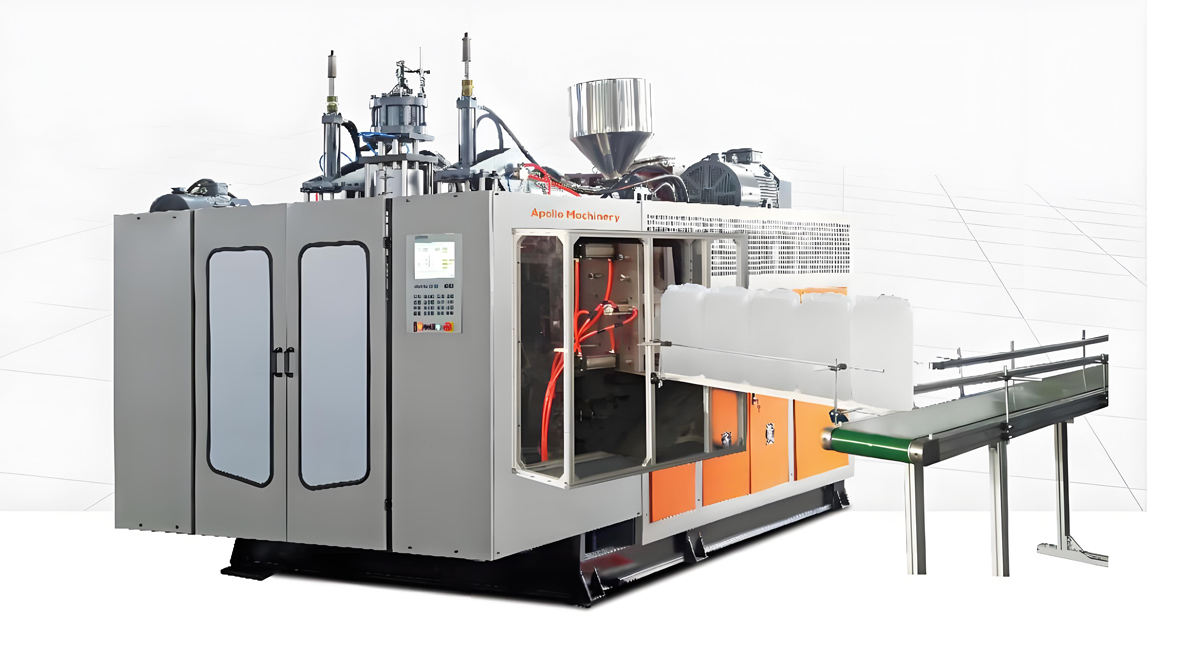
Apollo, une usine Wanplas située à Zhangjiagang près de Shanghai, a construit des machines de soufflage par extrusion automatique pendant plus de vingt ans à partir d'une usine de 8 000 mètres carrés, avec dix séries de machines couvrant plus de quatre-vingt modèles et plus de 4 000 machines en service dans plus de quatre-vingts pays. Ce portefeuille couvre exactement la situation décrite dans cet article : une première machine, une petite équipe, une seule famille de produits et le besoin de réaliser des profits avant la justification du deuxième appareil. Les sections ci-dessous combinent cette expérience de terrain avec les pratiques d'ingénierie de soufflage standard afin que vous puissiez spécifier votre première ligne avec confiance.
Cadre de prise de décision en sept étapes pour votre première machine.
Chaque projet EBM réussi suit une séquence identique, et chaque projet qui échoue a saisi une étape. La chaîne débute par la nature du produit, la gamme de volumes, le matériau, le rendement requis, l'architecture de la machine, l'outillage et les auxiliaires, puis l'exploitation et l'énergie. Chaque étape conditionne la suivante, c'est pourquoi travailler en rétroaction à partir d'un catalogue de machines produit des résultats coûteux et inadaptés.
Le schéma de régularité de défaillance est le suivant : un nouveau producteur voit une spécification de machine attrayante, commande la machine et ne découvre que plus tard qu'il faut une station de déflaging pour le moule désiré, car le conteneur que souhaite son client est doté d'une poignée, ou que le débit requis de 1 200 pièces par heure est impossible avec une machine à deux cavités à cycle de 18 secondes. Aucun de ces problèmes n'est un défaut de machine. Tous deux sont des erreurs de séquençage.
Voici ce que décide chaque maillon de la chaîne :
- Produit cibleGéométrie, poignée ou pas de poignée, finition du col, zone d'étiquetage, exigence de charge supérieure, et si le conteneur contient un produit réglementé. Cela détermine la complexité du moule et les besoins de désencliquetage.
- Volume range.La capacité nominale en millilitres ou en litres, ainsi que le volume plein. Ces éléments déterminent la longueur du pressoir, la taille de la tête de coulée et la course de serrage.
- Material.HDPE, PP, HMWHDPE, PETG ou PVC. Cela détermine la géométrie de la vis, le rapport de compression, le profil de la température du bac et si vous avez besoin d'un système de séchage.
- Sortie nécessaire.Pièces par heure sous conditions d'utilisation réelles, et non à un maximum théorique. Cela détermine le nombre de cavités et le nombre de stations.
- 6. Architecture de la machine.Station unique ou double, extrusion continue ou accumulateur, hydraulique ou entièrement électrique. Cela détermine le volume occupé, la puissance installée et le comportement du cycle.
- Outils et accessoires.Moules, refroidisseur, compresseur, granulateur, chargeur, détecteur de fuites. Cela détermine la part de votre production théorique que vous parvenez réellement à convertir en pièces commercialisables.
- Installations et puissanceCapacité d'alimentation en trois phases, débit d'eau de refroidissement, volume d'air comprimé, surface du sol, hauteur du plafond et charge du sol. Cela détermine le calendrier de votre installation.
Suivez cet ordre et la spécification de la machine s'écrit toute seule. Le reste de ce guide explique chaque étape en détaillant les numéros à inscrire dans les espaces vides.
Ce que fait une machine EBM et pourquoi elle convient aux nouveaux producteurs
Le blow molding par extrusion forme un contenant creux en extrudant un tube de plastic fondu appelé parison, en fermant une moulage à deux pièces autour de celui-ci et en l'inflamant avec de l'air comprimé contre les parois refroidies de la cavité. L'ensemble du cycle est continu, mécaniquement simple et permet de produire un contenant fini sans étape de formage secondaire, c'est pourquoi il est la voie la moins complexe de la fabrication de contenants.
Le cycle comporte six étapes, et en les comprenant, on explique la plupart de ce qui figure sur une fiche de spécification :
- Plasticisation.L'extrudeuse à simple vis fonde et homogénéise la résine dans le baril. Le diamètre de la vis et le taux L/D déterminent la vitesse de plastification en kilogrammes par heure, qui constitue le plafond maximal pour toute opération subséquente.
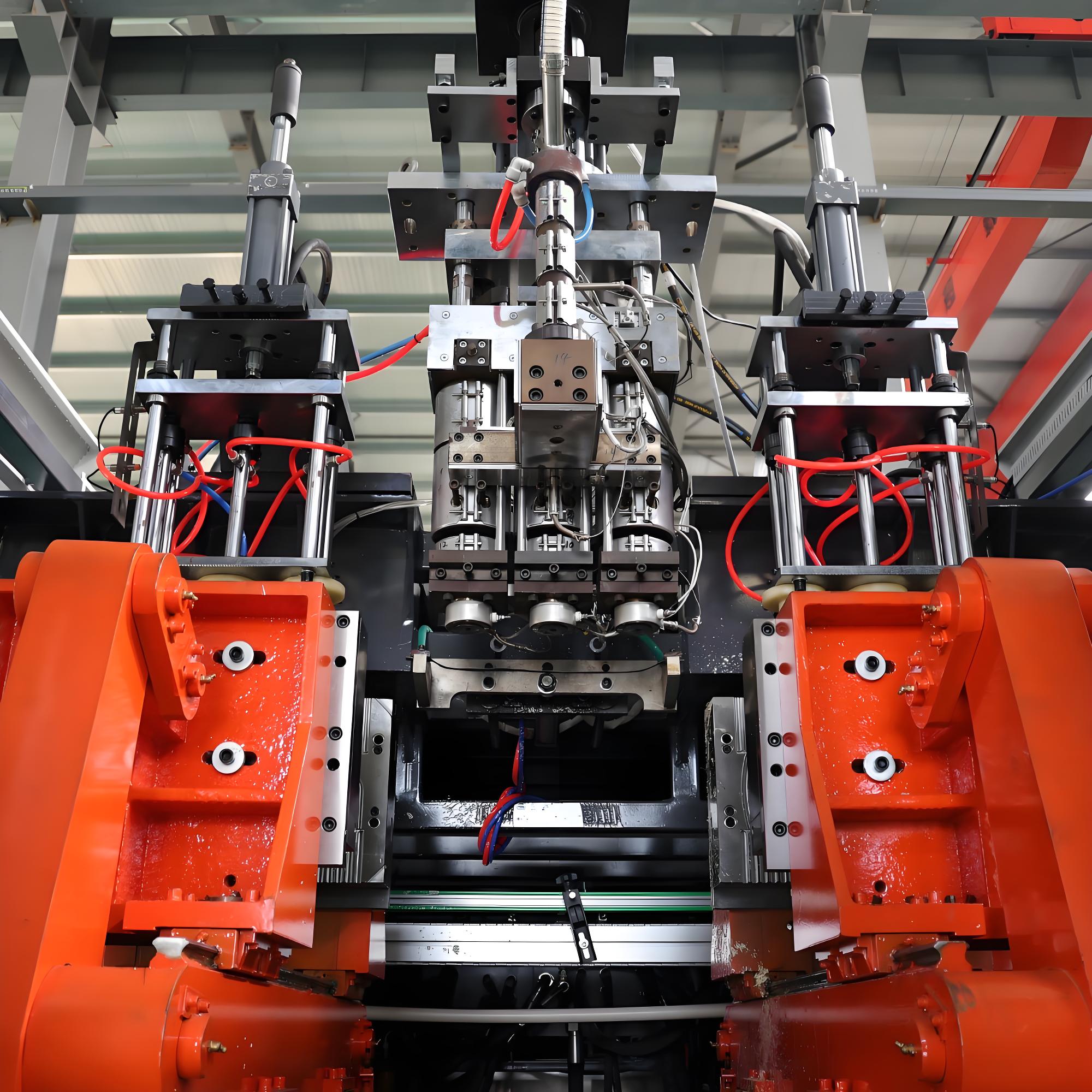
- Formation de paroïseLe flux de fusion passe par la tête de matrice et s'écoule entre la matrice et le mandrin sous la forme d'un tube creux. Un programmeur de parison modifie l'intervalle entre le mandrin au cours de l'extrusion, de manière à répartir l'épaisseur de paroi là où le contenant en a besoin.
- Mise en place.La matrice se referme autour de la pârisse, la pinçant fermement au fond et au col. La force de serrage doit maintenir fermement la matrice contre la pression de soufflage interne et produire une soudure propre à la séparation.
- Mélange.L'air comprimé à 0,6 à 1,0 MPa gonfle la guillotine contre la cavité. L'air arrive par un pique à pression au niveau de la gorge ou par une aiguille de projection dans le corps.
- Le refroidissement. Le passage d'eau fraîche dans le moule permet d'éliminer la chaleur jusqu'à ce que la pièce devienne dimensionnellement stable. Le refroidissement consomme en général 50 à 70 pour cent du cycle total, et c'est pourquoi la conception du refroidissement du moule est plus importante que ce que la plupart des premiers acheteurs pensent.
- L'éjection et le défilechage. Le moule s’ouvre, la pièce est retirée, et le flash provoqué par la section ou le bas sont éliminés, soit en-moule, sur une machine de défilechage séparée, soit manuellement sur des opérations très petites.
Trois caractéristiques rendent ce procédé attrayant pour une nouvelle entreprise. Premièrement, le coût de l'outillage par conteneur est faible par rapport aux processus d'injection, car un moule soufflant ne possède pas de noyau, de système de conducteur ni de dispositif d'éjection. Ensuite, le procédé permet un large éventail de configurations de contenants, y compris les bidons maniés et les formes asymétriques que le moulage par injection ne peut produire. Enfin, la surchauffe du procédé est entièrement recyclable en ligne, de sorte que le granulateur situé à côté de la presse récupère les déchets abandonnés directement dans la cuve, ce qui maintient le rendement effectif des matériaux élevé.
Les limitations sont tout aussi importantes à connaître avant de passer à l'action. La précision de finition du col est inférieure à celle du molding par soufflage par injection, donc les flacons pharmaceutiques cosmétiques et les tolérances de filet très serrées appartiennent à un processus différent. Le contrôle de l'épaisseur de paroi dépend de la programmation du parison et non d'un écart de cavité fixe, ce qui signifie que la compétence des opérateurs et la résolution du programmeur influencent tous deux le poids des pièces. Enfin, les récipients épais et lourds de plus de 30 L nécessitent une technologie de tête accumulateur, qui change entièrement la classe de machine.
Étape 1 : Verrouiller l'enveloppe du produit avant tout autre chose
Le document le plus utile dans un projet relatif au polybagage est un encart d'une page qui détermine le volume du conteneur, sa hauteur, son diamètre maximal, la finition du cou, le poids du produit cible et la production requise. Tant que ces six données ne sont pas connues, aucune machine ne peut être spécifiée de manière honnête, et toute offre gratuite que vous recevrez est une simple estimation présentée comme une proposition.
Commencez par la quantité remplie et non par la capacité nominale, car la cavité de la matrice est conçue pour que le contenant soit rempli. Un emballage portant l'indication 1 L a en général une capacité remplie de 1 050 à 1 120 ml, en fonction des exigences relatives à l'espace libre. Fixez ensuite la hauteur maximale du contenant, y compris le col, car cette hauteur, plus l'extrémité coupante, détermine la longueur de parison requise, et la longueur de parison détermine la course de serrage et la position de la tête de matrice.
Le poids des pièces mérite une attention particulière, car il constitue votre coût récurrent dominant. Une bouteille de détergent en HDPE de 1 L peut peser à partir de 38 g à 62 g selon la distribution de l厚 de ses parois, et la différence entre ces deux valeurs, réitérée sur une année de production, éclate presque toutes les autres variables de fonctionnement. C'est précisément pour cela que la résolution du programme de l'élaboration de prototypes est une spécification qui vaut la peine d'être payée plutôt qu'une fonction à supprimer.
Le tableau ci-dessous présente les premiers produits les plus répandus et leur architecture de machine correspondante. Utilisez-le en tant que premier filtre, puis vérifiez-le en consultant une spécification complète.
| Produit cible. | Volume typique | Matériau | Architecture recommandée. | Cavités typiques | Temps de cycle |
|---|---|---|---|---|---|
| Flacons de produits de soins cosmétiques et personnels | De 100 ml à 500 ml. | HDPE, PP. | Station double, extrusion continue | De 4 à 6 minutes. | 8 à 14 s |
| Flacons de détergent et de produits chimiques de consommation courante. | 500 ml à 2 l. | HDPE | Station double, extrusion continue | 2 à | 12 to 20 s |
| Bouteilles à huile comestible et à sauce | 1 L to 5 L | HDPE, PP. | Station double, extrusion continue | 2 à | 16 à 26 s |
| Jerricans de lubrifiant et d'agrochimie | De 4 à 25 litres | HDPE, HMWHDPE.. | Station unique, continue ou avec accumulateur | 1 à 2 | 35 à 75 secondes. |
| Tambours chimiques munis de manettes | 10 L à 30 L. | HMWHDPE | Station unique, tête à accumulateur | 29 | 55 to 95 s |
| Canalisations et réservoirs automobiles. | De 0,5 l à 8 l | HDPE, PP, PA | Station unique ou double, programmation du parison. | 1 à 2 | 25 à 60 s |
| Jouets et articles de loisirs creux. | 0,2 l à 20 l. | HDPE, PP, PVC | Station unique, traîneau long. | 1 à 2 | 30 to 80 s |
| Conteneurs pharmaceutiques et médicaux | 30 ml à 1 L | HDPE, PP, PETG.. | Double poste avec configuration propre | De 4 à 8 | De 9 à 16 secondes. |
Observez comment le même volume peut apparaître sous deux architectures. Un récipient de 5 L produit en grandes quantités pour un client stable justifie une station double avec deux cavités ; le même récipient de 5 L produit en quantités faibles dans le cadre de nombreuses variantes peut être mieux exploité par une station unique comportant des changements de moule plus rapides. La structure d'une commande, et non seulement la taille du récipient, conditionne le choix.
Enfin, définissez votre production souhaitée de façon réaliste. Divisez votre quantité de commande mensuelle par le nombre de jours ouvrables, par les heures prévues de la manoeuvre, puis divisez par un effet global de l'équipement de 0,70 à 0,80, pour une nouvelle opération. Le résultat représente le nombre de pièces par heure que la machine doit produire en fonctionnement normal et non à son meilleur.
Étape 2 : choisir le matériau avant de choisir la machine
Le choix des matériaux détermine la géométrie des vis, le taux de compression, le profil de température du tambour, les exigences de séchage et même le choix de l'acier du moule, donc il doit être choisi avant la sélection de la machine plutôt qu'après. Pour une première machine, la recommandation pragmatique est sans équivoque : commencer avec du HDPE de moulage par soufflage, apprendre le processus et ajouter des matériaux une fois la répartition de l'épaisseur des murs et le taux de rebut stablisés.
Les grades de moulage par soufflage se distinguent des grades de moulage par injection essentiellement par la résistance fondante. Un grade de moulage par injection ayant un débit de fusion de 8 à 20 g/10 min s'efforce avant la fermeture du moule. Un grade de moulage par soufflement ayant un MFR de 0,3 à 1,0 g/10 min à 190°C et 2,16 kg maintient la potence stable assez longtemps pour un cycle contrôlé. Ce seul paramètre sépare un matériau fonctionnel d'un matériau inutile et il est la première question à laquelle tout fournisseur de résines doit répondre.
| Matériau | MFR type. | Plage de température de fusion | Ration d'écrasement de la vis | Séchage nécessaire | Produits adaptés |
|---|---|---|---|---|---|
| Qualité de soufflage en HDPE | De 0,3 à 1,0 g/10 min (190 °C/2,16 kg) | De 170 à 200 °C. | 2,5 à 3,2 sur 1 | Non | Bouteilles de détergent, d'huile comestible et de cosmétiques |
| HMWHDPE | 0,03 à 0,35 g/10 min (charge élevée) | 180 à 210 °C. | 2,2 à 2,8 à 1 | Non | Jerricans, bacs en plastique, pièces à grande épaisseur Le moulage par soufflement forme un contenant creux en expulsant un tube de plastique fondu, appelé parison, en fermant le moule à deux parties autour du parison et en le gonflant à l'air comprimé contre les parois de la cavité refroidie. Tout le cycle est continu, mécaniquement simple et produit un contenant fini sans étape de formage secondaire, ce qui en fait la méthode la moins sophistiquée en matière de fabrication de récipients. |
| Homopolymère en PP | De 0,3 à 1,5 g/10 min (230 C/2,16 kg). | De 190 à 230 °C | De 3,0 à 4,0, à 1 | Non | Bouteilles de sauce à remplir à chaud, emballages transparents. |
| Copolyammonium de PP | De 0,4 à 2,0 g/10 min (230 °C/2,16 kg) | 190 à 225°C | 3,0 à 3,8 pour 1 | Non | Bouteilles résistantes aux chocs, emballages en chaîne de froid. |
| PETG | De viscosité graduée, de catégorie de moulage par soufflage | De 190 à 230 °C | 2,5 à 3,0 à 1 | Oui, 65 à 70 °C pendant 4 à 6 h. | Bouteilles claires pour la cosmétique et les soins personnels |
| PVC rigide | Valeur K : de 57 à | 165 à 185 °C | De 2,0 à 2,5 à 1 | Séchage léger uniquement | Bouteilles chimiques et cosmétiques transparentes |
| PC et PA (produits spécialisés). | Spécifiques au grade | 230 à 280 °C | 2,5 à 3,0 à 1 | Oui, à point de rosée contrôlé | Composants techniques et pour l'industrie automobile. |
Trois propriétés des matériaux méritent davantage d'attention qu'elles ne l'ont habituellement de la part des nouveaux entrants.
Résistance aux fissurations d'effort environnemental (ESCR)Indique si un contenant peut survivre au contact de surfactants, de produits d'eau de javel ou d'agrochimiques pendant sa durée de conservation. Une bouteille de détergent moulée à partir d'un grade à ESR faible peut passer tous les contrôles dimensionnels à l'usine et se fissurer dans un entrepôt trois mois plus tard. Pour l'emballage quotidien de produits chimiques et agrochimiques, spécifiez un grade dont les performances en ESR sont documentées et validez avec la méthode de test pertinente plutôt que de supposer que tout le HDPE se comporte de la même manière.
Densité et rigiditéIl est possible d'opter pour un matériau ayant une bonne résistance aux impacts si on privilégie un matériel de densité élevée (HDPE) d'environ 0,955 à 0,960 g/cm3 pour obtenir le meilleur taux de remplissage et pouvoir modeler des parois plus fines ; si la densité est plus faible (environ 0,950 g/cm3), on obtient une meilleure résistance aux chutes. Dans le cas des jerricans empilables, il est préférable de choisir un matériel de densité élevée ; en matière de contenants transportés sans support sur des routes accidentées, il vaut mieux opter pour un matériel ayant une meilleure résistance aux chutes.
Tolérance au recyclagec'est important parce que vous ferez courir le matériau recyclé à travers la machine. L'HDPE tolère une regrind de 25 à 40%, sans perte notable d'attributs, lorsque le matériau est maintenu propre et que le granulateur est correctement filtré. Le PVC et le PETG sont beaucoup moins compatissants, à cause de leur histoire thermique et de leur sensibilité à la contamination. Si votre plan d'affaires dépend d'une forte utilisation de la regrind, c'est une autre raison pour commencer à fabriquer avec l'HDPE.
Dans le cadre des applications alimentaires et pharmaceutiques, il faut se conformer à des exigences spécifiques. Vérifiez si votre qualité de résine et tout mélange maître porte les déclarations de contact alimentaire appropriées sur le marché concerné, que ce soit en accord avec la FDA 21 CFR 177.1520 pour les polyoléfines, l'UE 10/2011 pour le marché européen ou les exigences de la série GB 4806. La machine ne certifie pas le conditionnement, mais plutôt la matière, l'hygiène du process et les tests de l'article fini.
Étape 3 : architecture de la machine, station simple ou double
L'architecture de la machine est la décision qui a le plus d'effet sur la production par heure. Elle repose sur deux choix indépendants : le nombre de postes d'assemblage servant à l'extrudeur et le mode d'extrusion du cordon : continu ou par accumulation et éjection. Rends-tu ces choix correctement, une extrudeuse modeste peut atteindre d'impressionnantes performances. Rajoutes-tu l'erreur, une machine volumineuse reste inutilisée tandis que le moule se refroidit.
Station unique versus double station
Une machine à station unique dispose d'un seul poste d'assemblage sous une seule tige. L'extrudeur produit un cordon, le moule se ferme, souffle, se refroidit, s'ouvre et éjecte, et l'extrudeur doit rester inactif ou continuer à extruder du déchet pendant que le moule est occupé. Le temps de refroidissement est l'élément dominant du cycle, donc une machine à station unique qui produit des bouteilles de 1 L avec un cycle de 15 secondes laisse l'extrudeur sous-utilisé la plupart du temps.
Une machine à deux stations place deux unités de serrage sur un transporteur ou sur les faces opposées d'une seule tête d'extrudeur. Pendant que la station A refroidit, la station B reçoit le prochain parison. L'extrudeur fonctionne en continu, la capacité de plastification est entièrement convertie en produit et la production effective augmente généralement de 60 à 90 %, par rapport à une station unique avec la même vis. Pour les récipients inférieurs à environ 10 L, cette architecture est presque toujours la meilleure pour une entreprise qui compte exploiter plus d'un shift.
L'équilibrage porte sur la surface occupée, la complexité mécanique et un index d'acquisition légèrement plus élevé. Une station double exige plus de largeur de salle, deux montages de mats si l'on souhaite que les deux stations réalisent le même produit, et une synchronisation plus soignée. Pour une première machine dédiée à un seul produit de dimension importante, le gain de productivité justifie le choix de cette solution presque toujours.
Extrusion continue par rapport à la tête de l'accumulateur
L'extrusion continue signifie que le flux de matière fondue traverse la tête de garnissage sans interruption, ce qui permet de produire un parison suspendu à un rythme stable. Cela convient aux contenants de jusqu'à environ 30 L, où la baisse du parison est gérable au cours du cycle. Il est mécaniquement plus simple, a moins de pièces d'usure et offre une meilleure homéostasie de la matière fondue, car il n'y a pas de temps de durée dans une chambre de stockage.
Une tête d'accumulateur stocke la matière fondue dans une chambre, puis la pousse rapidement hors de la matrice à l'appel du tir. Cela est indispensable pour les pièces de masse et de gros volume, où une masse extrudée lentement gâtée et s'entasserait avant la fermeture de la matrice. La technologie d'accumulateur rend possible la fabrication de tambours de grande taille et de pièces techniques de masse, mais elle ajoute des complexités, des exigences de purge et une courbe d'apprentissage plus longue, et elle n'est en général pas le départ idéal pour un producteur débutant, sauf si le produit final l'exige.
| Architecture | Gamme optimale du conteneur | Production relative | Empreinte | Complexité d'exploitation | Indice d'acquisition | Best For |
|---|---|---|---|---|---|---|
| Station unique, continu. | 200 ml à 30 litres. | Base. | Compacte. | Faible | Faible | Des批量 faibles, de nombreuses variantes, de grandes pièces uniques. |
| Station double, continu | De 100 ml à 10 l | 1,6 à 1,9 fois le niveau de base | Large | Faible à moyen | Moyen | Bouteilles de grande capacité, fonctionnement en deux postes |
| Station unique, accumulateur | 10 L à 30 L. and above | De 0,7 à 1,0 fois la base de référence. | Haut, besoin d'espace supplémentaire. | Moyenne au haut. | Haut niveau | Tambours de paroi épaisse, pièces techniques. |
| Station double, pilotée par servo | De 100 ml à 10 l | De 1,7 à 2,0 fois la valeur de référence | Large | Moyen | Moyenne au haut. | Production continue à faible consommation d'énergie |
| Entièrement électrique, avec deux stations | 200 ml à 20 L | De 1,7 à 2,0 fois la valeur de référence | Wide, clean | Moyen | Haut niveau | Zones de production propres, régions à tarification élevée |
One practical note on growth planning. If your first product is a 1 L bottle but your second target is a 5 L jerrican, do not buy a machine sized exactly to 1 L. Specify a machine whose clamping stroke and die head capacity reach the larger container, then run the smaller product on it with a multi-cavity head. Buying twice within eighteen months is far more expensive than buying one size up at the start.
Étape 4 : technologie de la motoreduction, hydrodynamique versus servo versus complètement électrique
La technologie de commande détermine la consommation d'énergie, la reproductibilité, le niveau sonore et la propreté de l'atelier. Les trois architectures produisent tous des contenants de haute qualité, mais leurs coûts d'exploitation et leur capacité de reproduction de cycle en cycle varient considérablement. Pour une première machine, la réponse honnête est que le bon choix dépend du schéma des circuits et du tarif de l'électricité, et non du prestige.
Les machines hydrauliques classiques utilisent une pompe à déplacement fixe travaillant en continu, avec des valves diriguant le fluide vers les mouvements de fixation, les chariots et les ailettes de soufflage. Elles sont robustes, simples à entretenir presque n'importe où dans le monde et tolérent les compétences de base en maintenance. Elles souffrent du fait que la pompe consomme de l'énergie même pendant le refroidissement, quand aucun mouvement n'est requis, de sorte que une grande partie de la puissance installée est dissipée sous forme de chaleur dans l'huile et ensuite dans le refroidisseur.
Les machines servo-hydrauliques remplacent le fonctionnement fixe de la pompe par un moteur servo qui modifie sa vitesse à la demande. Le flux est produit uniquement lorsque un mouvement est requis, ce qui permet de réduire la consommation d'énergie de 25 à 40 % par rapport à une configuration hydraulique conventionnelle, de réduire la température de l'huile, de diminuer la charge du refroidisseur et de réduire le niveau sonore. La configuration mécanique est habituelle, de sorte que les compétences en maintenance se transfèrent directement.
Les machines entièrement électriques remplacent entièrement les machines hydrauliques par des moteurs servo et des vis à billes pour le serrage, le déplacement du carrousel et le mouvement du pin de soufflage. La consommation d'énergie diminue habituellement de 35 à 55 pour cent par rapport à une machine hydraulique conventionnelle de la même classe. Il n'y a pas d'huile hydraulique, par conséquent, pas de risque de fuite d'huile près de produits alimentaires ou pharmaceutiques, pas de changements d'huile et pas de charge de refroidissement de l'huile. La répétabilité de la position s'améliore en raison du fait que l'axe servo garde sa position dans une fraction de millimètre, indépendamment de la température de l'huile, ce qui stabilise la masse du pièce lors d'une transition.
| Critère | Hydraulique conventionnelle | Servo-hydraulique | Tout électrique |
|---|---|---|---|
| Consommation relative d'énergie | Niveau de base 100 | 60 à 75 | 45 à 65 |
| Indice d'acquisition | Faible | Moyen | Haut niveau |
| Réplication du cycle | Bon, avec des déviations liées à la température de l'huile | Très bien. | EN 61386 |
| Variation de la masse des pièces au cours d'une couche. | Habituellement entre 1,5 et 3 %. | Habituellement 1 à 2 pour cent | Généralement de 0,5 à 1,5 % |
| Niveau de bruit | Le plus élevé | Réduit | Le plus bas |
| Risque de contamination par l'huile | Présent | Présent | Aucun |
| La charge de refroidissement est fonction de la chaleur générée par la technologie de commande. | Haut niveau | Moyen | Faible |
| Compétence en maintenance requise. | Aspect mécanique et hydraulique de base. | Configuration de l'unité de commande et du dispositif mécanique | Diagnostics électriques et servo |
| Meilleur modèle de décalage afin obtenir un retour sur investissement | Un seul changement de poste, intermittent | Une à deux shifts | Deux à trois changements |
Un simple critère de décision fonctionne bien pour les acheteurs débutants. Si vous n'allez réaliser qu'une seule poste de travail avec des charges irrégulières et que votre tarif électrique est faible, une machine hydraulique conventionnelle empêche la valeur d'entrée de monter rapidement et rend le entretien facile. Si vous avez une adresse courrier confirmée pour deux postes de travail, ou si vous fournissez des produits qui doivent être nettoyés dans votre atelier, le système entièrement électrique se recouvre dans un nombre de mois prévisible de l'acquisition à des coûts d'énergie, de désordre et de respect de la qualité.
Une prudence concernant les allégations relatives à l'énergie en général. Les économies d'énergie sont toujours exprimées par rapport à une base de référence, et les bases de référence diffèrent. Demandez la base de comparaison : même conteneur, même cycle, même matière, mesurée en kilowatt-heure par kilogramme de produit ou par mille pièces. Une économie indiquée en pourcentage, sans base de référence indiquée, est marketing, et non pas technique. L'énergie mesurée par mille pièces est le chiffre qui apparaît dans vos comptes de fonctionnement.
Étape 5 : Nombre de têtes cinétiques et de cavités, combien en avez-vous réellement besoin
Le nombre de cavités est le levier le plus direct sur la production horaire et aussi l'élément le plus fréquemment surspécifié sur une première machine. Chaque module de tête d'injection additionnel augmente la demande en plastification, la largeur de serrage, le coût du moule, la charge de refroidissement et le temps de montage. Le nombre le plus approprié est le plus petit qui atteindra votre objectif de production horaire réaliste avec une marge acceptable.
L'arithmétique est simple. Le nombre de pièces par heure est égal à 3 600 divisé par le temps de cycle en secondes, multiplié par le nombre de cavités, puis par le facteur d'efficacité. Une tête à quatre cavités exécutant un cycle de 12 secondes avec un facteur d'efficacité de 0,78 produit 3 600 divisé par 12, multiplié par 4, multiplié par 0,78, égalant ainsi 936 pièces par heure. La même tête exécution un cycle de 18 secondes donne 624 pièces par heure. Le temps de cycle, et non le nombre de cavités seul, détermine la capacité.
La seconde contrainte est la plastification. Multipliez le poids de la pièce plus le poids de l’offrant par le nombre de pièces par heure pour obtenir le débit requis en kilogrammes par heure. Une bouteille de 45 g contenant 18 g de film passe à la fonderie 63 g de matière fondante par cavité par cycle. A 936 pièces par heure, cela correspond à environ 59 kg/h, que la vis de 55 à 65 mm gère confortablement. Si vous passez à huit cavités pour le même cycle, la plage atteint 110 kg/h, et il vous faut donc une vis plus grande et une machine de plus grande taille.
| Nombre d'empreintes | Taille typique de conteneur. | Bander de débit requis | Diamètre typique de vis | Indice de coût des moules | Effort d'installation et de changement de production |
|---|---|---|---|---|---|
| Une seule cavité | 5 L à 30 L | De 25 à 90 kg/h | 55 à 90 mm | 100 | Faible |
| 2 cavités. | 1 L to 5 L | 40 à 100 kg/h. | De 55 à 75 mm. | 165 à 185 mm | Faible à moyen |
| 4 cavités | 250 ml à 2 L | 55 à 130 kg/h | 65 à 80 mm | 290 à 330 | Moyen |
| 6 cavities | 100 ml à 1 L | 70 à 150 kg/h | 70 à 90 mm. | 420 à 480 mm. | Moyenne au haut. |
| 3. 8 alvéoles. | 30 ml à 500 ml | 80 à 170 kg/h | De 75 à 90 mm | 550 à 620 | Haut niveau |
L'indice de coût des moules dans le tableau ci-dessus est relatif, avec une forme à une cavité fixée à 100 points. Notez que le nombre de cavités n'augmente pas le coût du moule de manière linéaire, car la base du moule, les tuyaux de refroidissement et le matériel de montage sont partagés. Il augmente toutefois la difficulté de la rotation des paires et les conséquences d'une cavité ne respectant pas les spécifications : avec huit cavités, une cavité défectueuse entraîne l'élimination de 12,5 % de la production.
Un autre aspect important est la qualité. L’équilibre de la distribution de la dalle sur six ou huit modules de têtes à matrice nécessite une conception attentive des têtes et un contrôle des températures rigoureux. Un dysfonctionnement se manifeste par une variation de poids entre les cavités. Pour une première machine, deux ou quatre cavités représentent le « bon » compromis pour la plupart des entreprises qui fabriquent des emballages. Ils garantissent des résultats significatifs, facilitent l’équilibrage et offrent la marge nécessaire pour ajouter une tête plus large ultérieurement, si la demande le justifie.
Une question liée est de savoir si il faut acheter une nouvelle pièce de tête de matriau ou un mandrin de rechange et un ensemble de matrices au moment de la commande. La réponse est généralement oui pour les tailles que vous comptez utiliser le plus souvent, car le matériel commandé plus tard arrive plus tard, et une machine qui attend un ensemble de matrices ne produit rien. Le matériel commandé avec la machine est aussi validé durant l'essai de conformité en usine, ce qui transforme un article d'expédition en un article éprouvé.
Étape 6 : Lire correctement le questionnaire technique.
Une fiche de spécification EBM contient peut-être quarante chiffres, dont huit environ décident si la machine convient à votre activité. Apprendre à lire ces huit chiffres rapidement est la compétence la plus transférable dans tout ce processus, car elle vous permet de comparer les propositions d'un point de vue technique et non pas en fonction de la qualité de leur présentation.
Diamètre de la vis et L/D ratio
Le diamètre de l'écrou détermine la vitesse maximale de plastification. En tant que guide de travail pour le HDPE, un écrou de 45 mm fournit environ 30 à 45 kg/h, un écrou de 55 mm 50 à 70 kg/h, un écrou de 65 mm 70 à 100 kg/h, un écrou de 75 mm 100 à 140 kg/h et un écrou de 90 mm 150 à 200 kg/h. Les valeurs réelles dépendent de la géométrie de l'écrou, du profil de température du baril et de la qualité du matériau, il convient donc de les considérer comme des bandes de dimensionnement et non comme des garanties.
Le ratio L/D (longueur divisé par le diamètre) est typiquement de 24 à 28 pour le moulage par soufflage. Un L/D plus long assure une longueur de fusion plus importante et une meilleure homogénéité, ce qui est important lorsque l’on utilise un remélanger ou un mastérbatch coloré. Un L/D plus court réduit le temps de séjour, ce qui est important pour les matières thermosensibles telles que le PVC. Si vous prévoyez d’utiliser en moyenne 30 % de remélangeur ou plus, privilégiez l’extrémité la plus longue de cette plage.
Rapport de compression et conception de la vis.
Le ratio de compression est le rapport de la profondeur du canal dans la zone d'alimentation à la profondeur du canal dans la zone de dosage. Le HDPE fonctionne bien à un ratio de 2,5 à 3,2 à 1 ; le PP préfère un ratio de 3,0 à 4,0 à 1 ; le PVC rigide nécessite un design à faible frottement, à un ratio de 2,0 à 2,5 à 1, sans points morts, car le PVC déclassé libère des produits corrosifs qui attaquent à la fois le baril et la vis. Une vis polyoléfine polyvalente permet de traiter le PE et le PP de manière unifiée, mais utiliser le PVC sur la même vis est une manifestation réelle d'imprévoyance plutôt que d'une procédure de compromis.
Force de serrage et course de serrage
La force de serrage doit pouvoir résister à la pressurisation interne exercée sur la surface projetée de la pièce, et en laisser suffisamment de marge pour une fermeture sans décollement. Les machines destinées à des conteneurs jusqu'à 5 L sont généralement construites en groupes de force comprises entre 3 et 12 tonnes ; les machines utilisées pour les conteneurs de 10 à 30 L se situent dans la gamme de 12 à 30 tonnes. L'envergure de serrage, souvent négligée, doit respecter le diamètre du conteneur et la hauteur de la gorge d'ouverture du moule. Un conteneur adapté à la capacité de serrage mais non à l'envergure des vérins ne peut être produit sur cette machine.
Puissance installée versus consommation réelle
La puissance installée sur une ligne de démarrage varie d'environ 15 kW pour une machine compacte, unie, à 75 kW pour une double machine à plusieurs cavités incluant des chauffages, des moteurs et des équipements auxiliaires intégrés. La consommation réelle correspond généralement à 45 à 65 % de la puissance installée en production continuelle, car les chauffages de cylindres et les moteurs opérationnent de manière intermittente. Ajoutez une marge à votre approvisionnement électrique, basée sur la puissance installée, et évaluez votre consommation d'énergie en fonction de la consommation mesurée.
| Spécifications. | Entry Range | Moyenne gamme | Ce qu'il contrôle | Erreur courante |
|---|---|---|---|---|
| Diamètre de la vis | 45 à 55 mm | De 65 à 90 mm. | Taux de plastification, sortie maximale | Dimensionnement pour la commande en cours plutôt que pour l'année prochaine |
| Rapport L/D | De 24 à 26 en 1 | 26 à 28 à 1 | Homogénéité du matériau fondu et tolérance pour la reconditionne | Ignorer ce paramètre lors de la planification de l’utilisation du remalt |
| Rapport de compression | 2,5 à 3,0 à 1 | 2,8 à 3,5 t | Compatibilité des matériaux, qualité du fond | Un écrou pour les polyoléfines et le PVC |
| Force de fermeture | 3 à 12 tonnes | De 12 à 30 tonnes. | Qualité de vide, contrôle des flashs | Confusion de la force avec la course |
| Aucun pied à enrouler | 150 à 300 mm | De 300 à 600 mm | Diamètre maximal du contenant | Ne pas le vérifier contre des conteneurs traités |
| Modules de tête à couteaux | 1 à 2 | De 4 à 6 minutes. | Nombre de pièces produites par cycle | Spécifier trop grandes les cavités de l'écrou |
| Points de programmation du parti | De 24 à | 64 à 100 | Distribution de rondeaux et poids de pièce | Accepter le minimum offert |
| Puissance installée | 15 à 40 kW | De 40 à 75 kW | Dimensionnement de l'alimentation électrique | Commande de fourniture sur étiquette sans marge |
| Poids de la machine | 2,5 à 5 t | 5 to 12 t | Plan de chargement au sol et de joignage | Aucun accès de grue ou palan prévu |
Un élément supplémentaire mérite d'être souligné : une épreuve d'acceptation documentée en usine, à l'aide de votre résine et de votre moule, avec le temps de cycle enregistré, le poids des pièces, la variation de poids entre les cavités et le nombre de rebuts sur une période continue. Une fiche de spécification décrit le potentiel. Une épreuve témoin décrit la réalité, et c'est bien plus simple de corriger un problème d'équilibre de la tête de matrice avant l'expédition que après l'installation.
Série ABLB d'Apollo : le point d'entrée standard
La série ABLB d'Apollo couvre des contenants de 200 ML à 20 L dans huit types de machines et c'est la série que la plupart des producteurs débutants spécifient, car ce bande de volume contient l'immense majorité des produits de démarrage viables sur le marché. Apollo, une usine Wanplas, fabrique ces machines comme des machines à moulage par soufflage et extrusion automatique configurées au regard du programme de contenants des clients plutôt que de les vendre enpackages fixes.
Dans cette série, le modèle ABLB 55 a été conçu pour les volumes de 2 l à 3 l, ce qui constitue la taille principale pour le conditionnement de détergents, d'huiles comestibles, de lubrifiants et de produits chimiques agricoles. Il s'agit d'un point de référence utile, car il se situe exactement à la limite à partir de laquelle l'architecture à double station devient optionnelle pour les entreprises cherchant des débits significatifs à partir d'une seule machine.
Le tableau ci-dessous résume les gammes de configurations typiques de la série ABLB. Les spécifications finales sont confirmées au cas par cas, car les choix de vis, de tête d'insertion et de serrage dépendent de la géométrie du conteneur, du matériau et du cycle de production désiré.
| Bandes de configuration ABLB | Volume du réservoir | Stations typiques | Diamètre de vis | Rapport L/D | Modules de têtes à matrice | Cycle indicatif |
|---|---|---|---|---|---|---|
| Configuration du conteneur de la première moitié | 200 ML à 1 L | Station double | 50 à 65 mm | 24 à 28 à 1 | 2 à 6 | 8 à 16 s |
| Configuration ABLB 55 | 2 l à 3 l | Station unique ou double | 55 à 70 mm | 24 à 28 à 1 | 1 to 4 | 16 à 26 s |
| Configuration du conteneur de la deuxième moitié | 3 L to 5 L | Station double | 65 à 80 mm | 24 à 28 à 1 | 1 à 2 | De 22 à 34 s |
| Configuration Jerrican | 5 L à 10 L | Station unique | 70 à 90 mm. | 24 à 28 à 1 | 1 à 2 | 35 à 60 s |
| Configuration pour des conteneurs de grande capacité | 10 l à 20 l | Station unique | De 80 à 90 mm | 24 à 28 à 1 | 29 | 55 à 90 s |
Plusieurs caractéristiques de la série sont particulièrement importantes pour un acheteur qui fait ses premiers pas dans le domaine. La programmation de l'épaisseur du mur de parison est au centre du concept de la machine et c'est l'outil le plus précieux pour réduire le poids des pièces sans sacrifier les performances en charge maximale ou en chute. La personnalisation du moule et de la tension est une pratique standard, ce qui permet de configurer les machines en fonction de l'alimentation électrique et du programme de containers du marché de destination plutôt que de les adaptées localement après l'arrivée. Et comme la série couvre 200 ML à 20 L avec une logique de fonctionnement commune, un opérateur formé sur une configuration peut passer à une autre sans avoir à repasser à zéro avec la machine.
Les procédés Apollo permettent de traiter le PE, le PP, le PVC, le PA, le PC, l'ABS, le PS, l'EVA, le TPU et le PETG sur toute sa gamme de machines, ce qui permet de correspondre la configuration de la vis et du baril à votre programme de matériaux dès le stade de la commande, au lieu de découvrir un manque de capacité deux ans plus tard. Si votre plan d'activité s'articule autour de flacons en PEHD pour produits détergents, mais implique des conteneurs en PETG transparents pour cosmétiques à l'issue de la deuxième année, mentionnez-le dans les spécifications afin que la machine puisse être préparée pour traiter ces deux types de matériaux.
La taille est importante lorsque vous achetez votre première machine à l'étranger, car elle détermine si le fournisseur est toujours présent lorsque vous avez besoin d'une pièce de rechange. Apollo opère depuis une usine de 8 000 mètres carrés à Zhangjiagang. Elle bénéficie de plus de vingt ans d'expérience dans le moulage par soufflage, d'une capacité de production annulaire d'environ 100 machines et d'une base installée composée de plus de 4 000 machines dans plus de 90 pays. Cette base installée en est la raison pratique : les configurations qui ont été utilisées pendant vingt ans sur le terrain sont celles qui doivent être répétées.
Série Apollo entièrement électrique : Quand l'upgrade paye
La série Apollo Tout électrique couvre la même bande de conteneurs de 200 ml à 20 L que l'ABLB, mais remplace totalement le moteur hydraulique par un entraînement électrique. Elle est conçue pour les producteurs ayant des exigences élevées en matière d'environnement ou de propreté, pour les opérations travaillant de longues heures où l'énergie domine les coûts de conversion, et pour les clients qui ont besoin que la masse des pièces reste constante pendant toute la journée de travail.
Trois avantages déterminent la décision. La consommation d'énergie décroît considérablement, car la puissance de mouvement est captée uniquement lorsque l'axe bouge, et non dans un circuit continu d'un système hydraulique. Le risque de contamination disparaît grâce à l'élimination de l'huile, ce qui est important dans les productions pharmaceutiques, médicales et en contact avec les aliments où la buée d'huile près de la zone de moulage constitue un élément à prendre en compte pour les audits. Et la répétabilité s'améliore, car les axes servo ne dérive pas avec la température de l'huile, donc le poids de la pièce validé à l'heure n° 1 est le poids de la pièce que vous obtenez toujours à l'heure n°
| Configuration entièrement électrique Band | Volume du réservoir | Stations typiques | Diamètre de vis | Modules de têtes à matrice | Utilisation relative d’énergie | Secteur optimisé |
|---|---|---|---|---|---|---|
| Configuration de nettoyage compact | 200 ML à 1 L | Station double | 50 à 65 mm | 2 à 6 | 45 à 60 contre ligne de base hydraulique 100 | Industrie pharmaceutique, médicale et cosmétique |
| Configuration standard de la bouteille | 1 L to 5 L | Station double | 65 à 80 mm | 1 to 4 | 50 à 65 contre base hydraulique de 100 | Aliments et boissons, produits chimiques quotidiens |
| Configuration Jerrican | 5 L à 10 L | Station unique ou double | 70 à 90 mm. | 1 à 2 | 55 à 70 contre la référence hydraulique de 100 | industrie chimique, lubrifiants |
| Configuration pour des conteneurs de grande capacité | 10 l à 20 l | Station unique | De 80 à 90 mm | 29 | 55 à 70 contre la référence hydraulique de 100 | Matériaux de construction, agrochimiques |
Quand lʼindice dʼacquisition plus élevé est rentable sur une première machine ? Le schéma sur lʼinstallation du marché est constant. La version entièrement électrique se justifie le plus rapidement dans les régions où les heures dʼexploitation annuelles sont élevées, les tarifs électriques sont élevés et où la clientèle comprend des acheteurs qui auditent lʼenvironnement de production. Une exploitation en une seule partie dans une région à tarif bas, qui fabrique des contenants polyvalents, est généralement mieux gérée en commençant par la série ABLB et en effectuant une mise à niveau ultérieure à mesure que le volume augmente.
Pour les producteurs dont la voie de croissance entraîne l'adoption de containers de plus grande taille, la série ABLD couvre une gamme allant de 20 L à 1500 L pour les applications sensibles. La plupart des acheteurs débutants ne commenceront pas par ces machines, mais le fait qu'une telle échelle existe est utile lors de la planification d'une seconde machine، car le fait de rester dans la même famille de machines permet de consolidé les formations de l'opérateur, les pièces de rechange et les services plutôt que de les fragmenter entre des plates-formes incompatibles.
Moules : les premiers acheteurs sous-estiment les composants.
Le moule détermine la qualité de la pièce, le temps de cycle et le taux de rebuts de façon plus directe que toute autre partie individuelle des lignes de production, alors même que c'est l'article sur lequel les nouveaux producteurs tentent le plus souvent de faire des économies. Un moule peu onéreux sur une machine de qualité produira des contenants médiocres mais à vitesse ralentie ; un moule bien conçu sur une machine modeste prodira des contenants de qualité à vitesse élevée. Si le budget impose un compromis, protégez le moule.
Les moules à soufflage sont plus simples que les moules à injection parce qu'il n'y a pas de noyau, de cavalier et de système d'éjection, mais ils obéissent à une discipline de conception qui leur est propre. Quatre parties déterminent la performance d'un moule.
Matériau de la chambre et refroidissement
La plupart des moules à soufflage pour containers en polyoléfine utilisent des cavités en alliage d'aluminium à haute conductivité, car le taux d'extraction de la chaleur détermine le temps du cycle et l'aluminium conduit plusieurs fois mieux que l'acier d'outillage. Les canaux de refroidissement doivent avoir un diamètre de 8 à 12 mm, être placés à 15 à 25 mm de la surface de la cavité, et être disposés de manière à suivre le profil du container plutôt que d'être percés en lignes droites convenables. Le mouvement turbulent compte davantage que le volume de flux : l'eau se déplaçant rapidement suffisamment pour rompre le flux laminaire enlève beaucoup plus de chaleur qu'un flux plus important et plus lent.
Un repère pratique : sur un moule à bouteilles HDPE de 1 L qui est correctement refroidi et sur lequel les canaux sont positionnés de manière optimale, le refroidissement représente environ 55 à 65 % du temps de cycle. Sur un moule mal refroidi équipant la même bouteille, le refroidissement peut englober 75 % ou plus, ce qui signifie que le moule, bien qu'il coûte moins cher, aura à terme réduit la capacité de votre machine de par un cinquième ou plus.
Conception à évacuation par pincement
La jonction est le point où les demi-moules coupent et soudent le parison. La largeur du lit de jonction, l'angle et la poche de relâchement du rebord déterminent la résistance du soudage et le niveau de séparation du rebord. On utilise des inserts en cuivre beryllium ou en acier trempé à la limite de la jonction, car c'est là qu'il y a le plus d'usure. Une soudure en bas faible est la cause classique des défaillances de fuite dans le domaine réel ; elle entraîne habituellement un problème de géométrie de la jonction ou une force de serrage insuffisante plutôt que de la résine.
Venting
L'air coincé entre le parison et la paroi de la cavité se manifeste par une définition superficielle médiocre, un texte embossé difficile à lire et un contact de paroi inconstant. Le drainage est assuré par les surfaces bombées de la cavité, les fentes de drainage à la ligne de séparation et les pitons de drainage dans les éléments profonds. Cela ne coûte presque rien à l'étape de conception et n'est pas possible d'y ajouter ultérieurement.
Domaines du cou et de la poignée
Le calibrage du cou permet de déterminer si les bouches se ferment de manière fiable. Si le contenant est un jerrican manuel, la zone de pincement de la poignée a besoin de son propre refroidissement et de son propre traitement de pincement, car c'est une zone à refroidissement lent et dense, qui influe souvent sur le cycle entier. Les contenants à poignée sont également les plus complexes en ce qui concerne le flash du pli de la poignée, car il doit être éliminé sans endommager le contenant.
| Élément du moule | Prise en charge recommandée | Conséquences en cas de négligence | Priorité pour un premier moule. |
|---|---|---|---|
| Matériau de l'empreinte | Alliage d'aluminium à haute conductivité pour les polyoléfines | Refrigération plus longue, output inférieur | Essentiel |
| Diamètre du canal de refroidissement | 8 à 12 mm, disposition suivant le contour, | Disparité de rétraction, courbure | Essentiel |
| distance du chenal par rapport à la cavité | 15 à 25 mm | Spots chauds, marquage de surface | Essentiel |
| Régime de circulation du liquide de refroidissement | Turbulent, vérifié par contrôle du débit | Durée du cycle 10 à 25 % plus longue. | Essentiel |
| Inserts à fermeture par compression. | Cuivre beryllium ou acier trempé | Défauts de soudage, usure des bords, fuites | Essentiel |
| Venting | Surface sablée et entrées d'air avec ligne de séparation | Mauvaise précision, marques d'air piégé, | Essentiel |
| Calibration du col | piton informe calibré avec anneau de positionnement | Faillites de scellage de fermeture | Essentiel pour les liquides |
| Réfrigération de la pochette de la poignée | Circuit dédié aux contenants manipulés | Cycle défini par la zone la plus lente. | Essentiel pour les jerricans. |
| Marquage de la date et de la cavité | Inserts interchangeables | Failles de traçabilité dans les plaintes | Recommandés, |
| Montage à montage rapide | plaquettes de serrage normées | Changements de fabrication longs, heures perdues | Recommandés, |
Fournissez les moules avec la machine, si possible. Lorsque la machine et le moule proviennent de la même discussion d'ingénierie, le montage du moule, les connexions de refroidissement, la géométrie de la buse de soufflage et le foulage de serrage sont vérifiés ensemble pendant le fonctionnement de mise en fonctionnement plutôt que négociés entre deux parties après l'installation. Apollo fournit la personnalisation des moules dans le cadre de la personnalisation standard de la machine, ce qui est la raison pratique pour laquelle les acheteurs primaires évitent le conflit classique entre l'interface moule-machine.
Étape 7 : Liste complète des équipements auxiliaires
Une machine de吹塑 à elle seule ne produit rien. Elle requiert un système de refroidissement, d'air comprimé, de manutention des matières et de récupération des déchets avant de pouvoir fonctionner pendant une seule charge continuelle, et ces modules auxiliaires représentent généralement 25 à 45 % du budget total de l'installation. Les nouveaux producteurs qui ne prévoient que l'achat de la machine découvrent cela au moment le plus mauvais possible, généralement la semaine où la machine arrive.
Voici la ligne minimale viable complète, suivie de l'équipement nécessaire en fonction de votre progression.
| Équipement. | Fonctionnement. | Dimensionnement d'entrée typique | Nécessaire | Participe à l'indice d'investissement |
|---|---|---|---|---|
| Moules à souffler, | Forme le conteneur | de 1 à 4 cavités par produit | Essentiel | De 12 à 25 points |
| Réfrigérateur d'eau | Rafraîchit les moules et l'huile hydraulique | Capacité de refroidissement de 8 à 20 kW | Essentiel | 6 à 12 points. |
| Pompe à eau de refroidissement et collecteur. | Distribue le liquide de refroidissement aux circuits du moule | De 2 à 6 m3/h, de 0,25 à 0,4 MPa | Essentiel | De 1 à 3 points |
| Compresseur d'air | Distributeur d'air soufflé et pneumatique, | 0,8 à 1,5 m3/min à 0,8 à 1,0 MPa | Essentiel | de 5 à 10 points |
| Sécheur à air et filtration | Enlève l'humidité et l'huile de l'air soufflé | Adapté au débit du compresseur | Essentiel | De 1 à 3 points |
| Granulateur à côté de la presse | Régrind le rebond de soudure pour un réutilisation immédiate | De 3 à 7,5 kW, de 30 à 80 kg/h. | Essentiel | De 3 à 6 points. |
| Chargeur à plat-forme à vide | Convecte la résine et le remâchage vers la cuve | 300 à 800 kg/h, 0,75 à 1,5 kW | Essentiel | De 1 à 3 points |
| Unite de recyclage et de mélange entre gomme et matière première, | Taux de remoulage des compteurs d'une manière constante | Volume ou gravimétrie | Fortement recommandé | 2 à 4 points |
| Centrale de défroissage | Élimine l'excédent de composants (traile) et le rebond de soudure | Adapté à la géométrie du conteneur. | Recommandés, | De 3 à 7 points. |
| Détecteur de fuite | Détecte les ouvertures d'aérographe et les joints faibles | En ligne ou hors ligne, par cavité | Essentiel pour les liquides | 4 à 9 points, |
| Sécheur déshumidificateur | Sèche les matériaux hygroscopiques | Uniquement pour le PETG, le PC et le PA | En fonction du matériau | De 3 à 6 points. |
| Transportateur et table de collecte | Déplace les contenants finis vers l'emballage | Bande de 2 à 4 m. | Recommandés, | De 1 à 2 points. |
| Cloche de refroidissement | Élimine la chaleur de la boucle de refroidissement | Dimensionné selon la capacité du refroidisseur | Selon le climat, | 2 à 4 points |
| Impression ou étiquetage | Décore le récipient | Sérigraphie ou étiqueteuse | Dépend du marché | 4 à 12 points |
Deux annexes méritent un commentaire spécial, car ce sont là les points sur lesquels les nouveaux producteurs coupent le plus souvent et regrettent le plus souvent leur décision.
Le refroidisseur.En réduisant la taille du refroidisseur est l'erreur auxiliaire la plus fréquente de l'industrie. Calculez correctement la charge : le refroidissement d'une fonte de polyoléfines d'environ 190 degrés C à une température de démoulage proche de 40 degrés C exige d'éliminer de l'ordre de 600 à 650 kJ par kilogramme. Pour un débit de 60 kg/h, il s'agit d'environ 10 à 11 kW de refroidissement du processus, avant l'ajout du refroidissement à l'huile hydraulique sur une machine hydraulique, ce qui peut ajouter 30 à 50 % de plus. Ajoutez une marge pour la température ambiante en été et spécifiez en conséquence. Un refroidisseur sous-dimensionné ne échoue pas visiblement ; il prolonge chaque cycle pendant toute la durée de la ligne.
Le granulateur.Les microbulles représentent 15 à 35 % de la quantité de billet, selon la géométrie du conteneur, donc la récupération du rebut ne concerne pas seulement la gestion, mais joue un rôle crucial dans l'économie du matériau. Positionnez le granulateur à côté de la machine, tamisez la regrindage, et contrôlez avec précaution le taux de regrindage au lieu de verser tout le contenu du bac. Un taux de regrindage non contrôlé provoque une variation du poids des pièces, ce qui entraîne une variation de la épaisseur des parois et qui doit être imputée à la machine.
Établissement du plan d'usine : alimentation, eau, air et espace au sol.
Les retards les plus évitables dans un premier projet dans le secteur des plastiques sont liés aux installations civiles ou aux équipements (électricité, air comprimé, capacité de charge du sol, etc.) et non aux machines. Les machines arrivent à l’heure prévue et doivent ensuite attendre des semaines pour que l’on mette à niveau un transformateur ou une ligne d’air comprimé, ou que l’on mettra au point un sol capable de supporter la charge. Planifiez les installations civiles en parallèle avec la commande de la machine, et non après celle-ci.
Alimentation électrique,
La plupart des machines industrielles sont alimentées en énergie trifasique, généralement à 380 V et 50 Hz ou à 220 V et 440 V selon les différents marchés de destination. Vérifiez votre tension, votre fréquence et votre configuration en phase lors de la commande, car il est plus facile de procéder à une adaptation de la tension avant que la machine ne soit construite, plutôt que de la faire ensuite. Ajoutez 1,3 à 1,5 fois la puissance installée totale afin de pouvoir traiter le courant d’allumage et les futures installations annexes. Pour une installation de démarrage dont les machines, le refroidisseur, le compresseur et les installations annexes totalisent 55 à 80 kW d’installation, une capacité d’alimentation de 100 kVA est un chiffre de base raisonnable à inclure dans le plan.
Eau de refroidissement
Planifiez de 2 à 6 mètres cubes d'eau refroidie par heure pour une ligne d'entrée, délivrée à environ 0,25 à 0,4 MPa. L'eau de moule est généralement maintenue entre 8 et 15 degrés C pour les polyoléfines. La température doit être suffisamment basse pour éliminer rapidement la chaleur, mais pas si basse que des condensations ne se forment sur les surfaces des moules dans les régions humides. Le refroidissement par huile hydraulique fonctionne généralement sur un circuit séparé et plus chaud. Le traitement de l'eau est important : les tensions calcaires dans les canaux du moule réduisent la transmission de chaleur de façon permanente, et un moule dont le système de refroidissement est encrassé se comporte comme un moule conçu mal.
Air comprimé
L'air soufflé est généralement fourni à une pression de 0,8 à 1,0 MPa. Évaluez la consommation à partir du volume du bac : chaque souffle consomme environ le volume du bac multiplié par le rapport de pression absolue, plus la purge et l'actionnement pneumatique. Une ligne à quatre cavités produisant 900 bouteilles d'un litre par heure a généralement besoin d'environ 0,8 à 1,5 m³ par minute d'approvisionnement en air libre, ce qui correspond à un compresseur de classe 7,5 à 15 kW. L'air doit être séché et filtré, car l'humidité dans l'air soufflé entache l'intérieur des emballages et endommage les composants pneumatiques.
Espace au sol, hauteur et chargement
Une ligne d'entrée pour les contenants jusqu'à 5 L occupe généralement 45 à 70 mètres carrés, y compris la machine, le refroidisseur, le compresseur, le granulateur, le stockage des substances sur la machine et les passages pour l'opérateur. Prévoir une largeur d'au moins 1,2 mètre autour de la machine pour l'accès et le changement des moules utilisés pour les opérations de maintenance. La hauteur sous plafond de 4,0 à 4,5 mètres est confortable pour les machines de catégorie ABLB. Les machines à accumulateur et les machines à contenants plus grandes ont besoin de plus de hauteur de plafond et, plus important encore, un accès par grue ou chariot élévateur pour le déplacement des têtes de matrices et les opérations de changement de moule.
Le chargement sur le sol est rarement un problème pour les machines d'entrée de 2,5 à 5 tonnes sur une platine industrielle standard, mais vérifiez l'épaisseur et la planéité de la platine. Les machines sont nivelées lors de l'installation, et un sol qui bouge change l'alignement de serrage au fil du temps.
| Article d'utilitaire ou d'installation. | Valeur planifiée de la ligne d'entrée. | Remarques |
|---|---|---|
| Puissance installée totale | 35 à 80 kW | Machine, refroidisseur, compresseur, granulateur, chargeur |
| Capacité d'approvisionnement recommandée, | Environ 100 kVA | De 1,3 à 1,5 fois la puissance installée |
| Tension et fréquence | Confirmé au stade de la commande | Trois phases, spécifique au marché |
| Flux d'eau froide | De 2 à 6 m3/h. | De 0,25 à 0,4 MPa au collecteur. |
| Température de l'eau du moule | 8 à 15 °C | Augmentez la taille dans les zones humides |
| Pression d'air compressé, | 0,8 à 1,0 MPa | Sèche et filtre |
| Taux de débit d'air comprimé | 0,8 à 1,5 m3/min | Balances avec comptage des cavités et du volume |
| Surface de la machine et des annexes | De 45 à 70 m2 | Exclut le stockage. |
| Stockage de la matière première | 15 à 30 m2 | Deux à quatre semaines de résine |
| Stockage des produits finis | 60 à 150 m² | Les récipients soufflés sont encombrants, prévoyez donc généreusement |
| Hauteur du plafond | Au moins 4,0 à 4,5 m | Plus pour les machines à accumulateur |
| Poids de la machine | 2,5 à 8 t | Confirmez l'agencement et la route d'accès |
| Température ambiante de l'atelier. | Moins de 35 °C de préférence | Affecte les performances du refroidisseur |
Le stockage des produits finis est le point qui surprend presque chaque entreprise qui déploie un nouveau procédé de soufflage. Les conteneurs sont constitués majoritairement d’air par volume. Une installation à quatre cavités produisant 900 bouteilles de 1 litre par heure génère environ 7 200 bouteilles par changement d’horaire, et même en les emballant dans des paquets empilés ou en vrac, cela consomme plusieurs mètres cubiques d’espace par changement. Si votre client ramasse les produits chaque semaine plutôt que chaque jour, taillez votre entrepôt pour une semaine de production, et non pour une seule journée.
Planification d'investissement sans devinette : une méthode par indice
Les chiffres relatifs aux devises ne sont pas fiables et varient selon le marché, la configuration et les spécifications. La meilleure façon de planifier un premier investissement dans l'EBM consiste donc à utiliser un indice. Fixons le montant total de l'investissement pour une première machine à un stationnement de base, y compris ses accessoires de base et un moule à une seule cavité, à 100 points. Chaque autre configuration peut alors être exprimée par rapport à ce plancher de référence, et la comparaison reste valable, où que vous achetiez et à quel moment.
| Configuration de la ligne | Index de la machine | Indice des moules et de l'outillage | Indice des équipements secondaires | Indice d'investissement total | Capacité de sortie relative |
|---|---|---|---|---|---|
| Point de référence : entrée à une station unique, 1 cavité, jusqu'à 5 L | 62 | 185 | 22 | 100 | 1.0 |
| Installation de démarrage à double station, 2 cavités, jusqu'à 2 L | 85 | 24 | 26 | 135 | 1,9 à 2,2 mètres |
| Station double de moyenne gamme, 4 cavités, entraînement servo | 118 | 36 | 31 | 185 | 3.4 to 4.0 |
| Installation entièrement électrique à double station, 4 cavités | 152 | 36 | 29 | 217 | 3, 5 à 4, 1 |
| Station unique avec tête à accumulateur, jusqu'à 30 L | 140 | 34 | 38 | 212 | 0,8 à 1,1 |
| Station à double station, 6 cavités, avec flaschage et test de fuite. | 135 | 52 | 45 | 232 | 5,0 à 5,8 |
Lisez le tableau avec la capacité de sortie en parallèle de l'indice d'investissement, car ce rapport est la décision réelle. L'investissement dans une station à double poste est de 35 pour cent plus cher que la ligne de base et produit environ deux fois plus de contenants. La ligne à six cavités coûte 132 pour cent plus cher et produit cinq fois plus. En termes d'indices, la capacité devient plus abordable en fonction de la taille atteinte, toujours est-il que l'achat de capacité via un équipement qui semble abordable isolément est souvent la solution la plus coûteuse.
Le contrepoids est l'utilisation. La capacité que vous ne vendez pas est la capacité que vous avez financée à rien du tout. C'est pourquoi, la première machine adéquate est celle qui correspond à votre liste de commandes confirmées avec un certain augmentation, et non pas celle qui a le meilleur ratio de capacité par index sur papier.
Où va réellement le coût d'exploitation
La compréhension de la structure des coûts de conversion permet d'éviter l'erreur de planification la plus courante, qui consiste à optimiser la mauvaise variable. Pour une opération de contenants en PE HD typique, la répartition approximative des coûts de conversion par unité d'unité apparaît ainsi :
| Élément de coût | Part relative du coût de l'unité | Actionneur principal | Potentiel d'amélioration réaliste |
|---|---|---|---|
| Resine, hors récupération de la matière utilisée | 58 à 72 pour cent. | Poids de la pièce par programmation du modèle | Réduction de poids de 5 à 15 % |
| Énergie | De 12 à 18 % | Technologie de la pompe, dimensionnement du chiller, isolation | De 25 à 50 pour cent avec un entraînement électrique |
| Main-d'œuvre directe | 8 à 14 pour cent | Automatisation du démoussage et du conditionnement | 30 à 50 pour cent en cas de manutention en ligne. |
| Amortissement des moules et des outillages | 3 à 6 pour cent. | Durée de vie du moule et utilisation des cavités | Modeste |
| Entretien et pièces de rechange | De 2 à 5 % | Discipline de la maintenance préventive | Importante si elle est actuellement réactive |
| Perte de qualité et retravaillage | 1 à 4 pour cent | Tests de fuite, stabilité du processus | Grande dans les six premiers mois. |
La leçon est claire : la résine domine. Une réduction de 10 % de la masse partielle obtenue par une meilleure programmation du modelage et un moule bien refroidi apporte une amélioration supérieure à toute économie plausible obtenue ailleurs. C'est pourquoi la résolution de programmation, la qualité de refroidissement du moule et la cohérence de la masse sont les spécifications qu'il vaut la peine de défendre pendant les négociations, et pourquoi les réduire pour diminuer le facteur d'entrée est généralement une économie frauduleuse.
Rentabilité exprimée en mois, et non en monnaie.
Le retour sur investissement dépend bien davantage de l'utilisation que de l'indice d'achat. Le tableau ci-dessous indique, en mois, des gammes réalistes pour une ligne de démarrage bien spécifiée fournissant une clientèle stable, sous réserve de taux de rebuts normaux et d'aucune perturbation extrême du marché.
| Utilisation de la capacité | Schéma de poste | Bande de rentabilité typique | Risque dominant |
|---|---|---|---|
| 50 pour cent | Une équipe de travail, commandes irrégulières | 26 à 38 mois | Volatilité des commandes, capacité inutilisée |
| 70 percent | Un à deux changements, commandes stables | 14 à 22 mois. Gardez bien en tête les bonnes lignes. Une ligne aux activités très intenses et à un procédé instable génère un retour sur investissement plus lent qu'une ligne ayant un volume d'activité modéré et un procédé stable. La discipline des procédés constitue une variable d'investissement, et non un facteur soft, et c'est le principal élément que tout nouveau producteur contrôle de manière directe par l'entremise de la formation et de la mesure. | Taux de rebuts, dérive du poids des pièces |
| 85 % | Deux à trois postes, volume contractuel | De 11 à 17 mois | Temps d'arrêt non programmé, délai de livraison des pièces de rechange |
| 85 pour cent avec un taux de rebut élevé | Deux à trois équipes de travail, processus instable | 18 à 28 mois | Contrôle du processus, formation des opérateurs. |
De 250 ml à 5 l.
Applications et produits terminés que vous pouvez vendre de manière réaliste
Un à deux changements de poste, commandes stables.
| Secteur | Produits finaux typiques | Gamme de volumes | Matériau | Difficulté d'accès | Exigence clé |
|---|---|---|---|---|---|
| Produit chimique quotidien | Bouteilles de produit ménager, bouteilles de shampoing, contenants de désinfectant | De 200 ml à 5 L | HDPE | Faible | Performances des machines de l'ESCR, fin du cou conforme |
| Aliments et boissons | Bouteilles d'huile comestible, bouteilles de sauce, contenants pour les produits laitiers. | Voussoufflez. | HDPE, PP. | Moyen | Conformité aux normes en matière de contact avec les aliments, contrôle hygiénique. |
| Industrie chimique | Jerricans, contenants pour produits agrochimiques, flacons de solvants | De 1 L à 30 L | HDPE, HMWHDPE.. | Moyen | Homogénéité de la paroi, test de fuite, autorisations de conditionnement |
| Matériau de construction | Conteneurs adhésifs, packagings de vernis et d'additifs | 500 ml à 20 L | HDPE | Faible à moyen | Résistance aux produits chimiques, empilabilité |
| Médical et pharmacie | Bouteilles de produit prêt à servir, contenants pour comprimés, emballages pour produits d'hygiène | 30 ml à 1 L | HDPE, PP, PETG.. | Haut niveau | Environnement de production propre, contrôle documenté du processus. |
| Production automobile | Tuyaux d'air, réservoirs de lave, réservoirs d'expansion. | De 0,5 l à 8 l | HDPE, PP, PA | Haut niveau | Stabilité dimensionnelle, validation spécifique par pièce |
| Transport et logistique | Conteneurs maniables, conditionnement à couvercle clos | 5 L à 30 L | HMWHDPE | Moyenne au haut. | Pertinence d'alimentation, résistance à la charge supérieure |
| Activités culturelles et sportives | Jouets creux, bouteilles de sport, articles de loisirs | 200 ml à 20 L | HDPE, PP, PVC | Faible | Finition de la surface, cohérence de la couleur |
Pour la plupart des premières machines, la séquence d'entrée réaliste consiste à travailler quotidiennement les produits chimiques, puis les matériaux de construction et les emballages pour l'industrie chimique, puis les emballages contenant des aliments une fois que la conformité aux normes d'hygiène et de documentation est assurée, et seulement après cela les travaux médicaux ou automobiles, qui exigent une discipline de validation qui n'est pas encore présente dans une nouvelle opération. Cette séquence ne tient pas compte de la capacité de la machine ; elle est fonction de la maturité du système de qualité qui l'entoure.
Une note commerciale très concrète. La moulage sous pression local fournit un avantage structurel sur tous les marchés, car l'expédition de containers vides signifie l'expédition de l'air. Un producteur de contenants situé près de son client final peut concurrencer les économies logistiques à grande distance qui privilégient de toute évidence l'approvisionnement local. C'est ce qui sous-tend le fait qu'une petite entreprise avec une seule machine peut être viable sur un marché qui compte déjà de grands producteurs : c'est le rayon de transport, pas l'usine, qui définit le territoire concurrentiel.
Guide de sélection des matières premières à la fabrication
Ce tableau transforme la chaîne de décisions en recommandations concrètes de la gamme Apollo. Utilisez-le pour sélectionner une configuration, puis vérifiez-le dans un récapitulatif des spécifications, sur la base de votre dessin, de votre catégorie de résine et de votre cycle cible.
| Parison et course plus longues, support du maniement de la géométrie. | Conteneurs et matériel. | Cible de production | Configuration recommandée pour l'Apollo | Gorges suggérées | Pourquoi |
|---|---|---|---|---|---|
| Démarrage d'une entreprise de bouteilles cosmétiques et de soins personnels | De 100 à 500 ml, en HDPE ou en PP | 1 500 à 3 000 pièces/h | Série ABLB, configuration de contenants de petite taille, double poste | De 4 à 6 minutes. | Les cycles courts et les capuchons à plusieurs cavités transforment un écrou modeste en un haut rendement par pièce |
| Livraison d'un produit nettoyant local. | 500 ml à 2 l., HDPE | 600 à 1 200 pièces/h. | Série ABLB, double station | 2 à | Meilleur équilibre entre production, coût du moule et simplicité des changements |
| Emballage d'huile alimentaire pour une marque régionale | 1,1 L à 5 L, en HDPE ou en PP | De 400 à 900 pcs/h | Configuration ABLB 55 ou de conteneur intermédiaire, station double | 1 to 4 | Couvre toute la gamme de bouteilles d'huile sur une seule machine |
| Jerricans de lubrifiant et d'agrochimie | De 4 à 10 litres, HDPE | 150 à 350 pcs/h | Série ABLB, configuration jerrican, poste unique. | 1 à 2 | 700 à 1 400 pièces/h. |
| Conteneurs chimiques jusqu'à 20 litres. | 10 l à 20 l, HMWHDPE | De 60 à 150 boîtes / h | Serie ABLB, configuration de conteneurs grands, station unique | 29 | Parison plus lourd, classe de serrage plus élevée, capacité de parois épais. |
| Conteneurs pharmaceutiques et médicaux | De 30 ml à 1 L, en HDPE, PP ou PETG | De 1 200 à 2 500 pièces/heure | Série entièrement électrique, configuration propre et compacte | De 4 à 6 minutes. | Aucun huile hydraulique près du produit, répétabilité des poids strictes |
| Production continue en deux ou trois services | De 1 à 5 L, HDPE. | 700 à 1 400 pièces/h | Série entièrement électrifiée, configuration standard du flacon. | 2 à | Les économies d'énergie s'accumulent au fil des heures de fonctionnement. |
| Rince-conteneurs cosmétiques transparents | De 100 ml à 1 L, en PETG ou PVC | 800 à 1 800 pièces/h. | ABLB ou entièrement électrique avec vis spécifique au matériau | 2 à 6 | Géométrie des screws et contrôle de la température adaptés à la résine |
| Pièces creuses techniques et automobiles | De 0,5 à 8 litres, HDPE, PP ou PA | 80 à 300 pcs/h | Série ABLB avec programmation de parallélisme à haute résolution. | 1 à 2 | Contrôle du taux de distribution sur paroi avec une géométrie complexe. |
| Prévisions de croissance vers de grands conteneurs. | ≥ 20 L. | Spécifique au projet | La série ABLD en tant que deuxième machine | 29 | Assurer que la formation du gestionnaire et les services se déroulent sur une seule plateforme. |
Si votre besoin ne figure pas dans ce tableau, cela signifie généralement l'une des deux choses suivantes : soit le contenant se trouve à la limite entre deux configurations, soit les cibles de rendement et la taille du contenant ne correspondent pas. Les deux cas sont rapidement résolus par une révision technique du dessin du contenant et de la cible de cycle, plutôt qu'en sélectionnant un article parmi un catalogue.
Douze erreurs que commettent les primo-acquéreurs d'équipements de traitement par injection dans le bas de cuve.
Les modes de défaillance dans les premiers projets d'EBM sont remarquablement cohérents entre les marchés et les types de conteneurs. Chacune des douze modalités ci-dessous peut être évitée à l'étape de la spécification et la plupart deviennent onéreuses ou impossibles à corriger après l'installation.
| Erreur | Qu'est-ce qui arrive | Approche correcte | Lorsque il faut effectuer des réparations. |
|---|---|---|---|
| 1. Trop peu de points de programmation du parison | L'épaisseur de paroi ne peut pas être réglée, le poids des pièces reste élevé de façon permanente. | Specify 64 to 100 points for anything beyond simple round bottles | À la commande |
| 2. Économies réalisées sur le design de refroidissement des moules | Temps de cycle 15 à 25 pour cent plus long pour la durée de la matrice. | Canaux suivant le profil, flux turbulents vérifiés. | Conception du moule |
| 3. Pas de test de fuite en ligne pour les emballages liquides | Pannes sur le terrain, réclamations des clients, pertes de contrats | Essai d'étanchéité du budget, indispensable et non facultatif | Avant le premier envoi. |
| Rapport de compression du montage incompatible avec le matériau. | Qualité de la fonte médiocre, dégradation, défauts à la surface. | Adaptez la conception des montages aux programmes de résines en cours. | À la commande |
| 5. Ignorer les DRE pour le contact chimique | Les conteneurs présentent des fissures quelques semaines après le remplissage | Indiquer les classes ESCR documentées et les valider. | Sélection du matériau. |
| 6. Mise à cale inférieure du refroidisseur | Chaque cycle est plus long, la rendement est durablement réduit | Calculer la charge de chaleur de fondant, plus le refroidissement à l'huile, avec marge | Planification de la ligne |
| 7. Ratio de remilage hors contrôle | Déviation de la masse et de l'épaisseur des parois au fur et à mesure de la production. | Règénération du mètre de manière volontaire, tamisage et nettoyage. | Lors des essais de mise en fonctionnement. |
| 8. Dimensionnement de la machine uniquement en fonction de la commande en cours | Un deuxième achat est nécessaire dans les 18 mois | Indiquer la course et la tête de matriose avec une garde d'embrayage. | À la commande |
| 9. Confusion de la force de serrage avec la course de serrage | Le conteneur ne peut être moulé sur le plan physique | Contrôlez à la fois le diamètre et la hauteur du conteneur | À la commande |
| 10. Ignorer le stockage des produits finis | Arrêts de production car il n'y a pas de place pour stocker la sortie | Planification du stockage pour un cycle complet de livraison. | Lors du planning d'usine. |
| 11. Pas de programme de formation des opérateurs | Le taux de rebuts reste élevé, le procédé ne se stabilise jamais. | contrôler la machine au cours de l'installation et à nouveau un mois après. | Lors des essais de mise en fonctionnement. |
| 12. Pas de pièces de rechange en stock | Une panne mineure entraîne une interruption de plusieurs semaines. | Enregistrer dès le départ les coûts de consommation des articles d'usure et des réchauffeurs. | Avec une commande de la machine |
Trois de ces points méritent d'être étendus, car ils entraînent les pertes cumulatives les plus importantes.
Résolution logiqueLa programmation de l'épaisseur des parois est le mécanisme que vous utilisez pour retirer de la matière là où le conteneur n'en a pas besoin. Avec 24 points sur un conteneur qui a un épaule, un panneau d'étiquette, une base et une poignée, vous ne pouvez pas traiter chaque zone indépendamment. Avec 100 points, c'est possible. Étant donné que la résine représente environ 60 à 72 pour cent du coût unitaire, le programmeur n'est pas une fonction de confort, mais le principal outil de contrôle des coûts de la machine.
Tests d'étanchéité. Les récipients moulés par soufflage rencontrent des problèmes de soudure à la portion de tranchage, et une défaillance de cette dernière est souvent invisible. Les fabricants qui expédient des contenants de type liquide sans effectuer de tests d'étanchéité sont amenés, à un moment donné, à expédier une série défectueuse, ce qui peut, dans le secteur de l'emballage, mettre fin à une relation avec un client sur laquelle on a mis deux ans à travailler. Les tests d'étanchéité par cavité permettent également d'obtenir des données de diagnostic, car les défaillances dans une seule cavité indiquent un problème particulier lié à la soudure ou au refroidissement.
Pièces de rechange. Les machines échouent souvent avec des pièces de moindre importance : bandes chauffantes, thermocouples, joints, interrupteurs de proximité, filtres. Le transport aérien d'une bande chauffante à travers le monde coûte plusieurs fois le prix de la pièce et dure encore plusieurs jours. C'est pourquoi Apollo inclut dans sa politique de service la fourniture gratuite de pièces de USD 500 par an et pourquoi un fabricant débutant doit percevoir cette allocation comme une réserve de pièces qu'il doit dépenser plutôt que comme une assurance qu'il pourra réclamer ultérieurement.
Service, pièces de rechange et assistance en matière de mise en service.
Pour une machine achetée à l'étranger, la structure de l'assistance technique est tout aussi importante que les spécifications techniques, car une nouvelle installation ne dispose pas de l'expérience interne nécessaire pour s'en sortir lors des incidents qui peuvent survenir après trois semaines de fonctionnement. Le paquet d'assistance devrait couvrir la machine, depuis les essais d'usine jusqu'à l'installation, en passant par le premier mois de production stable.
Apollo, une usine Wanplas, offre les éléments suivants dans le cadre de son engagement de service standard :
- Inspection de la machine en usine.Le produit est testé avant expédition. Insistez pour que les essais préalables à la réception se fassent en utilisant votre résine et votre moule, le cas échéant, et que le temps de cycle, le poids de la part, la variation de poids et le nombre de pièces rejetées soient enregistrés.
- Personnalisation de la machine.Les moules et la tension sont configurés en fonction de votre marché et de votre programme de conteneurs afin que la machine soit prête pour vos conditions d'approvisionnement et ne nécessite pas de modification locale.
- Ingénieurs pour l'installation sur siteSoutien pour l'installation et la mise en service au sein de votre usine, qui correspond également à la meilleure période de formation que vos opérateurs pourront recevoir.
- 500 pièces gratuites par an. An annual spare parts allocation that covers routine wear items. Use it to build a standing stock of heater bands, thermocouples and seals rather than waiting for a failure.
- Suivi des opérations et visites de suivi. Surveillance continue de l'état d'utilisation de la machine et visites périodiques chez les clients, qui permettent de détecter les défaillances en cours avant qu'elles ne causent d'interruption d'activité.
- fournir une garantie de transport.La couverture de la machine en transit, qui est importante lorsque votre première machine traverse l'océan et plusieurs points de manutention.
- Garantie de la capacité de production.Engagement de fournir une machine répondant aux spécifications convenues pour le contenant prévu, ce qui transforme une réclamation de vente en spécification contractuelle.
- Garantie des normes de qualitéSi les normes de qualité ne sont pas respectées, la politique prévoit un remboursement plus une indemnité de 10 %, ce qui place le risque du fournisseur au niveau du risque de l'acheteur.
- Visites dans l'usineLes acheteurs sont les bienvenus à l'usine de Zhangjiagang afin de pouvoir assister au montage des machines et à leurs tests avant leur expédition, ce qui constitue la forme la plus directe d'exigence due diligence.
Au-delà de la politique formelle, trois habitudes pratiques séparent les opérations qui se stabilisent rapidement de celles qui ont du mal. Premièrement, consigner les paramètres de processus pour chaque produit sous forme de tableau de règles d'exploitation écrit afin que les résultats auxquels on s'attend - ou espère - puissent être reproduits plutôt que redécouverts. Deuxièmement, peser les pièces à chaque poste et réaliser un graphique des résultats afin de détecter les variations de poids, qui sont le premier signe d'un dysfonctionnement. Troisièmement, tenir un journal de maintenance dès le début ; la machine vous indiquera ce dont elle a besoin, mais seulement si quelqu'un l'écrit.
Wanplas, en tant que marque mère, étend ce modèle de soutien à son réseau d'usines sous l'engagement de offrir à ses clients mondiaux des machines plastiques fabriquées en Chine. Pour un producteur dont les plans incluent ultérieurement une étape de compoundage en amont, une étape de remplissage en aval ou une recyclage des matières, des équipements adaptés peuvent être fournis au sein du groupe Wanplas afin que la chaîne de production reste techniquement cohérente et commercialement coordonnée.
Votre liste de vérification de démarrage, de la demande à la première livraison
La liste de vérification suivante est utilisée dans les premiers projets bien gérés. Travaillez-y dans l'ordre ; chaque élément débloque le suivant, et en sauter n'importe quel est ce qui provoque les retards décrits précédemment dans ce guide.
| Phase | définissez l'item d'action. | Sortie ou décision | Propriétaire. |
|---|---|---|---|
| Définition du besoin. | Confirmation du schéma du conteneur cible, du volume plein, de la finition du cou, du poids cible | Document sur l'étui du produit | Acheteur |
| Définition du besoin. | Confirmer la quantité de commande mensuelle et la convertir en pièces par heure selon une efficacité de 0,70 à 0,80 | Target de production réaliste. | Acheteur |
| Définition du besoin. | Choisissez la qualité de la résine et validez les exigences en matière de MFR, de densité et d'ESCR. | Spécifications des matériaux | Buyer with supplier |
| Spécifier les caractéristiques techniques. | Choisir le nombre de stations, le type d'extrusion et la technologie de transmission | Architecture de la machine | Revue conjointe du projet. |
| Spécifier les caractéristiques techniques. | Détermination du nombre de cavités en fonction du débit requis et de la capacité des screws | Configuration de la tête. | Revue conjointe du projet. |
| Spécifier les caractéristiques techniques. | Corriger les points de programmation du mélange, la force de serrage et la course | Spécification du noyau | Revue conjointe du projet. |
| Spécifier les caractéristiques techniques. | Confirmation de la tension, de la fréquence et de la phase pour la destination. | Configuration électrique | Acheteur |
| Préparation des outillages | Approuvez le design du moule, y compris la disposition du refroidissement et les inserts à effet de décharge. | signer les dessins des moules. | Revue conjointe du projet. |
| Planification | Détermination des dimensions du refroidisseur, du compresseur, du granulateur, du chargeur et du détecteur de fuites. | Liste complémentaire. | Acheteur |
| Planification | Organisez la capacité d'alimentation, la boucle d'eau et la ligne d'air | Date de disponibilité de l'équipement utilitaire. | Acheteur |
| Planification | Vérifier la superficie du sol, la hauteur de la搾, l'itinéraire d'accès et le système d'assemblage | Plan d'installation | Acheteur |
| Planification | Espace de stockage des matériaux bruts et des produits finis. | Plan d´étage de l´entrepôt | Acheteur |
| Vérifer | Participez à la phase d'acceptation d'usine ou recevez des informations documentées à ce sujet. | enregistrer les données relatives au cycle de production, le poids et les rejets. | Joint |
| Vérifer | Approbation de la liste de pièces de rechange et du stock initial. | Ensemble de pièces de rechange. | Joint |
| Installer | Positionner, niveler, connecter les équipements utilitaires, mettre en service en bénéficiant d'un support technique. | Mise en marche de la machine. | Joint |
| Installer | Formations des opérateurs sur la configuration, la programmation des mises à niveau et la sécurité | Équipe de postes formée et ausgebildet. | Joint |
| Stabilize | Mettre en production continue et enregistrer le poids des pièces et le taux d'élimination | Fenêtre de processus stable | Acheteur |
| Stabilize | établir un programme de maintenance préventive et des fiches de configuration. | Système de maintenance | Acheteur |
Attente raisonnable pendant la phase de stabilisation : la première semaine produit des contenants, le premier mois produit des contenants constants et le deuxième mois produit des contenants constants à la masse et au cycle cibles. Les entreprises qui prévoient cette courbe réussissent. Les entreprises qui promettent au client le volume complet du contrat pour la seconde semaine créent une crise qui n’a rien à voir avec l’équipement.
Questions fréquentes
Quelle est la meilleure machine EBM pour une start-up ?
Pour la plupart des producteurs débutants, le point de départ idéal est une machine de moulage par soufflage en extrusion continue à deux postes équipée d'une vis de 55 mm à 65 mm, d'un ratio L/D de 24 à 28, d'une force de serrage comprise entre 3 et 12 tonnes et d'un tête de matrice à deux cavités ou à quatre cavités. Cette configuration couvre les contenants de 100 ml à 5 L, plage dans laquelle se situe la plus grande variété de premières commandes. Dans la gamme Apollo, cela correspond aux configurations des séries ABLB (petits contenants) et ABLB 55. Achetez l'architecture qui correspond à votre commande confirmée, puis conservez une capacité de tête de matrice en réserve pour faire face à l'augmentation de vos besoins.
Un débutant doit-il acheter une machine EBM mono poste ou bi poste ?
Choisissez une station double lorsque le contenant est de moins de 10 L et que le cycle est court, car la seconde station de serrage permet à l'extrudeur de produire un parison alors que la première station se refroidit, permettant ainsi d'augmenter de 60 à 90 % la production par rapport à une station unie avec la même vis. Choisissez une station unique lorsque le contenant est volumineux, que le parison est long et lourd, ou si vous avez besoin d'un capuchon de stockage pour les tambours à paroi épaisse. La structure de commande est également importante : de nombreux petits lots pour de nombreuses variantes se traduisent souvent par la préférence pour une station simple.
Quelle est la surface nécessaire pour une première ligne de moulage par soufflage ?
Prévoyez environ 45 à 70 mètres carrés pour la machine, le refroidisseur, la compresseur d'air, le granulateur, les matériaux disposés en bordure de la machine et les passages pour les opérateurs sur la ligne d'entrée, en vue de la fabrication de récipients de 5 litres maximum. Ajoutez ensuite 15 à 30 mètres carrés pour le stockage de la résine et 60 à 150 mètres carrés pour le stockage des produits finis. Le stockage des produits finis est ce que les jeunes entreprises sous-estiment, car les récipients enrobés sont pour la plupart constitués d'air, et une seule tranche de production à quatre creux remplit plusieurs mètres cubes de rangement.
De quel matériau devrais-je commencer sur une machine EBM nouvelle ?
L'HDPE de qualité à moulage par soufflage, dont le débit de fusion est d'environ 0,3 à 1,0 g/10 min à 190 degrés C et 2,16 kg, est le matériel d'apprentissage standard. Il possède une large plage de processus, une bonne résistance en fusion, une forte résistance aux fissurations climatiques dans les grades appropriés et un comportement du poinçon forgé. Passez au PP, au PETG ou au PVC seulement lorsque votre équipe a stabilisé la répartition de l'épaisseur des parois et le taux d'élimination sur l'HDPE, et n'oubliez pas que le PVC requiert un écrou à faible coefficient de friction.
Combien de points de contrôle de l'épaisseur de paroi ai-je besoin dans le programmeur de montage ?
Pour des bouteilles cylindriques simples de moins de 2 L, 24 à 32 points de programmation suffisent. Pour les récipients manipulés, les sections ovales, les fioles et les pièces techniques, spécifiez 64 à 100 points, car chaque transition de géométrie nécessite sa propre valeur d'épaisseur. Ne pas spécifier suffisamment de points de programmation est l'une des erreurs les moins réversibles sur une première machine, car cela limite directement la quantité de résine que vous pouvez retirer de la pièce, et la résine représente la majeure partie du coût unitaire.
Combien de temps faut-il pour recouvrer les frais d'investissement réalisés dans une première ligne EBM ?
Exprimées en mois plutôt que en monnaie, les hypothèses réalistes pour une ligne d'entrée bien chargée vont de 14 à 22 mois, avec un taux d'utilisation de 70 % et une base de clients stable. À un taux d'utilisation de 50 %, la même ligne s'étend généralement de 26 à 38 mois, et à 85 %, elle peut se serrer à 11 à 17 mois. Une ligne fonctionnant à une haute utilisation, mais avec un processus instable et une quantité élevée d'écarts, a beaucoup moins de chances d'être performante qu'une ligne modérément chargée et bien gérée, d'où l'importance de la formation du personnel dans le cadre du plan d'investissement.
Une machine EBM entièrement électrique vaut-elle la peine d'être achetée en premier ?
Une machine entièrement électrique consomme en général de 35 à 55 % d'énergie moins que chez un équivalent mécanique à fluide hydraulique. Elle est plus silencieuse, ne présente pas de risque de contamination par l'huile hydraulique et offre une meilleure répétabilité de la charge des pièces au cours d'une même session de travaux. Ce type de machine offre un rendement d'acquisition plus important, ce qui lui assure un meilleur retour sur investissement en mode 2 ou 3 de travail, dans les régions où les tarifs électriques sont élevés ou lorsque des clients pharmaceutiques, médicaux ou spécialisés dans les produits chimiques de grande consommation exigent un audit du service de conditionnement. Pour un emballage général en phase simple dans une région à tarifs faibles, la série ABLB est généralement la meilleure option.
Quel équipement additionnel dois-je acheter avec la machine de soufflage ?
Le pack de démarrage minimaliste comprend des moules, un refroidisseur à eau adapté au refroidissement de la matière fondu ainsi qu'au refroidissement à l'huile hydraulique, un compresseur d'air fournissant une pression de 0,8 à 1,0 MPa avec séchage et filtration, un granulateur situé à côté de l'impressionneur pour la récupération des produits non intégrés, un chargeur à bennes sous vide et un appareil de contrôle des fuites si vous vendez des emballages liquides. Les unités de départiculation, les convoyeurs, les unités de mélange et l'impression sont ajoutés lorsque la production augmente. Les équipements accessoires représentent généralement 25 à 45 pour cent du total des investissements dans la ligne, il est donc crucial de les préparer dès le début du projet.
Une machine EBM peut-elle produire plusieurs tailles de réservoirs différentes ?
Oui, dans l'enveloppe relative au volume de la machine et à la course de serrage. Une machine spécifiée pour une capacité de 200 ml à 5 l peut fonctionner avec la plupart des tailles dans cette fourchette s'il est possible de modifier les outils, les matrices et les mandrins, alors qu'un passage de 5 l à 30 l nécessite un autre type de machine plutôt qu'un changement d'outillage. C'est pourquoi le contrôle de la spécification devrait porter non seulement sur le premier récipient, mais aussi sur ceux à ajouter ensuite.
Quelle quantité d'emballage doit attendre une nouvelle installation de blow molding ?
Le flash de processus, résultant du pincement et du tubage, représente généralement 15 à 35 % du poids total des pièces, et il est normalement remis en ligne sous forme de matière recyclée plutôt que de matière perdue. Le taux de déchet lié à des anomalies devrait atteindre un niveau compris entre 2 et 3 % après la mise en service et la formation de l'opérateur. Si le taux de rejet reste supérieur à 5 % après le tout premier mois, il faut se livrer à une recherche approfondie des conditions de refroidissement du moule, programmer correctement le grammage, et veiller à la qualité de la matière gronde avant de conclure que la machine est en cause.
Ai-je besoin d'un appareil de détection de fuites dès le début ?
Si vous vendez des récipients pour des liquides, oui. Les défauts de soudure par emboutissage sont souvent invisibles à l'œil, et un lot qui fuit, livré à un remplisseur, entraîne des hors d'usage et des pertes de produit pour le client, ce qui constitue un événement commercial beaucoup plus grave qu'un rejet interne. Les tests de géotâtage par cavité fonctionnent également comme un outil de diagnostic, car un modèle de défaillance concentré dans une seule cavité indique directement un problème spécifique au moule ou au refroidissement.
Quelles certifications dois-je prévoir en tant que producteur de conteneurs ?
Cela dépend de votre marché final. Les emballages en contact avec les denrées alimentaires nécessitent généralement l'utilisation de résine compatible avec les articles dans le cadre de normes telles que FDA 21 CFR 177.1520 pour les polyoléfines, EU 10/2011 pour le marché européen ou la série GB 4806, ainsi qu'une maîtrise de la hygiène documentée dans votre atelier. L'emballage des produits chimiques et des marchandises dangereuses requiert des tests de performance supplémentaires sur le conteneur final. En ce qui concerne l'équipement, vérifiez la configuration électrique et de sécurité requise pour votre marché de destination au stade de la commande, car cette configuration est beaucoup plus simple avant la construction de la machine.
Conclusion : acheter la machine qui correspond à votre première commande.
Le choix de votre première machine EBM dépend d'une séquence disciplinée plutôt que d'un achat judicieux. Définissez précisément le container, choisissez la résine avant la machine, optez pour une architecture compatible avec votre production horaire réaliste, taillez la vis et le serrage en fonction de cette architecture, spécifiez une résolution de programmation généreuse, protégez le budget du moule, planifiez les auxiliaires dans le cadre de la chaîne et préparez l'énergie, l'eau, l'air et l'espace en parallèle avec la commande de la machine. Les producteurs qui suivent cette séquence démarrent la production dans les délais ; les producteurs qui commencent avec un catalogue ne le font généralement pas.
Les spécifications les plus importantes sont également celles les plus faciles à modifier pendant les négociations, et cela n'est pas un hasard. Les points de programmation de la matrice, la qualité du refroidissement du moule, la capacité du refroidisseur et les tests de fuite réduisent tous l'indice d'entrée une fois qu'ils ont été supprimés, et tous diminuent votre compétitivité de manière permanente. La résine représente environ 60 à 72 % du coût de conversion de l'unité, donc tout ce qui vous permet de fabriquer des conteneurs plus légers, plus cohérents et plus étanches amortit en continu les coûts sur la durée de la ligne.
Apollo, usine Wanplas à Zhangjiagang, a passé plus de vingt ans à construire des machines automatiques d'extrusion par soufflage dans une usine de 8 000 mètres carrés, avec dix séries et plus de quatre-vingt modèles, plus de 4 000 machines en service dans plus de 90 pays, et un ensemble de services comprenant des tests en usine, une installation sur place par des ingénieurs, un suivi de l'utilisation, les garanties relatives au transport et à la capacité de production, une garantie de qualité soutenue par un remboursement de 10 % et une offre de pièces gratuites à hauteur de 500 USD par an. Pour une première machine, la série ABLB, couvrant la gamme de 200 ml à 20 L, est le point d'entrée standard. La série entièrement électrique s'adresse aux producteurs ayant des priorités en matière de propreté ou d'économie d'énergie. Enfin, la série ABLD est destinée aux entreprises qui souhaitent passer à des contenants plus volumineux.
Si vous planifez votre première ligne, envoyez-nous votre dessin du conteneur, le volume cible, la qualité de la résine, la quantité requise et la tension de votre alimentation locale. Les ingénieurs d'Apollo vous enverront une proposition de configuration comprenant l'architecture de la machine, le choix des vis et de l'assemblage, le nombre de cavités, la conception du moule, la liste des équipements annexes et les exigences utilitaires, afin que vous puissiez comparer en termes d'ingénierie. Des essais de démonstration avec votre matériau et un essai d'acceptation assisté sont disponibles, et les acheteurs sont les bienvenus pour visiter l'usine de Zhangjiagang afin de voir le montage et les essais de la machine avant de prendre une décision.